How to Grow Mushrooms at Home — The Complete Guide
By Andrew Langevin · Founder, Nature Lion Inc · Contributing author, Mushroomology (Brill, 2026)
Updated May 2026 · 20 min read
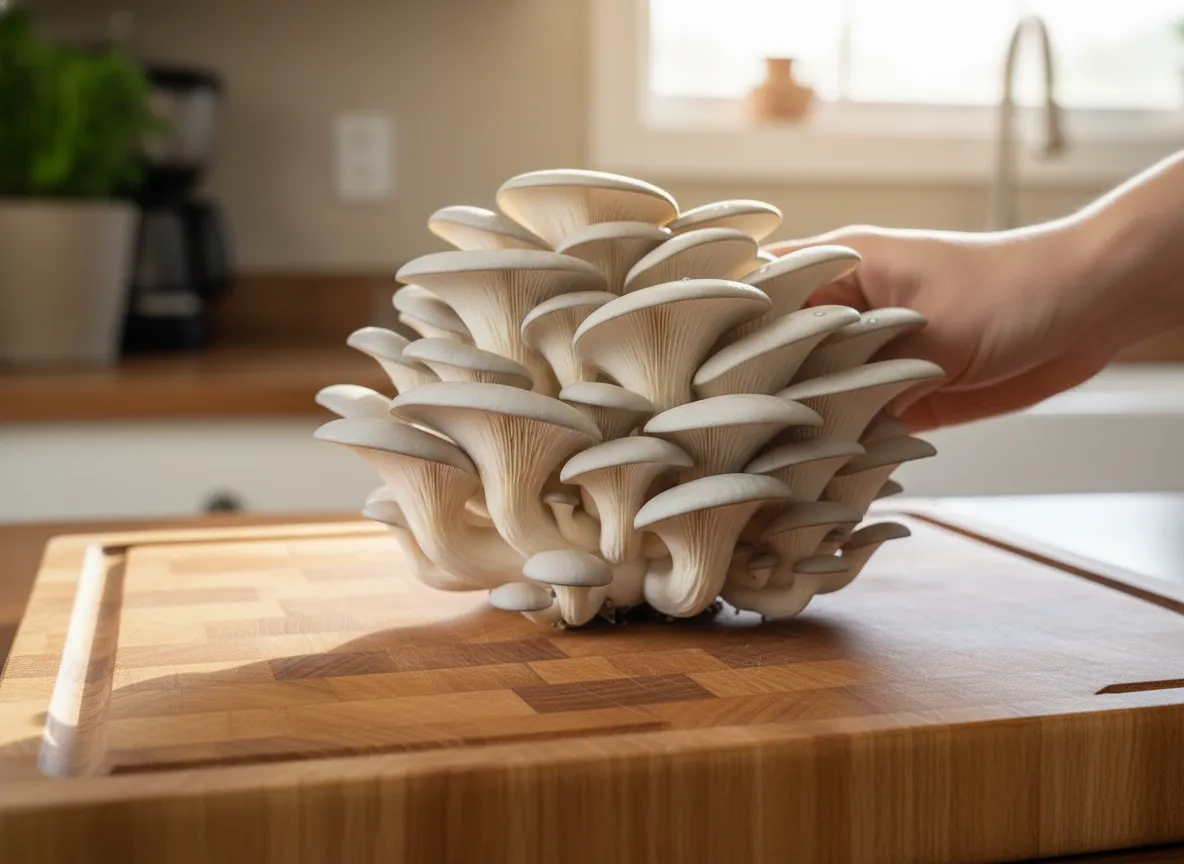
Growing mushrooms is one of the most rewarding skills you can learn. Unlike vegetable gardening, mushrooms don't need sunlight, don't require a yard, and can produce their first harvest in as little as two weeks. Whether you live in a studio apartment or on a rural homestead, you can grow gourmet mushrooms year-round with minimal equipment and surprisingly little effort. A closet, a plastic tub, and a bag of substrate are all it takes to get started.
This guide covers everything from choosing your first species to harvesting your fourth flush. It is written from hands-on experience running a CFIA-licensed cultivation facility and distilled from the 1,000+ growing tips in our knowledge base. Every technique recommended here has been tested at production scale and adapted for home growers.
If you have never grown mushrooms before, start with our beginner checklist and come back here when you are ready for the full picture. If you are an intermediate grower looking for a specific technique, use the table of contents below to jump to the section you need.
What You Need to Get Started
The barrier to entry for mushroom growing is remarkably low. At its simplest, you need three things: a substrate (the material mushrooms feed on), spawn (mushroom mycelium growing on grain or another carrier), and a humid environment for fruiting. Everything else is optional until you are ready to scale up.
Your starting investment depends on which path you choose. Here are the three most common entry points, from easiest to most capable:
| Approach | Cost | What You Get |
|---|---|---|
| Ready-made grow kit | $20–40 | Pre-colonized block, just mist and harvest. First mushrooms in 7–14 days. No learning curve. |
| Uncle Ben's Tek | $30–60 | Pre-sterilized rice bags as spawn, transferred to a monotub. Skips pressure cooking entirely. |
| Full monotub setup | $150–250 | Pressure cooker, grain jars, bulk substrate, SAB. Complete control over the entire process. |
If you are a complete beginner, start with a grow kit or the Uncle Ben's method and graduate to a full setup once you have seen the colonization cycle first-hand. For a detailed breakdown of everything on the shopping list, see our essential supplies guide.
The most important piece of equipment you will eventually want is a pressure cooker for sterilizing grain spawn and agar. A still air box (SAB) — a clear plastic tote with arm holes — provides a low-cost alternative to a laminar flow hood for clean air work. Beyond that, you need spray bottles for misting, a thermometer and hygrometer for monitoring conditions, and food-safe containers for your substrate.
Choosing Your First Mushroom Species
Your first grow should use a forgiving, fast-colonizing species. Not all mushrooms are equally easy — some require precise temperatures, sterile technique, or months of patience. The three species below are the best starting points, each offering a different experience.
Oyster Mushrooms — The Beginner's Best Friend
Oyster mushrooms (Pleurotusspp.) are the undisputed king of beginner cultivation. They colonize aggressively (outrunning many contaminants), tolerate a wide temperature range of 10–24°C, and grow on almost anything cellulose-based: straw, cardboard, coffee grounds, paper, hardwood sawdust, and even old jeans. Blue oysters are the most vigorous variety. Pearl oysters offer a milder flavour. Pink oysters grow the fastest but need warmth above 18°C. Expect your first flush in 3–5 weeks from inoculation, yielding 200–400g per kilogram of dry substrate.
Lion's Mane — The Impressive Second Grow
Lion's mane (Hericium erinaceus) produces stunning, snow-white cascading spines that look nothing like a typical mushroom. It has a lobster-like flavour and texture that impresses even non-mushroom eaters. Research suggests it may support nerve growth factor production. Lion's mane prefers hardwood-based substrates (supplemented sawdust at 10–20% wheat bran) and fruits best at 16–21°C with high humidity above 90%. It is slightly more demanding than oysters but still well within a beginner's reach. Read our health benefits guide for more on functional mushrooms.
Shiitake — The Patient Grower's Reward
Shiitake (Lentinula edodes) are the second most cultivated mushroom worldwide. They develop rich umami flavour that intensifies when dried. Shiitake require supplemented hardwood sawdust blocks and a longer colonization period (6–12 weeks), but reward you with beautiful cracked-cap donko if you provide a cold shock and low humidity during early pinning. They fruit in flushes for 3–5 months from a single block and are also excellent candidates for outdoor log cultivation.
| Species | Difficulty | Time to Harvest | Best Substrate | Yield (per kg dry sub) |
|---|---|---|---|---|
| Blue Oyster | Beginner | 3–5 weeks | Straw, sawdust, coffee | 200–400g |
| Lion's Mane | Intermediate | 4–6 weeks | Supplemented hardwood | 150–300g |
| Shiitake | Intermediate | 8–14 weeks | Supplemented hardwood | 150–250g |
| King Oyster | Intermediate | 5–8 weeks | Supplemented hardwood | 150–300g |
| Reishi | Advanced | 3–6 months | Supplemented hardwood | 100–200g |
Explore all species in our complete species growing guide, including king oyster, reishi, enoki, maitake, and cordyceps, and rare gourmet varieties.
The 5 Most Popular Growing Methods
There is no single “right way” to grow mushrooms. Each method (called a “tek” in the mycology community, short for technique) trades off simplicity, cost, and yield. Here are the five approaches that account for the vast majority of home grows.
1. Grow Kits — Easiest Start
Pre-colonized blocks that arrive ready to fruit. Cut an X in the bag, mist twice daily, and harvest in 7–14 days. No sterilization, no substrate prep, no failure modes for a first-timer. The downsides: limited to one or two flushes, you can't choose your genetics, and per-gram costs are the highest of any method. Think of grow kits as a training run, not a long-term strategy.
Choosing your first grow →2. PF Tek — The Classic Beginner Method
Developed by Robert McPherson (“Psylocybe Fanaticus”) in the 1990s, PF Tek uses half-pint mason jars filled with a mixture of brown rice flour and vermiculite, sterilized in a simple pot of boiling water. The colonized “cakes” are birthed into a fruiting chamber (a plastic tote lined with wet perlite). PF Tek teaches you the full colonization cycle and the critical role of sterile technique — skills that transfer directly to every other method. Yields are modest (15–30g dry per cake) but the learning value is immense.
Full PF Tek guide →3. Monotub Tek — The Most Popular Method
The monotub is the workhorse of home mushroom cultivation. A large plastic storage container (50–100 litre) with polyfill-stuffed ventilation holes, filled with 5–10 cm of colonized bulk substrate. Monotubs are self-regulating: the polyfill controls gas exchange while the closed lid maintains humidity. A single monotub can produce 500–900g of fresh mushrooms per flush across 3–5 flushes. This is the method most growers settle on permanently. It requires grain spawn (pressure cooker needed) and a bulk substrate recipe.
Full monotub tek guide →4. Bucket Tek — Cheapest and Simplest
The bucket method is elegantly simple: drill 12mm holes in a 20-litre bucket, fill it with pasteurized straw mixed with oyster mushroom spawn, and wait. Mushrooms fruit directly out of the holes in the bucket sides. No sterilization equipment needed — pasteurization requires only boiling water. Bucket Tek is the cheapest path to growing mushrooms at scale and works especially well on balconies and patios. The constraint is species: this method works mainly for oyster mushrooms because they can tolerate the less-clean substrate.
Full bucket tek guide →5. Grow Bags — Professional Scale
Autoclavable grow bags with filter patches are the standard in commercial mushroom farms and the best method for growing lion's mane, shiitake, and other supplemented-substrate species at home. The bags are filled with hydrated, supplemented hardwood sawdust, sterilized at 121°C for 2.5 hours in a pressure cooker, cooled, and inoculated in front of a laminar flow hood or SAB. Each bag produces 300–600g across multiple flushes. This method gives you the most control over nutrition, hydration, and contamination risk.
Full grow bag guide →Want something unconventional? Check out Uncle Ben's Tek (spawn from pre-cooked rice bags) or our advanced techniques for Martha tents, automated shotgun fruiting chambers, and cold-weather growing.
Understanding Mushroom Substrate
Substrate is the material that mushrooms grow on and decompose for nutrition. It is the mushroom equivalent of soil for plants, but with a critical difference: mushrooms are decomposers, not plants. They break down complex organic matter (cellulose, lignin, hemicellulose) rather than absorbing nutrients through roots. Choosing and preparing the right substrate is the single biggest factor in your success or failure.
The four most common substrate materials for home growers are:
- Straw— Wheat or oat straw, chopped to 5–10 cm lengths and pasteurized. The standard for oyster mushrooms. Cheap and widely available.
- Hardwood sawdust— Oak, maple, beech, or poplar sawdust, often supplemented with 10–20% wheat bran for extra nutrition. The standard for shiitake, lion's mane, and king oyster. Requires sterilization.
- Coco coir + vermiculite + gypsum (CVG)— The most popular monotub bulk substrate. Coir provides structure and moisture retention, vermiculite adds air pockets, and gypsum supplies calcium and prevents clumping. Use our CVG calculator to get your ratios right.
- Grain— Rye berries, wheat berries, oats, or millet used for spawn production. Grain is not a fruiting substrate — it is the vehicle for multiplying mycelium before transferring it to a bulk substrate. See our grain spawn preparation guide.
Substrate preparation falls into two categories: pasteurization (60–82°C for 60–90 minutes, which reduces contaminant load while leaving beneficial organisms) and sterilization (121°C at 15 PSI for 90–150 minutes in a pressure cooker, which kills everything). Pasteurization works for non-supplemented substrates like plain straw. Any substrate with added nutrition (bran, soy hull, etc.) must be sterilized or it will contaminate.
Deep dive: Substrate fundamentals · Bulk substrate recipes · Species-substrate matching · The science of substrate
The Growing Process Step by Step
Regardless of which method or species you choose, every mushroom grow follows the same fundamental cycle. Understanding these six steps will give you a mental model that applies to any tek.
- 1
Prepare Your Substrate
Hydrate your chosen substrate material to the correct moisture content (typically 60–65% by weight — the “squeeze test” should produce a few drops of water). Then pasteurize or sterilize it depending on whether it contains supplements. Allow it to cool to below 25°C before the next step. Our bulk substrate calculator helps you scale recipes to your container size.
- 2
Inoculate with Spawn
Mix your colonized grain spawn evenly through the cooled substrate. The standard spawn-to-substrate ratio is 1:5 to 1:10 by weight. Higher spawn rates (1:3 to 1:5) colonize faster and resist contamination better, but cost more. Work in a clean environment — ideally in front of your SAB or flow hood. For detailed inoculation techniques, see our spawn guide.
- 3
Colonization — Wait
Seal your container and store it in a warm (21–27°C), dark place. Over the next 1–4 weeks, the white mycelium will spread through the substrate, breaking it down and building its network. Do not open the container during this phase — every opening is a contamination risk. You will know colonization is complete when the substrate surface is fully covered in white mycelium. Learn how to evaluate colonization progress and troubleshoot stalls.
- 4
Introduce Fruiting Conditions
Once fully colonized, trigger fruiting by changing the environment: increase fresh air exchange (FAE), raise humidity to 85–95%, introduce indirect light, and (for many species) drop the temperature by 5–10°C. These changes mimic the arrival of autumn rains and tell the mycelium it is time to produce mushrooms. For monotubs, this means cracking the lid or flipping it. For grow bags, cut slits or remove the bag. Our fruiting chamber setup guide covers each configuration in detail.
- 5
Harvest
Harvest mushrooms just before or as the caps flatten out and the edges begin to curl upward. For oysters, twist and pull the entire cluster at the base. For shiitake and lion's mane, cut cleanly at the substrate surface with a sharp knife. Harvesting at the right moment maximizes both weight and flavour — waiting too long means spore drop (messy but not harmful) and tougher texture. See our harvesting guide for species-specific timing.
- 6
Flush and Repeat
After harvesting, soak your substrate block in cold water for 6–12 hours to rehydrate it (called “dunking”), then return it to fruiting conditions. Most substrates produce 3–5 flushes, with each flush yielding progressively less than the one before. The total biological efficiency (fresh mushroom weight divided by dry substrate weight) for oysters typically reaches 100–150% across all flushes. Use our yield calculator to estimate your total output. For post-harvest storage and preservation, see our post-harvest guide.
Fruiting Conditions — Humidity, Temperature, and Fresh Air
Getting fruiting conditions right is where most beginners struggle. Mushrooms need a precise balance of three environmental factors: high humidity to prevent the pins from drying out, fresh air exchange to remove CO₂ (which causes leggy stems), and the right temperature range for your species. Getting even one factor wrong can mean the difference between a full canopy and zero pins.
| Species | Fruiting Temp | Humidity | FAE Need | Light |
|---|---|---|---|---|
| Blue Oyster | 10–21°C | 85–95% | High | Indirect / 12h |
| Pink Oyster | 18–30°C | 85–95% | High | Indirect / 12h |
| Lion's Mane | 16–21°C | 90–95% | Moderate | Indirect / 12h |
| Shiitake | 12–18°C | 80–90% | Moderate | Indirect / 12h |
| King Oyster | 12–18°C | 85–95% | Low–Moderate | Indirect / 12h |
| Reishi | 21–30°C | 85–95% | Low (for antler) | Minimal |
The most common sign that your conditions are off is “fuzzy feet” — thick, fluffy white growth at the base of the stems. This is aerial mycelium caused by excess CO₂ and indicates you need more fresh air exchange. On the other end, pins that dry out and abort mean your humidity is too low or your FAE is too aggressive (drying the air). The sweet spot is a fine mist of condensation on the inside walls of your fruiting chamber without pooling water.
Complete guides: Fruiting environment optimization · Pinning triggers and troubleshooting · Species-specific fruiting parameters · Grow room calculator
Common Problems and How to Fix Them
Every grower encounters problems. The key is diagnosing them early and knowing which are fixable. Here are the five most common issues, roughly in order of frequency.
1. Green Mold (Trichoderma) Contamination
Bright green patches on your substrate are almost always Trichoderma, the most common contaminant in mushroom cultivation. It thrives in warm, humid conditions and outcompetes mushroom mycelium on improperly sterilized substrates. If you catch it early (a small green spot), you can sometimes save the grow by cutting away the contaminated area with a 5 cm margin and applying hydrogen peroxide. But if green mold covers more than 10% of the surface, discard the entire container outdoors. Prevention is always better: ensure thorough sterilization, work in clean air, and use fully colonized spawn. See our contamination identification guide with photos of every common contaminant.
2. No Pinning
Your substrate is fully colonized but no pins (baby mushrooms) are forming. This is almost always an environmental issue. The most common causes: insufficient fresh air exchange (CO₂ buildup suppresses pinning), humidity too low (below 80%), no temperature drop (many species need a 5–10°C decrease to trigger pinning), or no light stimulus. Check each factor systematically. If conditions look correct, be patient — some substrates take 7–14 days after introducing fruiting conditions before pins appear. Our pinning troubleshooting guide walks through the diagnosis step by step.
3. Fuzzy Feet (Aerial Mycelium)
Thick white fuzz growing at the base of the stems (not on the substrate) is aerial mycelium reaching up for oxygen. It is not contamination and is not dangerous — the mushrooms are still edible. But it signals that CO₂ levels are too high. Increase your fresh air exchange: fan the chamber 2–3 times daily, add more or larger ventilation holes, or switch from polyfill to micropore tape for finer airflow control. Fuzzy feet usually resolve within 24–48 hours of improved FAE.
4. Aborted Pins
Small pins that turn dark, stop growing, and shrivel up are “aborts.” Some abort rate is normal — the mycelium sets more pins than it can support and sacrifices the weakest. But if most of your pins are aborting, the usual causes are sudden temperature swings (more than 5°C in a few hours), humidity crashes (from opening the chamber too often), or bacterial contamination (sour, off smell from the substrate). Maintain stable conditions and avoid unnecessary lid openings during the pinning phase.
5. Stalled Colonization
Mycelium that stops spreading before the substrate is fully colonized. The most common causes are temperature too low (below 18°C slows most species significantly), substrate too wet or too dry, insufficient gas exchange in the container, or weak genetics. Check your temperatures first, then moisture content. If the mycelium has stalled at 60–70% colonization with no visible contamination, try gently breaking up and redistributing the grain spawn through the substrate. Learn more in our common growing problems guide.
More on contamination: Prevention strategies · Rescue and recovery · Diagnosing by smell · Troubleshooting flowchart
How Long Does It Take to Grow Mushrooms?
The timeline from start to first harvest depends on your method and species. Here is what to expect for the most common approaches, assuming room temperature (20–24°C) colonization.
| Method | Colonization | Fruiting | Total to 1st Harvest |
|---|---|---|---|
| Grow Kit | Pre-done | 7–14 days | 1–2 weeks |
| Uncle Ben's Tek | 2–4 weeks | 1–2 weeks | 3–6 weeks |
| PF Tek | 3–4 weeks | 1–2 weeks | 4–6 weeks |
| Monotub (oysters) | 1–2 weeks | 1–2 weeks | 2–4 weeks |
| Grow Bags (shiitake) | 6–12 weeks | 1–2 weeks | 8–14 weeks |
| Bucket Tek (oysters) | 2–3 weeks | 1–2 weeks | 3–5 weeks |
| Log Cultivation | 6–18 months | Seasonal | 6–18 months |
Remember that each block or container produces multiple flushes. A monotub that takes 3 weeks to its first harvest will keep producing flushes every 7–14 days for another 4–8 weeks after that. The first harvest is not the end — it is just the beginning.
Growing Mushrooms Outdoors
Not all mushroom cultivation happens indoors. Outdoor methods are lower-effort, require minimal equipment, and can produce mushrooms for years from a single setup. They are also the only practical way to grow species like wine caps (Stropharia rugosoannulata) and morels, which need soil contact and natural seasonal triggers.
Log cultivationis the oldest method: drill holes in freshly cut hardwood logs, hammer in spawn plugs, seal with wax, and stack the logs in a shaded area. Shiitake, lion's mane, and oyster mushrooms all grow on logs. The first harvest takes 6–18 months, but each log produces mushrooms for 3–7 years. See our log cultivation guide and detailed log growing walkthrough.
Wine cap beds are a garden-bed approach: layer hardwood chips and straw with wine cap spawn in a shaded garden bed, keep it watered, and harvest mushrooms the following season. Wine caps are aggressive colonizers that also improve soil health.
Bucket Tek outdoors is also highly effective. Oyster mushroom buckets placed on a shaded patio or balcony fruit with zero maintenance if the weather provides adequate humidity and temperature. Our outdoor growing guide covers all three approaches with seasonal timing for different climates.
Equipment You'll Need
Your equipment needs scale with your ambition. Here are three tiers, from minimal to fully equipped.
Starter — $50
- • Spray bottle
- • Plastic storage tote
- • Thermometer/hygrometer
- • Isopropyl alcohol (70%)
- • Nitrile gloves
- • Spawn + grow kit
Intermediate — $200
- • Everything above, plus:
- • 23-quart pressure cooker
- • Still air box (SAB)
- • Mason jars & grain
- • Polyfill & micropore tape
- • Scalpel & alcohol lamp
Advanced — $500+
- • Everything above, plus:
- • Laminar flow hood or FFU
- • Autoclavable grow bags
- • Agar plates & parafilm
- • Digital scale (0.1g)
- • Humidity controller
Full breakdown: Budget equipment builds · Pressure cooker guide · Clean air solutions · Essential equipment list · Fruiting chamber equipment
Free Mushroom Growing Calculators
We built a suite of free, interactive calculators that no other mushroom growing site offers. Use these to eliminate guesswork from your substrate recipes, spawn ratios, and equipment sizing.
CVG Substrate Calculator
Perfect coco coir, vermiculite, and gypsum ratios for your tub size
Bulk Substrate Calculator
Scale any substrate recipe to your container dimensions
Spawn Ratio Calculator
Calculate spawn-to-substrate ratios by weight or volume
Liquid Culture Calculator
Sugar-to-water ratios and batch sizing for LC
Yield Estimator
Predict total harvest weight based on species and substrate
Grow Room Calculator
Size your FAE, humidification, and shelving for your space
Pressure Cooker Timing
Sterilization time based on volume, altitude, and PSI
Fresh-to-Dry Converter
Convert between fresh and dried weights by species
Browse all tools at our calculator hub or see tips on using calculators effectively.
Frequently Asked Questions
Can you grow mushrooms without a pressure cooker?
Yes. Many species thrive on pasteurized substrates that only require boiling water or a hot water bath. Oyster mushrooms grow well on straw pasteurized at 65–82°C for 60–90 minutes. Bucket Tek and Uncle Ben's Tek both skip pressure cooking entirely. A pressure cooker is only essential for agar work and grain spawn preparation.
Do mushrooms need sunlight to grow?
Mushrooms do not photosynthesize and do not need sunlight for energy. However, most species benefit from indirect ambient light (a few hours of diffused daylight or a 6500K LED on a 12/12 cycle) to develop normal cap shape and orientation. They can grow in complete darkness but may produce elongated stems and small caps. See our myths and misconceptions page for more.
How much does it cost to start growing mushrooms?
You can start for as little as $20–40 with a ready-made grow kit. A DIY Uncle Ben's Tek setup costs $30–60. A full monotub setup with pressure cooker runs $150–250. For a detailed breakdown, see our essential supplies and budget equipment builds.
Can you grow mushrooms in an apartment?
Absolutely. Mushrooms are the ideal apartment crop because they need no sunlight, minimal space, and thrive in closets, under beds, or in bathrooms. A single monotub fits on a shelf and produces 500–900g per flush. Read our small space growing guide for apartment-specific tips.
What is the easiest mushroom to grow?
Blue oyster mushrooms (Pleurotus ostreatus var. columbinus) are the easiest species for beginners. They colonize fast (7–14 days), tolerate a wide temperature range (10–24°C), resist contamination better than other species, and grow on almost any cellulose-based substrate. Our oyster mushroom guide has the full details.
How long does it take to grow mushrooms from start to harvest?
Timeline varies by method. Grow kits produce mushrooms in 7–14 days. PF Tek takes 4–6 weeks total. Monotub grows take 2–4 weeks for oysters, 8–14 weeks for shiitake. Outdoor log cultivation takes 6–18 months for the first harvest but produces for years. See the timeline table above for a full breakdown.
What temperature do mushrooms need to grow?
Most gourmet mushrooms colonize at 21–27°C and fruit at 16–24°C. The temperature drop from colonization to fruiting is a key trigger for pinning. Avoid temperatures above 30°C as they promote contamination. See our environment optimization guide for species-specific ranges.
Is mushroom growing profitable?
Specialty mushrooms sell for $15–40 per kilogram at farmers markets and restaurants, with substrate costs of $1–3 per kilogram of yield. A small home operation can generate $500–2,000 per month. Our commercial growing guide covers the business side in detail.
Need Personalized Help?
Every grow is different, and sometimes you need advice specific to your setup, your species, and your local conditions. Dr. Myco is our AI mycology assistant trained on decades of cultivation knowledge. Ask it anything — from diagnosing a mystery contaminant to optimizing your fruiting chamber — and get an expert answer in seconds.
Ask Dr. MycoAbout the Author
Andrew Langevin is the founder of Nature Lion Inc, a CFIA-licensed mushroom cultivation facility that has served over 50,000 customers. He is a contributing author of Mushroomology (Brill, 2026), one of the most comprehensive academic references on applied mycology. His work on this site distills hands-on production experience and a knowledge base of 32,000+ community knowledge chunks into actionable tips for growers at every level.
Read full bio →Continue Learning
Getting Started Hub
Everything beginners need to know
Substrate Guide
Recipes, preparation, and science
Teks & Methods
Step-by-step growing techniques
Species Guide
Grow guides for 20+ species
Contamination Hub
Identify, prevent, and fix problems
Fruiting Guide
Environment, pinning, and harvesting
Agar Work
Culture isolation and genetics
Spawn Production
Grain spawn, LC, and expansion
Equipment
Builds, reviews, and recommendations