Agar Basics
10 tips in Agar Work & Culture
By Andrew Langevin · Founder, Nature Lion Inc · Contributing author, Mushroomology (Brill, 2026)
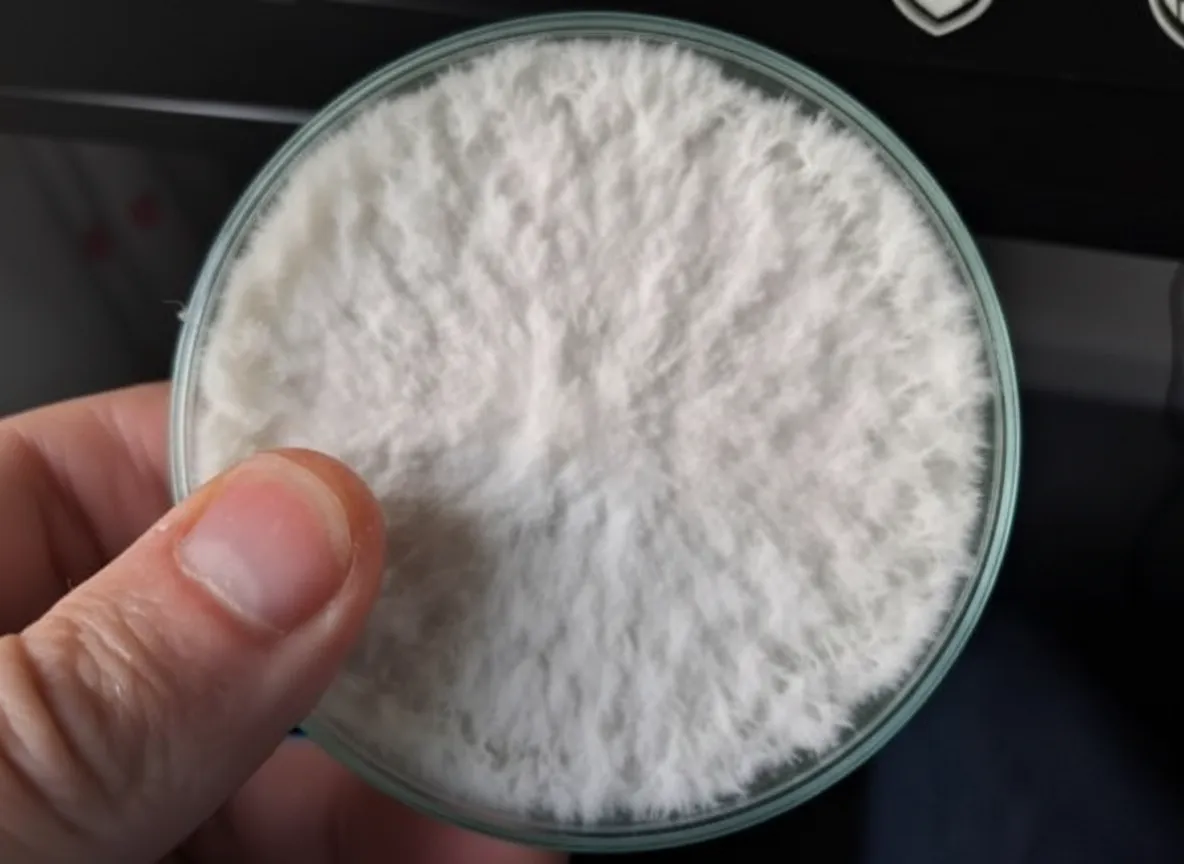
Agar is a gelatinous substance derived from seaweed that solidifies into a firm, clear gel when cooled. Mushroom growers pour sterilized agar mixed with nutrients into petri dishes to create a growth medium for mycelium. Agar work is the foundation of serious mushroom cultivation because it gives you precise control over your cultures.
Agar lets you:
- Isolate clean cultures from contaminated ones
- Select for desirable genetics (fast growth, high yield)
- Clone mushrooms from tissue samples
- Test spawn for contamination before committing it to grain
- Store cultures long-term
Think of agar as your mycology workbench — it's where you can see exactly what's growing, manipulate genetics, and ensure quality before scaling up to grain spawn and bulk substrate.
A petri dish is a shallow, lidded dish used to hold agar media for growing mycelium cultures. Standard sizes are 90mm (most common for mushroom work) and 100mm. You can use glass petri dishes (reusable, autoclavable, more expensive) or disposable plastic ones (pre-sterilized, cheaper, single-use).
For beginners, pre-sterilized disposable plastic dishes are the best choice — they eliminate one contamination risk. If you go with glass, you need to autoclave them before use.
Some growers use small mason jars or condiment cups as alternatives, though these are harder to work with for transfers.
A mushroom culture is a living sample of mycelium growing on a nutrient medium, typically agar. Cultures are how cultivators preserve, propagate, and share mushroom genetics. A culture can come from a spore germination (multispore — genetically diverse), a tissue clone (genetically identical to the parent mushroom), or a transfer from another culture.
The goal of culture work is to maintain a clean, vigorous library of mycelium that you can use to inoculate grain spawn whenever you want to start a new grow. A well-maintained culture library means you never need to buy spore syringes again.
Strain isolation is the process of selecting a single genetic individual from a multispore culture. When you germinate spores on agar, you get dozens of different genetic combinations growing together — some fast, some slow, some vigorous, some weak.
By transferring the fastest, healthiest-looking sector of growth to a fresh plate, and repeating this 3-5 times, you isolate a single monoculture with consistent genetics.
Isolated strains produce more uniform results:
- Predictable colonization speed
- Consistent fruiting
- Reliable yields
Without isolation, every grow from multispore is a genetic lottery.
A clean culture is one that contains only the target mushroom mycelium with zero contamination — no bacteria, no mold, no competing fungi. Achieving and maintaining clean cultures is the central challenge of agar work.
You verify cleanliness by observing the growth pattern: clean mycelium grows as a uniform white front from the inoculation point, with no off-color patches, no irregular margins, and no bacterial slime.
If any contamination is present, you can often rescue the culture by cutting a small piece of clean mycelium from the leading edge (far from the contaminant) and transferring it to a fresh plate.
No. Many successful growers never touch agar. You can grow mushrooms entirely with pre-made spawn, liquid culture syringes, or spore syringes inoculated directly to grain or substrate.
Agar work becomes valuable when you want to:
- Verify that your cultures are clean before committing grain
- Isolate strong genetics for consistent results
- Clone a particularly impressive mushroom
- Rescue a contaminated culture
- Build a long-term strain library
If you're growing from kits or buying spawn from reputable suppliers, agar is optional. If you want to be self-sufficient and optimize your genetics, it's essential.
Start after you've completed 3-5 successful grows using pre-made spawn or spore syringes. By that point, you understand the basic cultivation cycle and can focus on the precision that agar requires without being overwhelmed.
The learning curve is steep at first — your first few plates will likely contaminate. That's normal. Budget for a 50% failure rate on your first batch of plates.
The two prerequisites are:
- A Still Air Box (SAB) or laminar flow hood for clean air
- A pressure cooker to sterilize your agar media
If you already have these from grain spawn preparation, the marginal cost of starting agar is just the agar powder and petri dishes.
Total startup cost for agar work is roughly $30-60 if you already have a pressure cooker and SAB.
Minimum equipment:
- A pressure cooker (to sterilize media)
- A Still Air Box or flow hood (for clean transfers)
- Petri dishes (90mm, disposable or glass)
- A scalpel or exacto knife (for cutting and transferring)
- A lighter or alcohol lamp (for flame sterilization)
- Parafilm or micropore tape (for sealing plates)
- Agar media ingredients (agar powder + nutrients)
Optional but helpful:
- A magnetic stir plate for mixing media
- A pouring vessel with a narrow spout
- A small dedicated refrigerator for storing plates
Yes, and most home cultivators do. A Still Air Box (SAB) is a large clear plastic tub with arm holes cut in the sides, creating a still-air environment that minimizes airborne contamination.
The key to successful agar work in a SAB:
- Spray the inside with 70% isopropyl alcohol and wipe down all surfaces before starting
- Let the air settle for 5-10 minutes after closing the lid
- Move slowly and deliberately (fast movements create air currents that carry contaminants)
- Flame-sterilize your scalpel between every cut
- Work close to the bottom of the box where air is most still
Expect a slightly higher contamination rate than a flow hood, but a SAB is perfectly adequate for hobby-level agar work.
Yes, significantly. A laminar flow hood pushes HEPA-filtered air across your work surface in a uniform stream, actively preventing contaminants from reaching your plates. Contamination rates with a flow hood are typically under 5%, compared to 10-20% with a good SAB technique.
A flow hood also lets you work at a normal pace without worrying about air currents — the positive pressure does the work.
The tradeoff is cost:
- A commercial flow hood runs $500-1500
- A DIY build costs $200-400
- A SAB costs under $15
If you plan to do agar work regularly (weekly or more), a flow hood pays for itself in saved time and reduced contamination losses within 6-12 months.
Need more help? Dr. Myco can answer follow-up questions about agar basics based on thousands of real growing experiences.
Ask Dr. Myco