Mushroom Growing Myths & Misconceptions
10 tips in Getting Started
By Andrew Langevin · Founder, Nature Lion Inc · Contributing author, Mushroomology (Brill, 2026)
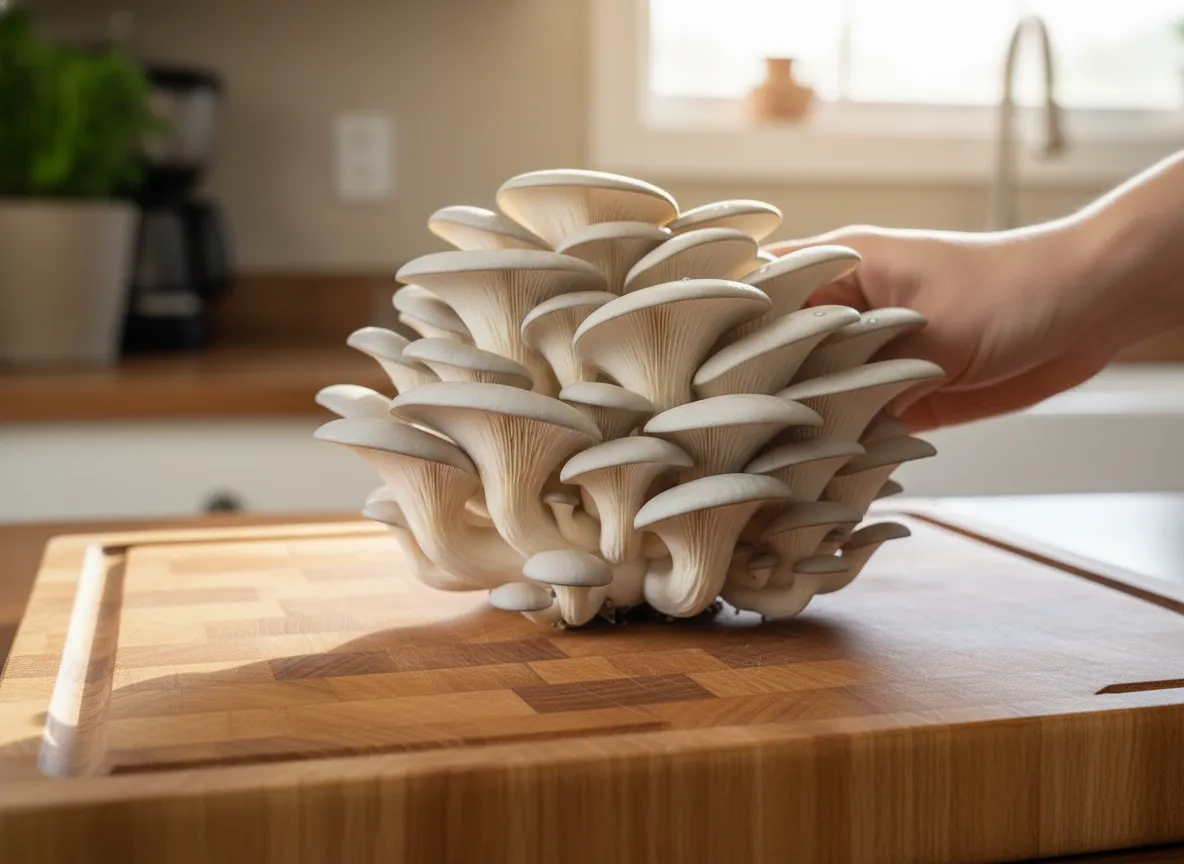
This is one of the most persistent myths in mushroom growing, and the truth is more nuanced than a simple yes or no. Mushrooms do not photosynthesize like plants, so they do not need light as an energy source. However, most cultivated species actually benefit from some light exposure during the fruiting stage.
What light does for mushrooms:
- Directional signaling — Light tells mushroom pins which direction to grow. Without any light, some species produce long, spindly stems and tiny caps as the fruiting bodies search aimlessly for a directional cue
- Pinning trigger — Many species use a light and dark cycle as one of the environmental signals that trigger primordia formation
- Color development — Some species develop richer colors with light exposure
What mushrooms actually need:
- During colonization — No light needed. Keeping jars or bags in a dark closet is perfectly fine and standard practice
- During fruiting — Indirect ambient light or a simple LED on a twelve-hours-on, twelve-hours-off cycle produces the best results
- Direct sunlight — Actively harmful. It dries substrate, raises temperatures, and can kill mycelium
The practical takeaway is that mushrooms grow best with a little ambient light during fruiting, not in pitch darkness. A room with a window or a basic desk lamp is all you need.
Technically possible in rare cases, but practically speaking, no — this method is unreliable and not worth your time. The drying process exposes mushroom tissue to heat and dehydration that kills most of the living cells. Any mycelium or spores that survive are severely compromised and unlikely to produce viable cultures.
Why it almost never works:
- Heat damage — Most food dehydrators operate at 130 to 170 degrees Fahrenheit, which kills the majority of fungal cells
- Desiccation — Extended moisture loss destroys cell membranes and denatures essential proteins
- Contamination — Dried mushrooms from grocery stores have been handled, packaged, and stored in non-sterile conditions, making contamination almost guaranteed if you try to culture from them
- Age — The longer mushrooms have been dried, the less viable any surviving tissue becomes
What actually works instead:
- Fresh mushroom tissue cloning — Take a small piece of inner stem tissue from a fresh mushroom and place it on agar under sterile conditions. This is reliable and widely practiced
- Spore prints — Collect spores from a fresh cap onto foil or paper for later use
- Buy spawn or liquid culture — The most reliable and beginner-friendly method by far
Do not waste weeks waiting for dried shiitake from the grocery store to colonize a jar. Invest a few dollars in proper spawn or a spore syringe and start with viable genetics.
No, mushrooms do not produce seeds — they are fungi, not plants, and they reproduce through spores. This is one of the most fundamental misconceptions new growers bring from their plant gardening experience, and clearing it up helps you understand everything else about mushroom cultivation.
How mushroom reproduction actually works:
- Spores — Microscopic reproductive cells released from the gills or pores of mature mushrooms. A single mushroom can release billions of spores. Spores are like seeds in the sense that they start new organisms, but they are biologically very different
- Germination — When spores land in favorable conditions, they germinate and produce thin filaments called hyphae
- Mating — Two compatible hyphae must find each other and fuse to create fertile mycelium capable of producing mushrooms
- Mycelium — The vegetative body of the fungus, a network of thread-like cells that grows through substrate and eventually produces fruiting bodies (mushrooms)
Why this matters for home growers:
- Growing from spores is slow and unpredictable because you need compatible mating types to combine. Results vary widely
- Most beginners start with spawn — grain or sawdust already colonized by established mycelium — which skips the slow and uncertain spore germination process entirely
Think of spawn as mushroom transplants rather than seeds. You are starting with an established organism, not waiting for germination and mating to happen by chance.
Mushroom growing is no more dangerous than baking bread or gardening, and the safety concerns are manageable with basic common sense. The fungi you cultivate at home — oyster, shiitake, lion's mane, and other gourmet species — are food crops with long histories of safe consumption.
Legitimate but manageable concerns:
- Spore inhalation — Mature mushrooms release spores that can irritate airways in sensitive individuals. Harvest before caps fully flatten and work in ventilated areas. Wearing a simple dust mask during harvest eliminates this risk
- Mold exposure — Contaminated grows produce mold spores. Discard contaminated containers without opening them indoors, and wear a mask when handling suspicious containers
- Pressure cooker safety — Follow manufacturer instructions, never overfill, and maintain the gasket. Pressure cookers used properly are no more dangerous than any other kitchen appliance
Things that are not genuine risks:
- Growing edible mushrooms does not attract dangerous molds to your home any more than having a fruit bowl does
- Mushroom mycelium is not toxic — it is the same organism you eat when you eat a mushroom
- You cannot accidentally grow poisonous mushrooms from commercial spawn or spore syringes. You get exactly the species you purchased
The hobby is safe, affordable, and rewarding. Use common sense, maintain basic hygiene, and you have nothing to worry about.
In any practical sense, no — growing truffles at home is not feasible, despite what some online sellers may claim. Truffles are among the most difficult fungi to cultivate, and the process is fundamentally different from growing oyster mushrooms or shiitake in your closet.
Why truffles are so difficult:
- Obligate mycorrhizal relationship — Truffles form a symbiotic partnership with the roots of specific living trees (usually oak or hazelnut). You cannot grow them on grain, straw, or any standard substrate
- Time horizon — Even in professional orchards with inoculated trees, it takes five to ten years before the first truffles appear. Most hobbyists are not prepared for that timeline
- Climate requirements — Truffles need specific soil chemistry, drainage, pH levels, and seasonal temperature fluctuations that are nearly impossible to replicate indoors
- Unpredictable yields — Even established truffle orchards have variable and sometimes disappointing harvests
What you can do instead:
- Grow gourmet species that have truffle-like umami richness — lion's mane, maitake, and shiitake deliver incredible flavor for a fraction of the effort
- Start a truffle orchard if you own land with appropriate climate and soil. Purchase inoculated tree seedlings from reputable nurseries and plan for a five-to-ten-year investment
Be skeptical of anyone selling truffle growing kits for indoor use. These products do not produce real truffles and are a waste of money.
Absolutely not — this is a dangerous myth that has no basis in reality. Some of the most lethal mushrooms on earth are white, including the destroying angel (Amanita virosa and related species), which can cause fatal liver and kidney failure from a single cap. There is no color-based rule for determining mushroom safety.
Dangerous white mushrooms in the wild:
- Destroying angel (Amanita species) — Pure white, elegant-looking, and deadly. Responsible for the majority of fatal mushroom poisonings worldwide
- Fool's mushroom (Amanita verna) — Another white Amanita that causes severe organ damage
- White *Clitocybe* species — Some produce muscarine toxin that causes profuse sweating, salivation, and gastrointestinal distress
Why this myth persists:
- Common grocery store mushrooms (button, cremini, portobello) are all white or light-colored and perfectly safe, leading people to associate white with edible
- Folk wisdom about mushroom identification is notoriously unreliable. There are no visual shortcuts for determining edibility
For home cultivators, this myth is less relevant because you always know exactly what species you are growing — your spawn came from a reputable supplier with a specific species label. The danger applies primarily to wild foraging, where misidentification can be fatal.
Never eat a wild mushroom based on color alone. Positive identification requires examining multiple features including spore print, gill attachment, habitat, and often microscopic analysis.
This is a common misconception rooted in a misunderstanding of how fungi interact with plants. Most fungi in your garden are actually beneficial, and the relationship between fungi and plants is one of the most important partnerships in nature.
How fungi actually interact with plants:
- Mycorrhizal fungi — The vast majority of plants form mutually beneficial relationships with soil fungi. The fungal mycelium extends the plant's root network by hundreds of times, delivering water and minerals in exchange for sugars the plant produces through photosynthesis. This is cooperation, not theft
- Saprophytic fungi — Species like oyster mushrooms and shiitake feed on dead organic matter, breaking it down into nutrients that become available to plants. They are nature's recyclers
- Parasitic fungi — A small minority of fungal species do attack living plants, causing diseases. These are not the species you grow at home
What this means for growers:
- Your indoor mushroom grows pose zero threat to houseplants — the mycelium in your bags and tubs has no interest in living plant tissue
- Spent mushroom substrate makes excellent garden compost that enriches soil rather than depleting it
- If you see mushrooms growing in your garden, it typically means your soil is healthy and full of organic matter
Fungi and plants evolved together over hundreds of millions of years, and their relationship is overwhelmingly positive. Growing mushrooms does not compete with growing plants in any meaningful way.
Sometimes yes, sometimes no — and the answer matters more than you might think. The green or blue mold you see on bread is most commonly Penicillium or Rhizopus, and both of these genera can also appear on mushroom substrate. However, the most common contaminant in mushroom cultivation — Trichoderma — is rarely found on bread.
Common molds and where you find them:
- Penicillium — Found on bread, cheese, and mushroom substrate. The blue-green powdery mold on your forgotten sandwich is often the same genus contaminating your grain jars. It enters from airborne spores that are everywhere in our environment
- Rhizopus (black bread mold) — The fast-growing fuzzy mold with black dots that covers bread. Less common in mushroom cultivation but can appear on improperly stored grain
- Trichoderma — The primary enemy of mushroom growers. Rarely seen on bread because bread is a less favorable environment for it
- Aspergillus — Found on bread and mushroom substrate alike. The most health-concerning contaminant in both contexts
Key difference for mushroom growers:
- Bread mold is a nuisance — you throw out the bread
- Substrate mold can ruin entire batches and release spores that persist in your growing environment for months
The shared lesson from both bread mold and substrate contamination is the same: mold spores are everywhere, and they colonize any nutrient-rich material that is not properly protected.
Only up to a point, and pushing beyond that point does more harm than good. This myth contains a kernel of truth — warmer temperatures within the optimal range do accelerate mycelial growth — but cranking up the heat beyond species-specific limits creates serious problems.
How temperature actually affects growth:
- Below optimal range — Mycelium grows slowly but steadily. Colonization takes longer but contamination risk is also lower because competing organisms are similarly slowed
- Within optimal range (typically 70 to 80 degrees Fahrenheit for most species) — Mycelium grows at peak speed with the best balance of growth rate and contamination resistance
- Above optimal range — Mycelium stress increases dramatically. Growth may initially appear faster but quality suffers
What happens when you add too much heat:
- Bacterial contamination explodes — Bacteria thrive at higher temperatures and will outcompete mushroom mycelium above 80 to 85 degrees
- Trichoderma gets an advantage — This aggressive competitor grows even faster than your mushroom mycelium at elevated temperatures
- Mycelium weakens — Heat-stressed mycelium produces fewer metabolites, has less resistance to contamination, and may stall entirely
- Fruiting is inhibited — Most species require a temperature drop to trigger pinning. Constant high heat prevents this signal
The best approach is to maintain steady, optimal temperatures rather than trying to speed things up. Patience produces healthier mycelium and better harvests than heat ever will.
Size has very little to do with nutritional value in mushrooms. A large oyster mushroom cap and a small one from the same cluster contain essentially the same nutrients per gram. This myth probably comes from the produce aisle, where people assume bigger means better, but mushroom nutrition is determined by species, growing conditions, and harvest timing — not physical size.
What actually determines mushroom nutrition:
- Species — Different mushroom species have dramatically different nutritional profiles. Lion's mane is rich in nerve growth factor compounds, shiitake contains lentinan, and oyster mushrooms are high in protein relative to other species
- Substrate quality — Mushrooms can only contain nutrients that are available in their growing substrate. Richer substrates with supplementation tend to produce more nutritionally dense fruiting bodies
- Harvest timing — Mushrooms harvested at peak maturity (just before spore release) tend to have the most concentrated nutrient profiles. Overripe mushrooms that have fully opened and begun releasing spores may have slightly reduced nutritional value
What bigger mushrooms actually indicate:
- Fewer pins — When a block produces fewer primordia, each one gets more resources and grows larger. Many small mushrooms versus few large mushrooms is primarily an aesthetic and texture preference
- Good growing conditions — Large, well-formed mushrooms suggest optimal humidity, temperature, and air exchange
Choose harvest timing and species for nutritional goals rather than selecting for size. Fresh, properly grown mushrooms of any size are nutritious and delicious.
Need more help? Dr. Myco can answer follow-up questions about mushroom growing myths & misconceptions based on thousands of real growing experiences.
Ask Dr. Myco