Other Essential Equipment
12 tips in Equipment & Lab Setup
By Andrew Langevin · Founder, Nature Lion Inc · Contributing author, Mushroomology (Brill, 2026)
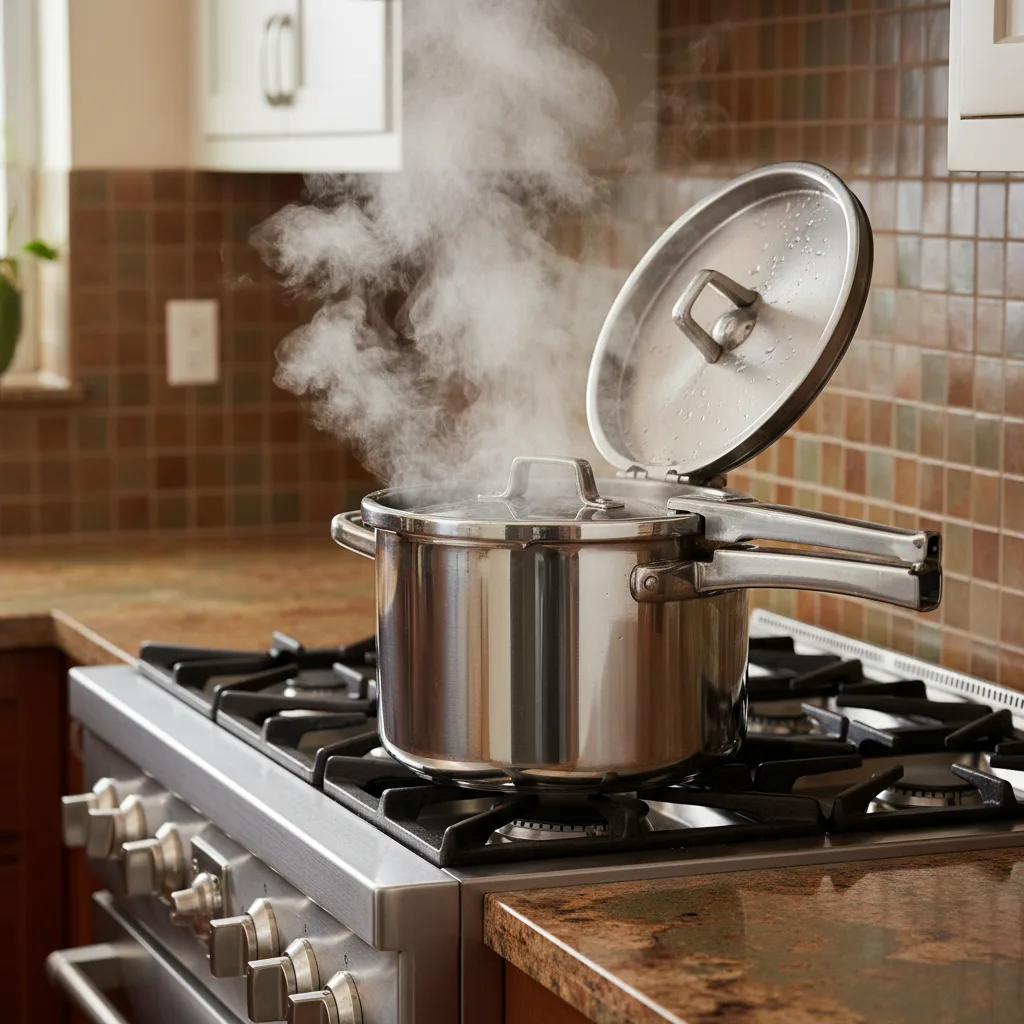
A food dehydrator is essential for preserving your harvest — mushrooms are 90% water and spoil within days if not dried. The right dehydrator depends on your harvest volume.
Top picks:
Budget — Presto 06300 ($40-$50): - 4 stackable trays, expandable to 8 - Bottom-mounted fan (less even drying) - Fine for small harvests of 1-2 lbs at a time - No temperature control on some models — verify before buying
Best value — Nesco FD-75A ($60-$70): - 5 trays, expandable to 12 - Adjustable temperature (95-160°F) - Top-mounted fan for more even airflow - Handles 2-4 lbs of fresh mushrooms per batch
Serious grower — Excalibur 3926TB ($180-$250): - 9 trays, rear-mounted fan with horizontal airflow - Most even drying — no tray rotation needed - Temperature accurate to ±2°F - Handles 5-10 lbs per batch - The commercial grower's standard
Drying tips:
- Set temperature to 125-135°F — Hot enough to dry efficiently, cool enough to preserve flavor compounds and nutrients.
- Slice large mushrooms to 1/4" thick for even drying.
- Dry until cracker-dry — mushrooms should snap, not bend. Any residual moisture invites mold in storage.
- Store in airtight jars with silica gel packets. Properly dried mushrooms keep 1-2 years.
An impulse sealer creates airtight seals on polypropylene spawn bags, which is essential for sterile grain spawn and supplemented substrate preparation. Unlike constant-heat sealers, impulse sealers only heat when triggered, making them safer and more energy-efficient.
Recommended models:
- 8" impulse sealer ($25-$35) — Minimum size for spawn bags. Works for narrow bags but limiting.
- 12" impulse sealer ($35-$50) — The sweet spot. Handles standard Unicorn 14A bags comfortably.
- 16" impulse sealer ($50-$75) — For large production bags. Overkill for most hobbyists.
Key specification: seal width. Look for a 2mm or 5mm seal. A 5mm seal is stronger and less likely to fail during sterilization. Some models offer double-seal capability (two parallel lines), which provides a backup if one seal fails.
Brands: Metronic and Fuxury on Amazon are reliable for hobbyist use. For commercial reliability, look at AIE (American International Electric) or Packaging Aids sealers.
Usage tips:
- Fold the bag top over twice before sealing for extra strength.
- Leave 2-3 inches of bag above the grain line for the fold and seal.
- Wipe the seal area clean — any grain dust or moisture on the bag prevents a good seal.
- Test your seals by inflating a sealed empty bag and squeezing — it should hold air.
A magnetic stir plate is highly recommended for liquid culture (LC) work — it breaks up mycelial clumps and promotes faster, more even colonization. Without stirring, LC tends to form a single dense ball that's hard to draw into syringes.
How it works:
- A magnetic stir plate contains a spinning magnet under the surface.
- A magnetic stir bar (Teflon-coated) sits inside your LC jar on the bottom.
- The spinning magnet rotates the stir bar, creating a vortex that keeps mycelium in suspension.
DIY stir plate ($15-$25):
- Computer fan (80mm or 120mm) with a small neodymium magnet hot-glued to the center
- Mount inside a project box or small container
- Wire to a 12V power adapter with a potentiometer for speed control
- Total build time: 30-45 minutes
Commercial stir plate ($30-$80):
- Magnetic stir plate from Amazon — Search for "lab magnetic stirrer." Basic models work perfectly.
- INTLLAB stir plate ($35-$45) — Popular in the mycology community, reliable and compact.
Stir bar sizes:
- 1-inch bar for pint/half-pint jars
- 1.5-inch bar for quart jars
- Bars cost $3-$5 each and are autoclavable
Run the stir plate at low speed — just enough to create gentle circulation, not a violent vortex that damages mycelium.
An inoculation loop is a thin wire tool used to transfer small amounts of culture — it's one of the simplest and most useful tools in mycology. Commercial loops cost $0.50-$2 each (disposable) or $10-$20 (reusable), but you can make your own for pennies.
DIY reusable loop:
- Get nichrome wire (26-28 gauge) — Available at vape shops, craft stores, or Amazon. A 10-foot spool ($5) makes dozens of loops.
- Cut a 4-inch length of wire.
- Wrap one end around a pen tip or small nail to form a 3-4mm loop.
- Insert the straight end into a handle — options include a mechanical pencil barrel, a small dowel with a hole drilled in the end, or a glass Pasteur pipette.
- Crimp or glue to secure.
Why nichrome wire:
- Withstands flame sterilization — Heat to glowing red between transfers without degrading
- Doesn't oxidize or corrode like regular steel wire
- Retains its shape through hundreds of heating cycles
Using the loop:
- Flame until glowing red before and after every transfer
- Let cool for 10-15 seconds or touch to the agar surface at the edge (away from your culture) — the slight sizzle confirms it's cool enough
- Scoop a tiny amount of mycelium or liquid and transfer to the new plate or media
Make 3-5 loops at once and keep spares in a clean container. They're small and easy to lose.
Injection ports are self-healing silicone or rubber patches on jar lids that allow you to inject liquid culture or spore syringes directly into sealed, sterilized jars without opening them. They're essential for no-pour grain inoculation.
Pre-made options:
- Self-healing injection ports (SHIP) — Adhesive-backed silicone discs. Peel and stick over a hole in your lid. $0.50-$1 each in packs of 10-20.
- Pre-made lids — Many suppliers sell mason jar lids with injection ports and filter patches pre-installed. $2-$4 each.
DIY injection ports ($0.10 each):
- Drill a 7/16" hole in your mason jar lid.
- Apply a dab of high-temperature RTV silicone (red or grey gasket maker from the auto parts store, $5-$8 per tube).
- Build up the silicone to about 1/4" thick over and around the hole.
- Let cure 24 hours before use.
- The cured silicone self-heals after needle puncture.
Using injection ports:
- Wipe the port with an alcohol swab before injecting.
- Insert the syringe needle at an angle through the silicone.
- Inject 1-2 cc of liquid culture or spore solution per quart jar.
- The silicone closes behind the needle, maintaining sterility.
Pair every injection port with a filter patch (micropore tape or synthetic filter disc) for gas exchange. The jar needs to breathe but not let contaminants in.
A liquid culture lid combines an injection port with a gas exchange filter on a modified mason jar lid, allowing you to inoculate, grow, and draw LC without ever opening the jar. Making your own saves significant money over buying pre-made.
Materials per lid ($1-$2):
- Wide-mouth mason jar lid (or reusable plastic lid)
- High-temp RTV silicone (for injection port)
- Synthetic filter disc or micropore tape (for gas exchange)
- Drill with 7/16" and 1/4" bits
Construction:
- Drill a 7/16" hole on one side — this is your injection port.
- Drill a 1/4" hole on the other side — this is your gas exchange vent.
- Apply RTV silicone over the injection port hole, building up to 1/4" thick.
- Cover the vent hole with 2 layers of micropore tape on both sides of the lid, or glue a synthetic filter disc.
- Let silicone cure 24 hours.
Optional upgrade — syringe draw port:
- Install a second injection port for drawing LC out with a syringe while the jar stays sealed.
- This maintains sterility through multiple draws over weeks or months.
LC lid usage workflow:
- Fill jar with LC media (water + 4% light malt extract).
- Add a magnetic stir bar if using a stir plate.
- Seal with modified lid, cover with foil.
- Pressure cook at 15 PSI for 20-30 minutes.
- Cool, then inoculate through the injection port with a clean syringe.
A good scalpel is the most-used tool in agar work — you'll use it for every transfer, clone, and isolation. The right blade shape and handle make a noticeable difference in precision and comfort.
Scalpel options:
- #10 blade on #3 handle — The standard for mycology. Curved belly for scooping agar wedges. Handles cost $5-$8, blades $0.20-$0.50 each in bulk packs of 100.
- #11 blade on #3 handle — Pointed tip for fine work like picking individual rhizomorphic tips. Same handle, different blade.
- X-Acto #1 knife ($5) — Works fine for beginners. Uses #11 blades. Less ergonomic for long sessions.
Other transfer tools:
- Inoculation loop — For liquid culture and streak plates (see DIY loop tip)
- Inoculation needle — Straight wire for point inoculations
- Bent-tip tweezers ($5-$10) — For picking up small tissue samples
- Curved hemostats ($5-$8) — For gripping tissue during cloning
Sterilization protocol:
- Dip blade in 70% isopropyl alcohol
- Flame sterilize until the alcohol burns off and the blade glows briefly
- Let cool 10-15 seconds — touching hot metal to agar melts it and kills mycelium
- Make your cut/transfer
- Re-sterilize between every plate
Replace blades frequently — a dull blade tears agar instead of cutting cleanly, increasing contamination risk. Budget $10-$15 per year on blades.
Parafilm is a stretchy, semi-permeable wax film used to seal petri dishes while still allowing gas exchange. It's the professional standard for plate sealing and far superior to alternatives for long-term culture storage.
Why Parafilm:
- Semi-permeable — Allows oxygen and CO2 exchange so mycelium can breathe, but blocks contaminant particles and moisture loss
- Self-sealing — Stretches and clings to itself, forming an airtight bond when wrapped
- Easy to remove — Peels off cleanly for transfers without disturbing the plate
How to use:
- Cut a strip about 1 inch wide and long enough to wrap around the plate (~8 inches for a 90mm dish).
- Stretch the strip to 2-3x its original length while wrapping — this activates the self-clinging property.
- Wrap around the plate seam where lid meets base, overlapping the starting point by 1 inch.
- Press firmly to seal.
Cost: A 4"x125' roll ($20-$25) lasts hundreds of plates. Available on Amazon, laboratory suppliers, or mycology shops. Brand name is "Parafilm M" by Bemis/Amcor.
Alternatives:
- Micropore tape ($3-$5) — Works well but doesn't cling as neatly. Good budget option.
- Electrical tape — Blocks gas exchange entirely. Okay for short-term but not storage.
- Saran wrap — No gas exchange, traps moisture, promotes bacterial contamination. Avoid.
For long-term storage (months), Parafilm is essential — it prevents plates from drying out while maintaining sterility.
3M Micropore tape (the paper-based surgical tape) is the standard for mushroom cultivation. It provides gas exchange while filtering out most airborne contaminants. But not all micropore tapes are equal.
3M Micropore (paper) — The standard ($3-$5 per roll): - White, papery texture - Available at any pharmacy (1/2", 1", or 2" widths) - Allows excellent gas exchange - Filters particles but not perfectly — adequate for spawn jars and monotubs - Loses adhesion when wet
3M Micropore+ (silicone-based) — Premium ($5-$8): - Sticks better and longer, even in humid conditions - Slightly lower gas exchange rate - Blue/purple packaging - Worth the extra cost for lids that need to stay sealed through sterilization
3M Transpore (clear plastic) — Avoid for most uses: - Larger pore size than Micropore paper - Allows more contamination through - Useful only where maximum gas exchange is needed and contamination risk is low
Common applications:
- Spawn jar lids: 2 layers of 1" Micropore over a 1/4" drilled hole
- Monotub holes: 1-2 layers over 2" holes for adjustable FAE
- Plate sealing: Wrap around the seam (budget alternative to Parafilm)
- Bag filters: Emergency replacement for damaged filter patches
Buy the genuine 3M brand — generic "micropore" tapes from Amazon vary wildly in pore size and quality. A single roll lasts months.
An alcohol lamp is the professional choice for agar work, but a lighter works fine for beginners. Both accomplish the same goal — sterilizing your scalpel, loop, or needle between transfers by heating it to red-hot.
Alcohol lamp advantages:
- Hands-free — The flame stays lit on your work surface, so both hands are free for tools and plates.
- Creates an updraft — The rising heat column creates a small zone of clean, upward-moving air directly above the flame. This is especially useful in a flow hood.
- Consistent flame — Steady and predictable, doesn't flicker out.
- Cost: $10-$15 for the lamp, fill with 70% or 91% isopropyl alcohol. Lasts weeks per fill.
Lighter disadvantages:
- Requires one hand to hold, leaving only one for your tool.
- Butane lighters can leave soot deposits on your blade.
- The flame is less stable — wind from arm movements can extinguish it.
- Standard Bic lighters get hot during extended use.
Safety note for SAB use: Many growers avoid open flames inside a SAB because alcohol vapor from sanitizing spray can ignite. If using a flame in a SAB:
- Wait 60+ seconds after spraying alcohol before lighting
- Use the smallest flame possible
- Keep alcohol spray bottles outside the box
- Some growers skip flame sterilization in the SAB entirely, relying on alcohol-dipped tools instead
In a flow hood, always use an alcohol lamp — the updraft complements the laminar airflow beautifully.
Yes, you can use non-filtered bags with some modifications, and it can save significant money. Filtered spawn bags (Unicorn 14A, 3T) cost $0.40-$0.60 each, while plain polypropylene bags cost $0.05-$0.15 each.
Methods for using unfiltered bags:
Method 1 — Micropore tape vent: 1. Fold the bag top over after filling. 2. Cut a 1-inch slit or punch a hole near the top of the bag. 3. Cover with 2-3 layers of micropore tape on both sides. 4. Seal the rest of the bag with an impulse sealer. 5. This creates a DIY filter patch for gas exchange.
Method 2 — Fold and clip (no filter): 1. Fill the bag, squeeze out excess air. 2. Fold the top over 3-4 times tightly. 3. Secure with a binder clip or impulse seal. 4. The fold creates a tortuous path that limits contamination while allowing minimal gas exchange. 5. Best for grain spawn that colonizes quickly.
Method 3 — Cotton plug vent: 1. Insert a small wad of synthetic polyfill into the bag opening before sealing. 2. The polyfill acts as a filter. 3. Seal the bag around the polyfill with the impulse sealer.
Tradeoffs: - Non-filtered bags have slightly higher contamination rates (~5-10% higher than filtered) - Gas exchange is less consistent, potentially slowing colonization - Best for grain spawn where colonization is fast; riskier for slow-colonizing supplemented substrates
For hobbyists processing fewer than 20 bags per month, the savings aren't worth the extra contamination risk. For larger operations, the per-bag savings add up.
Your budget determines which techniques are available to you, but you can grow mushrooms successfully at every price point. Here's what to buy at three common starting budgets.
$50 Budget — Absolute Basics: - Still Air Box (clear tote): $10 - Micropore tape: $4 - 70% isopropyl alcohol: $4 - Pre-made spawn bag (from a supplier): $15 - Bulk coco coir (substrate): $5 - Plastic tote for monotub: $10 - Spray bottle: $2 - Skip: pressure cooker, agar, grain prep. Buy pre-made spawn and use pasteurized coir.
$200 Budget — Self-Sufficient Hobbyist: - Everything above, plus: - Presto 23-quart pressure cooker: $85 - Mason jars (case of 12 quart): $12 - Grain (whole oats, 50 lb): $15 - Agar powder + petri dishes: $20 - Scalpel handle + blades: $8 - Lighter or alcohol lamp: $5 - Dehydrator (Nesco FD-75A): $65 - You can now prepare your own spawn, do agar work, and dry your harvest.
$500 Budget — Serious Setup: - Everything above, plus: - DIY flow hood (HEPA filter + blower + plenum): $250 - Inkbird humidity controller: $35 - Ultrasonic humidifier: $30 - Grow tent (2'x4'): $75 - Govee WiFi sensor: $20 - Impulse sealer: $35 - Magnetic stir plate (DIY): $20 - Parafilm roll: $25 - You now have a semi-automated, professional-grade home lab.
Upgrade path: Start at $50, prove you enjoy it, then invest in the pressure cooker. The flow hood comes last — use a SAB until the volume justifies the upgrade.
Need more help? Dr. Myco can answer follow-up questions about other essential equipment based on thousands of real growing experiences.
Ask Dr. Myco