Sterilization Methods
10 tips in Substrate Preparation
By Andrew Langevin · Founder, Nature Lion Inc · Contributing author, Mushroomology (Brill, 2026)
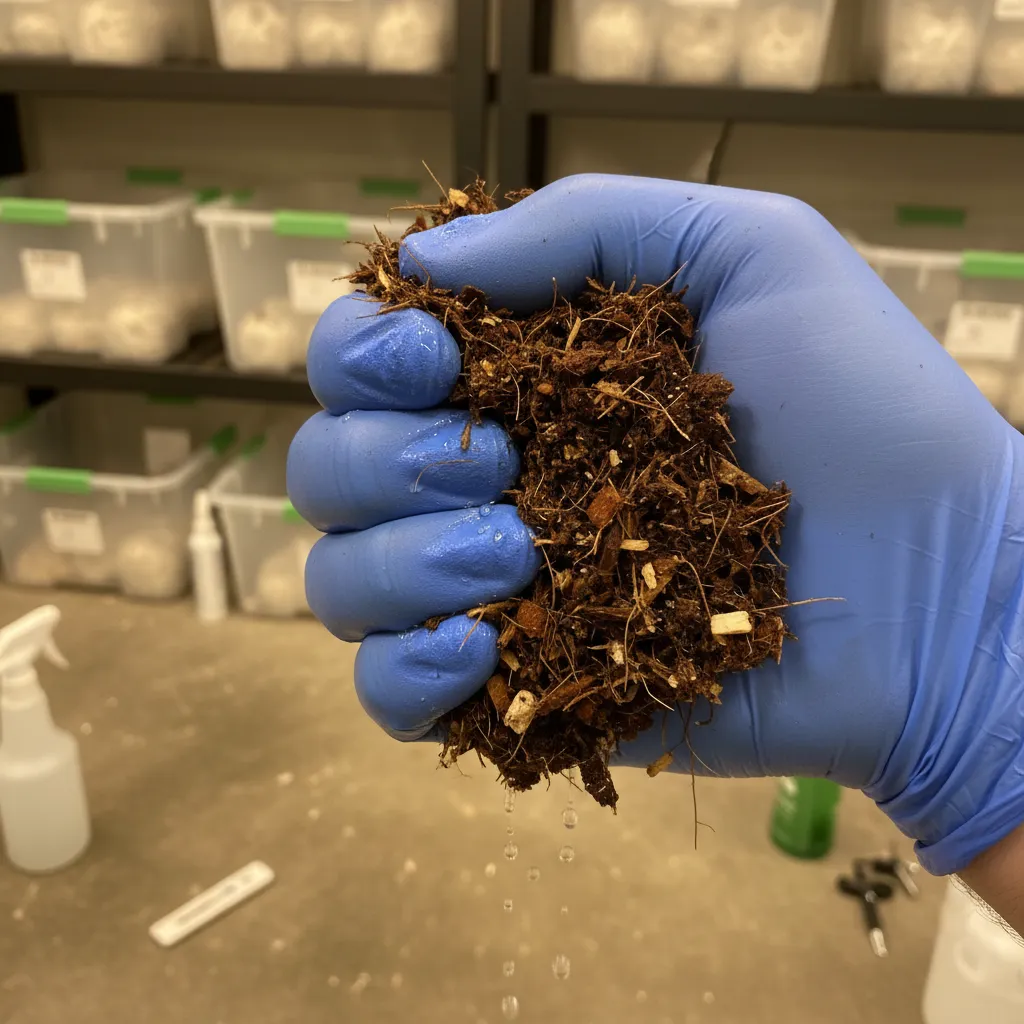
Pressure cooker sterilization is the standard method for grain spawn, supplemented sawdust, BRF cakes, agar, and liquid culture. Load your jars or bags onto a rack inside the pressure cooker — never place them directly on the bottom, or they may crack from direct heat. Add 5-8 cm of water to the bottom (enough that it won't boil dry during the long cook).
Place the lid and lock it according to your cooker's instructions. Heat on high until the cooker reaches 15 PSI (103 kPa), which corresponds to an internal temperature of 121C (250F). Start your timer only when 15 PSI is reached.
Standard sterilization times:
- Quart jars of grain: 90 minutes
- Half-pint BRF jars: 60 minutes
- Supplemented sawdust bags (2 kg): 150 minutes
- Agar plates: 45 minutes
- Liquid culture: 30 minutes
Maintain steady pressure throughout — if it drops below 15 PSI, restart the timer. After the cook, turn off heat and let the cooker depressurize naturally for 4-8 hours. Never force-cool. The slow cooling prevents jars from cracking and avoids sucking contaminated air back into containers.
Both achieve the same goal — 121C (250F) at 15 PSI — but differ in design and reliability.
A standard kitchen pressure cooker (Presto 23-quart is the most popular in mycology) costs $80-150 and works well for home-scale growers. It uses a weighted jiggler or gauge to maintain pressure and requires manual monitoring.
An autoclave is a purpose-built sterilization device with a locking door, automated pressure and temperature controls, and a drying cycle. Lab-grade autoclaves cost $2,000-15,000+ and are overkill for most home growers.
For practical purposes, a quality pressure cooker at 15 PSI for the correct duration sterilizes just as effectively as an autoclave. The main advantages of an autoclave are consistency (automated controls prevent pressure drops), capacity (larger chamber), and a post-sterilization drying cycle that removes condensation from containers. If you're choosing a pressure cooker for mycology, get one that holds at least 23 quarts (22 L) — this fits 7-10 quart jars per run. Avoid electric pressure cookers (Instant Pot) as most cannot maintain a true 15 PSI.
All times listed are at 15 PSI (121C / 250F), starting only after full pressure is reached:
- Grain spawn in quart jars: 90 minutes
- Grain spawn in half-gallon jars: 120 minutes
- Grain spawn in 2 kg bags: 120-150 minutes
- BRF cakes in half-pint jars: 60 minutes
- Supplemented sawdust (Masters Mix) in 2 kg bags: 150 minutes
- Plain hardwood sawdust in 2 kg bags: 90 minutes
- Agar media in petri dishes or jars: 45 minutes
- Liquid culture in pint jars: 30 minutes
- Liquid culture in quart jars: 45 minutes
- Substrate in 5 kg bags: 180 minutes (minimum)
These times account for heat penetration — larger volumes need longer because the center takes more time to reach sterilization temperature. Never reduce these times. If anything, add 15-30 minutes as a safety margin, especially for dense substrates packed tightly in bags. Growers who experience contamination in an otherwise clean setup should increase sterilization time by 30 minutes before troubleshooting other variables. It is far better to over-sterilize than under-sterilize.
Use autoclavable polypropylene grow bags rated for 121C (sold as mushroom grow bags or autoclave bags with a filter patch). Fill the bag with hydrated substrate — typically 1.5-2.5 kg per bag. Leave 10-15 cm of empty space above the substrate for expansion during heating.
Preparation steps:
- Fold the top of the bag over and secure with a fold-over clip, twist tie, or impulse sealer
- Do not seal the bag completely airtight — the filter patch provides gas exchange, but if your bag has no filter patch, leave a small opening for steam to escape
- Place bags upright in the pressure cooker, not crammed so tightly that steam cannot circulate between them
- Run at 15 PSI for 150 minutes for supplemented substrates (Masters Mix, bran-supplemented sawdust) or 90 minutes for plain substrates
After natural depressurization and cooling (8-12 hours), the bags are ready for inoculation. Inoculate in front of a flow hood or inside a still air box by cutting a small slit in the bag, inserting spawn, and sealing the slit with micropore tape or an impulse sealer.
Use wide-mouth quart mason jars (946 ml). Modify the lids: drill or punch a 12 mm hole in the center of each metal lid. Cover the hole on the inside with a disc of micropore tape (3M Micropore surgical tape) or stuff a small amount of polyfill through the hole. This provides gas exchange while filtering out contaminants.
Loading and sterilization steps:
- Fill jars three-quarters full with prepared, surface-dried grain
- Wipe the jar rim clean to ensure a good seal
- Place the modified lid on the jar and tighten the ring band to finger-tight — not fully tight, as some air needs to escape during heating
- Cover the lid with a square of aluminum foil to prevent water from dripping onto the micropore tape
- Place jars on a rack in the pressure cooker (a canning rack, jar ring, or folded towel works)
- Add 5-8 cm of water to the bottom
- Sterilize at 15 PSI for 90 minutes
After natural cooling (8-12 hours), the jars are ready. Inoculate in front of a flow hood or inside a SAB by lifting the foil, injecting spore solution or liquid culture through the micropore tape using a flame-sterilized needle.
Technically, you cannot achieve true sterilization (killing all endospores) without reaching 121C, which requires pressure. However, there are workarounds for growers without a pressure cooker.
The best option is fractional sterilization (tyndallization): steam your substrate at 100C for 60 minutes, then let it sit at room temperature for 24 hours. Repeat this cycle three times over three days. The theory is that heat-resistant endospores germinate during the room-temperature rest periods and are then killed by the next steaming cycle. This method is slower and less reliable than pressure cooking but works for many growers. Steam at atmospheric pressure (100C) using a large pot with a rack and tight-fitting lid.
Another option: use low-nutrient substrates that only require pasteurization (CVG, plain straw, plain coir) and avoid any substrate that needs sterilization. This eliminates the need for a pressure cooker entirely but limits your substrate options.
For grain spawn specifically, there is no reliable substitute for pressure cooking. If you want to make your own grain spawn, invest in a pressure cooker — a 23-quart Presto costs about $80-100 and is the single most important piece of mycology equipment.
Tyndallization is a method of sterilizing substrate without a pressure cooker by using repeated cycles of atmospheric-pressure steaming. The process exploits the lifecycle of bacterial endospores — the heat-resistant dormant structures that survive normal boiling.
The protocol:
- Day 1: Steam substrate at 100C (boiling / atmospheric steam) for 60-90 minutes. This kills all active bacteria and molds but leaves endospores alive. Remove from heat and let sit at room temperature (20-25C) for 24 hours. During this rest, surviving endospores germinate into active bacteria, now vulnerable to heat.
- Day 2: Steam again at 100C for 60-90 minutes, killing the newly germinated bacteria. Rest for another 24 hours.
- Day 3: Steam a third and final time. By this third cycle, virtually all endospores should have germinated and been killed.
Tyndallization takes 3 days instead of 90 minutes and is less reliable than pressure cooking — some endospores may not germinate during the rest periods, especially if temperatures are too cool. Keep rest temperatures above 20C for best results. This method works reasonably well for supplemented sawdust and BRF but is not recommended for grain spawn.
Prepare your agar recipe. A common recipe:
- Water: 500 ml
- Light malt extract: 10 g
- Agar powder: 10 g
- Nutritional yeast: 1 g
Mix all ingredients in a heat-safe glass bottle or flask and cap loosely (the cap must allow steam to escape). Alternatively, use pre-mixed media powder at the manufacturer's recommended ratio.
Place the bottle on a rack in your pressure cooker with 5-8 cm of water in the bottom. Sterilize at 15 PSI for 45 minutes. After the pressure cooker depressurizes naturally, carefully remove the bottle while the agar is still liquid (it solidifies below approximately 45C).
Working in front of a flow hood or inside a still air box, pour the liquid agar into sterile petri dishes, filling each dish about one-third full (approximately 15-20 ml per 100 mm dish). Pour quickly but carefully — tilt the dish lid just enough to pour, then replace immediately. Let the dishes sit undisturbed on a level surface for 30-60 minutes until the agar solidifies. Store poured plates upside down (agar on top) in a sealed bag or sleeve at room temperature for up to 2 weeks, or refrigerated for up to 2 months.
Liquid culture (LC) media is a nutrient-rich broth used to grow mycelium in liquid form for fast inoculation. Standard recipes (pick one):
- 600 ml water + 24 g light malt extract (4% solution)
- 600 ml water + 12 g honey (2% solution)
- 600 ml water + 6 g light corn syrup (1% solution)
Mix the ingredients in a quart mason jar. Add a small glass marble or magnetic stir bar to help break up mycelium when you swirl the jar later. Modify the jar lid with a self-healing injection port (a blob of high-temperature silicone over a drilled hole) and a gas exchange port (micropore tape over a second drilled hole). Cover the lid with foil.
Sterilize at 15 PSI for 30 minutes (quart jar) or 20 minutes (pint jar). Shorter sterilization times than grain because the liquid medium is less dense and heats through faster.
After cooling for 8-12 hours, inoculate by injecting a small amount of clean culture (0.5-1 ml of LC or a small agar wedge) through the injection port using a flame-sterilized syringe. Colonization takes 5-14 days at 21-24C with periodic gentle swirling to break up mycelial clumps.
The most frequent sterilization failures:
- Not reaching 15 PSI — electric pressure cookers (Instant Pot) often max out at 10-12 PSI, which reaches only 115C instead of 121C. This leaves endospores alive. Use a stovetop pressure cooker that reliably hits 15 PSI.
- Starting the timer too early — timing must begin only after the cooker reaches full 15 PSI, not when it starts building pressure.
- Pressure drops during the cycle — if pressure drops below 15 PSI at any point, the timer must restart from zero. Monitor the entire duration.
- Too much grain moisture — even perfect sterilization cannot save grain that is too wet. Excess moisture creates anaerobic zones where surviving thermophiles thrive.
- Force-cooling the pressure cooker — running cold water over the lid or releasing the pressure valve creates a sudden pressure drop that can suck contaminated air back into jars. Always let it cool naturally.
- Overloading the cooker — packing too many jars prevents steam circulation and creates cold spots that never reach 121C. Leave gaps between jars.
- Opening jars outside of clean air — sterilized substrate is maximally vulnerable. Only open in front of a flow hood or inside a SAB.
Need more help? Dr. Myco can answer follow-up questions about sterilization methods based on thousands of real growing experiences.
Ask Dr. Myco