Species-Specific Fruiting Tips
16 tips in Fruiting & Harvest
By Andrew Langevin · Founder, Nature Lion Inc · Contributing author, Mushroomology (Brill, 2026)
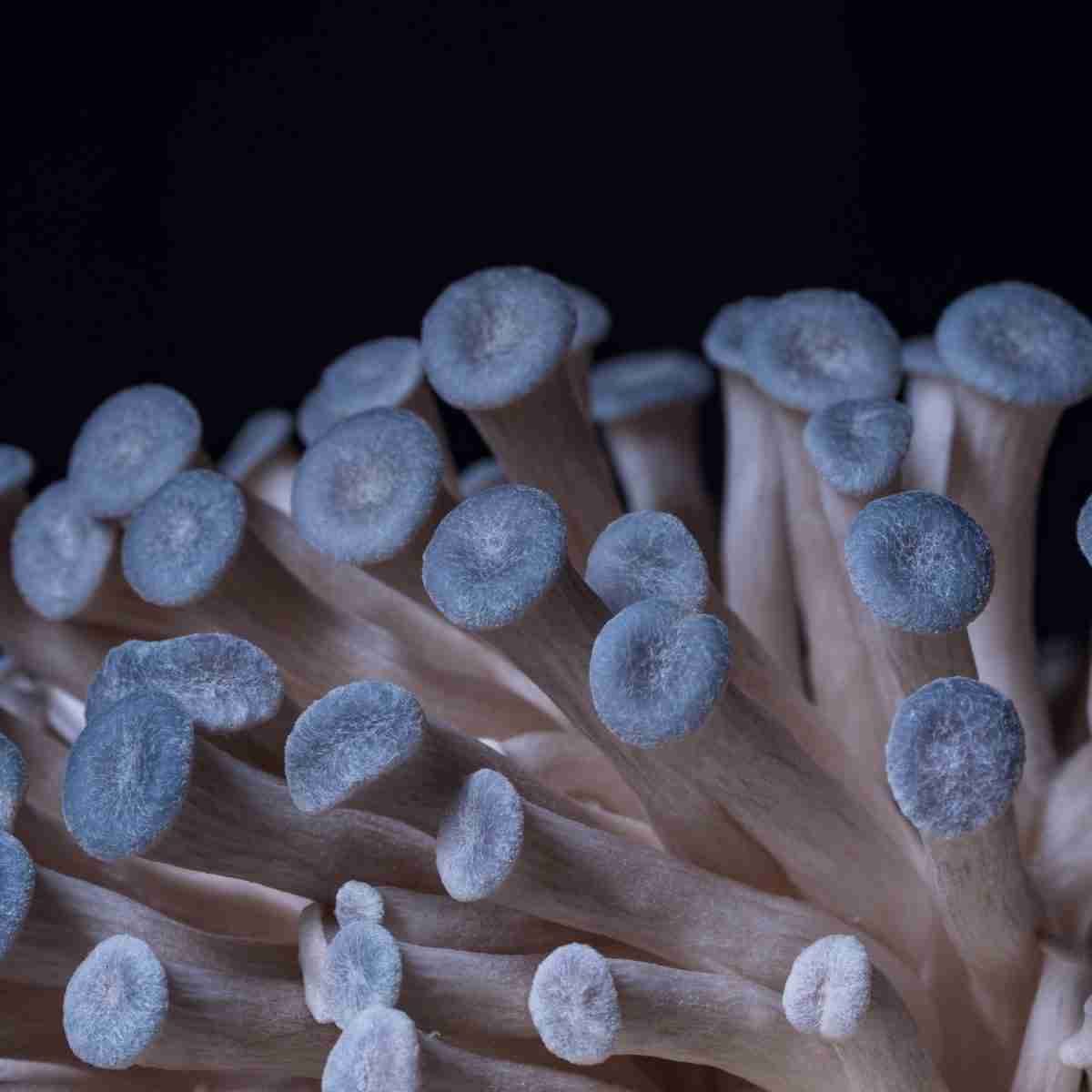
Oyster mushrooms are extremely sensitive to CO2 levels and require more fresh air exchange than almost any other cultivated species. In nature, oysters fruit from the sides of dead standing trees where wind provides constant airflow. Their biology is tuned to expect abundant fresh air, and they respond dramatically when they do not get it.
What happens with insufficient FAE:
- Long, stretched stems with tiny caps — The mushroom literally reaches toward fresh air, growing elongated stalks to escape the CO2-rich zone near the substrate
- Coral-like or rosette formations — Instead of normal shelf-shaped clusters, oysters produce bizarre branching structures
- Pale coloring — Blue and gray oyster varieties lose their color intensity in high-CO2 environments
FAE requirements compared to other species:
- Oyster mushrooms — Need CO2 below 800 ppm for normal cap development
- Shiitake — Tolerates CO2 up to 1,500 ppm without major deformity
- King oyster — Actually prefers higher CO2 (1,500-3,000 ppm) for thick stem development
If your oyster mushrooms are growing leggy with small caps, your number one fix is more ventilation. Increase fan run time, widen chamber openings, or fan manually more frequently. The improvement is usually visible within twenty-four hours on developing pins.
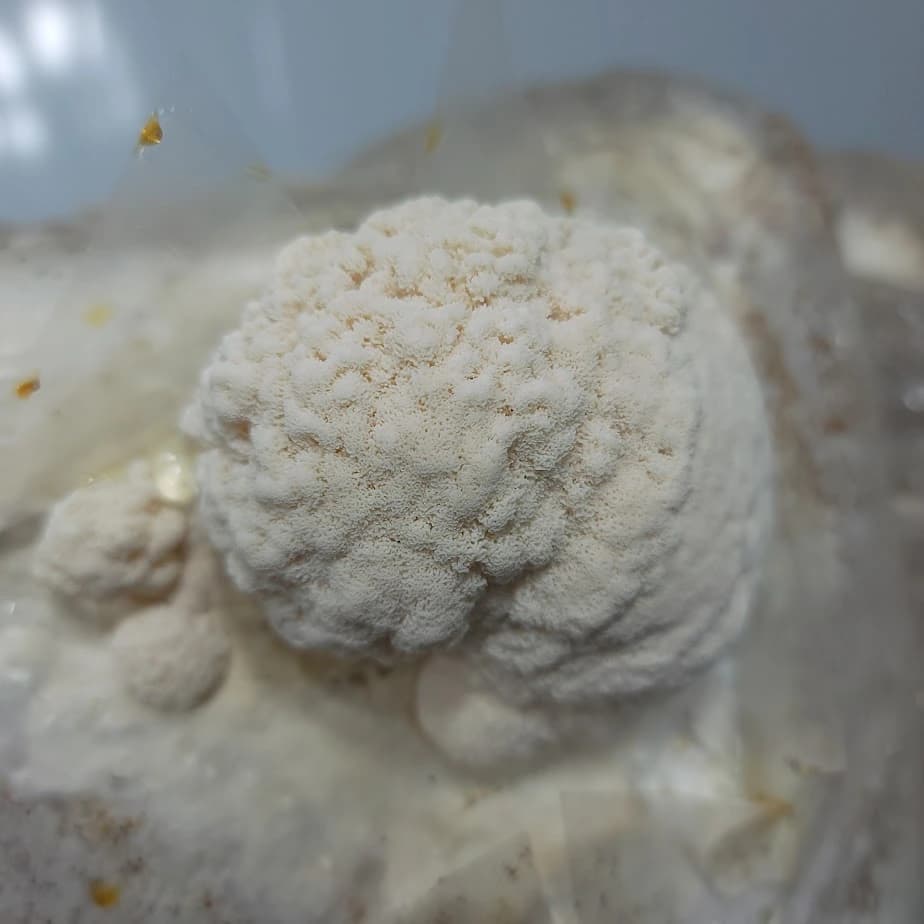
Lion's mane is the most humidity-sensitive gourmet species commonly grown at home, and drying out is the number one reason beginners fail with it. The distinctive cascading spines that make lion's mane so appealing are also extremely prone to dehydration because they create enormous surface area relative to the mushroom's volume.
Signs of drying:
- Yellowing or browning spines — Healthy spines are bright white; discoloration means moisture stress
- Stunted growth — The cluster stops expanding and the spines become brittle
- Cracked or hardened surface — The outer layer dries into a tough shell while the interior stays soft
Prevention strategies:
- Maintain ninety to ninety-five percent relative humidity — Lion's mane needs the upper end of the humidity range, higher than most species
- Use an automated humidifier — Manual misting alone often cannot keep humidity consistent enough for lion's mane
- Mist around the mushroom, not directly on it — Water droplets sitting on spines can cause yellowing and bacterial issues
- Reduce airflow near the cluster — While FAE is necessary, direct airflow across the fruiting body accelerates moisture loss
Position lion's mane blocks near the humidifier output in your Martha tent or grow tent, where humidity is highest and most stable. A humidity controller set to ninety percent with a narrow deadband ensures the humidifier runs frequently enough to prevent drying.
Shiitake blocks undergo a unique maturation process called browning where the white mycelium surface develops a dark brown, leathery skin before the block is ready to fruit. This brown layer is called the mycelial crust or primordia-forming zone, and it is essential for healthy shiitake production.
What browning looks like:
- The bright white colonized surface gradually darkens to tan, then chocolate brown
- The surface develops a firm, slightly bumpy texture
- The process takes two to four weeks after full colonization and cannot be rushed
- Brown spots called popcorning may appear first, then spread across the entire surface
Why browning matters:
- The brown crust protects the block from contamination and moisture loss during the long fruiting cycle
- It signals that the mycelium has fully matured and accumulated enough energy reserves to produce fruit bodies
- Blocks fruited before browning produce weak, sparse flushes and are more susceptible to green mold
How to encourage browning:
- Remove the block from its bag after full colonization and place it in a humid area with indirect light and moderate airflow
- Maintain seventy to eighty percent humidity during browning — lower than fruiting humidity
- Be patient — Attempting to force fruiting by cold-shocking an un-browned block will disappoint
Once the entire surface is uniformly brown, the block is ready for a cold-water soak to initiate the first flush.
King oyster stem thickness is primarily controlled by temperature and CO2 levels, giving growers a remarkable degree of influence over the final shape and market value of their harvest. Unlike regular oyster mushrooms where the cap is the prize, king oyster value comes from thick, meaty stems.
Temperature effects on morphology:
- Lower temperatures (fifty to fifty-eight degrees Fahrenheit) — Produce thicker, denser stems with smaller caps. This is the commercial standard for premium king oyster
- Higher temperatures (sixty-five to seventy-five degrees) — Produce thinner stems with larger, more open caps. The mushrooms look more like regular oysters
- The ideal commercial temperature is fifty-five to sixty degrees for maximum stem diameter
CO2 effects:
- Higher CO2 (2,000 to 3,000 ppm) — Encourages thick stem growth and suppresses cap expansion
- Lower CO2 (below 1,000 ppm) — Promotes cap development at the expense of stem thickness
- This is the opposite of regular oysters, which need low CO2 for proper cap formation
Practical application:
- Fruit king oyster in a more sealed environment than regular oysters
- Reduce fan run times compared to your oyster schedule
- Use a cooler fruiting area — a basement or cooled room is ideal
The combination of cold temperature and moderate CO2 produces the thick, cylindrical king oyster stems that command premium prices at farmers markets and restaurants.
Reishi is uniquely responsive to CO2 levels, producing dramatically different growth forms depending on the air quality in your fruiting space. This makes it one of the most morphologically variable species in cultivation, and growers can intentionally manipulate CO2 to produce the form they want.
CO2 and reishi morphology:
- High CO2 (above 2,000 ppm) — Produces antler-like formations: elongated, finger-shaped growths without a cap. These antler forms are prized for their concentrated triterpene content and dramatic appearance
- Low CO2 (below 1,000 ppm) — Produces the classic conk or shelf form with a flat, kidney-shaped cap featuring the distinctive lacquered reddish-brown surface
- Intermediate CO2 (1,000 to 2,000 ppm) — Creates hybrid forms with partial cap development on elongated bases
Practical implications:
- For antler reishi — Keep your fruiting chamber sealed with minimal ventilation. A monotub with holes plugged works well
- For conk reishi — Provide aggressive fresh air exchange, similar to what oyster mushrooms need
- For medicinal extracts — Antler form is often preferred because it has higher bioactive compound density by weight
Most beginners accidentally produce antler reishi because they do not provide enough ventilation. If you want the classic shelf mushroom shape with the beautiful lacquered cap, prioritize FAE as strongly as you would for oyster mushrooms.
Pink oyster mushrooms cannot fruit in cold weather — they are a tropical species with a strict minimum temperature requirement of about sixty-five degrees Fahrenheit. Below this threshold, the mycelium goes dormant and will not produce pins regardless of humidity, light, or other conditions. This is not a problem you can solve with better technique.
Pink oyster temperature requirements:
- Optimal fruiting range — Seventy-five to eighty-five degrees Fahrenheit
- Minimum fruiting temperature — Sixty-five degrees, and even at this threshold, growth is slow and yields are poor
- Mycelium death — Prolonged exposure below fifty degrees can kill pink oyster mycelium entirely, unlike cold-hardy species that simply go dormant
What to do instead during cold months:
- Switch to cold-tolerant species — Blue oyster fruits aggressively down to forty-five degrees and fills the same culinary niche
- Use a heated space — If you have a warm room that stays above seventy degrees, pink oyster can fruit year-round indoors
- Heat your fruiting chamber — A small seedling heat mat under a monotub or a space heater with a thermostat in a grow tent can maintain tropical temperatures
Many growers rotate species seasonally: pink oyster in summer, blue oyster in winter. This takes advantage of each species' natural temperature preference and reduces energy costs. Trying to force pink oyster in a cold room wastes spawn and substrate.
Chestnut mushrooms (Pholiota adiposa) grow significantly slower than oyster mushrooms during colonization, and rushing them into fruiting conditions before they are ready is one of the most common mistakes new chestnut growers make. Understanding why they are slower helps you manage expectations and avoid problems.
Colonization speed comparison:
- Oyster mushrooms — Fully colonize a five-pound block in ten to fourteen days with aggressive, fast-spreading mycelium
- Chestnut mushrooms — Take three to five weeks to fully colonize the same block, with finer, slower-growing mycelium
Why chestnuts are slower:
- Less aggressive mycelium — Chestnut mycelium grows in a more delicate, thread-like pattern compared to the ropey, rhizomorphic growth of oysters
- Higher contamination vulnerability — The slower colonization speed gives competitors a wider window to establish, making sterile technique more critical
- Substrate preferences — Chestnuts perform best on supplemented hardwood sawdust with specific moisture content, and they are less adaptable than oysters
Best practices for chestnut colonization:
- Be patient — Do not initiate fruiting until the block is one hundred percent colonized with no uncolonized patches
- Maintain slightly warmer colonization temperatures (seventy-five to eighty degrees) to speed growth
- Use higher spawn rates (fifteen to twenty percent) to compensate for slower colonization speed
The wait is worth it — chestnut mushrooms have a rich, nutty flavor and satisfying texture that many growers consider superior to oysters.
Turkey tail (Trametes versicolor) is one of the easiest medicinal mushrooms to fruit, requiring conditions similar to oyster mushrooms but with more patience during the slower development process. Turkey tail produces thin, colorful bracket fungi rather than the fleshy mushrooms most growers are used to.
Fruiting conditions for turkey tail:
- Temperature — Sixty to seventy-five degrees Fahrenheit, very flexible and tolerant of swings
- Humidity — Eighty to ninety percent, slightly lower than gourmet species
- FAE — Moderate fresh air exchange; turkey tail is not as CO2-sensitive as oyster mushrooms
- Light — Indirect light helps develop the characteristic color banding on the caps
Key differences from gourmet species:
- Growth is slow — Turkey tail brackets develop over two to four weeks, much slower than the five-to-seven-day sprint of oyster mushrooms
- Thin, tough fruit bodies — These are medicinal mushrooms meant for tea or extraction, not eating fresh
- Beautiful zonation — The concentric color bands that make turkey tail visually distinctive develop best with consistent light and airflow
Best substrates:
- Supplemented hardwood sawdust blocks work well indoors
- Outdoor logs are the easiest approach — inoculate hardwood logs and let them fruit naturally in a shady spot
Turkey tail is an excellent beginner medicinal mushroom project because it is forgiving, beautiful, and produces for years on outdoor logs.
Each mushroom species has an optimal fruiting temperature range, and knowing these ranges helps you plan which species to grow based on your available climate control. Growing species outside their preferred range leads to poor yields, abnormal morphology, or complete failure to pin.
Fruiting temperature ranges by species:
- Pink oyster — 75-85F (24-29C). Strictly tropical, will not fruit below 65F
- Yellow oyster — 70-85F (21-29C). Another warm-weather species
- King oyster — 55-65F (13-18C). Prefers cool conditions for thick stems
- Blue oyster — 45-65F (7-18C). The most cold-tolerant oyster variety
- Pearl oyster — 55-75F (13-24C). The most versatile oyster for temperature range
- Shiitake — 55-70F (13-21C). Prefers cool conditions, cold-shock initiates fruiting
- Lion's mane — 60-75F (16-24C). Moderate temperature needs but demanding on humidity
- Maitake — 55-65F (13-18C). Cool temperatures and long development times
- Reishi — 70-85F (21-29C). Warm-loving like pink oyster
- Chestnut — 55-65F (13-18C). Similar range to king oyster
- Enoki — 40-50F (4-10C). The coldest-fruiting cultivated species
Group species with similar temperature needs together in the same fruiting space. Running warm and cool species side by side forces compromises that reduce yields for both. Seasonal rotation is the smartest strategy for growers without temperature-controlled rooms.
Several popular species fruit well at typical room temperature of sixty-eight to seventy-five degrees Fahrenheit, making them ideal for growers without dedicated cooling equipment. You do not need an air conditioner or a cold basement to produce excellent harvests with the right species selection.
Species that thrive at room temperature:
- Pearl oyster — The most reliable all-around room temperature species, producing well from sixty to seventy-five degrees
- Lion's mane — Fruits beautifully at sixty-five to seventy-five degrees, though it demands high humidity
- Pink oyster — Prefers warmth and fruits explosively at seventy to eighty-five degrees. Perfect for warm apartments
- Yellow oyster — Similar to pink oyster in heat tolerance, thriving at seventy to eighty-five degrees
- Pioppino — Performs well at sixty-five to seventy-five degrees with minimal temperature fussiness
Species that struggle at room temperature:
- King oyster — Needs fifty-five to sixty-five degrees for proper stem development
- Enoki — Requires forty to fifty degrees for the classic thin, elongated form
- Blue oyster — Prefers cooler conditions and may produce leggy growth above seventy degrees
If your home stays between sixty-eight and seventy-four degrees, pearl oyster and lion's mane are your best bets for consistent quality without any cooling equipment. In summer when rooms run warmer, switch to pink or yellow oyster to work with the heat rather than against it.
Fruiting multiple oyster varieties simultaneously is possible but requires compromising on temperature since different oyster species have different thermal preferences. The key is grouping compatible varieties together and using shelf placement strategically.
Oyster variety temperature compatibility:
- Compatible warm group — Pink oyster and yellow oyster both prefer seventy to eighty-five degrees and fruit well side by side
- Compatible cool group — Blue oyster and pearl oyster overlap at fifty-five to sixty-five degrees
- Difficult to combine — Pink oyster (needs above seventy) and blue oyster (prefers below sixty-five) have almost no overlap
Strategies for multi-variety fruiting:
- Use shelf height — Warm air rises, so place pink and yellow oyster on upper shelves and blue oyster on lower shelves in a Martha tent
- Accept compromises — At sixty-eight to seventy-two degrees, pearl oyster performs well, pink oyster fruits adequately, and blue oyster produces but with longer stems
- Stagger timing — Fruit cool-weather varieties in fall and winter, warm-weather varieties in spring and summer
All oyster varieties share similar requirements for:
- High FAE — CO2 below 800 ppm for proper cap development
- High humidity — 85-95% relative humidity
- Moderate light — 12 hours of indirect light
The simplest approach is to pick two or three varieties with overlapping temperature ranges and accept minor morphological differences from growing each slightly outside its ideal.
A casing layer is a thin covering of non-nutritive material applied over colonized substrate to create a microclimate that triggers pinning. Some species have evolved to fruit only when they detect a specific moisture and gas exchange gradient above the substrate surface, which a casing layer provides.
Species that require or strongly benefit from casing:
- Button mushrooms (Agaricus bisporus) — Absolutely require a casing layer and will not fruit without one. This applies to cremini and portobello as well
- Maitake (hen of the woods) — Strongly benefits from a casing layer for even pinset
- Wine cap (king stropharia) — Fruits best with a casing or mulch covering
- Pioppino — Pin formation improves significantly with a casing layer
Species that do not need casing:
- Oyster mushrooms — Fruit readily from exposed substrate surfaces
- Shiitake — Fruit from browned block surfaces without casing
- Lion's mane — Fruits from openings in the bag or exposed block faces
What the casing layer does:
- Maintains a humidity gradient — The wet casing material keeps the surface consistently moist
- Creates a CO2 pocket — A thin gas layer between casing and substrate triggers primordia formation
- Provides a physical barrier — Prevents the substrate surface from drying and cracking
Typical casing materials include peat moss and vermiculite mixed with hydrated lime, or coconut coir blended with vermiculite. The casing should be pH-adjusted to around 7.5 to 8.0 and moistened to field capacity.
Each mushroom species has specific visual cues that indicate the optimal harvest window, and learning these cues is one of the most important skills for maximizing quality and shelf life. Harvesting too early sacrifices weight; harvesting too late sacrifices quality and releases excessive spores.
Harvest indicators by species:
- Oyster mushrooms — Harvest when cap edges are still slightly curled downward. Once edges flatten or turn upward, the mushroom is past prime and releasing spores heavily
- Shiitake — Pick when the cap is seventy to eighty percent open and the partial veil beneath is just beginning to tear away from the stem
- Lion's mane — Harvest when spines are one-quarter to one-half inch long and still bright white. Yellowing or browning spines indicate the mushroom is overmature
- King oyster — Ready when the cap just begins to flatten from its convex shape. The stem should be firm and white
- Maitake — Harvest the entire cluster when individual fan-shaped caps are still tightly overlapping and edges are firm
- Reishi — Harvest conks when the white growing edge stops advancing and the cap surface begins to release brown spore powder
- Chestnut — Pick when caps are still convex and the partial veil is just breaking
The universal rule: when in doubt, harvest early. An underripe mushroom is still delicious and stores well. An overripe mushroom is past its best texture, releases spores that coat your grow space, and has shorter shelf life.
The number of flushes a species produces depends on genetics, substrate nutrition, and growing conditions, but some species are consistently more productive over time than others. Understanding flush potential helps you plan substrate preparation and set realistic yield expectations.
Flush production by species:
- Oyster mushrooms — Three to five flushes from supplemented sawdust blocks, with the first flush producing forty to fifty percent of total yield. The most prolific flusher overall
- Shiitake — Three to six flushes from hardwood blocks, often producing over a period of months with rest periods between flushes. Cold-shocking between flushes improves performance
- Button mushroom — Four to six flushes from composted substrate, with commercial farms typically harvesting three to four before composting
- Lion's mane — Two to three flushes, with a significant yield drop after the first flush
- King oyster — Two to three flushes with notable size reduction in later flushes
- Maitake — One to two flushes, with the first being the primary harvest
- Reishi — One to two flushes of conks, but can produce for months as a single growing conk
To maximize flush count:
- Rehydrate blocks by soaking in cold water for six to twelve hours between flushes
- Maintain consistent environmental conditions throughout the entire production cycle
- Use properly supplemented substrates that provide enough nutrition for multiple rounds of fruit body production
Shiitake on logs are the ultimate long-term producer, fruiting seasonally for three to seven years from a single inoculated log.
Staggering your block production schedule is the key to continuous mushroom harvests rather than feast-or-famine cycles. By starting new blocks at regular intervals, you ensure that blocks at every stage of development are always in your pipeline.
Staggering strategy:
- Determine your harvest cycle — Most species go from inoculation to first harvest in four to eight weeks, with each flush lasting five to ten days
- Start new blocks every one to two weeks — This creates an overlapping production schedule where some blocks are colonizing while others are fruiting
- Track everything — Label each block with inoculation date, species, and expected fruiting window
Example schedule for oyster mushrooms:
- Week 1 — Inoculate batch A (four to six blocks)
- Week 3 — Inoculate batch B while batch A colonizes
- Week 5 — Inoculate batch C, move batch A to fruiting, batch B colonizes
- Week 7 — Harvest batch A flush one, move batch B to fruiting, batch C colonizes
- Ongoing — Continue the rotation with a new batch every two weeks
Scaling considerations:
- For personal use — Two to four blocks staggered every two weeks provides steady weekly harvests
- For farmers market sales — Eight to sixteen blocks staggered weekly ensures enough product for a consistent market presence
The biggest mistake new growers make is preparing all their blocks at once, leading to a massive harvest followed by weeks of waiting. Staggering takes the same total effort but distributes it evenly for a more rewarding and manageable production rhythm.
Each oyster mushroom variety has distinct temperature preferences that determine when and where you can grow it successfully. While all oysters share similar humidity, FAE, and light needs, their temperature ranges vary dramatically — from near-freezing tolerance to strictly tropical requirements.
Variety-by-variety fruiting conditions:
- Blue oyster (*P. ostreatus*) — Temperature: 10-18°C (50-65°F). The most cold-tolerant variety, capable of fruiting in unheated garages and basements during winter. Produces dense, blue-gray clusters with excellent flavor. Struggles above 22°C
- Pink oyster (*P. djamor*) — Temperature: 18-30°C (65-86°F). Strictly tropical — mycelium can die below 10°C. Fruits explosively fast in warm conditions, going from pins to harvest in 3-5 days. Perfect for summer growing
- White oyster (*P. ostreatus* white strain) — Temperature: 10-21°C (50-70°F). Similar range to blue oyster but slightly more tolerant of moderate warmth. Produces clean white clusters preferred by some markets
- Black oyster (*P. ostreatus* black strain) — Temperature: 10-18°C (50-65°F). Nearly identical requirements to blue oyster with darker coloring when fruited cool. Color intensity fades in warmer conditions
- King oyster (*P. eryngii*) — Temperature: 10-16°C (50-60°F). Needs the coolest conditions of any oyster for proper thick-stemmed morphology. Higher CO2 (1,500-3,000 ppm) during growth produces the prized meaty stems
All varieties share these requirements:
- Humidity: 85-95% RH
- FAE: Aggressive — CO2 below 800 ppm for all except king oyster
- Light: 12-hour cycle of indirect or ambient light at 50-200 lux
Need more help? Dr. Myco can answer follow-up questions about species-specific fruiting tips based on thousands of real growing experiences.
Ask Dr. Myco