Choosing Your First Grow
15 tips in Getting Started
By Andrew Langevin · Founder, Nature Lion Inc · Contributing author, Mushroomology (Brill, 2026)
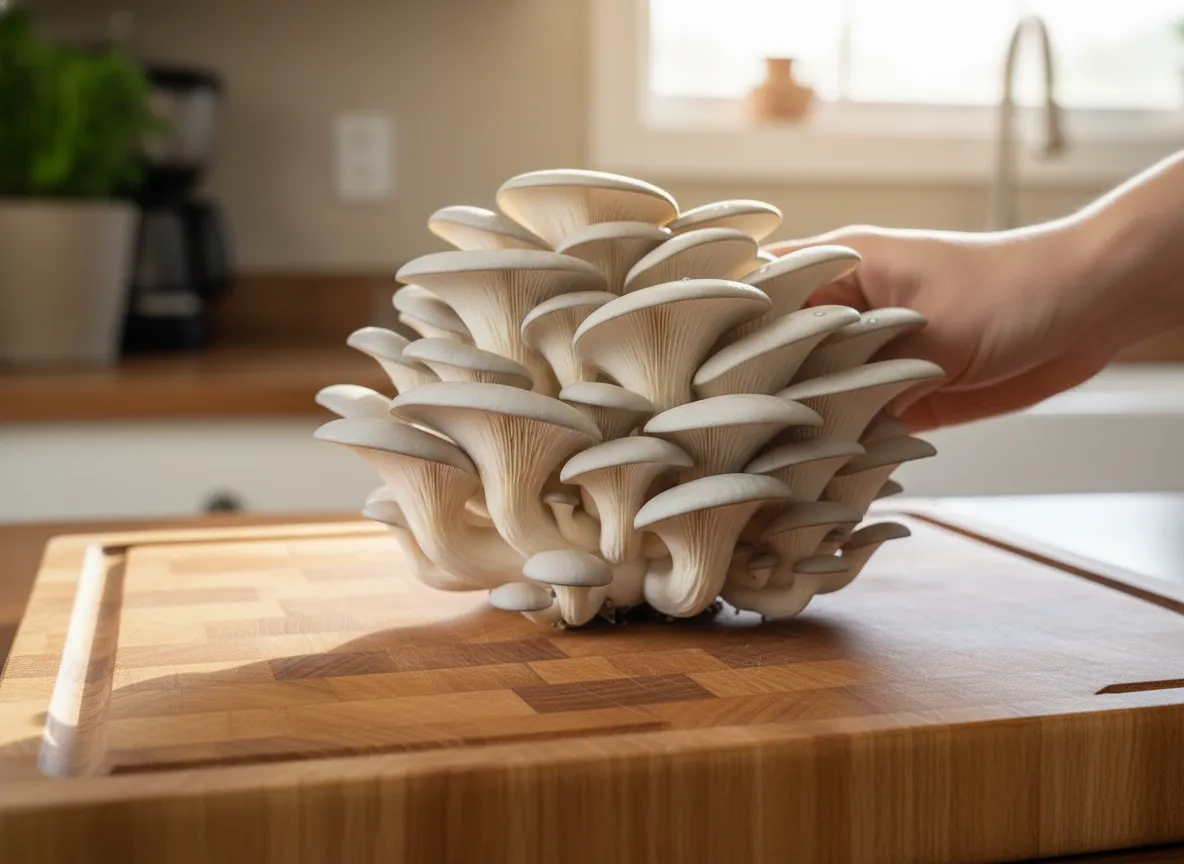
Oyster mushrooms are widely considered the easiest mushroom for beginners to grow. They are aggressive colonizers, meaning the mycelium spreads quickly and can outcompete many common contaminants that trip up new growers. They fruit over a wide temperature range, tolerate imperfect conditions, and grow on an enormous variety of substrates.
Great oyster varieties for beginners:
- Blue oyster — tolerates cooler conditions well
- Pink oyster — grows the fastest but prefers warmer temperatures
- Pearl oyster — reliable and versatile
Beyond oysters, shiitake and lion's mane are also good second-grow choices once you have one successful harvest under your belt. Shiitake are a bit more particular about substrate and fruiting conditions, and lion's mane needs high humidity, but both are well within reach for a motivated beginner.
If you want the absolute lowest-effort first experience, start with a ready-made oyster mushroom grow kit — they arrive fully colonized and usually fruit within a week or two of opening. Growing oysters from scratch using the bucket technique is the natural next step and teaches you the fundamentals of substrate preparation, spawning, and fruiting management.
It depends on your goals. If you want to see mushrooms growing as quickly as possible with minimal risk of failure, start with a grow kit. Kits arrive fully colonized and ready to fruit — all you do is cut the bag open, mist daily, and harvest within one to three weeks.
If you want to actually learn the craft of mushroom cultivation and understand the full process from start to finish, growing from scratch is more rewarding. Techniques like PF Tek, bucket tek, or Uncle Ben's tek teach you about:
- Substrate preparation
- Sterile technique
- Inoculation and colonization
- Fruiting conditions management
You will make some mistakes along the way, but each one deepens your understanding.
A great middle path is to run a grow kit first while you study and gather supplies for a from-scratch grow. That way you enjoy an early success, see what healthy mycelium and proper fruiting look like up close, and carry that visual reference into your first independent project. Many experienced growers started exactly this way. There is no wrong answer — the best approach is whichever one keeps you excited and learning.
Grow kits are the fastest, lowest-risk way to start growing mushrooms, but they come with trade-offs in cost and learning value.
Pros:
- Beginner-proof — no sterile technique, no special equipment, almost no preparation
- Arrive fully colonized, skipping the riskiest stages (sterilization and inoculation)
- Most kits fruit within one to three weeks for fast, tangible results
- Make great gifts and educational tools for kids
Cons:
- More expensive per pound of mushrooms than growing from scratch (fifteen to thirty dollars for one to two pounds)
- You skip the preparation and colonization process, limiting skill development
- Species selection is limited — mostly oyster, shiitake, or lion's mane
- Short shelf life — should be started soon after arrival since the mycelium is alive and waiting to fruit
For a first experience, the pros far outweigh the cons. If left sitting for weeks, yield and success rates drop, so plan to start your kit promptly after it arrives.
Most mushroom grow kits produce two to three flushes, with some kits capable of four or even five under ideal conditions. A flush is one complete cycle of mushroom production — pins form, grow into mature mushrooms, get harvested, and then the mycelium rests before starting again.
Typical yield pattern:
- First flush — the largest and most vigorous, often producing 50 to 70 percent of the kit's total yield
- Second flush — noticeably smaller
- Third flush and beyond — smaller still, with diminishing returns
Between flushes, the block needs to rest and rehydrate. Most kit instructions tell you to soak the block in water for six to twelve hours after each harvest to replenish lost moisture. Without rehydration, subsequent flushes will be significantly smaller or may not happen at all.
You will know the kit is spent when it stops producing pins after rehydration, the block starts to shrink or crumble, or you see signs of contamination like green mold. At that point, the spent block makes excellent garden compost or can sometimes be buried outdoors where it may surprise you with one more outdoor flush in the right weather conditions.
PF Tek (Psilocybe Fanaticus Technique) is one of the oldest and most well-documented beginner mushroom growing methods. Despite its name, it works for many species including oyster mushrooms, shiitake, and lion's mane.
The basic process:
- Fill half-pint mason jars with a substrate of brown rice flour, vermiculite, and water
- Sterilize the jars in a large pot of boiling water (no pressure cooker required)
- Let them cool, then inoculate through holes in the lids using a spore syringe or liquid culture
- Colonize for two to four weeks in a warm, dark space
- "Birth" the fully colonized cakes — remove them from the jars
- Place cakes in a shotgun fruiting chamber (a plastic storage tote with holes drilled in the sides) on a layer of damp perlite
The perlite maintains humidity, and you fan the chamber several times a day for fresh air exchange. Pins typically appear within a week or two.
PF Tek is popular because it requires minimal equipment, uses inexpensive materials, and has detailed instructions freely available online. It is an excellent way to learn the fundamentals of sterile technique, colonization, and fruiting before moving on to more advanced bulk growing methods.
Bucket tek is a simple, low-cost mushroom growing method that uses a five-gallon bucket filled with pasteurized straw and grain spawn. It is especially popular for oyster mushrooms, which are aggressive enough to colonize straw quickly and fruit through holes drilled in the sides of the bucket.
The basic process:
- Chop straw into short pieces
- Pasteurize by soaking in hot water (around 160 to 180 degrees Fahrenheit) for one to two hours, then drain and cool
- Drill quarter-inch holes in a grid pattern around the bucket, spaced a few inches apart
- Layer pasteurized straw and grain spawn in the bucket — a few inches of straw, a sprinkling of spawn, repeating until full
- Cover with a lid and store in a warm spot for two to three weeks while the mycelium colonizes
- Once fully colonized, move to a fruiting area with good humidity and fresh air
Mushrooms will emerge from the holes in dramatic clusters.
Bucket tek is a favorite among beginners because it skips the need for sterilization and pressure cooking — pasteurization is sufficient for straw. It scales easily, costs very little, and produces impressive yields.
Uncle Ben's tek is a beginner-friendly method that uses pre-cooked rice bags as a pre-sterilized grain substrate, skipping the grain preparation and pressure cooking steps entirely. The factory-sealed rice is already sterile inside.
The basic process:
- Wipe the bag with isopropyl alcohol
- Cut a small corner, inject your spore or liquid culture syringe
- Seal the opening with micropore tape for gas exchange
- Colonize for two to four weeks in a warm, dark space (monitor by feel — colonized areas are firm and solid)
- Once the bag feels fully hard, break it up and mix into a bulk substrate like pasteurized coconut coir in a small plastic tub
- The mixture colonizes for another week, then you introduce fruiting conditions
Uncle Ben's tek gained enormous popularity on online mushroom communities because it has an extremely low barrier to entry:
- No pressure cooker needed
- No grain preparation
- All supplies are available at any grocery store
The trade-off is a somewhat higher contamination rate compared to properly sterilized grain jars, since you are relying on factory sterility and working through a small opening.
Monotub tek is a popular bulk growing method that uses a large plastic storage tote as a self-contained fruiting chamber. It is one of the most productive methods for home growers and works well with many species including oyster mushrooms, shiitake, and lion's mane.
The basic process:
- Start with fully colonized grain spawn
- Mix with a pasteurized or sterilized bulk substrate (coconut coir, straw, hardwood sawdust, or a mix) at a ratio of roughly one part spawn to two to four parts substrate
- Spread the mixture evenly in the tub, seal the lid, and colonize for seven to fourteen days
- For fruiting, either crack the lid slightly or use holes drilled in the sides and stuffed with polyfill to manage fresh air exchange and humidity
A single sixty-six-quart tub can yield several pounds of mushrooms over multiple flushes — significantly more than jar-based methods like PF Tek.
Monotub tek is where many growers settle long-term because it balances productivity with manageable effort. The initial learning curve involves dialing in your fresh air exchange and surface moisture conditions, but once you find the right balance, results are very consistent.
In the mushroom growing community, tek is simply short for technique, and it is used interchangeably with method. There is no formal difference between the two words. When someone says PF Tek, bucket tek, or Uncle Ben's tek, they are describing a specific step-by-step technique for growing mushrooms.
New teks are often named after:
- The person who popularized them (PF Tek was created by a grower known as Psilocybe Fanaticus)
- A key material used in the process (Uncle Ben's tek is named after the rice brand)
Some growers use method for broader categories and tek for more specific procedures, but this distinction is not standardized and varies by community.
When you are researching mushroom growing online, treat tek and method as synonyms. The important thing is to understand what each technique involves — what substrate it uses, what equipment you need, how sterile you need to be, and what species it works best with — rather than worrying about the naming conventions. Every tek is simply a recipe that someone found effective and shared with the community.
Indoor growing gives you complete control over temperature, humidity, light, and fresh air exchange, meaning you can grow year-round regardless of your local climate. Indoor methods include grow kits, PF Tek, monotubs, bucket tek, and fruiting chambers of various sizes. The trade-off is that you need to actively manage the environment and your growing space is limited by your home setup.
Outdoor growing is more hands-off but depends on your local climate and seasonal weather. Common outdoor methods include:
- Growing shiitake on hardwood logs
- Cultivating wine cap mushrooms in wood chip garden beds
- Planting oyster mushrooms on straw bales or in buried buckets
Outdoor grows benefit from natural humidity, rainfall, and temperature fluctuations that can trigger fruiting without your intervention. However, you also contend with pests, unpredictable weather, and seasonal limitations.
Most beginners start indoors because it is more predictable and educational — you can see every stage of the process up close and learn to troubleshoot problems in real time. Outdoor growing is a wonderful complement once you are comfortable with the basics, and many growers do both. Some species like wine caps and chicken of the woods grow much better outdoors than in.
Several mushroom species thrive in cold climates and are excellent choices for outdoor cultivation in northern regions. You can enjoy productive outdoor grows even with harsh winters if you choose the right species.
Top cold-climate species:
- Shiitake — fruits best with cool nighttime temperatures; logs can produce for three to five years once fully colonized
- Blue oyster — cold-tolerant and fruits aggressively in temperatures as low as 45 degrees Fahrenheit, ideal for spring and fall
- Wine cap (king stropharia) — incredibly hardy in wood chip beds or garden paths; survives freezing winters and fruits the following spring and summer
- Nameko — Japanese species that does well on hardwood logs in cool, humid conditions
- Lion's mane — can be grown on logs outdoors in temperate climates, though it prefers some protection from wind and direct sun
For the coldest climates, timing is key. Inoculate logs in early spring as temperatures begin to rise, and they will colonize through the summer. First fruiting often happens in the fall of the same year or the following spring.
Burying spent indoor grow blocks in a shady garden bed is another low-effort technique — mycelium that survived indoors sometimes fruits outdoors when conditions align, giving you a bonus harvest with zero additional work.
For indoor growing, there is no wrong season because you control the environment. You can start a grow kit, PF Tek, or monotub any time of year. That said, many growers find fall and winter ideal for indoor cultivation because the naturally cooler temperatures in most homes are closer to the fruiting range for popular species (55 to 70 degrees Fahrenheit). Summer can make temperature control harder, since high temperatures promote contamination and can stress the mycelium.
For outdoor growing, timing matters much more:
- Early spring is the best time to inoculate logs and outdoor beds in most temperate climates
- Rising temperatures and spring rains create ideal colonization conditions
- Avoid inoculating logs in the heat of summer — mycelium can struggle before competing molds take hold
- In very cold climates, wait until after the last hard frost
If you are brand new and eager to start immediately, the answer is simple: start now, indoors, with whatever season it is. Order a grow kit or gather PF Tek supplies and begin learning. Mushroom growing is a year-round hobby once you are set up indoors, and waiting for the perfect season only delays your learning.
Blue oyster mushrooms (*Pleurotus ostreatus var. columbinus*) are the fastest cultivated species, capable of going from inoculation to harvest in as little as 3-4 weeks under ideal conditions. Here is how common species compare:
Speed rankings (inoculation to first harvest):
- Blue oyster: 3-4 weeks — fastest colonizer, aggressive, extremely forgiving
- Pink oyster: 3-4 weeks — equally fast but requires warm temperatures (18-30°C)
- Golden oyster: 4-5 weeks — fast but slightly slower than blue
- Pearl oyster: 4-5 weeks — reliable, moderate speed
- Lion's mane: 5-7 weeks — moderate colonization, fast fruiting once triggered
- King oyster: 6-8 weeks — slow, deliberate colonizer
- Shiitake (blocks): 8-12 weeks — includes mandatory browning phase
- Shiitake (logs): 6-12 months — long colonization on natural logs
- Reishi: 3-6 months — fast colonization but very slow fruiting body development
- Maitake: 4-8 months — extremely slow colonization
What affects speed:
- Spawn rate — higher spawn rates (15-20%) accelerate colonization significantly
- Temperature — colonization is fastest at the upper end of each species' range
- Substrate nutrition — supplemented substrates colonize faster than plain straw or sawdust
- Grain type — liquid culture to grain is faster than spore syringe to grain
If you want mushrooms as fast as possible, grow blue oyster on pasteurized straw using bucket tek with a high spawn rate. You can realistically go from ordering spawn to eating mushrooms in under a month.
Yes, but it is a multi-step process that takes 2-4 months and requires intermediate skills. A spore print is not like a seed you can plant directly — it contains millions of microscopic spores that must first germinate on agar, grow into viable mycelium, transfer to grain spawn, and then inoculate your final substrate.
The complete path from spore print to mushrooms:
- Spore print to agar (2-4 weeks) — scrape a tiny amount of spore material from the print onto a sterile agar plate using sterile technique in a SAB or flow hood. Spores germinate and produce mycelium in 5-14 days.
- Clean up on agar (1-3 weeks) — transfer the cleanest mycelium to fresh agar plates 2-3 times to isolate contamination-free growth. This step is critical because spore prints are not sterile.
- Agar to grain spawn (2-4 weeks) — cut a wedge of clean agar culture and place it in a sterilized jar of grain. The mycelium colonizes the grain over 2-4 weeks.
- Grain spawn to substrate (2-6 weeks) — mix colonized grain into your bulk substrate (straw, sawdust, etc.) and fruit as normal.
Why this is harder than buying spawn:
- Multi-spore genetics — spore prints produce variable offspring because spores must find compatible mating partners. Results are unpredictable compared to cloned cultures
- Contamination risk — every transfer step is an opportunity for contamination
- Equipment needed — you need agar plates, a SAB or flow hood, a pressure cooker, and grain jars — far more than a basic grow kit requires
For beginners, purchasing grain spawn is far more practical. Spore prints are best used by intermediate growers who want to work with genetics, isolate strains, or preserve cultures from wild specimens for future use.
Not all grow kits are created equal, and choosing the right one can mean the difference between a rewarding first harvest and a frustrating failure. Here is what to evaluate before buying.
Species selection — match your environment:
- Blue oyster — best all-around beginner kit, fruits at 10-21°C (50-70°F), perfect for most homes
- Pink oyster — needs warmth, 18-30°C (65-85°F) — ideal if your home runs warm or in summer
- Lion's mane — needs high humidity (90%+) — harder for beginners without a humidity tent
- Shiitake — slower (4-6 weeks to first fruit from kit) but excellent flavor
Quality indicators:
- Fully colonized substrate — the block should be completely white with dense mycelium throughout. Partially colonized kits are more susceptible to contamination
- Filter patch on the bag — indicates the kit was produced with proper gas exchange during colonization
- Shipped cold — quality suppliers ship with cold packs in warm weather to prevent heat stress
- Clear instructions — reputable companies include detailed growing guides specific to the species
Red flags to avoid:
- Kits with visible green, blue, or black patches — this is contamination, return immediately
- Extremely cheap kits ($5-10) — often poorly colonized or made with inferior substrate
- Kits that have been sitting on store shelves for weeks — check for a production date
- Kits requiring you to add water and wait weeks before anything happens — quality kits are ready to fruit immediately
Kit size matters:
- Small kits (1-2 lbs) produce 1-3 small harvests — good for trying a species
- Large kits (5-10 lbs) produce 2-4 lbs total across 3-5 flushes — better value per pound
After your first kit, consider graduating to bucket tek or making your own fruiting blocks — the per-pound cost drops dramatically when you prepare your own substrate.
Put these tips into context
Identify what stage and physical format you are actually starting with.
Compare mushroom grow kit typesNeed more help? Dr. Myco can answer follow-up questions about choosing your first grow based on thousands of real growing experiences.
Ask Dr. Myco