Mushroom Growing for Beginners — Start Here
By Andrew Langevin · Founder, Nature Lion Inc · Contributing author, Mushroomology (Brill, 2026)
Updated May 2026 · 25 min read
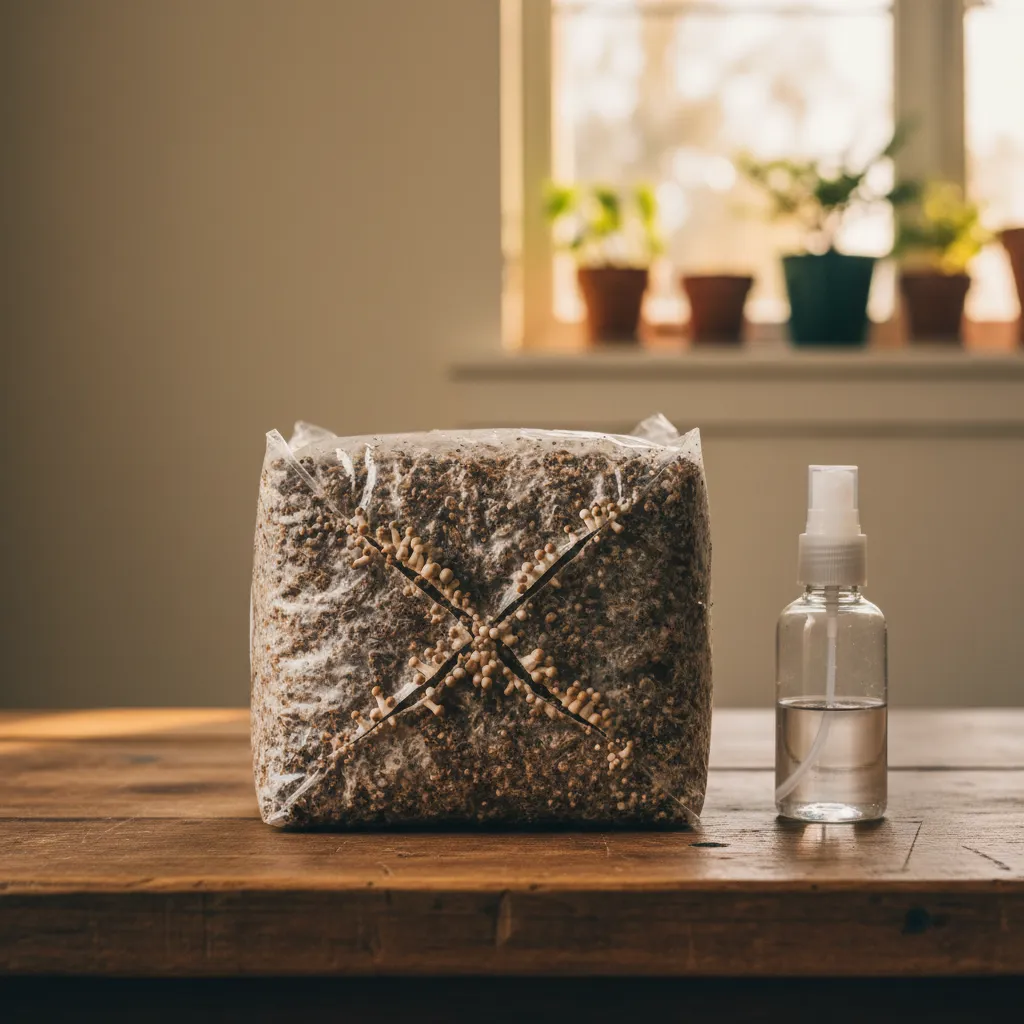
If you have never grown a mushroom in your life, you are in the right place. This guide is written for you — someone who is curious, maybe a little overwhelmed by the jargon, and wants a clear, honest roadmap from “I want to try this” to “I just harvested my first cluster.” No previous experience required. No science degree needed. Just a willingness to learn and about twenty dollars.
Growing mushrooms is genuinely one of the easiest food-producing hobbies you can pick up. Unlike vegetable gardening, you do not need a yard, sunlight, or even a windowsill. A closet, a plastic tub, and a spray bottle can produce gourmet mushrooms that sell for $15–40 per kilogram at farmers markets — all within two to four weeks. This guide draws from the 1,000+ growing tips in our knowledge base and from hands-on experience running a CFIA-licensed cultivation facility.
Read this page from top to bottom for the full picture, or jump to any section that interests you using the table of contents below. By the end, you will know exactly which species to grow, which method to use, what to buy, and how to get from inoculation to harvest without losing your first batch to contamination.
5 Reasons to Grow Your Own Mushrooms
Before you spend a penny, here is why mushroom growing is worth your time. These are the reasons that keep people hooked long after their first harvest.
1. You Can Grow Gourmet Food for Pennies
A single grow kit costing $25 produces 300–600g of fresh oyster mushrooms — the same amount that would cost $8–15 at a grocery store. Once you move to bulk methods like monotubs, your cost per kilogram drops below $2. You get restaurant-quality lion's mane, oysters, and shiitake without the restaurant price tag.
2. No Yard, No Sunlight, No Problem
Mushrooms are not plants. They do not photosynthesize and do not need light for energy. You can grow them in a closet, under your bed, in a bathroom, or on a kitchen counter. A single monotub takes up less space than a microwave. If you live in an apartment with zero outdoor space, mushrooms are the best food you can produce. Our small-space growing guide has layouts for every living situation.
3. It Is Fascinatingly Fast
Vegetables take months. Fruit trees take years. Mushrooms? You can go from opening a grow kit to harvesting a cluster in seven days. Even a full DIY grow takes only three to five weeks. Watching mycelium colonize a jar — a silent white web slowly conquering every grain — is strangely mesmerizing. And then one morning, pins appear overnight and double in size every 24 hours. There is nothing else like it in the food-growing world.
4. Freshness You Cannot Buy
Grocery-store mushrooms are often 7–14 days old by the time you buy them. Home-grown mushrooms harvested minutes before cooking have a completely different texture, flavour, and aroma. Lion's mane is firm and lobster-like instead of spongy. Oyster mushrooms are silky and fragrant instead of slimy. Once you taste the difference, you will not go back.
5. It Can Grow Into Something Bigger
Many people start with a single grow kit and end up selling at farmers markets within a year. Specialty mushrooms command $15–40 per kilogram, and demand consistently outstrips supply in most regions. A spare bedroom with ten monotubs can generate $500–2,000 per month. Even if you never sell a single mushroom, the skills you learn — sterile technique, substrate chemistry, environmental control — transfer to gardening, fermentation, and food science. See our commercial growing guide for the business side.
The 3 Easiest Mushroom Species for Beginners
Not all mushrooms are equally forgiving. Some need precise temperatures, sterile lab conditions, or months of patience. The three species below are battle-tested beginner choices that colonize fast, tolerate mistakes, and reward you with impressive harvests.
Blue Oyster Mushrooms — Your Best First Grow
Blue oyster mushrooms (Pleurotus ostreatus var. columbinus) are the undisputed champion for beginners, and there are four reasons why. First, they colonize aggressively — their mycelium spreads so fast that it outcompetes most contaminants before they can take hold. Second, they tolerate a huge temperature range (10–24°C for fruiting), so you do not need climate control. Third, they grow on almost anything cellulose-based: straw, cardboard, coffee grounds, sawdust, even old cotton t-shirts. Fourth, they fruit in dramatic clusters that look gorgeous and taste amazing with just butter and garlic.
Expect:First harvest in 3–5 weeks from inoculation. Yield of 200–400g per kilogram of dry substrate. Three to five flushes per block. Blue oysters are the species most grow kits are made from.
Lion's Mane — The Impressive Second Grow
Lion's mane (Hericium erinaceus) looks nothing like a typical mushroom — it produces cascading white spines that resemble a shaggy icicle. It has a mild, lobster-like flavour and a meaty texture that impresses even people who think they do not like mushrooms. Research suggests it may support nerve growth factor production, making it one of the most popular functional mushrooms.
Expect:First harvest in 4–6 weeks. Prefers supplemented hardwood sawdust (10–20% wheat bran). Fruits best at 16–21°C with humidity above 90%. Slightly more demanding than oysters, but well within a beginner's reach on a second or third grow.
Pink Oyster Mushrooms — Tropical, Fast, and Stunning
Pink oysters (Pleurotus djamor) are the fastest-growing mushroom you can cultivate. In warm conditions (18–30°C), they can go from pins to harvest in as little as four days. Their vivid pink colour fades when cooked but looks spectacular in the growing chamber. They taste meaty and slightly smoky, often compared to bacon when crisped in a pan.
Expect:First harvest in 2–4 weeks from inoculation. Grows on straw, sawdust, or coffee grounds. The trade-off is that pink oysters are tropical — they will not fruit below 18°C, and they have a very short shelf life (eat them the day you harvest). Perfect if your home runs warm.
| Species | Difficulty | Fruiting Temp | Time to Harvest | Best Substrate |
|---|---|---|---|---|
| Blue Oyster | Beginner | 10–24°C | 3–5 weeks | Straw, sawdust, coffee |
| Lion's Mane | Beginner+ | 16–21°C | 4–6 weeks | Supplemented hardwood |
| Pink Oyster | Beginner | 18–30°C | 2–4 weeks | Straw, sawdust, coffee |
Explore all species in our complete species growing guide, including shiitake, king oyster, reishi, and rare gourmet varieties.
3 Paths to Start Growing Mushrooms (by Budget)
There is no single right way to start. Your best entry point depends on how much you want to spend, how much you want to learn, and how patient you are. Here are the three most popular paths, ordered from simplest to most capable.
Path 1: Ready-Made Grow Kit
$20–40A grow kit is a pre-colonized block of substrate that arrives ready to fruit. You cut a hole in the bag, mist it with water twice a day, and harvest mushrooms in 7–14 days. There is literally nothing that can go wrong unless you forget to mist. This is the path if you want to see mushrooms grow before committing to any equipment.
Pros: Zero equipment, zero skills, instant gratification. Cons:Limited to 1–2 flushes, highest cost per gram, you do not learn the full process. Choosing your first grow kit →
Path 2: Uncle Ben's Tek
$30–60Uncle Ben's Tek is a clever shortcut that uses pre-cooked rice bags (the kind you buy at the grocery store) as a pre-sterilized grain spawn. You inject a spore syringe into the bag through a small hole, let it colonize for 2–4 weeks, then mix the colonized rice with a bulk substrate (usually CVG — coco coir, vermiculite, and gypsum) in a plastic storage tote. This method skips the most intimidating step for beginners: pressure cooking.
Pros: No pressure cooker needed, teaches the full colonization cycle, cheap. Cons: Higher contamination rate than sterilized grain, limited to species that tolerate less-clean spawn.
Path 3: Full Monotub Setup
$100–200The monotub is the workhorse of home mushroom cultivation. A large plastic tote (50–100 litres) with ventilation holes, filled with colonized bulk substrate. This path requires a pressure cooker for sterilizing grain spawn, mason jars, bulk substrate materials, and a still air box for clean inoculation. It takes more effort to set up, but you get full control over the process and dramatically higher yields: 500–900g per flush across 3–5 flushes.
Pros: Highest yields, lowest cost per gram long-term, teaches every skill. Cons: Higher upfront cost, steeper learning curve, more ways to fail. Full supply list →
Our recommendation: start with Path 1 (grow kit) to see the magic, then move to Path 2 or 3 for your second grow. You will learn more from one hands-on experience than from reading ten guides.
Minimum Supply Lists for Each Path
Here is exactly what you need to buy for each approach. Nothing more, nothing less.
Grow Kit ($20–40)
- • Mushroom grow kit
- • Spray bottle (fine mist)
- • That's it — seriously
Uncle Ben's ($30–60)
- • 4–6 bags pre-cooked rice
- • Spore syringe ($10–15)
- • Micropore tape
- • Lighter or alcohol lamp
- • 70% isopropyl alcohol
- • Nitrile gloves
- • Plastic storage tote (50L+)
- • Coco coir brick
- • Spray bottle
Monotub ($100–200)
- • Pressure cooker (23-quart)
- • Mason jars (12–24 wide-mouth)
- • Grain (rye or oat, 5kg)
- • Spore syringe or LC
- • Still air box (clear tote)
- • Coco coir + vermiculite + gypsum
- • Large plastic tote (50–100L)
- • Polyfill or micropore tape
- • 70% isopropyl alcohol
- • Nitrile gloves
- • Spray bottle
- • Thermometer / hygrometer
For detailed product recommendations, see our essential supplies guide and budget equipment builds.
Your First Grow Kit Walkthrough — 9 Steps to Harvest
This is the simplest path from zero to mushrooms. If you follow these nine steps, you will have fresh gourmet mushrooms in your kitchen within two weeks. No prior experience needed.
- 1
Choose Your Kit
Order a blue oyster or pink oyster grow kit from a reputable supplier. Look for kits that ship with a fully colonized substrate block (all white, no green or black spots). Blue oysters are the safest bet for a first grow because they tolerate the widest temperature range. Check our kit selection guide for recommendations.
- 2
Pick a Location
Place the kit somewhere with indirect light, stable temperature (15–24°C), and some air circulation. A kitchen counter, bathroom shelf, or laundry room works well. Avoid direct sunlight, heating vents, and drafty windows. You want consistent, mild conditions — think “spring day indoors.”
- 3
Open and Cut the Bag
Follow the kit's instructions (they vary slightly by supplier). Most kits ask you to cut an X-shaped slit or a rectangular window in the bag, exposing the colonized block to fresh air. Some kits have you remove the block entirely and place it in a humidity tent. Wash your hands thoroughly before handling.
- 4
Mist Twice Daily
Using a fine-mist spray bottle, mist the exposed surface of the block 2–3 times per day. The goal is to keep the surface glistening with tiny water droplets, not dripping wet. Mist the air around the block and the inside of the bag, not directly onto emerging pins, which can cause bacterial blotch. Tap water is fine.
- 5
Watch for Pins (Days 3–7)
Within 3–7 days, you will see tiny bumps forming on the exposed surface. These are “pins” — baby mushrooms. They start as small white nubs and grow rapidly. This is the most exciting phase. Do not touch them. Just keep misting. If you do not see pins after 10 days, check that your humidity is high enough and temperature is in range.
- 6
Watch Them Double Daily (Days 5–10)
Mushroom pins can double in size every 24 hours. Oyster mushrooms grow in clusters that fan outward from the slit you cut. Keep misting but also ensure some fresh air reaches the mushrooms — if the stems are growing long and thin with tiny caps, they need more fresh air exchange (FAE). Open the bag wider or fan the area gently once a day.
- 7
Harvest at the Right Moment (Days 7–14)
Harvest oyster mushrooms just before the cap edges flatten out and start to curl upward. At this stage, they are at peak flavour and texture. If you wait too long, the caps will thin out, drop spores (a fine white powder everywhere), and get tougher. To harvest, grip the entire cluster at the base and twist firmly — it should come away cleanly. Use a sharp knife to trim any substrate from the base. See our harvesting guide for species-specific timing.
- 8
Soak for the Second Flush
After harvesting, the block needs to rehydrate before it can fruit again. Submerge the block in cold water for 6–12 hours (some growers use a pot or bucket with a plate on top to keep it submerged). Then drain, return it to its fruiting position, and resume misting. Most kits produce 2–3 flushes, with each one yielding a bit less than the last. Use our yield calculator to estimate your total harvest.
- 9
Cook and Enjoy
Fresh home-grown mushrooms should be eaten within 3–5 days (store in a paper bag in the fridge, not plastic). Sauté oyster mushrooms in butter over high heat until the edges are crispy — they should not be crowded in the pan or they will steam instead of fry. Season with salt, garlic, and a squeeze of lemon. You will immediately taste why home-grown mushrooms are worth the effort. For long-term storage, see our post-harvest and preservation guide.
5 Common Beginner Mistakes (and How to Avoid Them)
Every new grower makes at least one of these mistakes. Knowing them in advance saves you time, money, and frustration.
1. Opening Containers During Colonization
The number one beginner mistake. During the colonization phase, your mycelium is silently spreading through the substrate. Every time you open the lid to “check on it,” you introduce airborne contaminants — mold spores, bacteria, and yeasts that are invisible to the naked eye. Leave it sealed until colonization is complete. Check progress by looking through the sides or bottom of the container. Learn more in our contamination prevention guide.
2. Misting Directly onto Pins
Spraying water directly onto developing mushroom pins causes bacterial blotch — brown, slimy spots that ruin the harvest. Instead, mist the walls of the fruiting chamber and the air above the mushrooms. The goal is high ambient humidity (85–95%), not wet mushrooms. Think of it like morning dew, not a rainstorm.
3. Not Enough Fresh Air Exchange (FAE)
Mushrooms breathe oxygen and exhale CO₂, just like you. If CO₂ builds up in your fruiting chamber, the mushrooms grow long, spindly stems with tiny caps — they are literally reaching for oxygen. You will also see “fuzzy feet” (white fuzz at the base of stems). The fix: increase ventilation by adding more holes, fanning the chamber 2–3 times daily, or switching to micropore tape. Learn more in our fruiting chamber setup guide.
4. Growing Too Warm
Beginners often keep their grows too warm, thinking warmer is better. While warmth speeds colonization, temperatures above 27°C dramatically increase contamination risk. Mold and bacteria love heat even more than mushroom mycelium does. Most gourmet species fruit best at 16–24°C. If your home runs warmer, grow in a basement, closet, or air-conditioned room. Use a digital thermometer and hygrometer — they cost under $10 and are the most valuable tool in your kit.
5. Harvesting Too Late
Many beginners wait until their mushrooms are as big as possible, thinking bigger equals better. But mushrooms harvested after spore drop (when the caps flatten and curl upward) have tougher texture, less flavour, and a shorter shelf life. For oyster mushrooms, harvest when the edges of the caps are still slightly curved downward. For lion's mane, harvest when the spines are 1–2 cm long but before they start to yellow. Our harvesting guide has photos of the ideal harvest window for each species.
More troubleshooting: Common growing problems · Contamination identification · Rescue and recovery
Key Terms Explained (No Jargon Left Behind)
Mushroom growing has its own vocabulary. Here are the eight terms you will encounter most often, explained in plain English.
Mycelium
The vegetative body of a fungus — a network of white, thread-like filaments that spread through substrate, breaking it down for nutrition. Think of mycelium as the “roots and body” of the fungus. The mushroom itself is just the fruiting body (like an apple on a tree).
Substrate
The material that mushrooms grow on and decompose for nutrition. Common substrates include straw, hardwood sawdust, coco coir mixes, coffee grounds, and cardboard. Different species prefer different substrates. See our substrate fundamentals guide.
Spawn
Mushroom mycelium growing on a carrier material (usually grain like rye berries, oats, or millet). Spawn is the “seed” you mix into your substrate to colonize it. You can buy ready-made spawn or learn to make your own grain spawn.
Colonization
The phase where mycelium spreads through the substrate, building its network and breaking down organic matter. During colonization, the container stays sealed in a warm (21–27°C), dark place. It looks like white fuzz slowly taking over everything. This phase takes 1–4 weeks depending on species and spawn rate.
Fruiting
The phase where the mycelium produces mushrooms. Triggered by changing the environment: more fresh air, higher humidity, lower temperature, and indirect light. These changes mimic autumn conditions and tell the fungus it is time to reproduce.
Flush
One complete cycle of mushroom production from a substrate block. After harvesting, you soak the block in water and it produces another flush. Most substrates produce 3–5 flushes, with each yielding progressively less. The first flush is always the largest.
Contamination
Unwanted organisms (mold, bacteria, yeast) growing on your substrate, competing with or killing the mushroom mycelium. Green mold (Trichoderma) is the most common. Prevention through cleanliness is always easier than treatment. See our contamination ID guide.
FAE (Fresh Air Exchange)
The process of replacing stale, CO₂-rich air in your fruiting chamber with fresh, oxygen-rich air. Mushrooms need FAE to develop proper cap shape. Too little FAE causes fuzzy feet and spindly stems. Managed through ventilation holes, fans, or simply opening the lid periodically.
For a deeper glossary, see our before you begin guide and myths and misconceptions.
Cost Comparison: How Much Does Each Method Really Cost?
Here is an honest breakdown of what you will spend with each method, including the ongoing cost per batch. The upfront investment matters, but the real question is: how much does each gram of mushrooms cost you over time?
| Method | Upfront Cost | Per Batch Cost | Yield per Batch | Cost per kg |
|---|---|---|---|---|
| Grow Kit | $0 | $25–40 | 300–600g | $40–130 |
| Uncle Ben's Tek | $15–25 | $15–30 | 500–1,200g | $12–60 |
| Monotub | $100–200 | $10–20 | 1,500–4,000g | $2–13 |
| Bucket Tek | $20–40 | $8–15 | 800–2,000g | $4–19 |
As you can see, grow kits are the most expensive way to grow mushrooms per gram, but they have zero upfront cost and zero risk of failure. The monotub is the most economical long-term option, but requires the biggest upfront investment. Most beginners start with a kit, then move to monotubs or bucket tek once they are hooked.
Use our yield calculator and bulk substrate calculator to estimate your own costs precisely.
Growing Mushrooms in an Apartment
You do not need a house, a garage, or even a backyard to grow mushrooms. An apartment is actually an ideal mushroom growing environment because you have climate control, consistent temperatures, and protection from outdoor contaminants. Here is how to make it work in a small space.
Best Spots in an Apartment
Closet: Ideal for colonization (dark, warm, undisturbed). Also works for fruiting if you add a small fan and leave the door cracked. Bathroom:Naturally humid — perfect for fruiting. Place your grow on a shelf away from the shower spray. Kitchen counter: Great for grow kits. The ambient light and air circulation are usually perfect. Under the bed: Works for colonization but not fruiting (too dark and stagnant).
Smell and Mess
Healthy mushroom grows have almost no smell — at most, a faint earthy or mushroomy aroma. If your grow smells sour, sweet, or off-putting, that is a sign of contamination. The main mess is spore drop (a fine white powder) if you harvest late. Keep a tray under your fruiting container to catch drips.
Space Requirements
A grow kit takes up less space than a shoebox. A single monotub is about the size of a large storage bin (60 × 40 × 35 cm). You can stack two monotubs on a shelf for double the production. A bucket tek setup sits on a balcony. The point is: you need far less space than you think.
Read our full apartment and small-space growing guide for layouts, humidity hacks, and roommate-friendly tips.
What Comes After Your First Grow
Your first successful harvest is just the beginning. Once you have seen the magic of mycelium, you will want to go deeper. Here is the natural progression most growers follow.
- 1
Try a Different Species
If you started with blue oysters, try lion's mane or shiitake. Each species teaches you something new about substrate preferences, fruiting conditions, and timing.
- 2
Learn to Make Your Own Spawn
Making grain spawn is the skill that unlocks independence. Instead of buying spawn for each grow, you sterilize your own grain, inoculate from a liquid culture or agar plate, and expand endlessly. This requires a pressure cooker and a still air box, but it drops your cost per grow dramatically.
- 3
Explore Agar Work
Agar culture is where mushroom growing becomes truly scientific. You grow mycelium on nutrient agar in petri dishes, isolate the strongest genetics, identify contamination early, and clone mushrooms from tissue samples. It is the gateway to consistent, high-performing grows.
- 4
Scale Up or Start Selling
Once you can reliably produce clean, high-yielding grows, you have the skills to either scale up with multiple monotubs, move to grow bags, or start selling at farmers markets. The jump from hobby to side income is smaller than you think. See our commercial growing guide and advanced techniques.
Free Mushroom Growing Calculators
We built a suite of free, interactive mushroom growing calculators to take the guesswork out of substrate recipes, spawn ratios, and equipment sizing. Use them alongside this guide to dial in your first grow.
CVG Calculator
Coco coir, vermiculite, gypsum ratios
Spawn Ratio
Spawn-to-substrate by weight
Yield Estimator
Predict total harvest weight
Bulk Substrate
Scale recipes to your tub
Liquid Culture
Sugar-to-water ratios
PC Timing
Sterilization time by volume
Grow Room
Size FAE and humidity
Fresh/Dry Converter
Fresh-to-dry weights
10 Beginner FAQ — Your Questions Answered
What is the easiest mushroom to grow for beginners?
Blue oyster mushrooms (Pleurotus ostreatus var. columbinus) are the easiest species for beginners. They colonize in 7–14 days, tolerate temperatures from 10–24°C, resist contamination better than other species, and grow on almost any cellulose-based material. Our oyster mushroom guide covers everything from inoculation to harvest.
How much does it cost to start growing mushrooms?
You can start for as little as $20–40 with a ready-made grow kit. A DIY Uncle Ben's Tek setup costs $30–60. A full monotub setup with pressure cooker runs $100–200. See the cost comparison table above for a detailed per-gram breakdown.
Can you grow mushrooms in an apartment?
Absolutely. Mushrooms are the ideal apartment crop because they need no sunlight, minimal space, and thrive in closets, under beds, or in bathrooms. A single monotub fits on a shelf and produces 500–900g per flush. See our apartment growing section for setup tips.
Do mushrooms need sunlight to grow?
No. Mushrooms do not photosynthesize and do not need sunlight for energy. Most species benefit from a few hours of indirect ambient light to develop proper cap shape, but a dark closet with a small LED is more than enough. See our myths and misconceptions page for more common misunderstandings.
How long does it take to grow mushrooms from start to harvest?
With a grow kit, 7–14 days. Uncle Ben's Tek takes 4–6 weeks. A monotub grow takes 3–5 weeks for oyster mushrooms. The timeline depends on your method and species. Each substrate block then produces 3–5 additional flushes over the following weeks.
Can you grow mushrooms without a pressure cooker?
Yes. Grow kits, Uncle Ben's Tek, and Bucket Tek all skip pressure cooking. Oyster mushrooms grow on straw pasteurized with boiling water at 65–82°C for 60–90 minutes. A pressure cooker is only essential when you move to sterilized grain spawn and supplemented substrates.
What is the best method for beginners?
Start with a ready-made grow kit for your very first grow. It requires zero equipment and produces mushrooms in 1–2 weeks. For your second grow, try Uncle Ben's Tek (teaches inoculation without needing a pressure cooker). Then graduate to a monotub for full control and higher yields. See our three paths comparison above.
What do I need to buy to start growing mushrooms?
For a grow kit, you only need the kit ($20–40) and a spray bottle. For Uncle Ben's Tek, add pre-cooked rice bags, a spore syringe, micropore tape, and a plastic tote. For a monotub, add a pressure cooker, mason jars, grain, and bulk substrate materials. See our complete supply lists for each path.
Is it hard to grow mushrooms at home?
Growing mushrooms is easier than growing most vegetables. With a grow kit, it is as simple as misting a bag twice a day. The main skill you learn over time is cleanliness during inoculation to prevent contamination. Once you understand sterile technique, humidity, and fresh air exchange, mushroom growing becomes straightforward and predictable.
What are the most common beginner mushroom growing mistakes?
The five most common are: opening containers during colonization (introduces contamination), misting mushrooms directly (causes bacterial blotch), not enough fresh air exchange (causes fuzzy feet), growing too warm above 27°C (promotes mold), and harvesting too late (reduces quality). See our detailed mistakes section above for prevention tips.
Stuck on Something? Ask Dr. Myco
Every grow is different, and sometimes you hit a wall that no guide can anticipate. Dr. Myco is our AI mycology assistant trained on decades of cultivation knowledge. Ask it anything — from “is this green patch contamination?” to “why aren't my oysters pinning?” — and get a specific, actionable answer in seconds. It is like having a mycologist on call 24/7.
Ask Dr. Myco — Free AI MycologistAbout the Author
Andrew Langevin is the founder of Nature Lion Inc, a CFIA-licensed mushroom cultivation facility that has served over 50,000 customers. He is a contributing author of Mushroomology (Brill, 2026), one of the most comprehensive academic references on applied mycology. His work on this site distills hands-on production experience and a knowledge base of 32,000+ community knowledge chunks into actionable tips for growers at every level.
Read full bio →Ready to Dive Deeper?
This beginner guide is your starting point. Explore our other comprehensive guides and topic hubs to deepen your knowledge.
How to Grow Mushrooms
Complete guide covering every method in depth
Mushroom Cultivation Guide
Advanced techniques and commercial growing
Mushroom Identification
Learn to identify species safely
Foraging Guide
Find wild mushrooms responsibly
Getting Started Hub
All beginner tips in one place
Species Guide
Grow guides for 20+ species
Teks and Methods
Step-by-step growing techniques
Substrate Guide
Recipes, preparation, and science
Contamination Hub
Identify, prevent, and fix problems
Fruiting Guide
Environment, pinning, and harvesting
Equipment Guide
Builds, reviews, and recommendations
All Calculators
Free tools to dial in your grows