Mushroom Identification Guide — How to Identify Wild Mushrooms Safely
By Andrew Langevin · Founder, Nature Lion Inc · Contributing author, Mushroomology (Brill, 2026)
Updated May 2026 · 30 min read
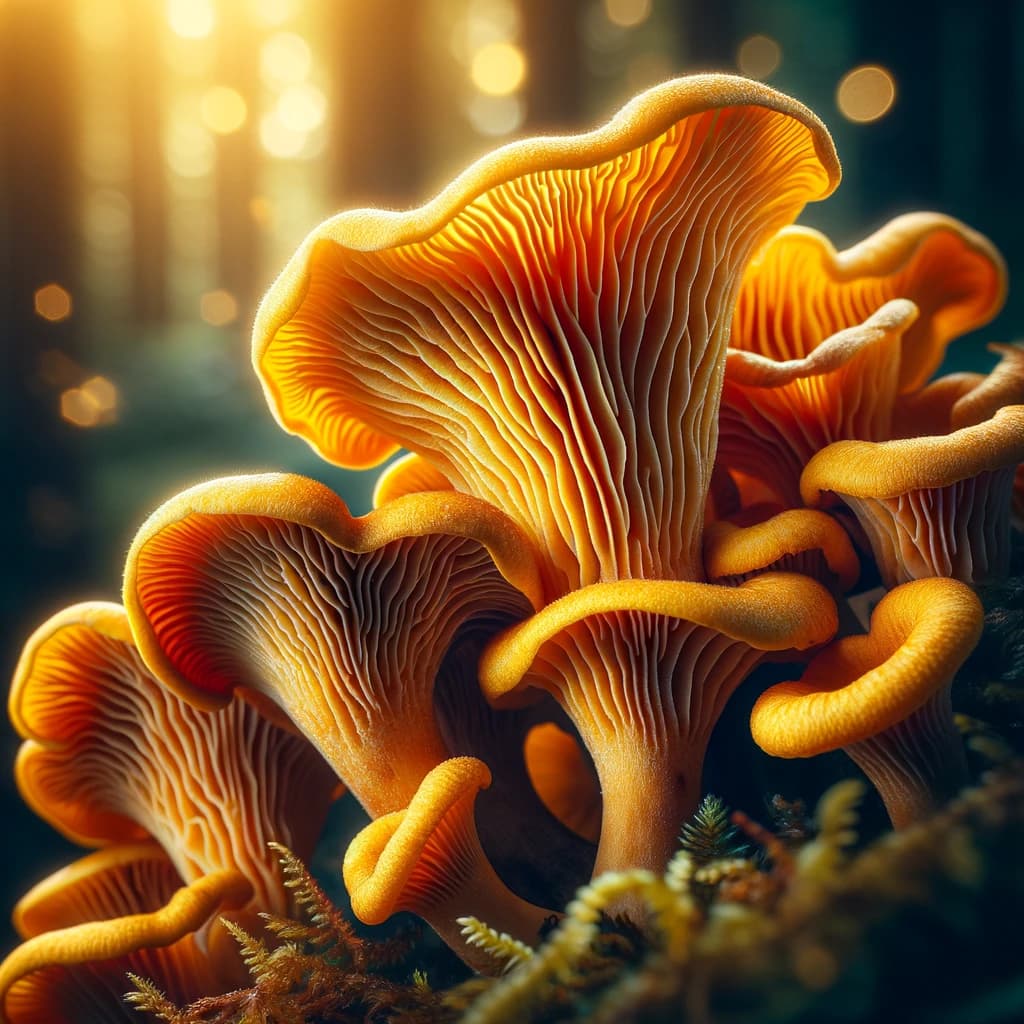
Mushroom identification is a skill that combines careful observation, anatomical knowledge, and an unwavering respect for what you do not yet know. There are over 14,000 described mushroom species in North America alone, and hundreds more are discovered every year. Among them are some of the finest foods on the planet — and some of the deadliest poisons in the natural world.
The single most important principle of mushroom identification is this: no single feature identifies a mushroom. Cap color, size, gill shape, habitat, season, smell, taste, spore print color — each one is a clue, and you need multiple clues pointing in the same direction before you can make a confident identification. Relying on a single feature — “it has a brown cap” or “it was growing on a log” — is how poisonings happen.
This guide teaches you the systematic approach that experienced mycologists and foragers use to identify wild mushrooms safely. It covers mushroom anatomy, spore printing, the most important edible and deadly species, dangerous look-alike pairs, and habitat-based identification strategies. Whether you are a curious beginner or a seasoned forager refining your skills, this resource will sharpen your eye and strengthen your confidence in the field.
The Anatomy of a Mushroom — What to Look At
Before you can identify a mushroom, you need to know what you are looking at. Every part of a mushroom's anatomy carries identification information, and overlooking any one feature can mean the difference between a correct ID and a dangerous mistake. Here are the key anatomical features you should examine every time you encounter a wild mushroom.
Cap (Pileus)
The cap is the first thing you notice, but it is also one of the most variable features — cap color changes with age, moisture, and sun exposure, so never use color alone for identification. Instead, examine shape (convex, flat, funnel-shaped, bell-shaped, umbonate), size (measure diameter in centimeters), surface texture (smooth, scaly, slimy, dry, fibrous, warty), and margin (inrolled, wavy, striate, appendiculate with veil remnants). Note whether the cap is hygrophanous— changing color as it dries — which is a useful feature in genera like Psathyrella and Hygrocybe. Warts or patches on the cap surface may be remnants of a universal veil, which is a critical anatomical feature in the Amanita genus.
Gills, Pores, and Teeth (Hymenium)
The underside of the cap carries the spore-producing surface, and its structure is one of the most powerful identification tools available. Most mushrooms have gills (thin blade-like structures radiating from the stem), but boletes have pores (tiny tubes that create a sponge-like surface), hedgehog mushrooms have teeth (downward-hanging spines), and chanterelles have false gills (shallow, forking ridges that are part of the cap flesh rather than separate structures). For gilled mushrooms, note attachment to the stem: free (not touching the stem), adnate (broadly attached), adnexed (narrowly attached), or decurrent (running down the stem). Check spacing (crowded versus distant), color(which often changes as spores mature), and whether gills are brittle or waxy. The death cap has free white gills that never change color — a critical distinguishing feature from the pink-then-brown gills of a field mushroom.
Stem (Stipe)
The stem holds two of the most safety-critical features in all of mushroom identification. First, the ring (annulus)— a skirt-like membrane around the upper stem, which is the remnant of the partial veil that protected the developing gills. Many edible mushrooms have rings, but so do deadly species. Second, and far more important, the volva— a cup-like or sack-like structure at the very base of the stem. The volva is the remnant of the universal veil that enclosed the entire developing mushroom, and it is the signature feature of the Amanita genus, which contains both the death cap and the destroying angel. Always dig up the base of the stem — the volva is often buried underground and invisible from above. Beyond the ring and volva, note whether the stem is hollow or solid (slice it lengthwise), its surface texture (smooth, fibrous, scaly, reticulate), and any color changes when handled or cut. Boletes with fine net-like patterning (reticulation) on the stem are often in the prized Boletus edulis complex.
Spore Print
The spore print is arguably the single most reliable macro identification feature. Spore color is consistent within a species and does not change with age, moisture, or habitat. The major spore print color groups are: white to cream (many Amanita, Russula, oyster, chanterelle), pink (Entoloma, Pluteus), brown to rusty-brown (Galerina, Cortinarius, Agrocybe), purple-brown to dark brown (Agaricus, Stropharia), and black (Coprinopsis, Panaeolus). A white spore print on a white-gilled mushroom growing from soil with a volva at the base narrows your identification to the potentially deadly Amanita genus.
Flesh, Smell, and Bruising Reactions
When you slice a mushroom open, note the color of the fleshand whether it changes when exposed to air. Some boletes stain blue instantly when cut — a dramatic reaction caused by oxidation of pulvinic acid derivatives. Lactarius and Lactifluus species exude latex (a milky fluid) when the gills are broken, and the color of this latex is a key identification feature. Smell is remarkably useful: chanterelles smell of apricots, Tricholoma matsutake has a spicy cinnamon-like aroma, Clitocybe nuda (blewit) smells of frozen orange juice, and Russula xerampelina (shrimp russula) smells distinctly of shellfish. Foul or chemical odors are often (but not always) a warning sign. Always note texture as well — is the flesh brittle (like chalk, typical of Russula), fibrous (like string cheese), or gelatinous? Each of these characteristics helps narrow your identification, and together they form the morphological fingerprint of each species.
How to Make a Spore Print
A spore print is one of the most reliable and accessible identification tools available to any forager. It requires no equipment beyond a piece of paper and a bowl, yet it provides information that can separate edible species from deadly look-alikes in a way that no amount of visual inspection can match.
- Remove the stem. Cut or snap the stem flush with the cap so the cap can sit flat with the gill surface facing down.
- Place on half-white, half-black paper. Use a sheet of paper that is white on one side and dark on the other (or place a white sheet next to a black one). This ensures you can see both light-colored and dark-colored spore deposits.
- Cover with a bowl or glass. This prevents air currents from disturbing the spore deposit and maintains humidity, which encourages spore release.
- Wait 4–12 hours. Most species produce a clear print within 4–6 hours. Leaving it overnight ensures a robust deposit. Older or drier specimens may need the full 12 hours.
- Carefully lift the cap and examine the print. Note the color against both the white and dark backgrounds. A white print is invisible on white paper but obvious on dark. A dark brown print may appear black on dark paper but reveals its true color on white.
Spore print color can separate deadly Galerina marginata (rusty-brown) from edible honey mushrooms (white) — two species that grow on the same substrate and can look nearly identical. It also distinguishes edible field mushrooms (dark purple-brown spore print) from death caps (white spore print). For every unknown mushroom you encounter, a spore print should be your first laboratory step. Our complete identification guide covers additional spore analysis techniques including KOH reactions and microscopy basics.
The 10 Most Important Edible Species to Learn First
These ten species are widely considered the safest and most rewarding starting points for new foragers. Each one has distinctive identification features, and most have few or no dangerous look-alikes. Master these before attempting more challenging genera like Agaricus, Russula, or Cortinarius.
1. Chicken of the Woods
Laetiporus sulphureus
Bright orange and yellow overlapping shelf brackets growing on dead or dying hardwoods, especially oak. Pored underside, no gills. Virtually unmistakable — no dangerous look-alikes. The safest beginner species. Young, tender edges are best for cooking. Avoid specimens growing on eucalyptus, yew, or conifers, which may cause gastrointestinal upset.
Confidence: High — safe beginner species
2. Giant Puffball
Calvatia gigantea
Large white sphere (often soccer-ball-sized or larger) found in meadows, parks, and forest edges. Must be pure white inside with no internal structure visible — any discoloration, yellowing, or visible outline of a developing mushroom means it is too old or is actually a young Amanita egg. Always slice puffballs in half vertically before consuming.
Confidence: High — verify by slicing open
3. Chanterelle
Cantharellus spp.
Golden to egg-yolk colored mushroom with false gills (shallow, forking ridges) rather than true blade-like gills. Grows singly or in scattered groups from the ground in hardwood and conifer forests. A distinctive apricot-like smell confirms the identification. Look-alike: jack o'lantern mushroom grows in dense clusters on buried wood and has true gills.
Confidence: Medium — learn the jack o'lantern distinction
4. Morel
Morchella spp.
Distinctive honeycomb-patterned capwith pits and ridges, attached directly to the stem. The defining test: slice vertically from top to bottom — a true morel is completely hollow inside from cap to stem base. Found in spring near dead elms, ash, burn sites, and old orchards. Look-alike: false morel has a brain-like cap and is cotton-filled, not hollow.
Confidence: High — slice open to verify hollow interior
5. Oyster Mushroom
Pleurotus ostreatus
Fan-shaped or shelf-like caps growing in overlapping clusters on dead hardwood. White to grey-tan color with decurrent gills (running down the short stem or attachment point). White spore print. Mild, pleasant smell. Found year-round in mild climates, especially on beech, poplar, and cottonwood. The angel wing (Pleurocybella porrigens) is a thin-fleshed look-alike that grows on conifer wood — avoid white shelf mushrooms on conifers.
Confidence: Medium — confirm with spore print and habitat
6. Hen of the Woods (Maitake)
Grifola frondosa
Large rosette of overlapping grey-brown fan-shaped caps growing at the base of living oaks. Pored underside (not gills). Can reach 20 kg or more. Returns to the same tree annually, making it one of the most predictable foraging targets. Look-alike: Berkeley's polypore (Bondarzewia berkeleyi) is similar but has large cream-colored shelves rather than small overlapping rosettes.
Confidence: High — location at oak base is definitive
7. Lion's Mane
Hericium erinaceus
A spectacular white globular mass of cascading icicle-like teeth. No cap, no gills, no stem in the traditional sense. Grows on wounds and hollows of dead or dying hardwood, especially oak and beech. No dangerous look-alikes — other Hericiumspecies (bear's head tooth, coral tooth) are all edible. Yellowing indicates the specimen is past its prime.
Confidence: High — unmistakable appearance
8. Hedgehog Mushroom
Hydnum repandum
Pale orange-tan cap with a smooth to slightly bumpy surface. The defining feature: tiny spines (teeth) underneath instead of gills or pores. Grows in mixed forests, often in mossy ground. Has no toxic look-alikes — the tooth structure is unique among terrestrial mushrooms. Mild nutty flavor, firm texture. An excellent beginner species.
Confidence: High — teeth are unique and unmistakable
9. Black Trumpet
Craterellus cornucopioides
Dark brown to black, thin-fleshed funnel-shaped mushroom with a smooth or slightly wrinkled underside (no gills, pores, or teeth). Grows in clusters in hardwood forests, especially under oak and beech. Called the “trumpet of death” not because it is toxic (it is delicious) but because it is nearly invisible on the dark forest floor. No dangerous look-alikes. Rich, smoky flavor prized in French cuisine.
Confidence: High — unique shape and color
10. King Bolete (Porcini)
Boletus edulis
Brown cap atop a fat, bulbous white stem with distinctive net-like reticulation (raised mesh pattern) on the upper stem. Underside is a spongy pore surface (not gills) that starts white and ages to yellow-green. Found under spruce, pine, and birch at elevation. Some blue-staining boletes in other genera are toxic — stick to specimens with white reticulation and no blue staining when starting out. Requires experience.
Confidence: Medium — verify stem reticulation and pore color
The 5 Deadliest Mushrooms — Learn These First
You must learn the species that can kill you before you learn the species you want to eat. This is not optional — it is the foundation of safe foraging. These five species are responsible for the overwhelming majority of fatal and serious mushroom poisonings worldwide. Memorize their features, and learn to recognize them in every growth stage and condition.
Death Cap — Amanita phalloides
The deadliest mushroom on Earth, responsible for over 90% of fatal mushroom poisonings globally. Contains amatoxins that cause irreversible liver and kidney destruction. Symptoms are delayed 6–12 hours after ingestion, by which time organ damage has begun. Identification features: greenish-yellow to olive cap (but color varies), white free gills that never change color, a prominent skirt-like ring on the stem, and — critically — a bulbous base enclosed in a cup-shaped volva that is often buried underground. White spore print. Based on 31 verified Mushroom Observer observations, A. phalloides is concentrated in the San Francisco Bay Area, introduced with European oaks, and now spreading across coastal California.
Destroying Angel — Amanita bisporigera / A. virosa
A pure white Amanita containing the same amatoxins as the death cap with identical delayed-onset liver destruction. Everything is white — cap, gills, stem, ring, and volva — making it easily confused with edible white mushrooms including young button mushrooms, horse mushrooms, and meadow mushrooms. Grows in hardwood and mixed forests from midsummer through fall. Based on 23 verified Mushroom Observer observations, it is found primarily in eastern North America. The critical test: dig up the base. If there is a volva, leave it alone.
Deadly Galerina — Galerina marginata
A small, inconspicuous brown mushroom growing on dead wood — and the most widespread deadly species in the Northern Hemisphere. Contains the same amatoxins as the death cap but in a package that looks completely harmless. With 44 verified Mushroom Observer observations, it is the most frequently documented deadly species in the database. Closely resembles edible honey mushrooms and velvet shank, which also grow on dead wood. Key distinction: deadly Galerina produces a rusty-brown spore print, while honey mushrooms print white. Always take a spore print when collecting small brown mushrooms from dead wood.
False Morel — Gyromitra esculenta
A spring-fruiting species with a reddish-brown, brain-like cap(not honeycomb) that is irregularly wrinkled and lobed. Despite its species name meaning “edible,” it contains gyromitrin, which the body converts to monomethylhydrazine — a rocket fuel component — causing liver failure and potential death. Confused with true morels, but the differences are clear: true morels are honeycomb-patterned and completely hollow; false morels are brain-like with chambered, cottony interior tissue. Always slice vertically to check.
Deadly Webcap — Cortinarius rubellus
A tawny-orange to reddish-brown mushroom found under conifers in Europe and parts of North America. Contains orellanine, a toxin that causes delayed kidney failure — symptoms may not appear for 3–14 days after ingestion, by which time the kidneys may be irreversibly damaged. There is no antidote; victims often require lifelong dialysis or kidney transplant. The deadly webcap resembles several edible Cortinarius species and some chanterelle-colored mushrooms, making genus knowledge essential. As a rule, beginners should avoid collecting any brown-capped mushroom with cobwebby veil remnants (the “cortina” that gives the genus its name).
Common Look-Alike Pairs — How to Tell Them Apart
The most dangerous moments in mushroom identification occur when an edible species closely resembles a toxic one. These five look-alike pairs are responsible for the majority of misidentification incidents. Study these comparisons until the differences become second nature.
| Edible Species | Dangerous Look-Alike | Key Difference #1 | Key Difference #2 | Key Difference #3 |
|---|---|---|---|---|
| Chanterelle | Jack O'Lantern (Omphalotus) | False ridges (chanterelle) vs true blade gills (jack) | Grows from soil (chanterelle) vs on buried wood in dense clusters (jack) | Apricot scent (chanterelle) vs no distinct smell (jack) |
| True Morel | False Morel (Gyromitra) | Honeycomb cap with pits and ridges (true) vs brain-like wrinkled cap (false) | Completely hollow when sliced (true) vs cottony chambered interior (false) | Cap fused to stem (true) vs cap attached only at top (false) |
| Hen of the Woods | Berkeley's Polypore (Bondarzewia) | Small grey-brown overlapping rosettes (hen) vs large cream-white shelves (Berkeley's) | At base of living oak (hen) vs at base of various hardwoods (Berkeley's) | Tender, fragrant (hen) vs tough, bitter when mature (Berkeley's) |
| Field Mushroom (Agaricus) | Death Cap (Amanita phalloides) | Gills pink then brown (field) vs gills always white (death cap) | No volva at base (field) vs prominent cup-like volva (death cap) | Dark purple-brown spore print (field) vs white spore print (death cap) |
| Honey Mushroom (Armillaria) | Deadly Galerina (G. marginata) | Grows in dense clusters (honey) vs usually solitary or few (Galerina) | White spore print (honey) vs rusty-brown spore print (Galerina) | Robust ring on stem (honey) vs thin, fragile, often absent ring (Galerina) |
In every one of these pairs, a spore print resolves the ambiguity. This is why experienced foragers consider spore printing non-negotiable when dealing with any species that has a dangerous look-alike. The five minutes it takes to set up a spore print could save your life.
Identification by Habitat — Where It Grows Matters
Habitat is one of the most powerful tools in mushroom identification. Most mushroom species have strong associations with specific tree species, substrate types, and ecological niches. Before you even look at the mushroom itself, the trees around it and the surface it is growing from have already narrowed your possibilities dramatically.
Oak Forests
Oak is the single most productive tree genus for mushroom diversity. It supports chanterelles, hen of the woods (at the base), chicken of the woods (on dead standing trees), black trumpets (in leaf litter), lion's mane (on wounds), and a wide variety of boletes and Amanita species. If you can only forage in one habitat, choose a mature oak forest.
Birch Forests
Birch associates with a distinctive suite of species: chaga (Inonotus obliquus) growing as a black conk on living trunks, birch polypore (Fomitopsis betulina) on dead birch, fly agaric (Amanita muscaria— toxic, not edible), and birch boletes. Scandinavian and boreal Canadian forests are rich birch territory.
Pine and Spruce Forests
Conifer forests host king boletes (porcini) at elevation, matsutake under old-growth pine in sandy soil, slippery jacks (Suillus), and hedgehog mushrooms. The acidic needle-litter creates conditions that favor mycorrhizal species adapted to low-pH soils. Fire morels fruit prolifically in conifer forests the spring after a wildfire.
Dead Logs and Stumps
Dead wood supports saprotrophic species that break down lignin and cellulose. Look for oyster mushrooms, chicken of the woods, turkey tail, lion's mane, honey mushrooms — and deadly Galerina. Always take a spore print when collecting from dead wood to rule out Galerina.
Grasslands and Meadows
Open grassy areas produce giant puffballs, fairy ring mushrooms (Marasmius oreades), field mushrooms (Agaricus campestris), and horse mushrooms. However, extreme caution is warranted: the destroying angel also grows in grassy areas near trees, and the white Amanita species can appear in meadow edges.
Detailed habitat associations: Tree-mushroom associations guide · Where to find each species
Identification by Season
Season is a powerful filter for narrowing mushroom identification. A mushroom found in April is from a completely different species pool than one found in October, and knowing what fruits when eliminates most possibilities before you even examine the specimen. In temperate Northern Hemisphere regions:
Spring (March–May)
The morel season dominates spring foraging. True morels (Morchella) appear when soil temperatures at 10 cm depth reach 10–16°C. Dryad's saddle (Cerioporus squamosus) appears on dead hardwood with its distinctive scaly cap and cucumber smell. Early oyster mushrooms flush on dead trees. St. George's mushroom (Calocybe gambosa) appears in European grasslands. False morels also fruit in spring — always slice vertically to confirm a hollow interior.
Summer (June–August)
Chanterelles begin fruiting after warm summer rains, especially in hardwood forests. Chicken of the woods peaks on standing dead hardwoods. Boletes appear at elevation in conifer forests. Lobster mushrooms (Hypomyces lactifluorum) parasitize Russula and Lactarius in mixed forests. Summer is also peak season for chicken of the woods across all regions.
Fall (September–November)
Peak season. The widest variety of species fruit simultaneously. Hen of the woods appears at oak bases. Porcini peaks in mountain conifer forests. Black trumpets hide in hardwood leaf litter. Chanterelles continue. Honey mushrooms erupt in massive clusters on dead wood. Giant puffballs appear in meadows. Matsutake fruits under old-growth pine. Fall rains after summer drought trigger the biggest flushes of the year. See our species-by-season calendar for precise timing.
Winter (December–February)
Mild-winter regions still produce. Velvet shank (Flammulina velutipes) fruits through near-freezing temperatures. Oyster mushrooms continue on dead wood. Turkey tail (Trametes versicolor) persists year-round. Chaga can be harvested from birch trunks. In California, the endemic Cantharellus californicuspeaks December through February under coast live oaks — one of the few regions where chanterelle season is in winter rather than fall.
Using Technology for Mushroom ID
Technology has become an increasingly useful tool in mushroom identification, but it must be used with clear-eyed awareness of its limitations. No app, no AI, and no online forum should ever be your sole basis for deciding whether to eat a wild mushroom.
Identification apps like iNaturalist, Picture Mushroom, and Shroomify use computer vision to match photos against databases of known species. They are useful for generating a shortlist of candidate species, but they fail on critical edge cases — including some that are life-or-death. Documented cases exist of apps identifying death caps as edible species. Apps cannot assess spore print color, smell, texture, or the presence of a volva underground.
Mushroom Observer is a citizen-science platform where experienced mycologists verify species observations with photos, habitat data, and microscopy. It is an invaluable verification resource — search for species in your region and compare your specimen against verified observations. Our foraging content draws on verified Mushroom Observer data covering 5,700+ species.
Online forumssuch as Reddit's r/mycology and local mycological society Facebook groups can provide helpful opinions, but treat them as exactly that — opinions from strangers. When consulting any expert, in person or online, provide photos from multiple angles, habitat details, spore print color, and your geographic location. Always verify with multiple sources.
Field Identification Checklist
Every time you encounter a wild mushroom you want to identify, record the following information. Disciplined note-taking is what separates guessing from genuine identification. Bring a notebook, a pen, and your phone camera on every foraging trip.
- 1.Location: GPS coordinates, forest name, nearest trail marker
- 2.Date and time: Note recent weather — days since last rain, temperature range
- 3.Habitat type: Hardwood forest, conifer forest, mixed, meadow, riverbank
- 4.Associated trees: Identify the nearest tree species within 5 meters
- 5.Substrate: Soil, dead wood (log, stump, buried roots), living tree, leaf litter, dung, mulch
- 6.Growth pattern: Solitary, scattered, clustered, in a ring, in a shelf arrangement
- 7.Cap: Diameter (cm), shape, color, surface texture (smooth, scaly, slimy), margin
- 8.Hymenium (underside): Gills, pores, teeth, or smooth. Gill color, attachment, spacing
- 9.Stem: Length, diameter, hollow or solid, ring present, volva present, surface texture
- 10.Spore print color: Take at home on half-white, half-black paper
- 11.Smell: Crush a small piece of cap between your fingers — note any aroma
- 12.Bruising/color changes: Cut the flesh — note any color changes over 15 minutes
- 13.Photos: Minimum 3 angles — cap top, underside showing gills/pores, stem including base
This systematic approach is the same method used by professional mycologists. The more detailed your notes, the more confident your identification will be — and the more useful feedback you will receive if you consult an expert. For more on each of these steps, see our foraging basics and safety guide.
Regional Identification Resources
The best field guides are region-specific, because mushroom diversity varies enormously by geography. A European guide will mislead you in North America, and a Pacific Northwest guide is limited in the eastern US. Here are the most trusted references for major foraging regions:
Eastern North America
Peterson Field Guide to Mushrooms of North America (Baroni) — comprehensive and scientifically rigorous. Mushrooms of the Northeastern United States and Eastern Canada (Bessette et al.) for detailed coverage. National Audubon Society Field Guide to Mushrooms for broader coverage with excellent photography.
Pacific Northwest
Mushrooms of the Pacific Northwest(Trudell & Ammirati) — the definitive regional guide for Washington, Oregon, and British Columbia. Clear descriptions, excellent photographs, and well-organized keys make it the standard reference for PNW foragers.
California & Western US
Mushrooms Demystified(Arora) — the Bible of mushroom identification. Over 2,000 species covered with dichotomous keys and David Arora's famously entertaining writing. Though originally focused on California, it covers much of western North America. All That the Rain Promises and More (Arora) is a compact field companion.
United Kingdom & Europe
Mushrooms and Other Fungi of Great Britain & Europe(Phillips) — the standard UK reference with detailed photographs. The Mushrooms and Toadstools of Britain & North-west Europe (Bon) for France and continental Europe. Collins Fungi Guide (Buczacki et al.) for comprehensive coverage of European species.
Beyond field guides, join your local mycological society. The North American Mycological Association (NAMA) maintains a directory of affiliated clubs across the US and Canada. The British Mycological Society serves the UK. These organizations run guided forays, ID sessions, and workshops that are the fastest path to field competence. For our region-specific guides, see North America, Europe, and Southern Hemisphere foraging guides.
Frequently Asked Questions
Can you identify mushrooms from a photo alone?
No, you cannot reliably identify mushrooms from a photo alone. Photographs fail to capture critical features such as smell, texture, flesh color changes when cut, spore print color, and the presence of a volva buried underground. Photos also distort color depending on lighting and camera settings. Use photos as a starting point for narrowing possibilities, but always examine the physical specimen and cross-reference multiple features before making a final identification. Online identification forums consistently require multiple photos from different angles plus detailed habitat and feature notes before offering any opinion.
What is the most important feature for mushroom identification?
No single feature is the most important — safe identification always requires cross-referencing multiple characteristics. However, the spore print is widely considered one of the most reliable features because it is consistent within species and difficult to misjudge. Spore print color can immediately separate deadly species from edible look-alikes (for example, deadly Galerina produces a rusty-brown spore print while honey mushrooms produce a white one). Beyond spore prints, gill attachment, the presence or absence of a volva, habitat, and season are all critical. Never rely on cap color alone — it varies enormously with age, moisture, and sunlight exposure.
Are there any universal rules for telling edible from poisonous mushrooms?
No. There are no universal rules, folk tests, or shortcuts for distinguishing edible from poisonous mushrooms. Popular myths like the silver spoon test (a poisonous mushroom will tarnish silver), the peel test (if the cap peels it is safe), the insect test (if insects eat it, humans can too), and the garlic test are all completely unreliable and have led to fatal poisonings. The only safe approach is positive identification: learning specific species through their combination of anatomical features, habitat, season, and spore print color, confirmed with multiple authoritative field guides.
How accurate are mushroom identification apps?
Mushroom identification apps have improved significantly but remain unreliable for safety-critical decisions. Studies have shown accuracy rates ranging from 50% to 90% depending on the species, photo quality, and app used. Critically, apps have misidentified deadly species as edible in documented cases. Apps like iNaturalist and Picture Mushroom are useful for generating a shortlist of possible species, but they should never be your sole identification tool. Always verify app suggestions against physical features, spore prints, and authoritative field guides before consuming any wild mushroom.
What should you do if you are unsure about a mushroom?
If you are unsure about a mushroom, do not eat it. Bring the specimen home for further study — wrap it in wax paper (never plastic), and note the exact location, habitat, associated trees, and substrate. Take a spore print at home on half-white, half-black paper. Photograph the specimen from multiple angles. Consult at least two regional field guides. Post detailed photos and notes to your local mycological society identification group or to Mushroom Observer. Many local mushroom clubs hold regular identification sessions where members can bring specimens for expert review. When in doubt, throw it out.
Can you learn mushroom identification from a book?
Books are essential for mushroom identification, but they are not sufficient on their own. Field guides provide the reference framework — species descriptions, photographs, range maps, and dichotomous keys — but real competence comes from handling specimens in the field. The texture, weight, smell, and subtle color variations of a fresh mushroom cannot be fully conveyed on a printed page. The best approach combines field guide study with guided forays led by experienced mycological society members, where you handle dozens of species in a single outing and receive immediate feedback on your identifications.
How long does it take to become confident at mushroom identification?
Most foragers report becoming comfortable with 5-10 beginner-friendly species within one to two foraging seasons (roughly 1-2 years). Achieving broader competence across 50 or more species typically takes 3-5 years of active field experience. Mastery — the ability to confidently identify hundreds of species across multiple genera and recognize subtle variations — takes a decade or more of dedicated study. The key accelerators are attending mycological society forays, keeping detailed field notes, taking spore prints of every unknown specimen, and focusing on one genus at a time rather than trying to learn everything at once.
Should beginners go foraging alone?
Beginners should not go foraging alone for identification purposes, though walking in the woods to observe and photograph mushrooms is perfectly safe and educational. For your first season, join organized forays through a local mycological society where experienced members can confirm your identifications in real time. Once you have had your IDs verified in the field for a full season, you can begin foraging independently for species you are confident with — starting with beginner-safe species like chicken of the woods, giant puffball, and lion's mane that have no dangerous look-alikes. Always tell someone where you are going and when you expect to return.
Need Help Identifying a Mushroom?
Found a mushroom in the wild and want a second opinion? Dr. Myco is our AI mycology assistant trained on decades of identification knowledge and verified Mushroom Observer data. Describe what you found — habitat, cap shape, gill type, spore print color, stem features, and smell — and get expert guidance in seconds. Remember: never eat a wild mushroom based solely on any AI identification. Use Dr. Myco as a starting point, then confirm with field guides and experienced foragers.
Ask Dr. MycoAbout the Author
Andrew Langevin is the founder of Nature Lion Inc, a CFIA-licensed mushroom cultivation facility that has served over 50,000 customers. He is a contributing author of Mushroomology (Brill, 2026), one of the most comprehensive academic references on applied mycology. His identification content draws on verified Mushroom Observer data covering 5,700+ species and a knowledge base of 32,000+ community knowledge chunks spanning decades of field experience.
Read full bio →Continue Learning
Complete Identification Guide
Spore prints, gill types, and systematic ID techniques
Foraging Basics & Safety
Golden rules, equipment, and getting started
Choice Edible Species
Detailed profiles of the best wild edibles
Deadly & Toxic Mushrooms
Species that can kill or harm you
Deadly Species Locations
Where dangerous species have been confirmed (MO data)
Chanterelles by Region
16 species across North America with MO data
Morels by Region
Regional species and verified locations
Morel Varieties & ID
True vs false morels and species guide
Tree-Mushroom Associations
Which trees host which fungi
Species by Season
Month-by-month fruiting calendar
Where to Find Wild Mushrooms
Species-specific habitat guides
North America Guide
Regional foraging across the continent
Europe Foraging Guide
UK, Scandinavia, and continental Europe
Southern Hemisphere
Australia, NZ, South America, and Africa
Wild Lion's Mane
Finding Hericium in the wild
Chicken of the Woods
5 species by region with MO data
Porcini & Black Trumpet
Regional species and habitat
Chaga Foraging Guide
Finding and harvesting Inonotus obliquus
Morel Foraging Techniques
Timing, habitat, and hunting strategies
Regional Overview
Global foraging regions at a glance