Mushroom Foraging Guide — How to Find, Identify & Harvest Wild Mushrooms
By Andrew Langevin · Founder, Nature Lion Inc · Contributing author, Mushroomology (Brill, 2026)
Updated May 2026 · 25 min read
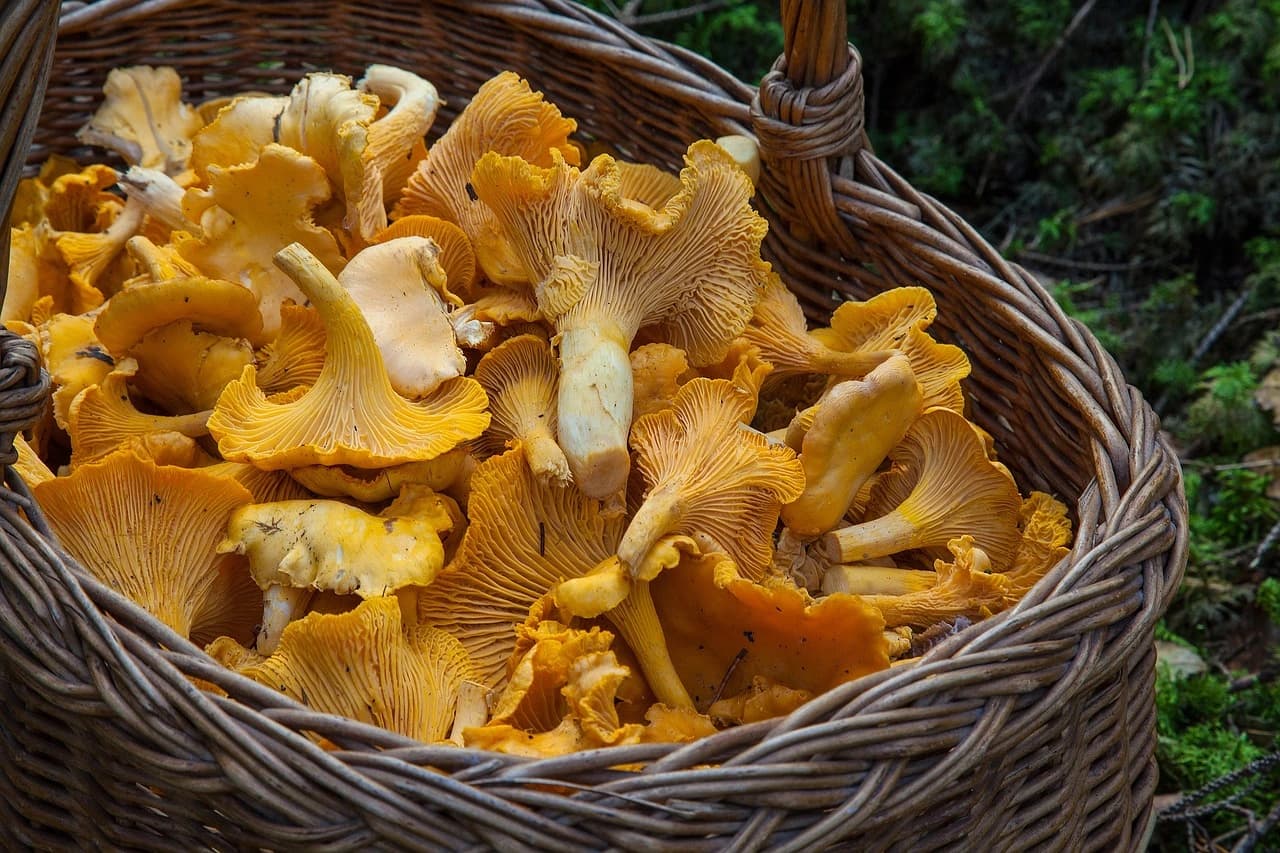
Mushroom foraging is one of the most rewarding outdoor pursuits you can learn. Walking through a forest and finding a flush of golden chanterelles or a massive chicken of the woods is a thrill that never fades, no matter how many times you have done it. But foraging is also a skill that demands respect: some of the most beautiful mushrooms in the forest are also the most deadly, and there is no room for guesswork when your health is at stake.
This guide distills everything we know about wild mushroom identification and foraging into a single resource. It is backed by verified Mushroom Observer data covering 5,700+ species and draws on the 229 foraging tips in our knowledge base. Whether you are picking up a basket for the first time or refining your skills after years in the field, this guide will help you forage safely, ethically, and successfully.
The single most important thing to understand before you read any further: never eat a wild mushroom unless you can identify it with absolute certainty. There is no universal test, no app, and no shortcut. Positive identification requires knowledge, practice, and humility.
The Golden Rules of Mushroom Foraging
Every experienced forager follows a set of non-negotiable rules that keep them alive and healthy. These are not suggestions — they are the foundation of safe foraging, and breaking any one of them can have fatal consequences.
- Never eat a mushroom you cannot identify with 100% certainty.If there is even a sliver of doubt, leave it in the forest. No meal is worth a trip to the ICU — or the morgue.
- Learn the deadly species before the edible ones. Knowing what will kill you is more important than knowing what tastes good. In North America, that means memorizing the death cap, destroying angel, and deadly Galerina before you learn a single edible species.
- Never rely on a single identifying feature. Mushroom identification requires cross-referencing multiple characteristics: cap shape, gill structure, spore print color, stem features, habitat, season, smell, and bruising reactions. A single feature match is never enough.
- Start with species that have no dangerous look-alikes.Chicken of the woods, giant puffball, and lion's mane are excellent starter species because nothing deadly resembles them.
- Use field guides specific to your region. A European field guide will mislead you in North America. Species that share common names across continents are often completely different fungi.
- Never trust a foraging app as your sole identification tool. AI-based mushroom ID apps have misidentified deadly species as edible. Use them as a starting point, never as a final answer.
- When in doubt, throw it out. This is the rule that saves lives.
For a deep dive into these principles with real-world examples, see our Foraging Basics & Safety guide, which covers spore prints, gill types, and step-by-step identification.
12 Best Edible Wild Mushrooms for Beginners
These twelve species are the best starting points for new foragers. They are widely distributed, relatively easy to identify, and — critically — most have few or no dangerous look-alikes. Master these before moving on to more challenging genera like Agaricus or Boletus.
| Common Name | Scientific Name | Key ID Features | Habitat | Season |
|---|---|---|---|---|
| Chicken of the Woods | Laetiporus sulphureus | Bright orange-yellow shelves, no gills, pored underside | Dead/dying hardwoods, especially oak | May–Oct |
| Chanterelle | Cantharellus spp. | Golden-yellow, false gills (ridges), apricot scent | Mature hardwood and conifer forests | Jun–Nov |
| Morel | Morchella spp. | Honeycomb cap fused to stem, completely hollow inside | Near dead elms, ash, burn sites, orchards | Mar–May |
| Giant Puffball | Calvatia gigantea | White sphere up to 50 cm, solid white flesh inside, no gills | Meadows, parks, forest edges | Aug–Oct |
| Oyster Mushroom | Pleurotus ostreatus | White to grey fan-shaped caps, decurrent gills, grows in shelf clusters | Dead hardwoods, especially beech and poplar | Year-round |
| Hen of the Woods | Grifola frondosa | Large grey-brown overlapping fans, pored underside, at tree base | Base of living oaks | Sep–Nov |
| Black Trumpet | Craterellus cornucopioides | Dark brown-black funnel shape, smooth underside, grows in clusters | Hardwood forests, especially oak and beech | Jul–Nov |
| Hedgehog Mushroom | Hydnum repandum | Pale orange cap with spines (teeth) instead of gills underneath | Mixed forests, mossy ground | Aug–Nov |
| King Bolete (Porcini) | Boletus edulis | Brown cap, bulbous white stem with fine netting, spongy pores | Spruce and pine forests, 1,000–3,000 m | Jul–Oct |
| Lobster Mushroom | Hypomyces lactifluorum | Bright red-orange coating over a host mushroom, firm dense flesh | Conifer and mixed forests | Aug–Oct |
| Lion's Mane | Hericium erinaceus | White cascading spines, no cap or stem, on dead hardwoods | Wounds and hollows of dead oaks and beeches | Aug–Nov |
| Wine Cap | Stropharia rugosoannulata | Burgundy-red cap, prominent ring on stem, dark purple-brown spores | Wood chip mulch, garden beds, paths | May–Oct |
Each of these species rewards careful study. A chanterelle that looks obvious to an experienced forager may stump you the first time you encounter one — field photos never fully capture the texture, weight, and smell that make identification certain. Get out with experienced foragers and handle these species in person before you eat them.
Detailed profiles: Choice edible species guide · Chicken of the woods by region · Porcini & black trumpet by region · Wild lion's mane guide
Deadly Mushrooms You Must Know
Before you learn what to eat, you must learn what will kill you. The following four species (and their close relatives) are responsible for the vast majority of fatal mushroom poisonings worldwide. Memorize their appearance, habitat, and the species they are confused with.
Death Cap — Amanita phalloides
The most deadly mushroom on Earth, responsible for over 90% of fatal mushroom poisonings globally. It contains amatoxins that destroy liver cells — symptoms appear 6–12 hours after ingestion, by which time irreversible organ damage may have already begun. The death cap has a greenish-yellow to olive cap, white gills, a skirt-like ring on the stem, and a bulbous base wrapped in a cup-like volva. It is frequently mistaken for paddy straw mushrooms by Southeast Asian foragers and for field mushrooms by European immigrants. In the San Francisco Bay Area, death caps have become alarmingly common under imported European oaks, with multiple confirmed fatalities in recent decades. Based on our Mushroom Observer data, A. phalloides observations cluster heavily around coastal California, particularly in the Bay Area, Santa Cruz, and the greater Los Angeles region.
Destroying Angel — Amanita bisporigera / A. virosa
A pure white Amanita found across eastern North America (A. bisporigera) and Europe (A. virosa). It contains the same amatoxins as the death cap with the same delayed-onset liver destruction. Its entirely white appearance — white cap, white gills, white stem, white volva — makes it easy to confuse with edible white mushrooms, including button mushrooms, horse mushrooms, and puffballs (when young and still egg-shaped). The destroying angel grows in hardwood and mixed forests, often near oaks and beeches, from midsummer through fall. Always check the base of any white-gilled mushroom— if it has a cup-shaped volva at the base, leave it alone.
Deadly Galerina — Galerina marginata
A small, brown, nondescript mushroom that grows on dead wood — and contains the same amatoxins as the death cap. Deadly Galerina is particularly dangerous because it closely resembles several popular edible species, most notably honey mushrooms (Armillaria) and velvet shank (Flammulina velutipes). It has a brown cap, brown spore print, and a ring on the stem that may disappear with age. It fruits on dead hardwood and conifer logs year-round in mild climates. The key distinguishing feature is spore print color: deadlyGalerina has a rusty-brown spore print, while honey mushrooms print white and velvet shank prints white to pale cream.
False Morel — Gyromitra esculenta
A spring-fruiting species with a brain-like, reddish-brown, irregularly wrinkled cap. Despite the species name “esculenta” (meaning edible), it contains gyromitrin, which the body converts to monomethylhydrazine — a component of rocket fuel. Poisoning causes liver and kidney failure and can be fatal. False morels are confused with true morels (Morchella), but the differences are clear once you know them: true morels have a honeycomb cap with pits and ridges that is completely hollow when sliced vertically, while false morels have a wrinkled, brain-like cap with chambered (not hollow) interior tissue.
Comprehensive safety resource: Deadly & toxic mushroom guide · Deadly species locations (MO data) · Most dangerous look-alikes
Mushroom Foraging by Season
Mushrooms fruit in response to temperature shifts and moisture. Understanding the seasonal rhythm of your local fungi is the key to knowing where to be, when. The table below covers temperate North America and Europe — for reversed seasons in the Southern Hemisphere, see our Southern Hemisphere foraging guide.
| Season | Months | Key Species | What to Expect |
|---|---|---|---|
| Spring | Mar–May | Morels, dryad's saddle, oysters, St. George's mushroom | The morel season dominates spring. Soil temperatures above 10°C trigger fruiting. Burns from the previous year are prime territory. |
| Summer | Jun–Aug | Chanterelles, chicken of the woods, lobster mushrooms, boletes | Chanterelles begin after warm summer rains. Chicken of the woods peaks on standing dead hardwoods. Boletes appear at elevation. |
| Fall | Sep–Nov | Hen of the woods, porcini, black trumpets, chanterelles, honey mushrooms, puffballs, matsutake | The peak season. The widest variety of edible species fruit simultaneously. Fall rains after summer drought trigger massive flushes. |
| Winter | Dec–Feb | Velvet shank, oysters, turkey tail, chaga, C. californicus | Mild-winter regions still produce. Velvet shank and oysters fruit down to near-freezing. California's endemic chanterelle peaks in winter. |
The universal trigger is the same across all seasons: a soaking rain followed by 2–5 days of mild temperatures.Experienced foragers watch weather forecasts obsessively and plan their trips 3–7 days after significant rainfall. For detailed seasonal timing by species, see our species-by-season calendar.
Where to Find Wild Mushrooms — Habitat Guide
Mushrooms are not randomly distributed across the landscape. Most species have strong associations with specific tree species, substrate types, and soil conditions. Learning these associations is one of the most powerful identification tools you have — a chanterelle growing under pine in a spruce forest narrows your identification dramatically before you even look at the mushroom itself.
Hardwood Forests (Oak, Beech, Maple)
The richest foraging habitat in temperate regions. Hardwood forests support a vast array of mycorrhizal and saprotrophic species including chanterelles, hen of the woods, chicken of the woods, black trumpets, lion's mane, and oyster mushrooms. Old-growth stands with mature oaks are especially productive. The leaf litter layer on hardwood forest floors creates ideal moisture retention for fruiting.
Conifer Forests (Pine, Spruce, Fir)
Conifer forests host a different suite of species adapted to acidic soils and needle litter. Look for king boletes (porcini), matsutake, hedgehog mushrooms, and Pacific golden chanterelles. Higher elevation conifer forests (1,000–3,000 m) in the Rockies and Cascades are prime porcini territory. Spruce-fir forests in Scandinavia and the Pacific Northwest produce world-class chanterelle harvests.
Dead Wood — Logs, Stumps, Standing Dead Trees
Dead and dying trees are home to some of the most recognizable edible species: oyster mushrooms, chicken of the woods, lion's mane, and honey mushrooms. These saprotrophic species break down wood fiber and do not need living tree roots. Check fallen logs, stumps, and standing dead trees in any forest type. Wounds and hollows on dead oaks and beeches are prime lion's mane habitat.
Grasslands, Meadows & Urban Parks
Open habitats produce giant puffballs, fairy ring mushrooms (Marasmius oreades), field mushrooms (Agaricus campestris), and wine caps in mulched garden beds. Pastures grazed by cattle or horses can be productive, but exercise extreme caution with white-gilled grassland species — the deadly destroying angel also grows in grassy areas.
River Bottoms & Flood Plains
Lowland areas near rivers with cottonwood, elm, ash, and sycamore trees are legendary morel habitat. The moist, rich soil and dying trees create perfect conditions for spring morel flushes. Oyster mushrooms also thrive on dead cottonwood and willow in riparian zones.
Deep dives: Where to find each species · Tree-mushroom associations
Foraging by Region
Mushroom diversity varies enormously by geography. A foraging trip in the Pacific Northwest targets completely different species than one in the UK or Australia. Based on verified Mushroom Observer data covering 5,700+ species, here is what to expect in the world's major foraging regions.
Pacific Northwest (Washington, Oregon, British Columbia)
The PNW is arguably the best foraging region in North America. The combination of old-growth conifer forests, abundant rain, and mild temperatures produces extraordinary chanterelle harvests — commercial pickers pull tonnes of Cantharellus formosus from these forests every fall. King boletes (Boletus edulis) thrive at elevation in the Cascades, while matsutake (Tricholoma murrillianum) command prices of $50–200/kg in Japanese export markets. Hedgehog mushrooms, lobster mushrooms, and cauliflower mushrooms round out a world-class lineup. Peak season runs September through November after the first fall rains break the summer drought. North America foraging guide →
Eastern North America
The hardwood forests of the East Coast and Midwest offer a different but equally rewarding experience. Hen of the woods (Grifola frondosa) at the base of oaks is the iconic fall find. Black trumpets hide in the leaf litter of beech-oak forests. The spring morel season drives a near-obsessive culture across the Midwest, with festivals, competitive hunts, and closely guarded secret spots. Chicken of the woods (Laetiporus sulphureus and L. cincinnatus) is abundant on dead oaks. Lion's mane appears on beech wounds in late fall. Eastern chanterelles — including the vivid cinnabar chanterelle (C. cinnabarinus) — peak June through August. North America foraging guide →
United Kingdom & Ireland
Britain has a rich foraging tradition centered on the cep (Boletus edulis), chanterelles, field mushrooms, and the prized penny bun. The New Forest, Scottish Highlands, and ancient oak woodlands of Wales are prime territory. The UK benefits from relatively few deadly species compared to continental Europe, though the death cap is present in southern England. The Countryside and Rights of Way Act (2000) grants rights of access to open countryside, but foraging regulations vary by land designation. Autumn is peak season, running September through November. Europe foraging guide →
Scandinavia (Sweden, Finland, Norway)
Scandinavia is the chanterelle capital of the world. Sweden alone produces an estimated 2,000+ tonnes of foraged chanterelles annually, and allemansratten (the right of public access) means anyone can forage anywhere in the countryside. Finnish forests produce enormous quantities of funnel chanterelles (Craterellus tubaeformis) and porcini. Scandinavia's boreal forests of birch, spruce, and pine create ideal conditions for mycorrhizal species. The season is short but intense, peaking July through September. Europe foraging guide →
Australia & New Zealand
The Southern Hemisphere offers foraging on a reversed calendar, with peak season running March through June (autumn). The saffron milk cap (Lactarius deliciosus) is the most popular edible, found under introduced pine plantations across southeastern Australia. Slippery jacks, field mushrooms, and wood ear are also widely foraged. A critical safety note: the death cap (Amanita phalloides) was introduced to Australia and is now well-established around Canberra and Melbourne near European oaks — several fatalities have occurred. Southern Hemisphere foraging guide →
How to Identify Wild Mushrooms Safely
Safe identification is a process, not a single step. It requires examining multiple features, cross-referencing with authoritative sources, and building experience through repeated field encounters. Here is the systematic approach that experienced foragers use.
- Observe in situ before picking. Note the habitat, substrate (soil, wood, duff), nearby tree species, and growth pattern (solitary, clustered, in a ring). Photograph from multiple angles.
- Examine the entire specimen.Carefully dig up the base — the volva (cup) at the base of Amanita species is the most critical safety feature you can check, and it is hidden underground.
- Check the underside. Gills, pores, teeth, or smooth? Gill attachment (free, attached, decurrent)? Gill color and spacing? These features narrow your identification dramatically.
- Take a spore print. Place the cap gill-side down on a piece of half-white, half-black paper, cover, and wait 4–12 hours. Spore color is one of the most reliable identification features and can separate edible species from deadly look-alikes.
- Cross-reference with multiple guides. Use at least two field guides specific to your region. Never rely on a single source, a single photo, or a phone app.
- When in doubt, consult an expert.Post to your local mycological society's ID group or bring specimens to a foray. Online forums like Mushroom Observer and iNaturalist have experienced identifiers who can help.
Our knowledge base includes 229 foraging tips covering every aspect of identification. Start with the complete identification guide, which covers gill types, cap shapes, chemical tests, and microscopy basics.
Chanterelle Foraging — A Deep Dive
Chanterelles are the most popular foraging target worldwide, and for good reason: they are delicious, abundant, relatively easy to identify, and fruit reliably in the same spots year after year. But the story of chanterelles in North America is far more complex than most field guides suggest.
Based on our analysis of verified Mushroom Observer data, at least 16 distinct chanterelle species have been confirmed in North America, most of them described only in the last two decades. The European Cantharellus cibariusthat dominates field guides does not actually occur on this continent — what was previously called “C. cibarius” turns out to be a complex of closely related but genetically distinct species.
The regional breakdown is striking. In the Pacific Northwest, C. formosus dominates with 25 verified observations, fruiting under old-growth Douglas fir from September through November. In California, the endemic C. californicus (19 observations) rewrites the rulebook entirely by fruiting under coast live oaks in winter, peaking December through February. In the Eastern US, the vivid cinnabar chanterelle (C. cinnabarinus, 18 observations) lights up hardwood forests in midsummer.
Regional deep dives: Chanterelle species by region · Where chanterelles grow · Choice edible species
Morel Hunting Guide
Morel hunting is a spring ritual that borders on obsession for millions of foragers. The distinctive honeycomb-capped Morchella species are among the most prized wild mushrooms in the world, and hunting them combines ecological knowledge, pattern recognition, and sheer persistence.
The key to finding morels is understanding their triggers. Soil temperature is the primary factor: morels fruit reliably when soil temperature at 10 cm depth reaches 10–16°C (50–60°F). Carry a soil thermometer and check south-facing slopes first — these warm up earliest in spring. The morel season progresses northward across the continent, starting in the southern US in March and reaching Canada by late May.
Fire morels deserve special attention. Areas that burned the previous year — particularly conifer forests — can produce astonishing morel flushes the following spring. Commercial pickers follow wildfire maps across the western US and Canada, and a single productive burn site can yield hundreds of kilograms. Based on Mushroom Observer data, post-fire morel observations concentrate in the Rocky Mountain states, the Cascades, and northern British Columbia.
The half-free morel (Morchella punctipes) appears a week or two before the true morels in many regions and serves as a reliable indicator that the main season is about to begin. Learn to distinguish true morels from false morels (Gyromitra) by slicing them vertically: a true morel is completely hollow from top to bottom, while a false morel has chambered, cottony interior tissue.
Detailed guides: Morel species by region (MO data) · Morel foraging techniques · Morel varieties & identification · Where morels grow
Essential Foraging Equipment
Good foraging equipment makes the difference between a productive outing and a frustrating one. You do not need much, but what you bring matters.
- Wicker basket or mesh bag— Never use plastic bags. Mushrooms sweat in plastic, accelerating decomposition and making identification harder. A basket allows air circulation and lets spores drop through as you walk, helping spread the fungi.
- Sharp folding knife — For clean cuts at the base of the stem. Some foragers prefer to twist and pull, but cutting minimizes soil disturbance and keeps your basket cleaner.
- Regional field guide — A physical book, not just an app. David Arora's Mushrooms Demystified, Roger Phillips' Mushrooms and Other Fungi of North America, or a guide from your local mycological society. Carry at least one.
- Phone or camera — Photograph every specimen from multiple angles before and after picking: cap top, underside (gills/pores), stem, base, and surrounding habitat.
- Wax paper bags or sheets— To separate different species in your basket. Mixing species makes identification harder and risks contaminating edible specimens with fragments of toxic ones.
- Notebook and pen — Record habitat, associated trees, date, weather conditions, and GPS coordinates. This data is invaluable for revisiting productive spots.
Full equipment list: What to bring foraging
Foraging Ethics & Legality
Responsible foraging ensures wild mushroom populations remain healthy for future generations. The core ethic is simple: take only what you will use, and leave the rest for wildlife and reproduction. A good rule of thumb is to harvest no more than half of what you find in any given patch.
Cut mushrooms at the base rather than pulling them up, which preserves the mycelium network and minimizes soil disturbance. Carry your harvest in a mesh bag or basket to allow spores to drop as you walk, naturally spreading the fungi. Stay on trails when possible, and never rake leaf litter or dig extensively to find mushrooms.
Legality varies dramatically by jurisdiction. In most of Europe, “right to roam” laws (such as Sweden's allemansrattenand Scotland's Land Reform Act) permit foraging on most land. In North America, the picture is more complex: US and Canadian national forests generally allow personal-quantity collection without a permit, but national parks prohibit it. State, provincial, and municipal parks vary widely. Commercial harvesting almost always requires permits, with strict quantity limits and designated harvest areas.
Above all, respect other foragers. The foraging community operates on an honor system — if you find someone's productive patch, leave it alone. Do not post exact GPS coordinates of productive spots on social media, as this can lead to overharvesting and habitat damage. For detailed legal guidelines by region, see our foraging legality guide and regional foraging overview.
Frequently Asked Questions
Is mushroom foraging safe for beginners?
Yes, mushroom foraging is safe for beginners if you follow strict rules. Start with species that have no dangerous look-alikes, such as chicken of the woods, giant puffball, and oyster mushrooms. Never eat anything you cannot identify with 100% certainty. Join a local mycological society for guided forays where experienced members confirm your finds in the field. Use multiple field guides specific to your region and learn the deadly species in your area before learning the edibles.
What is the easiest wild mushroom to identify?
Chicken of the woods (Laetiporus sulphureus) is widely considered the easiest wild mushroom to identify. Its bright orange and yellow shelf-like brackets growing on trees are unmistakable and have no dangerous look-alikes. Giant puffball is another excellent beginner species — any pure white puffball larger than a softball with uniform white flesh inside is safe to eat. Both species are common, widely distributed, and delicious.
What time of year is best for mushroom foraging?
Fall (September through November in the Northern Hemisphere) is the peak mushroom foraging season, when the widest variety of species fruit simultaneously. However, every season offers something: spring brings morels and dryad's saddle, summer produces chanterelles and chicken of the woods, and even winter yields velvet shank, oyster mushrooms, and turkey tail. The key trigger is soaking rain followed by 2-5 days of mild temperatures.
Can you forage mushrooms in city parks?
Foraging in city parks is prohibited in most municipalities. Urban parks typically have bylaws against removing any natural material, including fungi. Even where technically legal, urban foraging carries additional risks: contamination from pesticides, herbicides, dog waste, and vehicle exhaust. If you want to forage near a city, national forests and state or provincial forests generally allow personal-quantity mushroom collection without a permit.
How do you tell edible from poisonous mushrooms?
There is no single test to distinguish edible from poisonous mushrooms — identification requires examining multiple features together. Key characteristics include cap shape, gill structure, spore print color, stem features, habitat, season, and smell. Never rely on folk tests like the silver spoon test or the peel test, which are unreliable myths. The only safe approach is positive identification using multiple field guides, combined with knowledge of your region's deadly species.
Do you need a permit to forage mushrooms?
Permit requirements vary by jurisdiction. In most US and Canadian national forests, personal-quantity foraging (typically under 5 gallons per day) is allowed without a permit. National parks generally prohibit foraging entirely. State and provincial parks vary widely — always check park-specific rules before collecting. Commercial harvesting almost always requires a permit, and fines for illegal collection can be substantial.
What should I do if I eat a poisonous mushroom?
Call Poison Control immediately (1-800-222-1222 in the US, 1-800-268-9017 in Canada, 111 in the UK). Save any remaining mushroom material, including cooking scraps, for identification. Do not wait for symptoms to appear — some of the deadliest mushroom toxins, including those in death caps, have a delayed onset of 6-12 hours, during which irreversible liver damage may begin. Go to an emergency room immediately and tell them you consumed a wild mushroom.
Can children go mushroom foraging?
Children can absolutely join mushroom foraging trips and benefit enormously from the experience. Foraging teaches observation, ecology, patience, and respect for nature. The critical rule is that children must never eat any mushroom they find without an adult confirming the identification. Make it a game: let them photograph specimens, carry the basket, and learn the names of trees and habitats. Many mycological societies offer family-friendly forays designed for young foragers.
Need Help Identifying a Find?
Found something in the forest and want a second opinion? Dr. Myco is our AI mycology assistant trained on decades of identification knowledge and verified Mushroom Observer data. Describe what you found — habitat, cap shape, gill type, spore print color — and get expert guidance in seconds. Remember: never eat a wild mushroom based solely on an AI identification. Use Dr. Myco as a starting point, then confirm with field guides and experienced foragers.
Ask Dr. MycoAbout the Author
Andrew Langevin is the founder of Nature Lion Inc, a CFIA-licensed mushroom cultivation facility that has served over 50,000 customers. He is a contributing author of Mushroomology (Brill, 2026), one of the most comprehensive academic references on applied mycology. His foraging content draws on verified Mushroom Observer data covering 5,700+ species and a knowledge base of 32,000+ community knowledge chunks spanning decades of field experience.
Read full bio →Continue Learning
Foraging Basics & Safety
Golden rules, equipment, and getting started
Choice Edible Species
Detailed profiles of the best wild edibles
Deadly & Toxic Mushrooms
Species that can kill or harm you
Identification Guide
Spore prints, gill types, and systematic ID
Chanterelles by Region
16 species across North America (MO data)
Morels by Region
Regional species and verified locations
Morel Foraging Techniques
Timing, habitat, and hunting strategies
Where to Find Wild Mushrooms
Species-specific habitat guides
Tree-Mushroom Associations
Which trees host which fungi
Species by Season
Month-by-month fruiting calendar
North America Guide
Regional foraging across the continent
Europe Foraging Guide
UK, Scandinavia, and continental Europe
Southern Hemisphere
Australia, NZ, South America, and Africa
Chicken of the Woods
5 species by region with MO data
Wild Lion's Mane
Finding Hericium in the wild
Porcini & Black Trumpet
Regional species and habitat
Deadly Species Locations
Where dangerous species have been confirmed
Chaga Foraging Guide
Finding and harvesting Inonotus obliquus
Morel Varieties
Identifying morel species and look-alikes
Regional Overview
Global foraging regions at a glance