Mushroom Growing & Foraging in Australia — Your Complete Guide
By Andrew Langevin · Founder, Nature Lion Inc · Contributing author, Mushroomology (Brill, 2026)
Updated May 2026 · 20 min read
Australia's mushroom scene is unlike anything in the Northern Hemisphere. The seasons are reversed, the most popular foraging targets are introduced European species thriving in pine plantations, the deadly death cap is spreading through Melbourne and Canberra with fatal consequences, and a growing gourmet cultivation industry is proving that Australians can produce world-class mushrooms in everything from a subtropical garage in Brisbane to a cool-climate shed in Tasmania.
If you are reading mushroom growing or foraging guides written for North America or Europe, almost everything about timing is wrong for your location. Your autumn is their spring. Your peak foraging months are March through May, not September through November. Your summer heat is the main obstacle for cultivation, not winter cold. This guide is written specifically for Australian growers and foragers, with Australian seasons, Australian species, and Australian conditions front and centre.
Whether you want to forage saffron milk caps in a Victorian pine plantation, grow oyster mushrooms in a Sydney apartment, or understand why you should never eat a white mushroom growing under an oak tree in the ACT, this guide covers it all. For a global perspective on foraging, see our complete foraging guide, and for general cultivation advice, visit our how to grow mushrooms guide.
Australia's Mushroom Seasons (Reversed from Northern Hemisphere)
This is the single most important thing to understand if you are using international mushroom resources: the Australian mushroom calendar is flipped 180 degrees from Northern Hemisphere guides. When Europeans and North Americans are enjoying their autumn peak season in October, Australians are heading into spring with relatively little to find. When the Northern Hemisphere is locked in winter, Australia is in the middle of a hot, dry summer that shuts down most fungal fruiting. Understanding this reversal is critical for planning your foraging trips and your cultivation schedule. For a comparison with Northern Hemisphere timing, see our species-by-season calendar.
| Season | Months | Key Species | What to Expect |
|---|---|---|---|
| Autumn | Mar–Jun | Saffron milk cap, slippery jack, field mushroom, wood blewit, porcini (rare) | PEAK SEASON. This is when the magic happens. March through May is your main foraging window. The first substantial autumn rains trigger massive flushes in pine plantations across VIC, SA, TAS, and NSW. Saffron milk caps and slippery jacks appear in huge numbers. Field mushrooms pop up in pastures. Temperatures of 10–18°C after rain are ideal. |
| Winter | Jun–Aug | Wood ear, oyster mushroom, some saffron milk caps (early winter) | Fruiting slows but does not stop entirely in temperate zones. Oyster mushrooms continue on dead hardwood in mild coastal areas. Wood ear fruits year-round in tropical Queensland. Some late saffron milk caps persist into June in warmer sites. Tasmania and highland Victoria may be too cold for most species. |
| Spring | Sep–Nov | Morels (rare, VIC/TAS), field mushrooms after rain | A quiet period for foraging. Morels appear occasionally in Victorian and Tasmanian forests, particularly after bushfires the previous summer, but they are far rarer than in North America. Some field mushrooms appear in pastures after spring rains. This is a good time to prepare your cultivation substrates for the growing season ahead. |
| Summer | Dec–Feb | Wood ear (tropical), tropical oyster, coral fungi | The quiet season across most of Australia. Hot, dry conditions shut down fruiting in temperate and Mediterranean zones. The tropical north is the exception — wood ear and tropical species fruit year-round in QLD and NT where summer monsoonal rains provide the moisture. For cultivators, summer is the time to focus on heat-loving species like pink oyster. |
Key takeaway for Australian foragers: If you are reading a Northern Hemisphere foraging guide that says “peak season is September through November,” flip it to March through May for Australia. The triggers are the same — rain followed by mild temperatures — but the calendar is reversed. Our Southern Hemisphere foraging guide covers this reversal in detail.
Edible Wild Mushrooms in Australia
Australia has relatively few edible native mushroom species compared to Europe or North America. The continent's unique eucalyptus-dominated forests support a distinct fungal ecology, but many of these native species are poorly studied and difficult to identify with confidence. The most popular foraging targets in Australia are, somewhat ironically, introduced European species that arrived with pine plantations established across southeastern Australia from the mid-19th century onwards. For general identification principles, see our mushroom identification guide.
Saffron Milk Cap / Pine Mushroom — Lactarius deliciosus
THE Australian foraging mushroom. Introduced with European pine trees, saffron milk caps have become so prolific in Australian radiata pine plantations that they are now a cultural foraging tradition, particularly among communities with Mediterranean heritage. The key identifying feature is unmistakable: cut the flesh and it exudes bright orange milk. The cap is orange with darker concentric zones, 5–15 cm across, with orange decurrent gills. The entire mushroom bruises green with age or handling. Found under radiata pine across VIC, SA, TAS, NSW, and WA from March through May. A superb eating mushroom — firm texture, slightly nutty flavour, holds up beautifully to grilling and roasting.
Slippery Jack — Suillus luteus
Another European introduction found abundantly under pines. Recognisable by its slimy, dark brown cap (3–12 cm), spongy yellow pores instead of gills, and a distinctive ring on the stem. Extremely common and often found in large numbers alongside saffron milk caps. The slimy cap skin should be peeled before cooking as it can cause digestive upset. Considered a good edible once prepared properly — popular in soups, stews, and pickled. Fruits March through May.
Field Mushroom — Agaricus campestris
Found in pastures and grasslands after autumn rains, the field mushroom is a familiar species with a white cap, pink to brown free gills (never white gills when mature), and a pleasant mushroomy smell. It is widespread across temperate Australia. Critical warning: field mushrooms can be confused with the deadly death cap and the yellow-staining mushroom. You must verify that the gills are pink to chocolate brown (never pure white), there is no volva (cup) at the base, the flesh does not stain chrome yellow when bruised, and the mushroom was growing in open grassland, not under trees. See our deadly mushroom guide for look-alike comparisons.
Wood Ear — Auricularia spp.
A jelly-like ear-shaped fungus that grows on dead hardwood, particularly common in tropical and subtropical Queensland. Wood ear fruits year-round in the tropics and is one of the few species reliably available during the Australian summer. Dark brown to black, rubbery and translucent when fresh, with a distinctive ear or cup shape. It has virtually no dangerous look-alikes and is one of the safest species for beginners to forage. Widely used in Asian cuisine — excellent in stir-fries, soups, and salads. Learn more in our choice edible species guide.
Oyster Mushroom — Pleurotus spp.
Found on dead and dying hardwoods in temperate regions of Australia. White to grey fan-shaped caps growing in shelf-like clusters with decurrent gills running down a short lateral stem. Fruits mainly in autumn and winter in mild coastal areas. Important caution: the ghost fungus (Omphalotus nidiformis) is a toxic look-alike — always check that your specimen does not glow in the dark (ghost fungus is bioluminescent). For cultivation guidance, see our oyster mushroom growing guide.
Lawyer's Wig / Shaggy Ink Cap — Coprinus comatus
A striking mushroom with a tall, cylindrical white cap covered in shaggy scales. Common on urban lawns, nature strips, and disturbed ground across temperate Australia after autumn rains. The key feature is its “deliquescence” — the cap dissolves into black inky liquid from the bottom up within hours of maturity. You must harvest and cook this mushroom the same day before the ink process begins. Delicious when fresh — delicate flavour, excellent sauteed in butter. Do not consume with alcohol, as some related ink cap species contain coprine which causes an adverse reaction with alcohol.
Wood Blewit — Lepista nuda
A beautiful mushroom with a distinctive lilac to violet colouration on the cap, gills, and stem. Found in leaf litter and compost heaps during autumn across temperate Australia. The purple colour fades with age, becoming more buff-brown, so younger specimens are easier to identify. Must be cooked thoroughly before eating — raw blewits can cause gastrointestinal distress. An excellent eating mushroom with a distinctive, slightly perfumed flavour.
Porcini — Boletus edulis
Rare in Australia but found in some Victorian forests, particularly in areas with introduced European trees. The classic brown cap with spongy white-to-yellow pores (never gills), a bulbous white stem with fine netting, and firm white flesh that does not stain blue when cut. If you find porcini in Australia, consider yourself exceptionally lucky — they are not reliably found in most regions. For global porcini information, see our porcini regional guide.
Deadly Mushrooms in Australia — Critical Safety
Australia has a genuine death cap crisis. The death cap is not native to Australia — it was introduced with European trees and is now spreading through urban and suburban areas of southeastern Australia with fatal consequences. Every Australian forager must know the dangerous species below before they eat anything from the wild. For a global overview of deadly species, see our comprehensive deadly mushroom guide and deadly species location data.
Death Cap — Amanita phalloides
The most dangerous mushroom in Australia, responsible for the majority of mushroom fatalities in this country. Introduced with European trees, the death cap is now well-established around Melbourne, Canberra, Adelaide, and parts of regional Victoria and New South Wales. It grows under European oaks, elms, and other imported deciduous trees in parks, gardens, nature strips, and institutional grounds — places where people walk every day.
The death cap contains amatoxins that destroy liver cells. Symptoms appear 6–12 hours after ingestion — by which time irreversible organ damage has often already begun. There is no antidote. Liver transplant is frequently the only treatment option, and even with transplant, fatalities occur.
Multiple fatalities in Australia have involved foragers from Southeast Asian backgrounds who mistook death caps for the edible paddy straw mushroom (Volvariella volvacea), a popular species in Vietnamese, Thai, and Chinese cuisine. The immature “egg” stage of the death cap can closely resemble paddy straw mushrooms or young field mushrooms.
Identification: greenish-yellow to olive to white cap (colour varies widely), white free gills, a skirt-like ring on the stem, and a cup-shaped volva at the bulbous base (often hidden underground). The cap can appear pure white in some specimens, making it even more dangerous.
Yellow-staining Mushroom — Agaricus xanthodermus
The most commonly eaten poisonous mushroom in Australia. Extremely common in urban lawns, parks, and gardens across temperate Australia, it closely resembles the edible field mushroom (A. campestris) and other edible Agaricus species. The critical test is simple: scratch or bruise the flesh at the very base of the stem. If it instantly turns bright chrome yellow and smells of ink, chemicals, or phenol, it is A. xanthodermusand should not be eaten. Ingestion causes severe gastrointestinal distress — violent nausea, vomiting, cramps, and diarrhoea lasting 12–24 hours. Not typically fatal but deeply unpleasant and can require hospitalisation in vulnerable people.
Ghost Fungus — Omphalotus nidiformis
A native Australian species that is both fascinating and dangerous. Ghost fungus is bioluminescent — it glows pale green in complete darkness, which makes positive identification possible if you can observe it at night. It grows in shelf-like clusters on dead or dying wood and is frequently confused with edible oyster mushrooms. Cream to white with purplish-brown tones, the ghost fungus has sharper-edged gills and a more defined central stem than true oysters. Ingestion causes severe vomiting and diarrhoea. While not typically fatal, it can cause serious illness requiring medical attention. Call the Poisons Information Centre on 13 11 26 if ingested.
Critical safety rule for Melbourne, Canberra, and Adelaide foragers: Assume that ANY white-gilled mushroom growing under or near oak trees in southern Australia is a death cap until an expert mycologist confirms otherwise. This single rule could save your life. Never rely on photographs, apps, or online identification for mushrooms found near European trees. If in doubt, contact your state's mycological society or the Royal Botanic Gardens.
Where to Forage in Australia
Australian foraging is heavily concentrated in the southeastern states where introduced pine plantations provide reliable habitat for European mycorrhizal species. The tropical north offers a completely different set of species. For a global perspective on foraging habitats, see our habitat guide for wild mushrooms and tree-mushroom association guide.
Victoria
Victoria is the heartland of Australian mushroom foraging. Radiata pine plantations in the Macedon Ranges, the Great Otway National Park surrounds (state forest sections only — not within the national park itself), the Dandenong Ranges hinterland, and northeastern Victoria produce excellent saffron milk cap and slippery jack harvests from March through May. The cool, moist climate of the Yarra Ranges and Gippsland also supports field mushrooms, wood blewits, and occasional porcini. Be aware that death caps are established across metropolitan Melbourne and regional Victorian towns with European trees.
Tasmania
Tasmania offers some of Australia's best foraging conditions. Cool, wet winters and mild autumns create ideal fungal fruiting conditions. Pine plantations in the north and east produce saffron milk caps and slippery jacks. The island's temperate rainforests harbour a diverse native fungal flora, though many species remain poorly documented. Morels are occasionally found in spring, particularly in disturbed or recently burned areas. Tasmania's isolation means the death cap has not yet been widely reported there — but vigilance is still essential.
South Australia
The Adelaide Hills and Mount Lofty Ranges pine forests are productive foraging grounds for saffron milk caps and slippery jacks. South Australia's Mediterranean climate means the season is concentrated — March through May, dependent on autumn rains. The forestry plantations around Mount Crawford and Kuitpo are popular with Adelaide-based foragers. Death caps have been confirmed in the Adelaide area under European trees, so exercise particular caution with any white-gilled species.
New South Wales
The Blue Mountains, Southern Highlands, and pine plantations around Oberon and Bathurst offer good foraging for saffron milk caps. The cooler tablelands above 600 m provide the best conditions. Coastal NSW is generally too warm for the main foraging species, but field mushrooms appear in pastures from the Hunter Valley south after autumn rains. The subtropical north coast around Lismore and the Dorrigo Plateau can produce wood ear and tropical species.
Western Australia
Pine forests in the Perth Hills and around the Margaret River region produce saffron milk caps and slippery jacks. The southwest corner of WA has a Mediterranean climate similar to South Australia, with foraging concentrated in the cooler, wet months of April through June. Field mushrooms can be found in southern pastures. WA's vast arid interior is unsuitable for foraging.
Queensland
Queensland's foraging scene is dominated by tropical species. Wood ear (Auricularia) grows abundantly on dead hardwood in the Wet Tropics, Sunshine Coast hinterland, and Gold Coast hinterland year-round. Tropical oyster mushrooms appear on dead logs in subtropical forests. The Darling Downs and Granite Belt at higher elevations may produce some temperate species in autumn. Southeast Queensland around the D'Aguilar Range can be productive after wet autumns.
Australian Capital Territory
The ACT's pine forests (particularly the remnants of the former Stromlo plantation and forests around Kowen) are excellent for saffron milk caps and slippery jacks. However, the ACT is also the epicentre of Australia's death cap problem. Death caps are well-established around the parliamentary triangle, in established suburbs with European trees, and along Lake Burley Griffin. Canberra foragers must exercise extreme caution and should never eat any mushroom found under oak trees without expert identification.
Australian Foraging Laws
Foraging laws in Australia vary by state, territory, and land classification. Understanding where you can and cannot legally forage is essential before you head out. For international comparisons, see our foraging basics and legality guide.
- National Parks — PROHIBITED everywhere. Removing any plant, animal, or fungal material from an Australian national park is illegal. This applies uniformly across all states and territories. Penalties can include substantial fines.
- State Forests — Foraging for personal quantities is generally permitted in state forests and forestry plantations across most jurisdictions. This is where the majority of Australian mushroom foraging takes place, particularly in pine plantations. Commercial harvesting typically requires a permit.
- Victoria— The Flora and Fauna Guarantee Act 1988 protects native species. Foraging of introduced species (saffron milk caps, slippery jacks) in state forests is generally tolerated for personal use. Check with Parks Victoria for specific locations.
- New South Wales — Contact the NSW National Parks and Wildlife Service (NPWS) for current regulations. Foraging is prohibited in national parks and nature reserves. State forests generally allow personal-quantity collection.
- Other states and territories — Always check with the relevant state authority before foraging. Rules vary and can change. As a general principle: national parks are always off limits, state forests are usually fine for personal quantities, and private land requires the owner's permission.
Bottom line: stick to state forests and pine plantations for the best legal footing, and always confirm local rules before heading out. Take only what you need for personal use, and leave enough for wildlife and future fruiting. For ethical foraging principles, see our regional foraging guide.
Growing Mushrooms in Australia
Mushroom cultivation in Australia presents a unique set of challenges and advantages compared to Northern Hemisphere growing. The biggest obstacle is summer heat — most gourmet species prefer temperatures between 15–24°C, and Australian summers routinely exceed 35°C across much of the continent. However, Australia's mild winters (in coastal areas) and long autumn growing seasons are a significant advantage, and the tropical north can support year-round cultivation of warm-weather species. For comprehensive cultivation guidance, see our complete cultivation guide and beginner's growing guide.
Climate Zones & Growing Windows
Tropical (Cairns, Darwin, Townsville): Year-round growing is possible for heat-loving species. Pink oyster mushrooms thrive in the constant warmth (24–30°C). Paddy straw mushrooms are in their native climate. Wood ear grows outdoors year-round. The challenge is contamination — high humidity and warmth accelerate mould growth, so sterile technique is paramount. See our contamination prevention guide.
Subtropical (Brisbane, Gold Coast, Sunshine Coast): Excellent for 8–9 months of the year. Blue oyster and pink oyster rotate well — pink oyster in the warm months (October through March), blue oyster in the cooler months (April through September). Shiitake does well in the cooler half of the year. Air conditioning in summer extends your growing window. Humidity is naturally high, which helps fruiting but demands good fruiting environment management.
Temperate (Melbourne, Hobart, Adelaide Hills): The best climate zone in Australia for mushroom growing. Excellent for 9–10 months, with only the hottest January–February weeks requiring management. Blue oyster, shiitake, lion's mane, turkey tail, and reishi all perform well. Melbourne's cool autumns and mild winters are ideal — many growers run year-round with minimal climate control. Tasmania is exceptional for shiitake, which loves the cool, moist conditions. Learn more about shiitake cultivation and lion's mane growing.
Mediterranean (Perth, Adelaide, Western Sydney): Good autumn through spring growing (March through November), but summer requires active cooling. Hot, dry summers are particularly challenging — grow in insulated garages, basements, or air-conditioned spare rooms during December through February. The dry climate makes outdoor fruiting difficult without supplemental humidity.
A Critical Note on Eucalyptus
Eucalyptus wood is NOT suitable for mushroom cultivation. Despite being the most abundant hardwood in Australia, eucalyptus contains antimicrobial essential oils and compounds that inhibit mushroom mycelium growth. Do not attempt log cultivation with eucalyptus. Instead, use purchased hardwood blocks or sawdust from non-native timber species, or use straw-based methods. For log cultivation, imported hardwood logs (oak, beech) or non-native species grown in Australia work best. See our log cultivation guide for suitable wood species.
Recommended Species for Australian Growers
| Species | Ideal Temp | Best Regions | Notes |
|---|---|---|---|
| Blue Oyster | 12–22°C | VIC, TAS, SA, NSW (winter) | Handles temperature swings well. Ideal autumn/winter species for most of Australia. |
| Pink Oyster | 24–30°C | QLD, NT, all states (summer) | Your summer species. Thrives in heat that kills other mushrooms. Fast colonisation and fruiting. |
| Shiitake | 14–20°C | VIC, TAS, SA, highland NSW | Loves cool Victorian and Tasmanian autumn. Requires patience — slower colonisation. |
| Lion's Mane | 16–22°C | VIC, TAS, SA | High humidity requirements. Excellent in temperate climates with supplemental misting. |
| Turkey Tail | 18–25°C | All states | Very forgiving temperature range. Good for beginners. Grown for extracts and tea. |
| Reishi | 22–30°C | QLD, NSW, all states (summer) | Handles warmth well. Grown for medicinal extracts, not culinary use. |
| Wine Cap | 15–22°C | VIC, TAS, SA, NSW | Outdoor garden beds in shaded areas. Low-maintenance once established. |
Species guides: Oyster mushrooms · Shiitake · Lion's mane · Reishi · All species
Best Growing Methods for Australian Conditions
The best growing method for you depends on your climate zone, available space, and experience level. Australian growers have access to the same techniques used worldwide, but some methods suit Australian conditions better than others. For detailed technique guides, explore our growing techniques (teks) hub.
Grow Kits — Best for Beginners
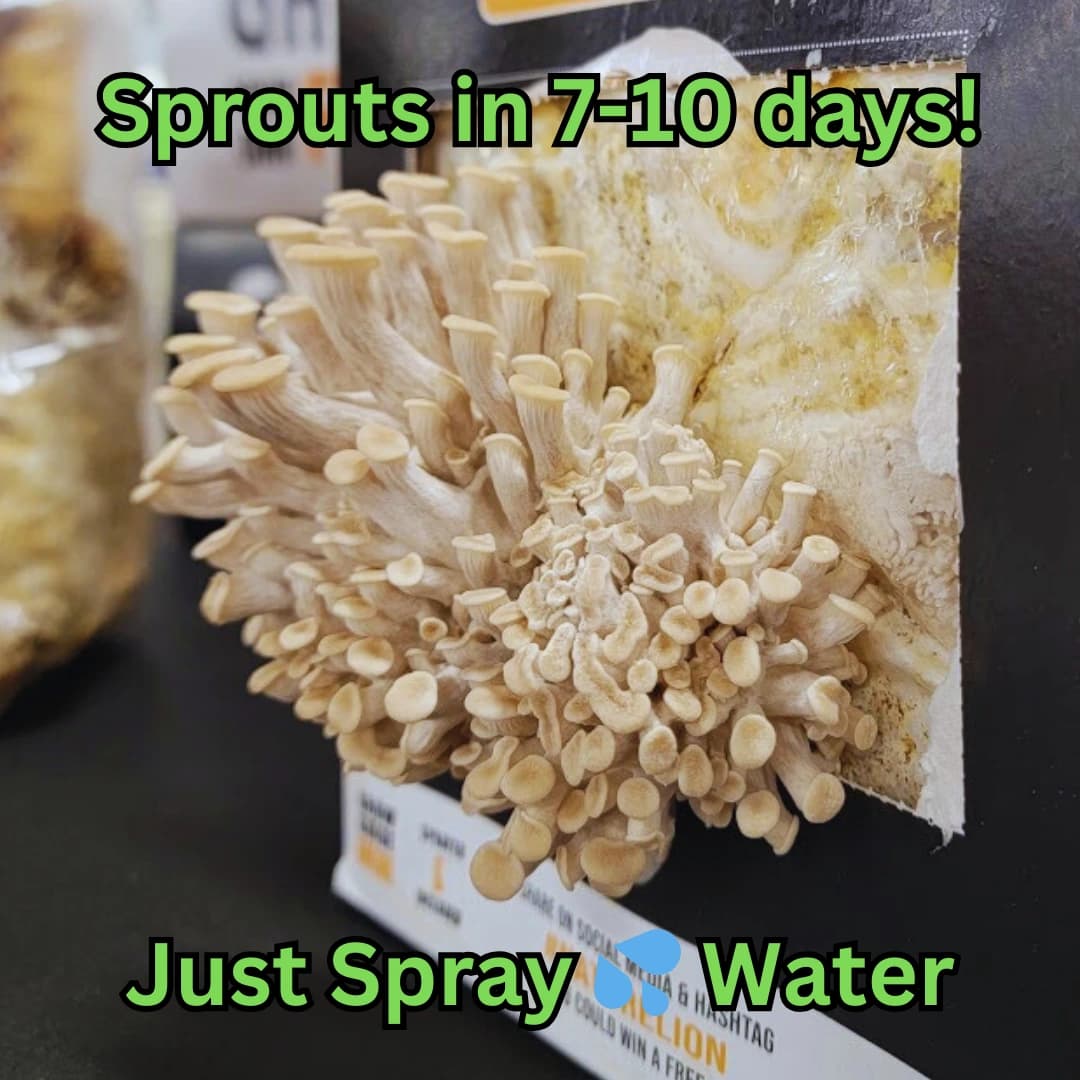
Ready-to-fruit grow kits from Australian suppliers are the easiest way to start. Simply open the bag, mist daily, and harvest in 7–14 days. Expect $30–60 AUD per kit, yielding 300–500 g of fresh mushrooms over 2–3 flushes. Oyster mushrooms are the most reliable kit species. This is the perfect way to learn the fundamentals of fruiting conditions before scaling up.
Bucket Tek with Straw
An excellent low-cost method for Australian growers. Straw is readily available from rural suppliers and produce stores across the country. Pasteurise chopped straw in a bucket with boiling water, mix with grain spawn once cooled, and fruit from holes cut in the bucket. Blue and pink oyster mushrooms do exceptionally well with this method. See our complete bucket tek guide for step-by-step instructions and our pasteurisation guide for technique details.
Indoor Growing — Spare Room or Garage
For consistent year-round production, set up a dedicated growing space in a spare room, garage, or laundry. A simple fruiting chamber (a large plastic tub with holes and a humidity source) is all you need to start. Climate control via air conditioning extends your growing season through the Australian summer. Garages are popular because they are typically cooler than the main house and provide the darkness many species prefer during colonisation. Check our small-space growing guide for apartment setups.
Hardwood Block Cultivation
Supplemented hardwood sawdust blocks (purchased, not eucalyptus) are the commercial standard for shiitake, lion's mane, and other gourmet species. Australian suppliers sell pre-sterilised blocks ready for inoculation. If you want to make your own, you will need a pressure cooker and proper sterilisation technique. Remember: eucalyptus sawdust will inhibit growth. Source hardwood sawdust from non-native timber mills.
Wine Cap Garden Beds
Wine cap mushrooms (Stropharia rugosoannulata) grow beautifully in shaded garden beds mulched with hardwood chips. This is one of the most low-maintenance methods for Australian temperate-climate gardeners. Inoculate a bed of hardwood chips with wine cap spawn in autumn, keep it moist, and expect flushes the following autumn. Works well in Melbourne, Hobart, Adelaide, and highland NSW. See our outdoor growing guide for more garden cultivation methods.
Tropical Growing — QLD & NT
If you live in tropical Australia, lean into the heat rather than fighting it. Pink oyster mushrooms and paddy straw mushrooms thrive in temperatures that would kill temperate species. You can fruit pink oyster outdoors year-round in Cairns, Townsville, and Darwin. Wood ear can be grown on supplemented logs or bags in a shaded outdoor area. The key challenge in the tropics is contamination — warm, humid air is perfect for both mushrooms and moulds, so maintaining clean growing environments is essential.
More techniques: Monotub tek · PF Tek for beginners · Grow bag methods · Substrate basics
Frequently Asked Questions
When is mushroom season in Australia?
Mushroom season in Australia runs from March through June, which is autumn in the Southern Hemisphere. This is the opposite of the Northern Hemisphere, where peak season falls in September through November. The main trigger is the same worldwide: soaking autumn rains followed by mild temperatures between 10-18 degrees Celsius. March through May is the prime window for saffron milk caps, slippery jacks, field mushrooms, and wood blewits across Victoria, Tasmania, South Australia, and southern New South Wales. In tropical Queensland and the Northern Territory, some species such as wood ear fruit year-round.
Are there death caps in Australia?
Yes, death caps (Amanita phalloides) are established in Australia and have caused multiple fatalities. They were introduced with European trees and are now found around Melbourne, Canberra, Adelaide, and parts of regional Victoria. They typically grow near European oaks, elms, and other imported deciduous trees in parks, gardens, and streetscapes. Death caps are responsible for the majority of fatal mushroom poisonings in Australia. They have been mistaken for edible paddy straw mushrooms by foragers from Southeast Asian backgrounds, with tragic consequences. If you find any white-gilled mushroom growing near European trees in southern Australia, assume it is a death cap until an expert confirms otherwise.
Can you forage mushrooms in Australian national parks?
No. Foraging is prohibited in all Australian national parks. Removing any plant, animal, or fungal material from a national park is illegal under federal and state legislation, and penalties can be substantial. However, foraging for personal quantities is generally permitted in state forests across most of Australia. Pine plantations managed by forestry agencies are popular foraging destinations, particularly for saffron milk caps and slippery jacks. Always check with the relevant state authority — Parks Victoria, NSW National Parks and Wildlife Service, Forestry SA, or your local equivalent — before collecting.
What is a pine mushroom or saffron milk cap?
The saffron milk cap (Lactarius deliciosus), commonly called pine mushroom in Australia, is the country's most popular foraging mushroom. It was introduced to Australia along with European pine trees (especially radiata pine) planted in commercial forestry plantations. When you cut or break the flesh, it exudes bright orange milk — this is the key identifying feature that makes it unmistakable. The cap is orange with concentric darker zones, the gills are orange and decurrent (running down the stem), and the entire mushroom bruises green with age. It fruits from March through May under pine trees across Victoria, South Australia, Tasmania, New South Wales, and Western Australia.
Can you grow mushrooms in the Australian summer heat?
Growing mushrooms through the Australian summer (December through February) is challenging but possible with the right species and methods. Pink oyster mushrooms (Pleurotus djamor) thrive in temperatures of 24-30 degrees Celsius and are ideal for summer growing. Paddy straw mushrooms (Volvariella volvacea) are another warm-weather option suited to tropical and subtropical climates. For cooler-season species like blue oyster or shiitake, you will need climate control — a spare room with air conditioning, or a basement or garage that stays below 24 degrees Celsius. In tropical Queensland and the Northern Territory, summer is actually a productive growing season for heat-loving species.
Is the ghost fungus actually dangerous?
The ghost fungus (Omphalotus nidiformis) is toxic and will cause severe gastrointestinal distress including violent vomiting, abdominal cramps, and diarrhoea lasting 12-24 hours, but it is not typically fatal in healthy adults. It is frequently confused with oyster mushrooms because it grows in similar shelf-like clusters on dead wood. The key distinguishing features are: ghost fungus is bioluminescent (it glows pale green in complete darkness), it has a more defined central stem compared to true oysters, and its gills do not run as far down the stem. If you suspect you have eaten ghost fungus, call the Poisons Information Centre on 13 11 26 immediately.
What mushrooms grow in tropical Queensland?
Tropical Queensland supports several mushroom species that fruit year-round thanks to consistent warmth and humidity. Wood ear (Auricularia cornea and related species) grows abundantly on dead hardwood, particularly in rainforest margins and along creek lines. Tropical oyster mushrooms (Pleurotus) appear on dead logs, though they are less common than in temperate regions. Various coral fungi, jelly fungi, and bracket fungi can be found in the Daintree and Wet Tropics. For cultivation, tropical QLD is ideal for pink oyster mushrooms, paddy straw mushrooms, and wood ear — all of which prefer temperatures above 25 degrees Celsius.
Where can you buy mushroom spawn in Australia?
Several Australian suppliers sell mushroom spawn and grow kits. Aussie Mushroom Supplies, Forest Fungi, and Fungi Ally Australia are established suppliers offering grain spawn, plug spawn, and ready-to-fruit grow kits for species including oyster, shiitake, lion's mane, reishi, and turkey tail. Most ship nationwide via express post. Australian quarantine laws restrict the importation of live biological material, so purchasing from domestic suppliers is both easier and legally compliant. Expect to pay $20-40 AUD for grain spawn bags and $30-60 AUD for ready-to-fruit grow kits.
Have a Question About Australian Mushrooms?
Whether you need help identifying a find from a Victorian pine forest, advice on growing oyster mushrooms in Brisbane, or guidance on distinguishing a saffron milk cap from a look-alike, Dr. Myco can help. Our AI mycology assistant is trained on decades of identification knowledge and verified Mushroom Observer data. Describe your situation and get expert guidance in seconds. Remember: never eat a wild mushroom based solely on an AI identification — always confirm with field guides and experienced foragers.
Ask Dr. MycoAbout the Author
Andrew Langevin is the founder of Nature Lion Inc, a CFIA-licensed mushroom cultivation facility that has served over 50,000 customers. He is a contributing author of Mushroomology (Brill, 2026), one of the most comprehensive academic references on applied mycology. While based in Canada, his knowledge base draws on global cultivation data and verified Mushroom Observer records spanning every continent, including extensive Australian species data.
Read full bio →Continue Learning
Southern Hemisphere Foraging
Reversed seasons, species, and regional guides
Deadly & Toxic Mushrooms
Species that can kill or harm you
Identification Guide
Spore prints, gill types, and systematic ID
Choice Edible Species
Detailed profiles of the best wild edibles
Growing Oyster Mushrooms
The best beginner species for Australian growers
Growing Shiitake
Perfect for cool Australian autumns and winters
Bucket Tek Guide
Low-cost growing with straw and a bucket
Contamination Prevention
Essential for warm and humid Australian climates
Fruiting Conditions
Temperature, humidity, and air exchange