Porcini, Black Trumpet & Other Choice Edibles
10 tips in Foraging & Wild ID
By Andrew Langevin · Founder, Nature Lion Inc · Contributing author, Mushroomology (Brill, 2026)
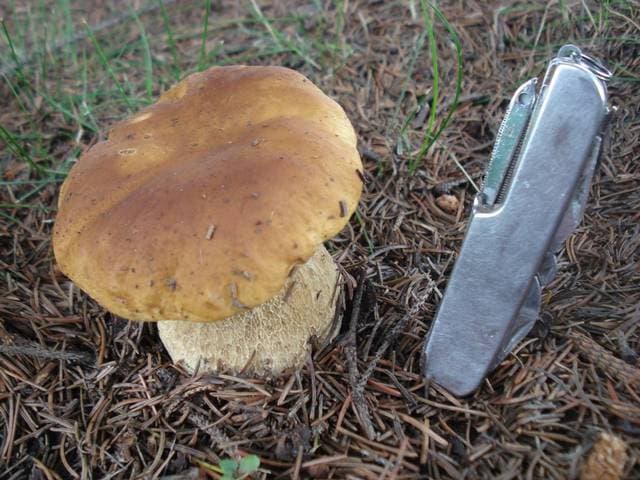
Porcini grow across North America in two main varieties, with the Pacific Northwest and California emerging as the top collection regions. Based on verified Mushroom Observer data, Boletus edulis has 26 confirmed observations and the California variety B. edulis var. grandedulis adds another 22, totaling 48 verified porcini records.
Verified porcini locations:
- Pacific Northwest (B. edulis, 26 obs): Breitenbush Hot Springs, Cook Forest State Park, Fort Stevens State Park, French Prairie area. Associated with spruce, pine, and Douglas fir
- California (B. edulis var. grandedulis, 22 obs): Aptos, coastal Sonoma County, Humboldt County, Jackson Demonstration State Forest. Under pine, live oak, and tanoak
Porcini are mycorrhizal fungi, meaning they form symbiotic partnerships with living tree roots and cannot be cultivated commercially. This is why wild-foraged porcini command premium prices — $30-80 per kg fresh, $150+ per kg dried.
For the best chances of finding porcini, target mature conifer forests with well-drained, slightly acidic soil. Look along forest trails and road cuts where fruiting bodies are more visible. Porcini often grow in the same locations year after year, so a productive spot is worth noting carefully.
*Boletus edulis var. grandedulis* is California's native king bolete — a larger, more robust variety of porcini found along the Northern California coast. Based on verified Mushroom Observer data, it has 22 confirmed observations at locations including Aptos, coastal Sonoma County, Humboldt County, and Jackson Demonstration State Forest.
What distinguishes grandedulis from typical B. edulis:
- Size: Consistently larger than eastern and PNW populations. Individual caps can exceed 25 cm in diameter and specimens over 1 kg are common
- Cap color: Often paler, tan to light brown, compared to the darker brown caps of the typical variety
- Habitat: Under Monterey pine, Bishop pine, live oak, and tanoak in coastal forests. Strongly associated with the California fog belt
- Season: Typically November through February, fruiting during the rainy season — later than PNW porcini
- Range: Primarily from Mendocino County south to Santa Cruz County, concentrated in the coastal zone
Jackson Demonstration State Forest and Salt Point State Park are legendary California porcini spots, attracting foragers from around the state during the winter season. The coastal Sonoma and Humboldt County forests also produce exceptional harvests. Competition among foragers is intense at known spots — arriving at dawn and having backup locations is essential during peak season.
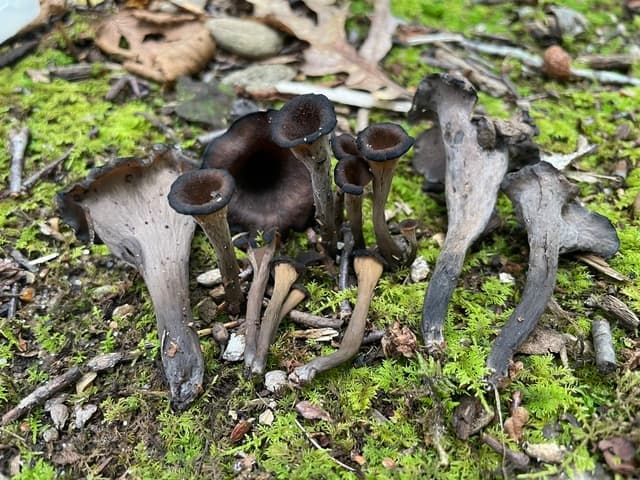
Black trumpets are split into two species by region — Eastern and Western — and both rank among the most prized wild edibles for their intense, complex flavor. Based on verified Mushroom Observer data, Craterellus fallax has 21 confirmed observations in the East and C. cornucopioides has 5 observations in the West.
Black trumpet locations by species:
- C. fallax (21 obs, Eastern) — ARMCO Park, Bald Mountain Recreation Area, Brown County State Park, Durham, Edmund Babler State Park. Found under oaks, beech, and mixed hardwoods on mossy, well-drained slopes
- C. cornucopioides (5 obs, Western) — CYO Retreat, Hills near Aptos, Jackson Demonstration State Forest, Salt Point State Park. Under live oak and tanoak in coastal California forests
Black trumpets are notoriously difficult to spot despite being relatively common. Their dark gray-to-black color blends perfectly with leaf litter and shadows on the forest floor. Experienced foragers describe developing a "search image" — once you find one, you suddenly see dozens.
Search strategy: Look on mossy banks and slopes in mature hardwood forests, especially along creek drainages and trail edges. Peak season is July through September in the East and November through January in California. Once you find a productive patch, return annually — the mycelium is perennial.
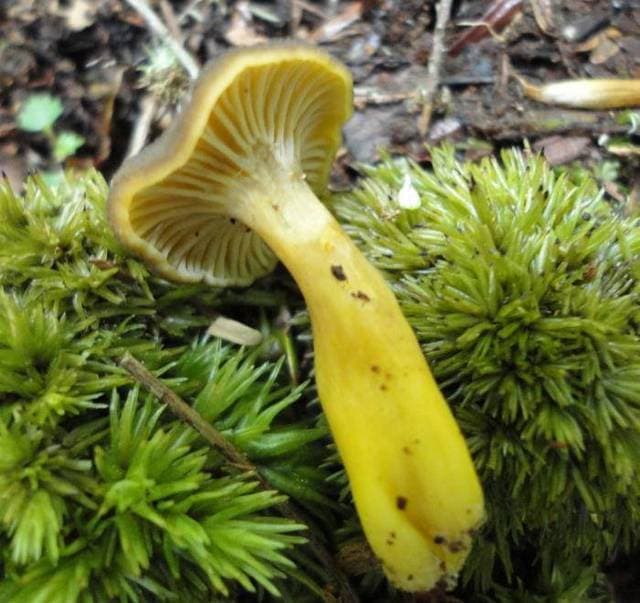
*Craterellus tubaeformis* (yellowfoot or winter chanterelle) is a late-season gem that fruits when most other edible species have finished for the year. Based on verified Mushroom Observer data, it has 16 confirmed observations at locations including Albion, Bear Creek, Cook Forest State Park, and Humboldt County.
Verified yellowfoot locations:
- Eastern US: Cook Forest State Park (Pennsylvania) — under hemlock and mixed hardwoods, in mossy areas near streams
- Northern California: Albion (Mendocino County), Humboldt County — under conifers in coastal forests
- Pacific Northwest: Bear Creek and other moist, mossy forest locations
Key identification features:
- Cap: Thin, funnel-shaped, dark brown becoming yellowish at edges, 2-6 cm diameter
- Underside: Blunt, vein-like ridges (not true gills), grayish to yellowish
- Stem: Hollow, bright yellow — the "yellowfoot" that gives this species its common name
- Habitat: Always on mossy ground, often among sphagnum or along stream banks
The late season timing (October through December) is this species' greatest advantage. When golden chanterelles are done, hedgehogs are winding down, and most foragers have put away their baskets, yellowfoot chanterelles are just hitting their stride. They often grow in enormous quantities — harvests of several kilograms from a single patch are possible.
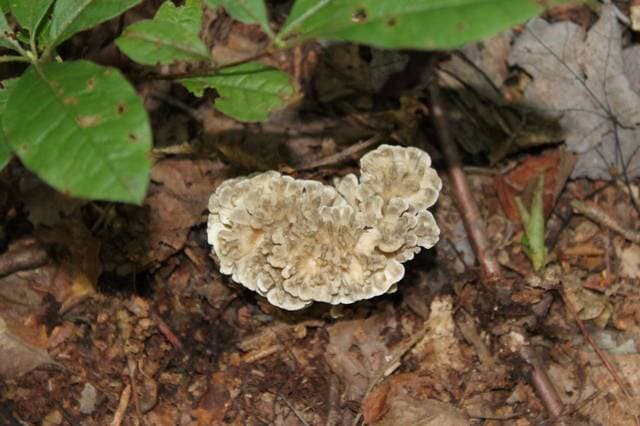
Maitake is an Eastern North American specialist, fruiting at the base of oak trees in the same locations year after year. Based on verified Mushroom Observer data, Grifola frondosa has 29 confirmed observations, making it one of the most well-documented choice edibles in the database.
Verified maitake locations:
- Northeast: Amagansett (Long Island, NY), and multiple New England locations
- Midwest: Bald Mountain Recreation Area (MI), Brown County State Park (IN)
- Mid-Atlantic: Cliff Cave Park (MO) and locations throughout Virginia, Maryland, and Pennsylvania
Critical maitake foraging facts:
- Host tree: Almost exclusively oak, especially red oak and white oak. Fruits at the base of living or recently dead trees
- Returns annually: Maitake mycelium persists in the root zone and produces from the same tree year after year. A productive tree is like a renewable resource
- Season: September through November, triggered by cool fall temperatures and rain
- Size: Individual clusters can weigh 5-20 kg — some specimens exceed 25 kg
Maitake foraging is essentially a treasure hunt for productive oak trees. Experienced hunters guard their tree locations jealously. Once you find a producing tree, mark it with GPS and check it annually in September and October. The mushroom often appears as a gray-brown rosette at ground level that can be mistaken for a pile of leaves.
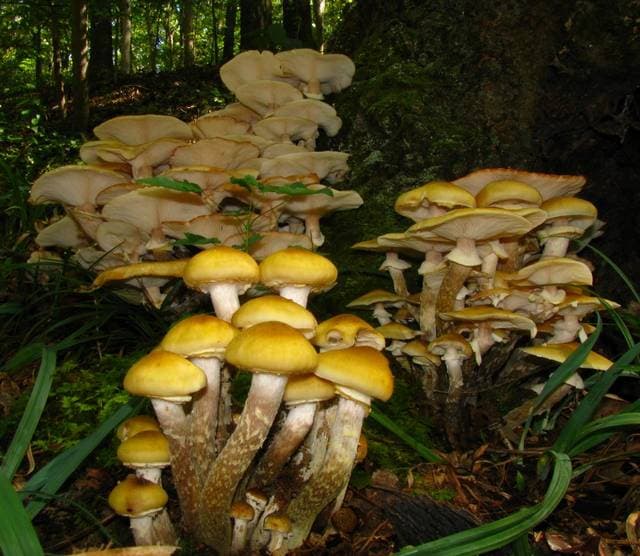
Honey mushrooms are the most widespread edible species complex in North America, with multiple species occurring in virtually every forest type. Based on verified Mushroom Observer data, Armillaria mellea alone has 31 confirmed observations, with related species A. gallica adding 20 and A. tabescens adding 8 — totaling 59 verified records.
Honey mushroom species overview:
- A. mellea (31 obs) — The classic honey mushroom. Distributed everywhere from urban parks to old-growth forests. Recognized by its honey-yellow cap, ring on the stem, and clustered growth on wood
- A. gallica (20 obs) — The bulbous honey mushroom. Slightly larger with a swollen stem base. Common in eastern hardwood forests
- A. tabescens (8 obs) — The ringless honey mushroom. Distinguished by the absence of a stem ring. Found primarily in the Southeast and lower Midwest
Honey mushrooms are simultaneously edible and parasitic — they are aggressive tree pathogens responsible for killing millions of trees annually. The Oregon "humongous fungus" (Armillaria ostoyae) covers 965 hectares and is one of the largest organisms on Earth.
Caution: Honey mushrooms must be cooked thoroughly — raw or undercooked specimens cause significant gastrointestinal upset. They also have a dangerous look-alike in Galerina marginata, which grows in similar habitats. Always check for the ring (present in mellea, absent in tabescens) and verify the spore print is white, not brown.
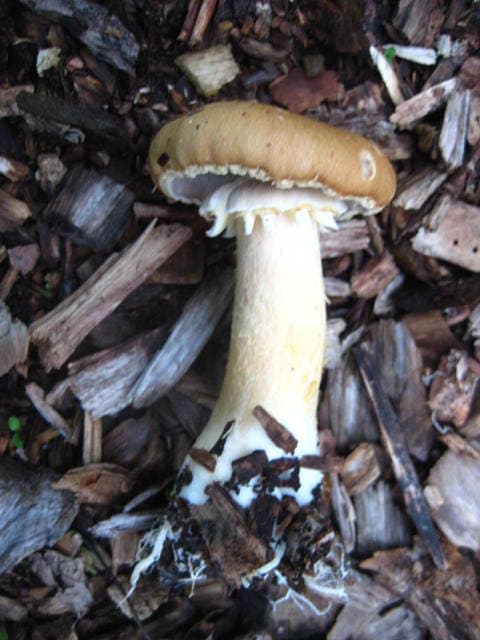
*Stropharia rugosoannulata* (wine cap or king stropharia) grows in wood chip and mulch habitats across Eastern North America — it is one of the few choice edibles that thrives in disturbed, human-modified environments. Based on verified Mushroom Observer data, it has 12 confirmed observations at locations including Brown County State Park, Lime Hollow Nature Center, Midland, and Morris County.
Wild wine cap habitats:
- Wood chip mulch: Garden paths, playground surfaces, landscaping beds, and municipal composting areas
- Deciduous leaf litter: Forest edges where thick layers of hardwood debris accumulate
- Streamside debris: Along creeks and rivers where flood-deposited wood chips and bark accumulate
Identifying features:
- Cap: 5-15 cm, wine-red to burgundy when young, fading to tan with age
- Ring: Distinctive corrugated or gear-toothed ring on the stem — the "rugosoannulata" (wrinkled ring) that gives it its name
- Gills: Gray-purple, becoming dark purple-black with spore maturity
- Size: Robust — a large mushroom compared to most woodland species
Wine caps are unusual among choice edibles because they are also easily cultivated. Many foragers who find them wild then start growing them at home on wood chip beds. A single outdoor bed can produce 5-10 kg per season. Finding wild wine caps is often the gateway to mushroom cultivation for many people.
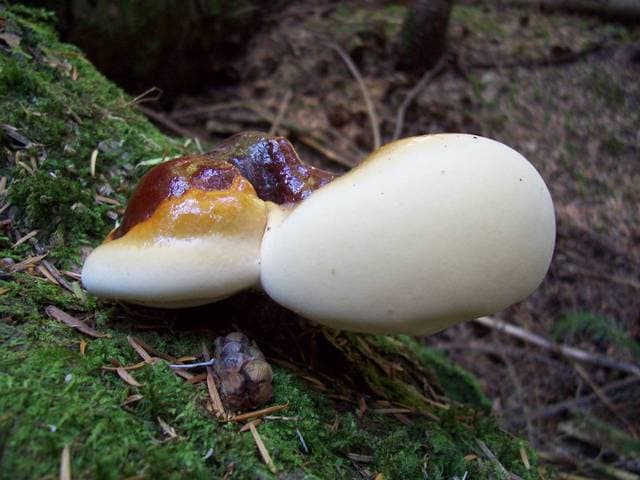
*Ganoderma oregonense* is the giant western reishi — a spectacular polypore found in old-growth coastal forests of the Pacific Northwest. Based on verified Mushroom Observer data, it has 17 confirmed observations concentrated in the most pristine temperate rainforest habitats in North America.
Verified G. oregonense locations:
- Olympic Peninsula: Hoh Rainforest (Washington) — the iconic temperate rainforest with annual rainfall exceeding 350 cm
- Northern California: Humboldt County — under coast redwood and Sitka spruce
- Oregon Coast: Various locations in the coastal fog belt
Remarkable characteristics:
- Size: Can grow to enormous dimensions — individual specimens exceeding 60 cm across and weighing 5+ kg have been documented
- Host trees: Dead or dying hemlock, spruce, Douglas fir, and redwood. Typically on large stumps or the base of standing dead trees
- Appearance: Glossy, varnished-looking upper surface (like lacquer), white pore surface, thick flesh
- Medicinal interest: Contains triterpenoids and polysaccharides similar to the Asian reishi (G. lucidum), driving significant foraging interest
This species is an indicator of old-growth forest health. Its dependence on large-diameter dead conifers means it is primarily found in forests with minimal logging history. Finding oregonense is a sign you are in an ecologically significant forest worthy of conservation.
Porcini season varies dramatically by region, spanning from late summer through winter depending on your location and the variety present. Based on verified Mushroom Observer data compiled from 48 total observations across both B. edulis and var. grandedulis, clear seasonal patterns emerge.
Porcini peak seasons by region:
- Pacific Northwest (B. edulis): September through November. Peaks after the first fall rains when soil temperatures drop below 15°C. Best in mature spruce and Douglas fir forests
- Northern California coast (var. grandedulis): November through February. The latest porcini season in North America, driven by winter rains. Jackson Demonstration State Forest and Salt Point peak in December and January
- Rocky Mountains (B. edulis): August through September. Higher elevation and earlier cold temperatures produce an earlier, shorter season
- Northeast (B. edulis): September through October. Less prolific than the West, but productive under spruce and pine
Temperature is the critical trigger. Porcini fruit when soil temperatures drop below about 15°C while moisture remains adequate. This is why the PNW season starts in September (fall rains + cooling) while California's starts in November (delayed rains + coastal cooling).
Check known spots 7-10 days after significant rain during the appropriate temperature window. Porcini can grow from pinhead to full size in 5-7 days, so timing your visits is critical.
Several of the most prized wild edibles are perennial fruiters, producing from the same location year after year — making a forager's site knowledge their most valuable asset. Based on verified Mushroom Observer data, repeat observations at identical locations confirm these patterns.
Species that reliably return:
- Maitake (Grifola frondosa, 29 obs) — The most reliable returner. Fruits at the base of the same oak tree annually for as long as the tree and root system persist. Some trees have produced for 10+ consecutive years
- Honey mushroom (Armillaria mellea, 31 obs) — Returns to the same stump or root system until the wood is fully consumed. A single colony can fruit for decades
- Porcini (Boletus edulis, 48 obs combined) — Returns to the same mycorrhizal network as long as the host trees are alive. Productive patches often remain productive for many years, though individual fruiting spots may shift within the patch
- Lobster mushroom (Hypomyces lactifluorum, 47 obs) — Returns to areas where host Russula and Lactarius populations are established, though exact fruiting spots vary more than maitake
- Chicken of the woods (Laetiporus spp., 84 obs combined) — Returns to the same tree until the internal decay column is exhausted. Typically 3-8 years of production from one tree
The practical implication is clear: keep a foraging journal. Record GPS coordinates, dates, species, tree associations, and yield for every productive site. This log becomes exponentially more valuable each year as you build a network of known productive locations.
Need more help? Dr. Myco can answer follow-up questions about porcini, black trumpet & other choice edibles based on thousands of real growing experiences.
Ask Dr. MycoMore in Foraging & Wild ID
Foraging Basics & Safety
10 tips
Choice Edible Species
12 tips
Deadly & Toxic Species
14 tips
Regional Foraging Guides
9 tips
Visual Identification Guide
17 tips
Chaga Identification & Harvesting
10 tips
Morel Foraging Guide
10 tips
Morel & Chanterelle Varieties
10 tips
North American Foraging by Region
14 tips
European Foraging Guide
12 tips
Southern Hemisphere & Tropical Foraging
10 tips
Foraging Species by Season
12 tips
Where to Find Wild Mushrooms
15 tips
Mushroom Habitats & Tree Associations
12 tips
Chanterelle Species by Region
12 tips
Morel Species by Region
12 tips
Chicken of the Woods & Turkey Tail by Region
10 tips
Deadly Mushrooms — Where They Actually Grow
10 tips
Wild Lion's Mane, Hedgehog & Lobster Mushrooms
10 tips