Common Mushroom Varieties
20 tips in Species Guides
By Andrew Langevin · Founder, Nature Lion Inc · Contributing author, Mushroomology (Brill, 2026)
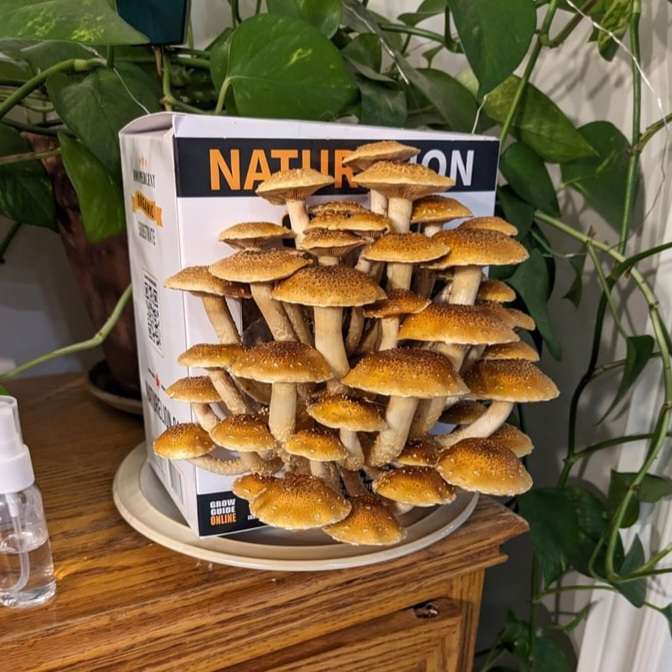
A chestnut mushroom is Pholiota adiposa, a gourmet species prized for its rich, nutty flavor and firm texture. It should not be confused with chestnut-colored button mushrooms (Agaricus bisporus), which are an entirely different species.
Key characteristics of true chestnut mushrooms:
- Small to medium-sized caps, typically 3-8cm across, with a warm brown to amber color
- Clusters of mushrooms grow together on hardwood logs or supplemented sawdust
- Firm, crunchy texture that holds up well in cooking — they do not become slimy like some other species
- Nutty, slightly sweet flavor that intensifies when sautéed
Growing chestnut mushrooms requires supplemented hardwood sawdust sterilized at 15 PSI. Fruiting temperatures of 12-18°C produce the best quality caps. They colonize more slowly than oyster mushrooms but reward patience with a premium product.
At farmers markets, chestnut mushrooms command $14-18/lb due to their superior texture and flavor compared to standard button mushrooms.
A trumpet mushroom is simply another name for the king oyster mushroom (Pleurotus eryngii), also called king trumpet or royal trumpet. The name comes from the mushroom's distinctive shape — a thick, white, trumpet-like stem topped with a small, flat brown cap.
Why it is called a trumpet mushroom:
- The elongated stem flares slightly at the base, resembling an upside-down trumpet
- Unlike other oyster species where the cap dominates, the stem is the prized part of the king oyster
- The stem has a dense, meaty texture often compared to scallops or abalone when sliced and seared
Growing trumpet mushrooms requires supplemented sawdust (Masters Mix) sterilized at 15 PSI. They prefer cooler fruiting temperatures of 12-18°C and need a cold shock of 10°C for 24-48 hours to initiate pinning.
Culinary tip: Slice the stems into 2cm-thick rounds and sear in butter until golden brown on each side. The caramelized exterior and tender interior create a texture remarkably similar to seared seafood.
The pink mushroom that grows in dramatic clusters is the pink oyster mushroom (Pleurotus djamor), a tropical species that produces some of the most visually striking mushrooms in cultivation.
Identifying pink oyster mushrooms:
- Vibrant coral-pink to flamingo-pink caps arranged in dense, layered clusters
- Caps are typically 3-8cm across with ruffled edges
- White to pale pink gills and a short, off-center stem
- Grows in tight shelf-like formations from the substrate or log
Pink oyster is a tropical species that thrives at 18-30°C and dies if exposed to temperatures below 10°C. This makes it ideal for summer growing but impossible in cold climates without heating.
The mushrooms grow explosively fast — pins appear within 3-4 days of fruiting conditions, with harvest-ready clusters in 5-7 days. The bright pink color fades to salmon-beige when cooked.
If you find a bright pink clustered mushroom in the wild, exercise caution. While pink oysters can occasionally escape cultivation, other pink-tinged species may not be edible. Always confirm identification before consuming.
The elm oyster (Hypsizygus ulmarius) is an edible mushroom that looks similar to true oyster mushrooms but belongs to a completely different genus. Despite the confusing common name, it is not a Pleurotus species.
Key differences from true oyster mushrooms:
- Taxonomy: Hypsizygus ulmarius vs Pleurotus ostreatus — different genus entirely
- Growth habit: Grows singly or in small groups rather than in large shelf-like clusters
- Cap: Larger, rounder, and more convex than true oysters, often 8-15cm across
- Stem: Central or slightly off-center, thicker and more defined than oyster mushrooms
- Habitat: Found on living or dead elm, box elder, and other hardwoods
Yes, elm oyster is edible and considered good. The flavor is mild and slightly sweet, with a firmer texture than true oyster mushrooms. It can be cultivated on supplemented hardwood sawdust.
The commercial "elm oyster" sold by some spawn companies is sometimes actually *Hypsizygus tessulatus* (beech mushroom), adding to the naming confusion. Always check the Latin name when purchasing spawn.
A black oyster mushroom is a dark-pigmented strain of *Pleurotus ostreatus* that produces striking grey-to-nearly-black caps. It is not a separate species — it is the same species as the common grey oyster, just a selected strain with darker pigmentation.
Why the caps turn dark:
- Temperature is the primary factor — cooler fruiting temperatures of 10-15°C produce the darkest caps
- At warmer temperatures (above 18°C), the same strain produces lighter grey caps
- The dark pigmentation is caused by melanin compounds in the cap surface
- Genetics also play a role — some strains are selected specifically for intense dark coloring
Growing black oyster mushrooms follows the same protocols as standard oyster cultivation. Use pasteurized straw or HWFP, colonize at 20-24°C, and fruit at 10-18°C with high humidity and FAE.
The dramatic appearance commands a market premium of $2-3 more per pound than standard grey oysters. Chefs value the visual contrast on plates, and the slightly meatier texture holds up well in high-heat cooking applications like grilling and searing.
These are two fundamentally different species with very different origins, availability, and ethical considerations.
Cordyceps sinensis (now *Ophiocordyceps sinensis*):
- A parasitic fungus that infects and mummifies ghost moth caterpillar larvae high in the Tibetan Plateau and Himalayas
- Cannot be commercially cultivated — all supply comes from wild harvest at 3,000-5,000m elevation
- Prices range from $20,000 to $60,000+ per kilogram for whole specimens
- Harvest is ecologically concerning due to overharvesting and habitat degradation
- The vast majority of "Cordyceps sinensis" supplements contain mycelium grown on grain, not the actual wild fungus
Cordyceps militaris:
- A different species that can be reliably cultivated on rice or grain-based substrates in controlled indoor environments
- Produces bright orange club-shaped fruiting bodies in 6-8 weeks
- Contains cordycepin (the primary bioactive compound) at levels equal to or higher than wild sinensis
- Affordable, sustainable, and widely available
For supplementation purposes, cultivated *Cordyceps militaris* is the ethical and practical choice. Research supports comparable bioactive profiles at a fraction of the cost.
Cordyceps is generally considered safe for most adults when consumed in typical supplemental doses, but there are important interactions and precautions to be aware of.
Known side effects and risks:
- Blood thinning: Cordyceps may inhibit platelet aggregation, which means it could increase bleeding risk. Stop taking cordyceps at least 2 weeks before scheduled surgery
- Blood sugar lowering: Cordyceps may reduce blood sugar levels, which could cause hypoglycemia in people already taking diabetes medication
- Immune modulation: Because cordyceps stimulates immune function, it may be contraindicated for people on immunosuppressant drugs (organ transplant recipients, autoimmune disease patients)
- Mild GI discomfort: Some people experience nausea, diarrhea, or stomach upset, especially at higher doses
Drug interactions to discuss with your doctor:
- Anticoagulants and antiplatelet drugs (warfarin, aspirin, clopidogrel)
- Diabetes medications (insulin, metformin)
- Immunosuppressants (cyclosporine, tacrolimus)
Cordyceps is not inherently dangerous, but like any bioactive supplement, it should not be taken carelessly. Consult your healthcare provider before adding cordyceps if you take prescription medications or have underlying health conditions.
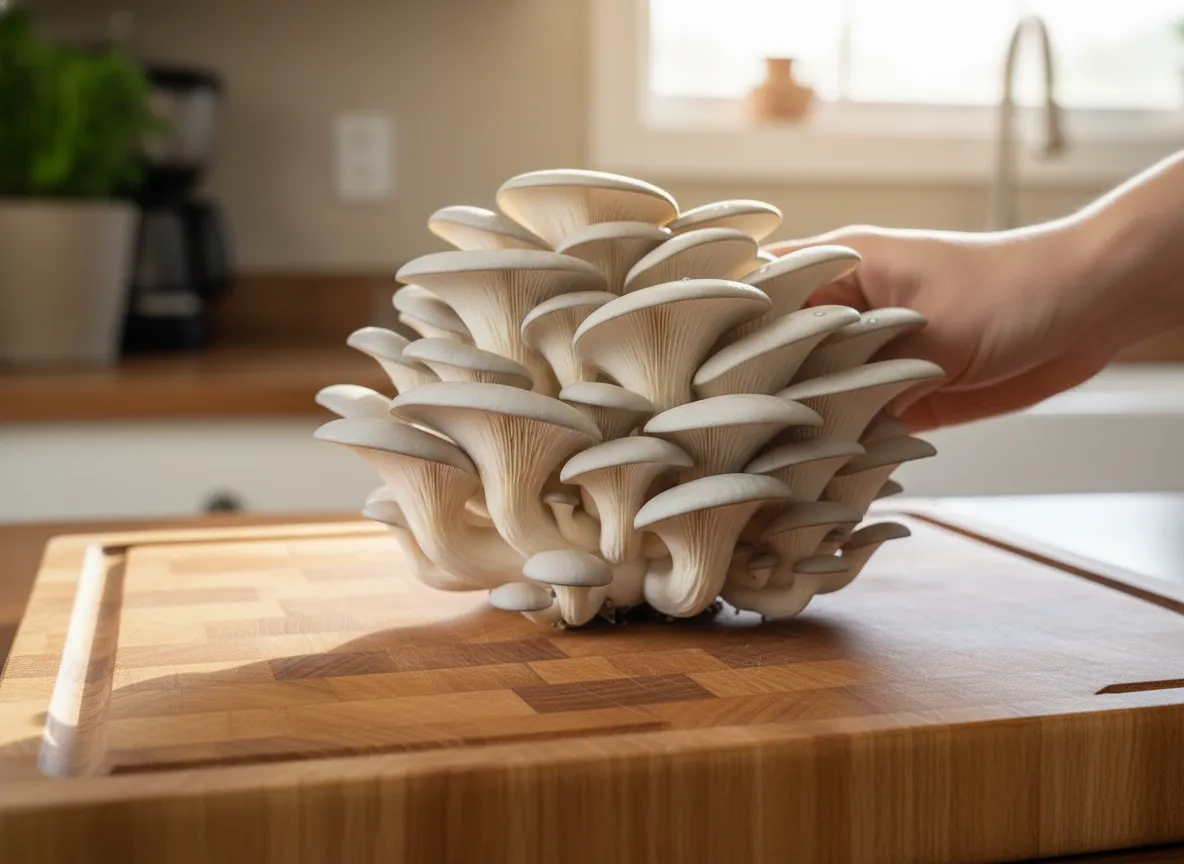
The blue oyster mushroom (Pleurotus ostreatus var. columbinus) is widely considered the hardiest and most beginner-friendly cultivated mushroom in the entire Pleurotus genus.
What makes blue oyster distinctive:
- Color: Steel blue to dark grey caps when young, fading to grey-brown as they mature. The blue tones are most intense at cool fruiting temperatures of 10-15°C
- Temperature tolerance: Fruits across the widest range of any oyster variety — 10-24°C, though best quality comes at the cooler end
- Colonization speed: Extremely aggressive, fully colonizing a 5 lb supplemented sawdust block in 10-14 days
- Substrate flexibility: Thrives on straw, HWFP, supplemented sawdust, coffee grounds, cardboard, and more
The single most important growing requirement is HIGH fresh air exchange (FAE). Blue oysters need more FAE than almost any other cultivated species — 4-8 air exchanges per hour during fruiting. Insufficient FAE produces the classic complaint: long, spindly stems with tiny caps.
Blue oyster is the default recommendation for first-time growers because it tolerates imperfect conditions and still produces reliably. Start here before moving to more demanding species.
Ophiocordyceps sinensis is a parasitic fungus that infects the larvae of ghost moths (Thitarodes species) high in the Himalayan and Tibetan Plateau at elevations of 3,000-5,000 meters. It is commonly called caterpillar fungus or yartsa gunbu in Tibetan.
Why it commands prices of $20,000-$60,000+ per kilogram:
- Cannot be cultivated — despite decades of research, no one has successfully produced the sexual fruiting body at commercial scale outside its natural habitat
- Extremely limited habitat — only found in specific alpine meadows in Tibet, Nepal, Bhutan, and parts of India and China
- Labor-intensive harvest — collectors crawl across hillsides at high altitude, plucking individual specimens by hand during a 6-8 week window in late spring
- Cultural demand — prized in Traditional Chinese Medicine for over 1,500 years as a tonic for energy, stamina, and vitality
- Declining populations — overharvesting and climate change have reduced yields by an estimated 30-50% over the past two decades
The economics affect entire communities. In some Tibetan regions, caterpillar fungus harvest accounts for 40-80% of household income. This economic dependence makes conservation efforts extremely complicated.
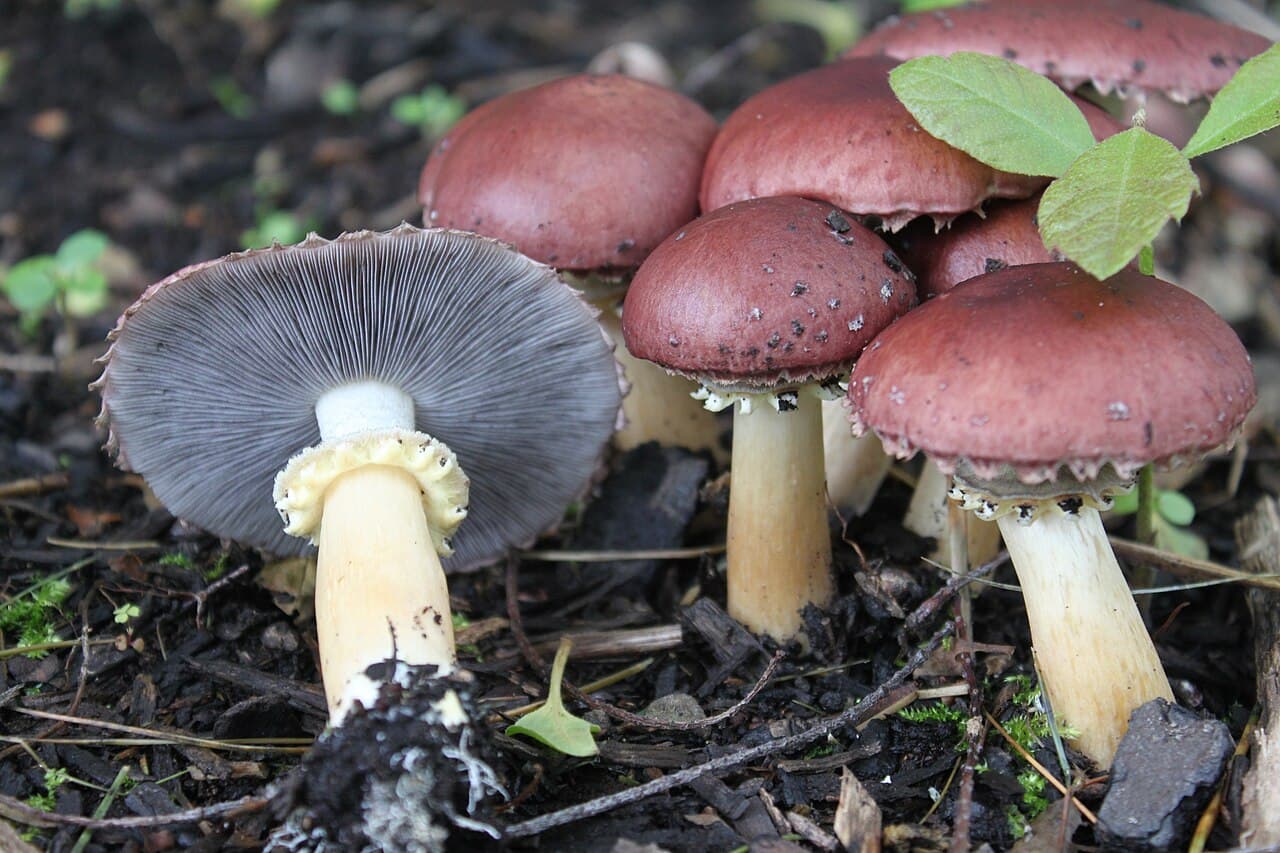
There is no difference — wine cap and king stropharia are two common names for the exact same species, Stropharia rugosoannulata. Other names include garden giant and burgundy mushroom.
Key facts about this species:
- Appearance: Large caps (up to 30cm across) that start deep burgundy-wine and fade to tan-brown with age. Prominent ring on the stem and purple-grey spore print
- Habitat: A wood-loving saprophyte that thrives outdoors in hardwood chip beds, straw mulch, and garden paths
- Temperature: Fruits at 10-24°C, preferring the 15-20°C sweet spot
- Flavor: Mild, slightly nutty, with a potato-like texture when cooked
Why wine caps are ideal for outdoor cultivation:
- No sterile technique required — inoculate directly into outdoor wood chip beds
- Establishes a perennial patch that can produce for 3-5 years with annual top-dressing of fresh chips
- Excellent companion for garden beds — breaks down mulch, improves soil structure, and some growers report reduced slug damage
- Produces impressively large mushrooms with minimal effort
To start a wine cap bed: spread 10-15cm of fresh hardwood chips, mix in grain spawn at 10% by volume, water thoroughly, and wait 2-4 months for the first flush.
The term "king mushroom" almost always refers to the king oyster mushroom (Pleurotus eryngii), though the name creates confusion because it overlaps with several other common names.
Clearing up the naming confusion:
- King oyster = king trumpet = trumpet mushroom = French horn mushroom — all the same species, Pleurotus eryngii
- King mushroom — informal shorthand, almost always means king oyster
- King bolete — a completely different mushroom (Boletus edulis), also called porcini or cep
- King stropharia — Stropharia rugosoannulata, the wine cap mushroom, unrelated to oysters
What makes the king oyster special:
- The thick, meaty stem is the prized part, unlike other oyster species where the cap is the focus
- Stems can reach 10-15cm long and 3-5cm thick, with a dense, scallop-like texture
- Excellent shelf life of 10-14 days refrigerated, far longer than other fresh mushrooms
- Requires more controlled conditions than other oysters — sterilized substrate, cold shock for pinning, and lower fruiting temperatures of 12-18°C
When a recipe calls for "king mushroom," use king oyster. Slice the stems into thick rounds and sear until golden for the best results.
Yes, it is possible to grow mushrooms from store-bought specimens, but success rates are limited and results are inconsistent compared to starting with proper spawn.
How stem butt cloning works:
- Cut the very bottom of the stem (the base that was attached to the substrate) from a fresh store-bought mushroom
- Place this tissue on damp cardboard, coffee grounds, or pasteurized straw in a container with air holes
- Keep at 20-24°C in a dark location and mist lightly to maintain moisture
- If viable mycelium is present, you may see white growth within 5-10 days
- Once colonized, transfer to a larger substrate volume
Why success is limited:
- Store mushrooms may be days or weeks old, reducing mycelial viability
- Refrigeration weakens and can kill the mycelium at the stem base
- Contamination is common without sterile technique
- Many commercial varieties are proprietary strains that may not perform well outside commercial growing conditions
Species most likely to succeed: Oyster mushrooms have the highest success rate for stem butt cloning due to their aggressive colonization. King oyster, shiitake, and lion's mane are more difficult.
For reliable results, buy quality grain spawn from a reputable supplier. It costs $10-15 and guarantees viable, vigorous mycelium.
Mushrooms are not plants. This is one of the most common misconceptions in biology. Fungi belong to their own biological kingdom, completely separate from the plant kingdom. Understanding this distinction is fundamental to growing mushrooms successfully.
Why mushrooms are not plants:
- No photosynthesis — mushrooms cannot make their own food from sunlight. They digest external organic matter
- Cell walls made of chitin (like insect exoskeletons), not cellulose like plant cell walls
- No roots, stems, leaves, or flowers — the structures you see serve entirely different functions
- Genetically closer to animals than to plants based on DNA analysis
What the fungal organism actually looks like:
- The main body is mycelium — a white, web-like network of microscopic threads (hyphae) growing through soil, wood, or other substrates
- Mycelium is usually hidden inside the substrate and invisible unless you break it open
- The mushroom itself is the fruiting body — the reproductive structure, analogous to a fruit on a tree
- A single mycelial network can spread across acres of forest floor underground
Because mushrooms are not plants, they need completely different growing conditions — no sunlight for energy, no soil with mineral nutrients, and no watering like a garden. They need organic substrate, humidity, fresh air, and indirect light.
A spore print captures the pattern and color of a mushroom's spores, and it is one of the most useful identification tools and the starting point for home cultivation from wild specimens.
Step-by-step process:
- Select a mature mushroom with fully opened cap and visible gills, pores, or teeth
- Remove the stem by cutting flush with the cap bottom
- Place the cap gill-side down on a piece of paper. Use half white, half black paper (or aluminum foil) to see spores of any color
- Cover with a glass, bowl, or cup to block air drafts
- Wait 6-12 hours (overnight is ideal) in a still, room-temperature location
- Carefully lift the cap to reveal the spore deposit
What the spore print color tells you:
- White/cream: Amanita, Lepista, many Russula, Lactarius
- Pink: Entoloma, Pluteus
- Brown/chocolate: Agaricus, Cortinarius
- Purple-brown to black: Stropharia, Coprinopsis, Psathyrella
To preserve a spore print, spray lightly with hairspray or clear fixative and store flat in a sealed bag. For cultivation purposes, spore prints can be stored in a sealed bag in the refrigerator and remain viable for months to years.
The terms mushroom cultivation and mushroom farming are often used interchangeably, but they generally imply different scales of operation with distinct goals, methods, and economics.
Mushroom cultivation (hobby to small scale):
- Typically refers to growing mushrooms as a hobby, educational pursuit, or small side business
- Scale: a few bags or buckets to perhaps 50-100 blocks at a time
- Space: spare room, closet, garage, or small grow tent
- Investment: $50-500 for basic equipment
- Focus: experimenting with species, learning technique, personal consumption, and small local sales
Mushroom farming (commercial scale):
- Implies a business operation with consistent production, sales channels, and revenue goals
- Scale: hundreds to thousands of blocks per week
- Space: dedicated grow rooms with climate control, clean rooms for inoculation, and cold storage
- Investment: $10,000-100,000+ depending on scale
- Focus: efficiency, yield optimization, consistent quality, market development, and profitability
Both are valid paths, and many successful mushroom farmers started as hobby cultivators. The key differences are scale, investment, and intent rather than the fundamental biology, which remains the same whether you are growing 5 bags or 5,000.
The golden oyster mushroom (Pleurotus citrinopileatus) is a stunning bright yellow oyster species native to eastern Asia that has become increasingly popular with home cultivators and farmers market vendors worldwide.
Key characteristics:
- Appearance: Vivid lemon-yellow to golden clusters that fade to cream-white when cooked. One of the most visually striking cultivated mushrooms
- Flavor: Mild, slightly nutty with a delicate cashew-like taste. More subtle than blue oyster
- Shelf life: Very short — 1-2 days after harvest. Must be sold or eaten immediately
Growing parameters:
- Colonization: 21-27°C for 10-14 days — prefers slightly warmer temps than blue oyster
- Fruiting: 18-28°C with 85-95% humidity and high FAE
- Substrate: Straw, hardwood pellets, supplemented sawdust, coffee grounds
- Spawn rate: 10-15% by weight
Golden oysters are a WARM weather species — they fruit best at 20-25°C and struggle below 15°C. This makes them an excellent summer species to complement blue oysters in winter. They are aggressive colonisers and very resistant to contamination, making them beginner-friendly despite their exotic appearance.
The extremely short shelf life is the main challenge — plan to sell or eat within 24 hours of harvest.
The phoenix oyster (*Pleurotus pulmonarius*) is a warm-weather oyster species closely related to the common oyster mushroom (P. ostreatus). With 590 monthly searches worldwide, it's a species many growers encounter without realising it's distinct from standard oyster.
How phoenix oyster differs from common oyster:
- Temperature: Prefers warmer fruiting temperatures (15-25°C) compared to blue oyster's cool preference (10-18°C)
- Appearance: Lighter coloured — cream to pale tan caps, thinner flesh, smaller clusters
- Growth speed: Faster colonisation and fruiting than P. ostreatus
- Season: Thrives in summer heat when blue oysters struggle
- Substrate: Same range — straw, hardwood, coffee, coir. Very undemanding
Why it matters for growers:
Phoenix oyster fills the summer production gap that blue oyster leaves. When ambient temperatures exceed 20°C and blue oysters produce thin, leggy fruits, phoenix oyster thrives. Many commercial farms grow both species year-round: blue oyster October-April, phoenix oyster May-September.
Widely distributed in the wild — MO observations confirm P. pulmonarius in Arizona (Coconino Co., July-August), New York, Michigan, and throughout North America, typically on dead hardwoods in warmer months.
Often sold as "summer oyster" or "Italian oyster" in spawn catalogs.
A mushroom growing medium is any material that provides nutrients and physical support for mycelium to colonise and eventually produce mushrooms. With 590 monthly searches worldwide, this term is essentially synonymous with "substrate" but often used by complete beginners.
Common mushroom growing media:
- Straw (wheat or oat) — pasteurised, used for oyster mushrooms. Cheap and widely available
- Hardwood sawdust/pellets — sterilised, used for lion's mane, shiitake, king oyster. Often supplemented with bran
- Coco coir + vermiculite + gypsum (CVG) — pasteurised, used for bulk monotub grows. Easy to prepare
- Brown rice flour + vermiculite (BRF) — sterilised in jars for PF Tek. The classic beginner medium
- Grain (rye, oats, millet, wheat) — sterilised, used for spawn production. Not a fruiting medium
- Logs — fresh hardwood inoculated with plug spawn for outdoor growing
- Coffee grounds — free from cafes, mixed 50/50 with another medium for oyster mushrooms
- Manure-based compost — composted horse manure + straw for button mushrooms (Agaricus bisporus)
Choosing your growing medium depends on:
- Your species — different mushrooms need different nutrients
- Your equipment — supplemented media require sterilisation (pressure cooker), plain media can be pasteurised (no PC needed)
- Your budget — straw and coffee are cheapest, hardwood pellets offer best results per dollar
Sulfur shelf is another common name for chicken of the woods (Laetiporus sulphureus) — one of the most recognisable and sought-after wild edible mushrooms in the world, with an estimated 90,500 monthly searches globally.
Why so many names? This species goes by:
- Chicken of the woods — the most common name, referring to its meat-like texture
- Sulfur shelf — referring to its bright sulfur-yellow pore surface
- Chicken mushroom — informal shorthand
- Laetiporus sulphureus — the scientific name
How to identify sulfur shelf:
- Bright orange-yellow shelf-like brackets growing on dead or dying hardwood trees, especially oak
- Brackets can reach 30-60cm across and weigh several kilograms
- Pore surface is bright sulfur-yellow (not gills — this is a polypore)
- Flesh is thick, firm, and white to pale yellow
- Young specimens are moist and tender; older ones become dry and chalky
Only harvest young, tender specimens — the outer edges should be moist and flexible. Once the flesh becomes dry, white, and crumbly, it is past its prime. Always cook thoroughly. Some people experience GI distress from specimens growing on conifers or eucalyptus, so stick to hardwood-grown chicken of the woods for the safest eating.
Despite the similar poultry-themed names, hen of the woods and chicken of the woods are completely different species that look nothing alike. This is one of the most common naming confusions in mushroom foraging.
Hen of the woods (Grifola frondosa):
- Also called maitake (Japanese name meaning "dancing mushroom")
- Grows in overlapping grey-brown rosettes at the base of oak trees
- Estimated 33,100 monthly searches globally
- Appears in autumn (September-November) in temperate regions
- Returns to the same tree year after year — a reliable foraging spot
- Texture: tender, layered fronds. Excellent sautéed or in soups
- Can be cultivated on supplemented hardwood but is very slow (12+ weeks colonisation)
Chicken of the woods (Laetiporus sulphureus):
- Also called sulfur shelf
- Grows as bright orange-yellow shelf brackets on the trunk or branches of dead/dying trees
- Estimated 90,500 monthly searches globally
- Appears spring through autumn depending on region
- Texture: firm, meaty, genuinely chicken-like when young
- Very difficult to cultivate — best sourced by foraging
Quick rule: Hen = grey-brown rosettes at the BASE. Chicken = bright orange shelves on the TRUNK.
Need more help? Dr. Myco can answer follow-up questions about common mushroom varieties based on thousands of real growing experiences.
Ask Dr. MycoMore in Species Guides
Oyster Mushrooms
15 tips
Lion's Mane
13 tips
Shiitake
13 tips
King Oyster
12 tips
Reishi
13 tips
Chestnut & Other Gourmet
15 tips
Mushroom Health & Medicinal Benefits
17 tips
Cooking & Preparation
16 tips
Enoki, Maitake & Cordyceps
14 tips
Mushroom Alternate Names & Varieties
17 tips
Mushroom Supplement Guide
18 tips
Rare & Specialty Cultivatable Species
16 tips