Dónde Encontrar Setas Silvestres
15 consejos en Recolección e Identificación Silvestre
Por Andrew Langevin · Fundador, Nature Lion Inc · Autor colaborador, Mushroomology (Brill, 2026)
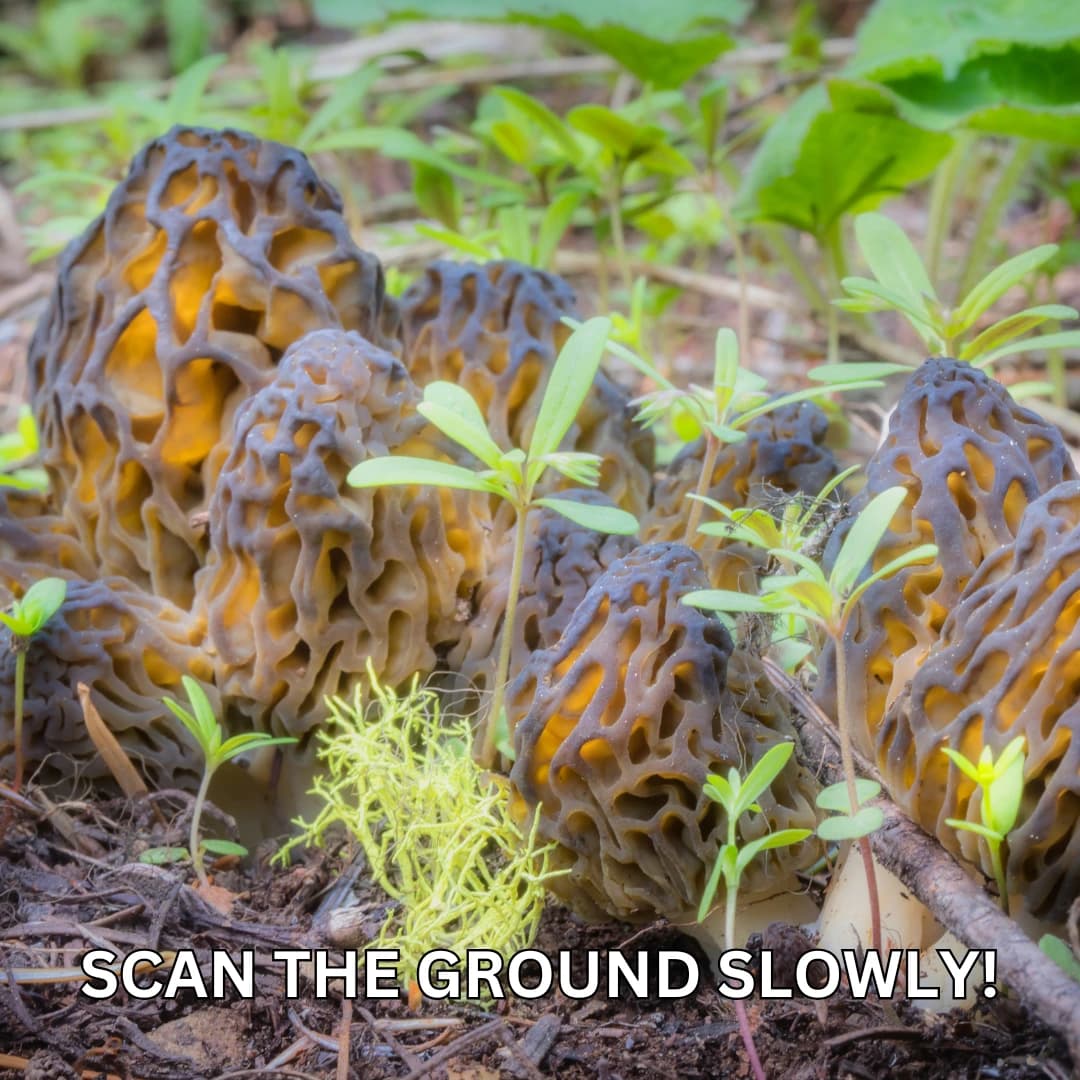
colmenillas grow in disturbed ground near specific tree species, and finding them requires learning their preferred habitats and timing. Look near dead or dying olmo, ash, tulipero, and apple orchards, as well as recent burn sites and river bottoms when soil temperatures reach 10-16°C (50-60°F).\n\nKey colmenilla habitats to search:\n\n- Dying olmo and ash trees: colmenillas have a strong association with these species, particularly trees that died within the last 1-3 years\n- Old apple orchards: Abandoned orchards are legendary colmenilla spots across the Midwest and Northeast\n- Burn sites: Areas that burned the previous year can produce massive colmenilla flushes, especially in conífera forests\n- River bottoms and flood plains: álamo and sycamore groves along waterways are prime territory\n- South-facing slopes: These warm up first in spring, producing the earliest colmenillas\n\nUse a soil thermometer — colmenillas fruit reliably when soil temperature at 10 cm depth reaches 10-16°C. Track the \"colmenilla progression\" northward each spring, starting in the southern US in marzo and reaching Canada by late mayo.
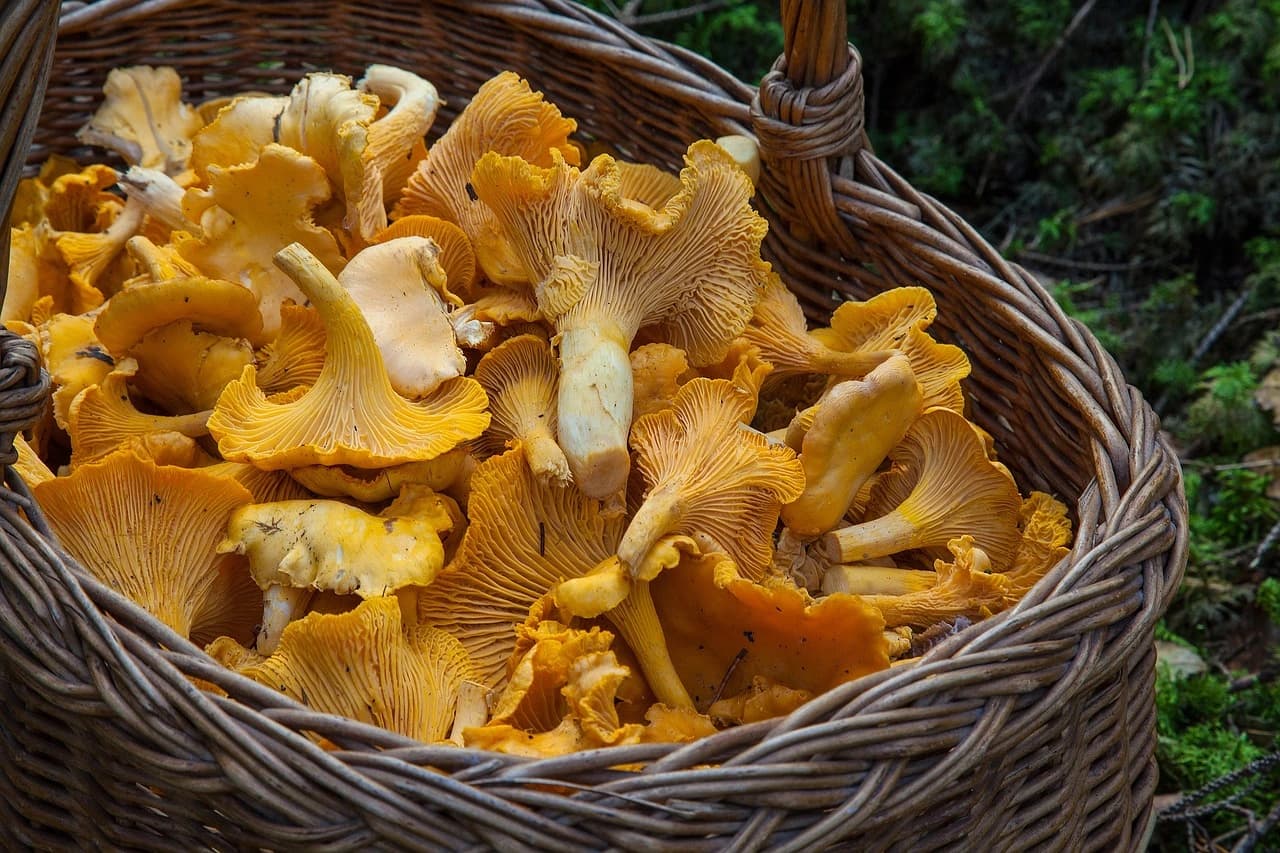
rebozuelos grow in mature forests with well-established micorrícico networks, favoring old-growth frondosas and mixed forests. Look near robles, coníferas, and on mossy hillsides with well-drained acidic soil, especially after summer rains.\n\nPrime rebozuelo habitats:\n\n- roble forests: rebozuelos dorados (Cantharellus cibarius) form micorrícico partnerships with robles throughout eastern Norteamérica\n- conífera forests: Pacific rebozuelos dorados thrive under abeto de Douglas, picea, and tsuga in the Pacific Northwest\n- Mossy hillsides: rebozuelos love moss-covered slopes with dappled sunlight and good drainage\n- Trail edges and old logging roads: The slight soil disturbance along paths often produces reliable patches\n\nrebozuelos prefer acidic soils with a pH of 4.0-5.5 and return to the same spots year after year. Once you find a productive patch, mark it with GPS and revisit it each season. They fruit from junio through octubre depending on your region, with peak season following warm summer rains.
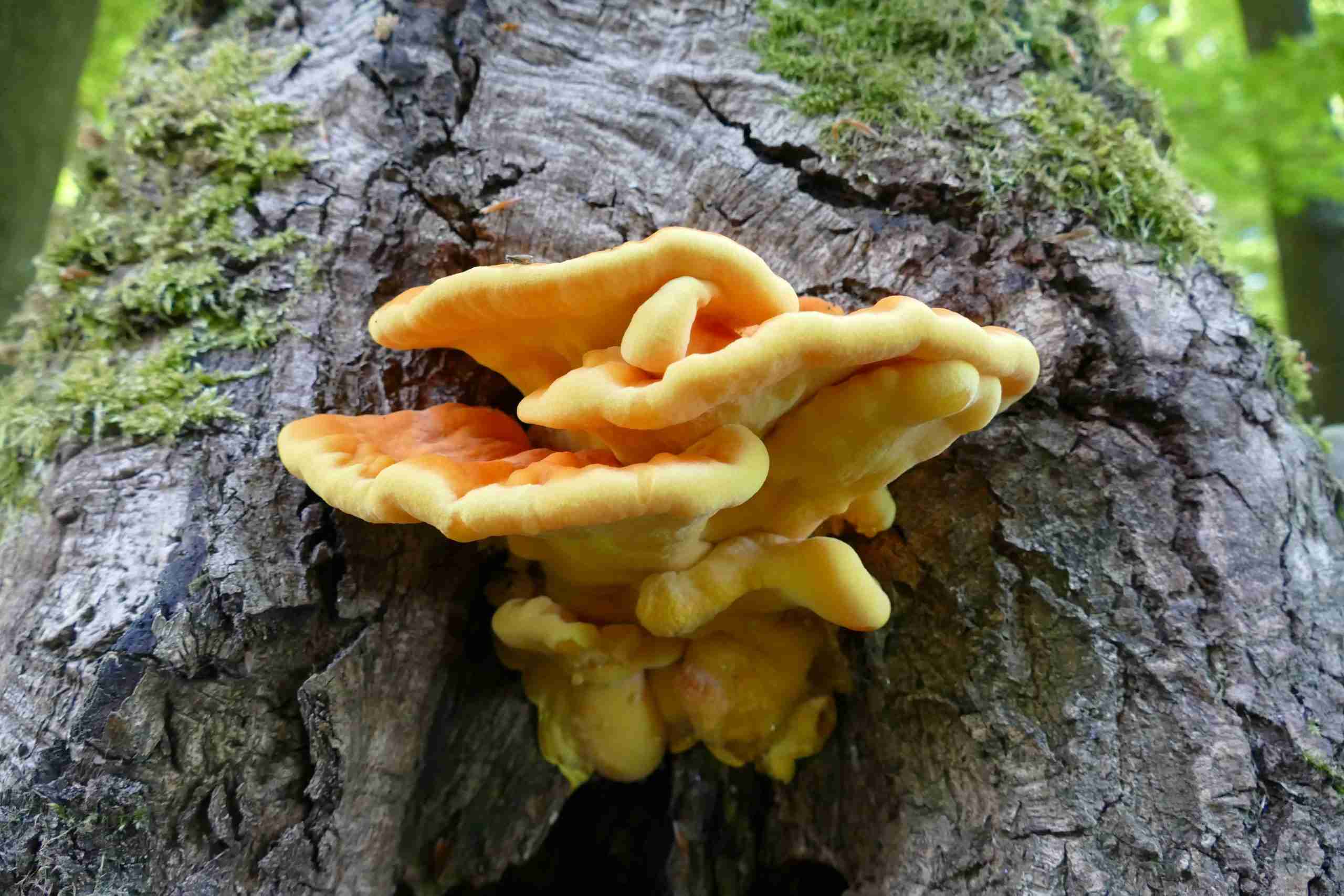
pollo del bosque (Laetiporus sulphureus and related species) grows on dead or dying frondosa trees, making it one of the easiest wild mushrooms to spot. Look for its unmistakable bright orange and yellow shelf-like brackets on standing dead robles, cherry, and other frondosas from late spring through fall.\n\nWhere to search:\n\n- Dead and dying roble trees: The most common host by far, both standing dead trees and fallen logs\n- Cherry, haya, and sauce trees: Secondary hosts that produce excellent specimens\n- Urban parks and suburban neighborhoods: pollo del bosque frequently fruits on ornamental trees and old stumps in developed areas\n- The same trees year after year: Once you find a productive tree, it will often produce new flushes for several consecutive years as the micelio consumes the wood\n\nHarvest young specimens when the edges are still tender and moist — older brackets become tough and chalky. Avoid specimens growing on coníferas or eucalipto, as these may cause gastrointestinal upset in some people.
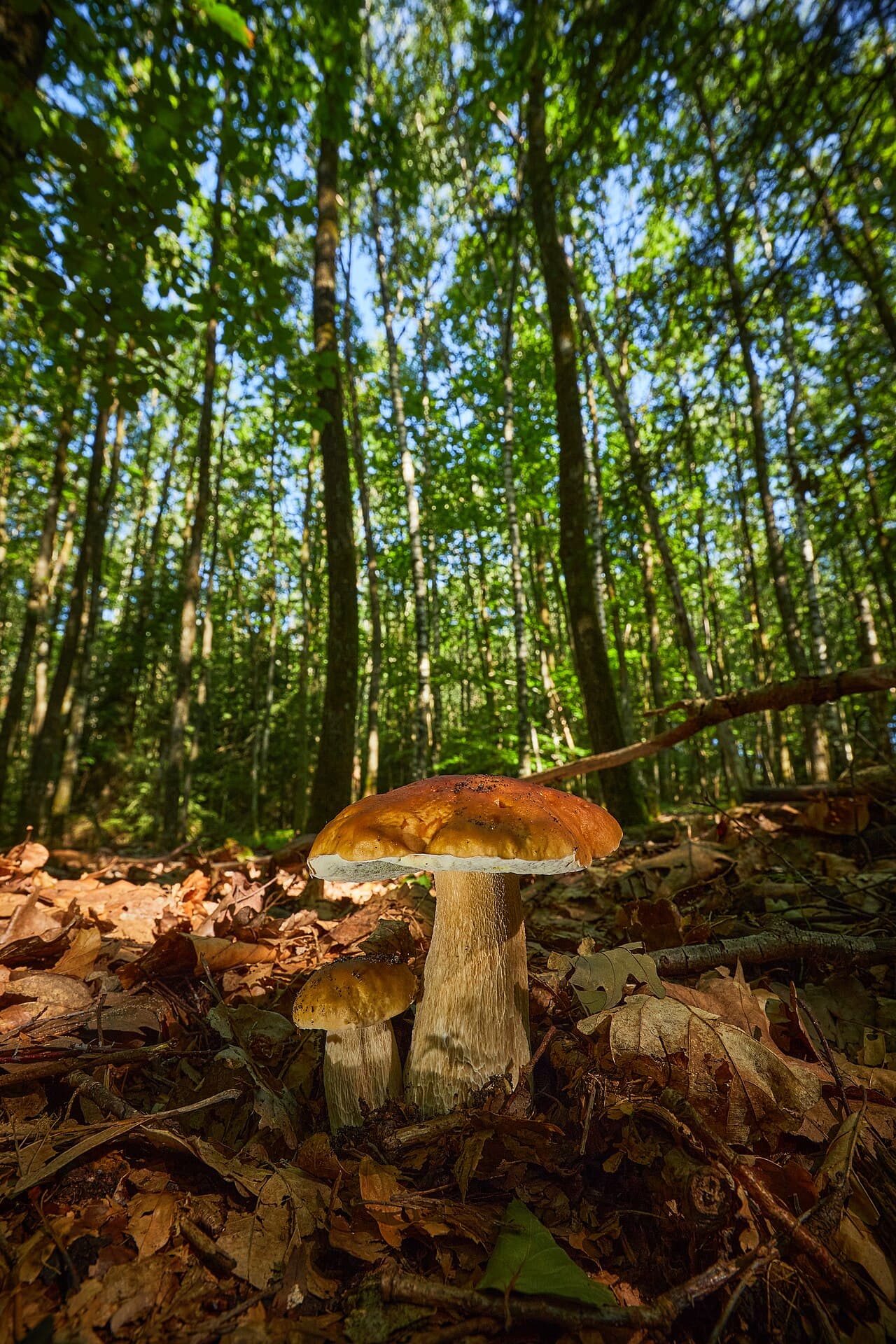
Porcini (Boletus edulis and related species) grow in micorrícico association with coníferas and some frondosas, typically at mid to high elevations. Search picea and pino forests at 1,000-3,000 m elevation from late summer through fall, especially after soaking rains.\n\nPrime porcini habitats:\n\n- picea forests: The classic European and Rocky Mountain habitat, particularly Engelmann and picea de Sitka\n- pino forests: pino silvestre in Europe, lodgepole and ponderosa pino in western Norteamérica\n- Mixed abedul and picea forests: Northern boreal forests produce excellent porcini\n- Forest edges and clearings: Porcini often fruit where dense forest meets meadows or trails\n\nTiming is critical — porcini typically appear from julio through octubre, with peak fruiting 7-14 days after heavy rain when temperatures are 10-20°C. They grow fast and are heavily targeted by insects, so check your spots every few days during prime conditions. Specimens with firm white flesh and no insect tunnels are the prize.
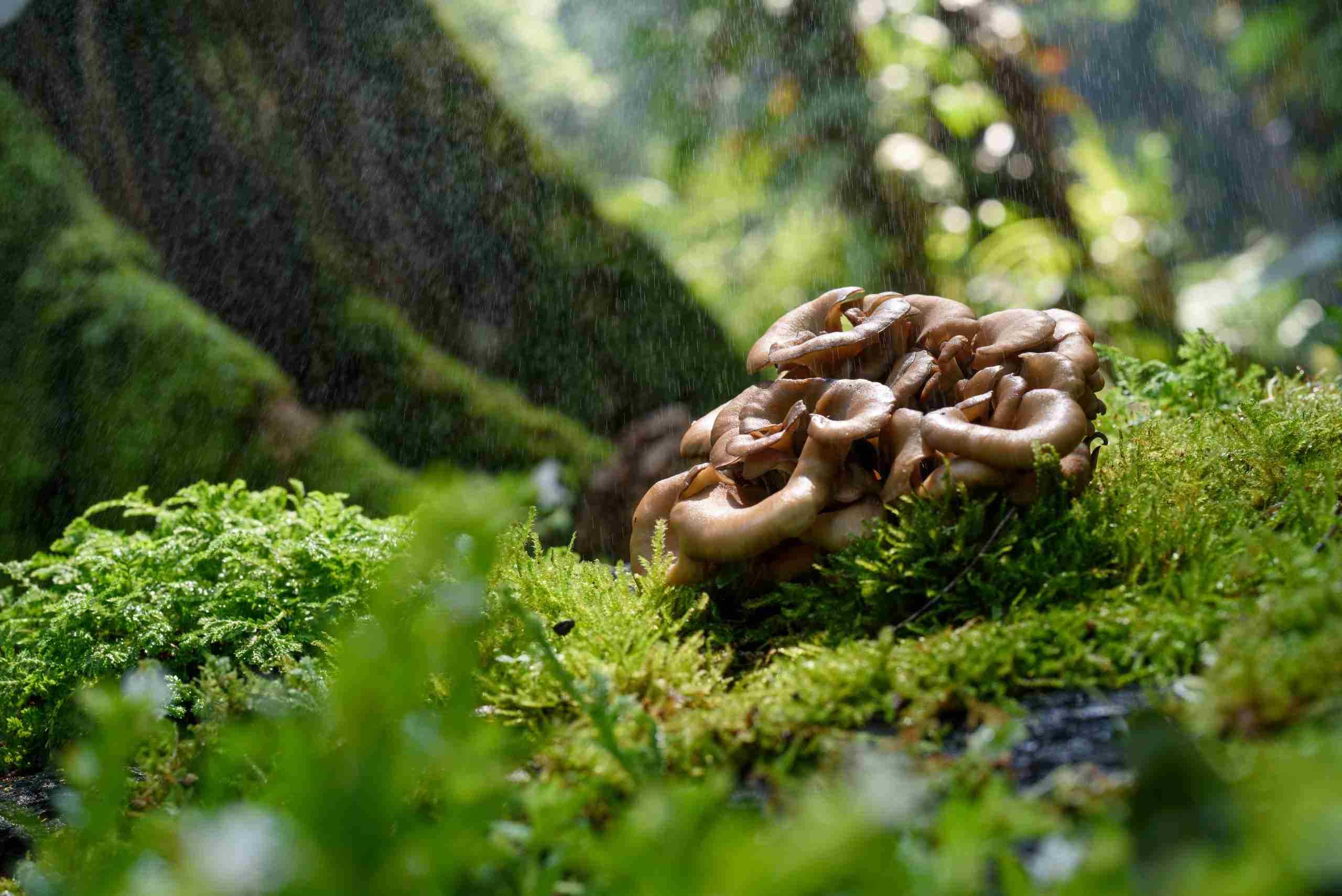
gallina del bosque (Grifola frondosa) grows at the base of living and dead roble trees, returning to the same tree year after year like clockwork. Check the base of mature robles from septiembre through noviembre — once you find a productive tree, it can produce 5-25 kg of maitake annually for a decade or more.\n\nWhere to look:\n\n- Base of large roble trees: The overwhelming favorite host, especially roble rojo, roble blanco, and pin roble\n- Old-growth and mature forests: Larger, older robles produce bigger flushes\n- Urban robles: Maitake frequently fruits on landscape robles in parks, yards, and along streets\n- Stumps of recently cut robles: Can produce impressive flushes for several years after the tree is removed\n\nMaitake grows in overlapping rosettes of grayish-brown fronds that can reach 20 kg or more on productive trees. Harvest by cutting at the base, leaving a small portion to allow regrowth. The best specimens are young and firm with pale edges — older ones become tough and develop a sour smell.
trompetas negras (Craterellus cornucopioides) grow in frondosa forests among moss and leaf litter, and they are notoriously difficult to spot despite being excellent edibles. Search moss-covered areas under robles and hayas in late summer through fall — their dark gray-black color makes them nearly invisible against the forest floor.\n\nHabitat and finding tips:\n\n- frondosa forests with heavy leaf litter: Especially under robles, hayas, and arces\n- Mossy banks and slopes: The moss seems to help retain the moisture they need\n- Near water features: Stream banks, drainage areas, and low spots in the forest\n- Along trail edges: Slightly disturbed areas often produce good patches\n\nThe biggest challenge is visual detection. trompetas negras blend perfectly with dark leaf litter and shadows. Experienced foragers recommend scanning from a low angle with the sun behind you, which makes their funnel shapes cast small shadows. Once you spot one, freeze and scan carefully — where there is one, there are usually dozens hiding in plain sight.
setas langosta are not a single species but the result of the parasitic fungus Hypomyces lactifluorum attacking Russula or Lactarius mushrooms. Search mixed frondosa and conífera forests from julio through octubre wherever *Russula* and *Lactarius* species are abundant.\n\nWhere to find them:\n\n- Mixed forests with tsuga, picea, and frondosas: These forests support large populations of the host species\n- Areas where *Russula* and *Lactarius* fruit heavily: If you see lots of these species, setas langosta may be nearby\n- Under tsuga trees: A particularly productive association in the northeastern US and Pacific Northwest\n- Semi-buried in leaf litter: setas langosta often push up through duff and can be partially hidden\n\nThe parasitic transformation creates a firm, bright orange-red exterior that is actually easier to spot than the host species. The parasite renders the host safe to eat even if the original species would have been acrid or mildly toxic. Harvest firm, bright-colored specimens and avoid any showing signs of decay or soft spots.
Matsutake (Tricholoma matsutake and related species) grow in very specific habitats, making them one of the most challenging and rewarding foraging targets. Search sandy, well-drained soils near pino lodgepole, jack pino, and shore pino along the Pacific coast and in northern boreal forests.\n\nKey matsutake habitats:\n\n- Coastal pino forests: Shore pino and pino lodgepole on sandy soils along the Pacific coast from British Columbia to Northern California\n- Jack pino forests: Northern Ontario, Quebec, and the upper Midwest\n- Sandy, nutrient-poor soils: Matsutake prefer lean, acidic soils where competition from other fungi is reduced\n- Specific elevation bands: In mountainous areas, they fruit in narrow elevation ranges that shift with local conditions\n\nMatsutake are extremely habitat-specific — a productive patch may be only 20-30 m across in an otherwise barren forest. Look for slight bumps in the duff layer (\"mushrumps\") where cuerpos fructíferos push up before breaking the surface. The most prized specimens are harvested before the veil breaks. Expect to invest significant scouting time before finding your first productive spot.

setas erizo (Hydnum repandum and Hydnum umbilicatum) grow in conífera and frondosa forests, often in the same areas where you find rebozuelos. Search mossy, well-drained forest floors under robles, hayas, coníferas, and mixed forests from late summer through late fall.\n\nWhere to look:\n\n- rebozuelo habitat: If you find rebozuelos, keep an eye out for setas erizo — they share similar micorrícico associations and soil preferences\n- Mossy conífera forests: Particularly productive under picea, fir, and tsuga\n- Old-growth frondosa forests: robles and hayas in mature forests support reliable patches\n- Trail edges and gentle slopes: Similar to rebozuelos, setas erizo favor slightly disturbed or sloping ground\n\nsetas erizo are an excellent beginner foraging target because they have no dangerous look-alikes. Their key identifying feature is the tooth-like spines (not gills or pores) under the cap. The pale cream to orange cap, mild flavor, and lack of toxic mimics make them one of the safest wild mushrooms to collect. They fruit later than rebozuelos, extending the foraging season into noviembre.
melena de león (Hericium erinaceus) grows on dead and dying frondosa trees, often appearing high up on standing trunks where wounds or broken branches expose the heartwood. Look on haya, arce, roble, and abedul trees from late summer through fall, checking wounds, broken limbs, and old knotholes 2-10 m above ground.\n\nWhere to search:\n\n- Dead and dying haya trees: The single most common host across eastern Norteamérica\n- Wounded arce and roble trees: Storm damage, broken limbs, and old pruning cuts provide entry points\n- Along rivers and streams: frondosa trees in riparian zones are prone to storm damage that creates melena de león habitat\n- Old-growth forests: Mature forests with abundant deadwood produce the most reliable fruitings\n\nmelena de león often fruits high on standing trees, so look up frequently while walking through frondosa forests. The white, shaggy, icicle-like mass is unmistakable once you spot it. Specimens can reach 1-5 kg and are best harvested while still white and firm — yellowing or browning indicates age. Check productive trees annually, as they often fruit from the same wound for multiple seasons.

setas ostra (Pleurotus ostreatus and related species) are among the most common and widespread wild edible mushrooms, growing on dead and dying frondosas virtually worldwide. Search fallen logs, dead standing trees, and stumps of deciduous frondosas year-round — oysters fruit in a wider temperature range than almost any other wild edible.\n\nPrime seta ostra habitats:\n\n- Fallen frondosa logs: Especially haya, poplar, álamo, olmo, and arce\n- Dead standing trees and stumps: Often fruit in large clusters on the shaded side\n- Storm damage areas: Freshly downed trees and broken limbs are rapidly colonized\n- Riparian forests: álamo and sauce along rivers and streams are excellent hosts\n\nsetas ostra can fruit from spring through winter, even surviving light frosts. In mild climates, they fruit nearly year-round. Cool-weather fruitings (5-15°C / 40-60°F) often produce the firmest, best-quality specimens. Watch for the pale-capped look-alike *Pleurocybella porrigens* (alas de ángel) on coníferas — stick to oysters growing on frondosas for safety.
seta de vino mushrooms (Stropharia rugosoannulata) are saprófito decomposers that thrive on wood chips, mulch, and decaying plant material — making them uniquely common in urban and suburban environments. Look in wood chip mulch along trails, in garden beds, around playgrounds, and in landscaped areas from spring through fall.\n\nWhere to find setas de vino:\n\n- Wood chip trails and paths: Municipal trails with frondosa chip surfaces are prime habitat\n- Garden mulch beds: Especially thick layers of frondosa mulch around trees and shrubs\n- Composting areas: Near community gardens, yard waste sites, and compost piles\n- Urban parks: Landscaped areas with fresh wood chip mulch\n\nsetas de vino are large, striking mushrooms with burgundy-red caps that fade to brown with age, prominent ring on the stem, and purple-gray gills. They can reach 15-20 cm across and weigh 200-300 g. They are also one of the easiest wild mushrooms to cultivate intentionally — simply inoculate a garden bed of frondosa chips with seta de vino spawn and harvest flushes for years. This makes them a perfect bridge between foraging and growing.
Many prized edible mushrooms form micorrícico partnerships with specific tree species, meaning they only grow near certain trees. Learning tree-mushroom pairings is one of the most powerful foraging strategies — identify the trees first, then search for their fungal partners.\n\nKey tree-mushroom associations:\n\n- roble: rebozuelos, gallina del bosque, pollo del bosque, boletes, trompetas negras\n- haya: melena de león, rebozuelos, setas erizo, trompetas negras\n- abedul: Chaga, políporo del abedul, abedul bolete, matamoscas\n- pino: Matsutake, boleto viscoso, boletus edulis, níscalo\n- picea/Fir: boletus edulis, rebozuelos, matsutake, setas erizo\n- olmo/Ash: colmenillas (especially dying trees), setas ostra\n- álamo/Poplar: colmenillas, setas ostra\n- Apple: colmenillas (old orchards)\n- tsuga: setas langosta, rebozuelos, setas erizo\n\nmicorrícico species exchange sugars and nutrients with their host trees, creating a partnership that can last decades. saprófito species (oyster, melena de león, pollo del bosque) feed on dead wood regardless of the living tree nearby. Understanding this distinction helps you predict what you might find in any forest.
Reading a forest means interpreting landscape features to predict where mushrooms are most likely to fruit. Evaluate slope, moisture, canopy density, tree species, soil type, and disturbance history to narrow your search area before you even start looking at the ground.\n\nWhat to assess:\n\n- Slope and aspect: South-facing slopes warm first in spring (early colmenillas). North-facing slopes stay cool and moist longer (rebozuelos, setas erizo)\n- Canopy density: 60-80% canopy cover is ideal — enough shade to retain moisture, enough light for air circulation\n- Moisture indicators: Moss, ferns, and liverworts signal consistently moist conditions favorable for fungi\n- Tree species composition: Identify dominant trees and cross-reference with known mushroom associations\n- Soil type: Sandy, well-drained soils favor matsutake and boletes. Rich, loamy soils favor colmenillas and rebozuelos\n- Disturbance: Recent tree falls, fire scars, and old logging roads create productive microhabitats\n\nExperienced foragers develop a \"mushroom eye\" — they scan the landscape at a macro level before zooming in. Walk slowly, stop frequently, and scan from multiple angles. The transition zones between different habitats (forest edge, stream banks, slope changes) are often the most productive areas.
Early morning is generally the best time for mushroom foraging, though the mushrooms themselves do not appear or disappear based on the hour. Head out at dawn or shortly after for the best combination of morning dew (which makes mushrooms glisten and stand out), cool temperatures that keep specimens fresh, and angled light that reveals shapes on the forest floor.\n\nWhy morning is optimal:\n\n- Morning dew: Moisture on mushroom caps creates a subtle sheen that makes them easier to spot against leaf litter\n- Low-angle light: Early sun casts long shadows that highlight the three-dimensional shapes of mushrooms against flat ground\n- Cool temperatures: Specimens harvested in morning coolness stay firmer and last longer than those collected in afternoon heat\n- Fewer insects: Slugs and flies are less active in cool morning hours\n- First-to-the-patch advantage: Popular foraging areas see competition, and early arrivals get the best specimens\n\nOvercast days can be excellent at any hour — diffuse light reduces harsh shadows and makes colors pop. Avoid foraging during or immediately after heavy rain, as waterlogged mushrooms are harder to identify and deteriorate faster after harvest. The 2-5 day window after rain is the sweet spot for both abundance and quality.
¿Necesitas más ayuda? Dr. Myco puede responder preguntas adicionales sobre dónde encontrar setas silvestres basándose en miles de experiencias reales de cultivo.
Pregunta al Dr. MycoMás en Recolección e Identificación Silvestre
Fundamentos y Seguridad en la Recolección
10 consejos
Especies Comestibles Selectas
12 consejos
Especies Mortales y Tóxicas
14 consejos
Guías Regionales de Recolección
9 consejos
Guía de Identificación Visual
17 consejos
Identificación y Recolección de Chaga
10 consejos
Guía de Recolección de Colmenillas
10 consejos
Variedades de Colmenillas y Rebozuelos
10 consejos
Recolección en Norteamérica por Región
14 consejos
Guía de Recolección en Europa
12 consejos
Recolección en el Hemisferio Sur y Trópicos
10 consejos
Especies de Recolección por Temporada
12 consejos
Hábitats de Setas y Asociaciones con Árboles
12 consejos
Especies de Rebozuelo por Región
12 consejos
Especies de Colmenilla por Región
12 consejos
Pollo del Bosque y Cola de Pavo por Región
10 consejos
Setas Mortales — Dónde Crecen Realmente
10 consejos
Melena de León, Erizo y Langosta Silvestres
10 consejos
Boletus Edulis, Trompeta Negra y Otras Selectas
10 consejos