Hábitats de Setas y Asociaciones con Árboles
12 consejos en Recolección e Identificación Silvestre
Por Andrew Langevin · Fundador, Nature Lion Inc · Autor colaborador, Mushroomology (Brill, 2026)
abedul trees support several distinctive and highly sought-after fungal species, both micorrícico partners in the soil and saprófito species on the wood itself. The most notable abedul-associated mushrooms are chaga, políporo del abedul, abedul bolete, and setas ostra.\n\nKey abedul-associated species:\n\n- Chaga (*Inonotus obliquus*): Forms black, charcoal-like conks on living abedul trunks. Harvested for tea and extracts, chaga grows slowly over 5-20 years and is increasingly overharvested in some regions\n- políporo del abedul (*Fomitopsis betulina*): A smooth, white to brown bracket fungus found almost exclusively on dead abedul. Historically used as tinder and traditional medicine\n- abedul bolete (*Leccinum scabrum*): A micorrícico species with a brown cap and black-scaly white stem, found in the soil near abedul roots from summer through fall\n- setas ostra (*Pleurotus ostreatus*): Commonly fruit on dead abedul logs and standing dead trees\n- matamoscas (*Amanita muscaria*): The iconic red-and-white spotted mushroom forms micorrícico bonds with abedul (toxic — do not eat)\n\nabedul forests are among the most productive habitats for beginner foragers because the tree is easy to identify and its associated fungi are relatively distinctive.
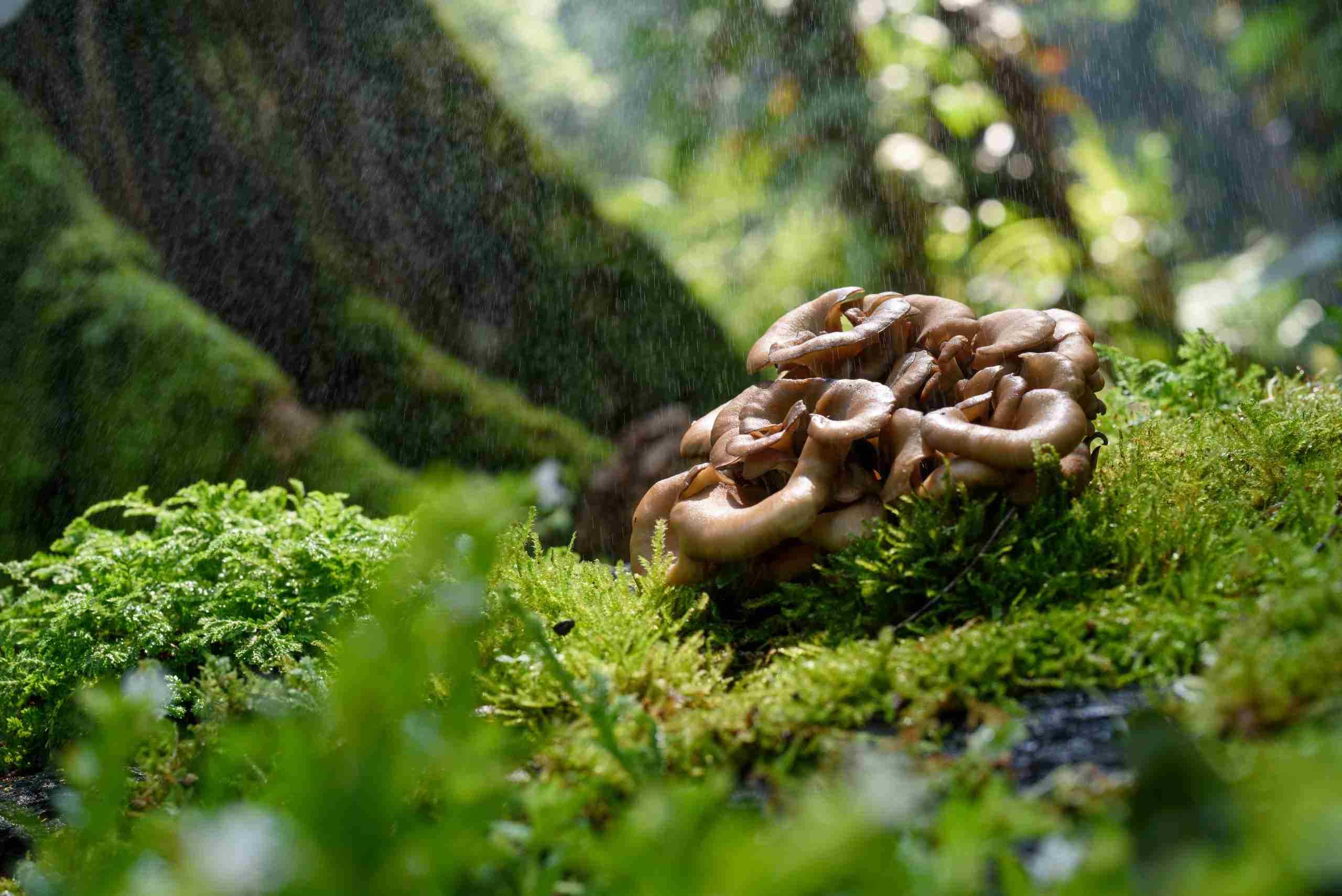
roble trees are the single most important tree genus for mushroom foragers in temperate regions, supporting more prized edible species than any other tree. roble associates include gallina del bosque, pollo del bosque, rebozuelos, trompetas negras, and sulfur shelf — making roble forests the most productive foraging habitat.\n\nKey roble-associated species:\n\n- gallina del bosque (*Grifola frondosa*): Grows at the base of living robles, returning to the same tree annually\n- pollo del bosque (*Laetiporus sulphureus*): Bright orange brackets on dead and dying roble trunks and branches\n- rebozuelos (*Cantharellus* spp.): micorrícico with roble roots, fruiting in the surrounding soil\n- trompetas negras (*Craterellus cornucopioides*): Found in roble leaf litter on mossy slopes\n- Boletes (*Boletus* spp.): Several excellent edible boletes partner with robles\n- Sulfur shelf: Another name for pollo del bosque when growing specifically on roble\n\nIf you can only learn one tree for foraging, learn to identify robles. Their distinctive lobed leaves, acorns, and rugged bark make them easy to recognize. A single mature roble can support multiple edible fungal species simultaneously.
pino forests host a distinct set of micorrícico mushrooms that differ significantly from frondosa associates. Key pino-associated species include matsutake, boletus edulis, boleto viscoso, níscalo, and pino spike — all forming underground partnerships with pino roots.\n\nNotable pino-associated species:\n\n- Matsutake (*Tricholoma matsutake*): Grows in sandy soils under lodgepole, jack, and shore pino. One of the world's most valuable wild mushrooms\n- boletus edulis (*Boletus edulis*): Found under various pino species at mid to high elevations\n- boleto viscoso (*Suillus luteus*): A common and easily recognized bolete with a slimy brown cap, found in pino plantations worldwide\n- níscalo (*Lactarius deliciosus*): Bright orange with green-staining flesh, found exclusively under pinos. The most popular foraging target in Australia\n- pino spike (*Chroogomphus rutilus*): An underappreciated edible with a pointed cap and smoky flavor\n\npino plantations are excellent foraging sites for beginners because the even-aged trees create uniform habitat and the open understorey makes spotting mushrooms easier. The needle litter also provides good contrast for mushroom caps. Look 1-3 m from the trunk base where feeder roots are most active.

Dead logs are among the richest microhabitats for edible fungi, supporting saprófito species that decompose wood for nutrition. The most common and prized log-dwelling species are setas ostra, melena de león, cola de pavo, pollo del bosque, and yesquero del artista.\n\nWhat to look for on dead logs:\n\n- setas ostra (*Pleurotus* spp.): Shelf-like clusters on frondosa logs, available nearly year-round in mild climates\n- melena de león (*Hericium erinaceus*): White, shaggy masses on haya and arce logs and standing dead trees\n- pollo del bosque (*Laetiporus* spp.): Bright orange brackets, especially on roble logs and stumps\n- cola de pavo (*Trametes versicolor*): Colorful banded brackets used for medicinal tea, extremely common on all frondosa logs\n- yesquero del artista (*Ganoderma applanatum*): Large, woody shelf fungus used in traditional medicine and art\n- Shiitake relatives (*Lentinula* spp.): Wild relatives of cultivated shiitake on roble logs in some regions\n\nThe stage of decomposition matters. Freshly fallen logs (1-3 years dead) attract different species than well-rotted logs. Oysters and pollo del bosque prefer fresher wood, while melena de león and yesquero del artista appear on older, more decayed logs. Check both the top and underside of logs — many species fruit on the shaded, moist underside.
Grasslands and meadows support a distinct group of saprófito mushrooms that decompose grass roots and organic matter in the soil. Common meadow species include bejín gigante, seta de corro de hadas, champiñón silvestre, barba de viejo, and champiñón de caballo — all growing independently of trees.\n\nKey grassland species:\n\n- bejín gigante (*Calvatia gigantea*): Unmistakable white spheres up to 50 cm across in pastures and meadows. Edible when the interior is pure white\n- seta de corro de hadas (*Marasmius oreades*): Forms distinctive dark-green circles in lawns and pastures. Small but flavorful with a nutty taste\n- champiñón silvestre (*Agaricus campestris*): The wild ancestor of the champiñón de botón, found in well-grazed pastures with pink gills that darken to brown\n- barba de viejo (*Coprinus comatus*): Tall, cylindrical white mushrooms that appear in disturbed grassland, roadsides, and lawns. Must be eaten within hours of harvest before they dissolve into black ink\n- champiñón de caballo (*Agaricus arvensis*): Large, white, with an anise-like smell, found in pastures and parkland\n\nExercise extreme caution with white mushrooms in grass — the deadly ángel destructor (Amanita bisporigera) can appear in grassy areas near trees. Always check for a volva (cup at the base) and take a esporada.
Rain is the primary trigger for mushroom fruiting, but different species respond at different speeds. The fastest responders appear within 1-3 days of heavy rain, while most prized edibles need 5-14 days of sustained soil moisture to develop full-sized cuerpos fructíferos.\n\nResponse times by species:\n\n- 1-3 days after rain: coprinos, barba de viejo, setas de corro de hadas, and small lawn fungi appear rapidly\n- 3-7 days after rain: setas ostra, champiñones silvestres, bejines, and many common woodland species\n- 7-14 days after rain: rebozuelos, boletes, gallina del bosque, and most micorrícico species that build large cuerpos fructíferos\n- Season-long moisture needed: Matsutake, truffles, and some boletes require sustained seasonal moisture rather than a single rain event\n\nTemperature matters as much as moisture. A summer thunderstorm followed by 20-25°C days triggers different species than autumn rain at 10-15°C. The ideal combination for most temperate edibles is 25-50 mm of rain followed by 5-7 days of mild temperatures (10-20°C) without additional heavy rain. Experienced foragers maintain rain logs and correlate them with fruiting observations to refine their timing year after year.
Compost piles, wood chip mulch, and garden beds provide nutrient-rich substrates that support vigorous saprófito fungi. Common compost and mulch species include seta de vino, barba de viejo, coprinos, and champiñones silvestres — many of which are excellent edibles that thrive in human-modified landscapes.\n\nSpecies to look for:\n\n- seta de vino (*Stropharia rugosoannulata*): The king of mulch mushrooms. Large burgundy caps on thick stems, found in frondosa chip beds. One of the best-tasting wild mushrooms\n- barba de viejo (*Coprinus comatus*): Appears in disturbed soil and compost edges, especially where soil has been mixed with organic matter\n- coprinos (*Coprinopsis* spp.): Clusters of small gray mushrooms that dissolve into black ink within hours. Edible when young, but C. atramentaria causes severe reactions with alcohol\n- champiñón silvestre (*Agaricus campestris*): Occasionally fruits from rich compost\n- Garden giant (*Stropharia rugosoannulata*): Another name for seta de vino when cultivated in garden beds\n\nMulch beds in their second year are the most productive — fresh chips need time for micelio to colonize, while very old mulch has been fully decomposed. Avoid eating mushrooms from mulch treated with pesticides, herbicides, or dyed colorants, as these chemicals can concentrate in fungal tissue.
High-elevation forests above 2,000 m support specialized mushroom communities adapted to short growing seasons, cool temperatures, and specific tree associations. Key alpine species include boletus edulis, matsutake, colmenillas de fuego, and various high-altitude rebozuelo and Russula species.\n\nNotable high-elevation species:\n\n- boletus edulis (*Boletus edulis*): Thrives at 2,000-3,000 m in picea and fir forests, often producing larger and less insect-damaged specimens than at lower elevations\n- Matsutake (*Tricholoma murrillianum*): Found at mid to high elevations in conífera forests of the Pacific Northwest and Rocky Mountains\n- colmenillas de fuego (*Morchella* spp.): Appear in enormous quantities the spring after high-elevation forest fires, sometimes producing hundreds of kg per hectare\n- Alpine rebozuelos: Several species fruit in subalpine meadows and forest edges\n- ala de halcón (*Sarcodon imbricatus*): A scaly-capped tooth fungus found under picea at elevation\n\nHigh-elevation foraging has a compressed season — typically julio through septiembre, compared to abril through noviembre at low elevation. Snow melt timing determines the start of the season, and early fall frosts end it abruptly. Monitor snowpack reports and plan your trips for 3-4 weeks after snow clears from your target elevation.
Wetlands, river corridors, and flood plains support unique mushroom communities tied to moisture-loving tree species and rich alluvial soils. Key wetland-associated species include colmenillas along waterways, oysters on álamo, bejines gigantes in river meadows, and various species adapted to periodically flooded soils.\n\nWhat to find in riparian habitats:\n\n- colmenillas (*Morchella* spp.): álamo, olmo, and ash groves along rivers are classic colmenilla habitat, especially in the Midwest and Great Plains\n- setas ostra (*Pleurotus* spp.): álamo, sauce, and box elder logs along rivers produce large flushes\n- bejín gigante (*Calvatia gigantea*): Frequents river meadows and flood plain pastures with rich soil\n- barba de viejo (*Coprinus comatus*): Common along riverbanks and levees where soil is disturbed\n- seta de miel (*Armillaria* spp.): Attacks stressed trees along waterways, fruiting in large clusters at the base\n\nRiver corridors act as fungal highways — flowing water distributes spores downstream, and the consistently moist microclimate supports fruiting even during dry periods. Check areas 2-5 days after high water events, as the moisture and nutrient deposit from flooding can trigger impressive mushroom flushes along the high-water line.
Urban environments produce surprisingly good mushroom foraging opportunities, with many species thriving on landscape trees, mulch beds, and managed lawns. Common urban finds include pollo del bosque, barba de viejo, setas ostra, setas de corro de hadas, and escudo del druida — all growing in parks, along streets, and in residential yards.\n\nUrban species to watch for:\n\n- pollo del bosque (*Laetiporus* spp.): Fruits on ornamental robles, cherries, and old stumps in parks and yards\n- barba de viejo (*Coprinus comatus*): Abundant in disturbed soil along sidewalks, parking lots, and construction sites\n- setas ostra (*Pleurotus* spp.): Found on dead street trees, storm-damaged limbs, and wood chip piles\n- seta de corro de hadas (*Marasmius oreades*): Common in well-maintained lawns and athletic fields\n- escudo del druida (*Cerioporus squamosus*): A large, shelf-like mushroom on wounded urban trees, especially olmo and arce\n- gallina del bosque (*Grifola frondosa*): Frequently fruits at the base of urban robles in parks and along streets\n\nUrban foraging requires extra caution about contamination. Avoid mushrooms growing near heavily trafficked roads (lead and heavy metals), recently treated lawns (pesticides and herbicides), or industrial sites. Parks with organic management practices are the safest urban foraging sites.
Coastal habitats including sand dunes, maritime forests, and beach-adjacent woodlands support specialized fungal communities adapted to sandy, salt-influenced soils. Sand-loving species include several unique boletes, agarics, and bejines that grow exclusively in coastal dune ecosystems and pino forests near the ocean.\n\nCoastal species to discover:\n\n- Sand-dwelling boletes (*Suillus* spp.): Several species associate with shore pino and beach grass in coastal dune systems\n- Matsutake (*Tricholoma* spp.): Coastal populations near shore pino on the Pacific coast are among the most productive in Norteamérica\n- Dune stinkhorn (*Phallus hadriani*): A pink-based stinkhorn found in sand dunes, edible only at the \"egg\" stage\n- Sandy bejines (*Lycoperdon* spp.): Small bejines that fruit in beach grass and dune areas\n- Coastal rebozuelos: Pacific rebozuelos dorados near shore pino in coastal forests\n\nCoastal foraging is highly seasonal — most species fruit from late summer through fall when fog moisture supplements rainfall. The interface between beach dune systems and coastal pino forests is particularly productive. Be aware of protected dune habitats — many coastal areas are ecologically sensitive, and foraging may be restricted to protect endangered plants and nesting shorebirds. Check local regulations before collecting.
Yes, combining tree identification with soil analysis gives you a powerful predictive framework for finding wild mushrooms. Experienced foragers can walk into an unfamiliar forest, identify the dominant trees and soil characteristics, and predict with reasonable accuracy which edible species are likely to fruit there.\n\nThe prediction framework:\n\n- Step 1 — Identify dominant trees: roble, haya, abedul, pino, picea, tsuga, and their associates each predict specific mushroom communities\n- Step 2 — Assess soil type: Sandy and well-drained (matsutake, boletes) vs. rich and loamy (colmenillas, rebozuelos) vs. clay-heavy (fewer species)\n- Step 3 — Check soil pH: Acidic soils (pH 4.0-5.5) favor rebozuelos and boletes. Near-neutral soils (pH 6.0-7.0) favor colmenillas and champiñones silvestres\n- Step 4 — Evaluate moisture: Consistent moisture from slope aspect, canopy cover, or proximity to water increases probability\n- Step 5 — Consider disturbance history: Recent fires, logging, or tree death can trigger specific species like colmenillas or setas de miel\n\nThis approach is not foolproof — even in perfect habitat, mushrooms may not fruit in dry years or off-seasons. But it dramatically narrows your search area. Keep a foraging journal recording GPS coordinates, tree species, soil observations, weather conditions, and what you found. After 2-3 seasons, clear patterns emerge that guide you to productive spots reliably.
¿Necesitas más ayuda? Dr. Myco puede responder preguntas adicionales sobre hábitats de setas y asociaciones con árboles basándose en miles de experiencias reales de cultivo.
Pregunta al Dr. MycoMás en Recolección e Identificación Silvestre
Fundamentos y Seguridad en la Recolección
10 consejos
Especies Comestibles Selectas
12 consejos
Especies Mortales y Tóxicas
14 consejos
Guías Regionales de Recolección
9 consejos
Guía de Identificación Visual
17 consejos
Identificación y Recolección de Chaga
10 consejos
Guía de Recolección de Colmenillas
10 consejos
Variedades de Colmenillas y Rebozuelos
10 consejos
Recolección en Norteamérica por Región
14 consejos
Guía de Recolección en Europa
12 consejos
Recolección en el Hemisferio Sur y Trópicos
10 consejos
Especies de Recolección por Temporada
12 consejos
Dónde Encontrar Setas Silvestres
15 consejos
Especies de Rebozuelo por Región
12 consejos
Especies de Colmenilla por Región
12 consejos
Pollo del Bosque y Cola de Pavo por Región
10 consejos
Setas Mortales — Dónde Crecen Realmente
10 consejos
Melena de León, Erizo y Langosta Silvestres
10 consejos
Boletus Edulis, Trompeta Negra y Otras Selectas
10 consejos