Recolección en el Hemisferio Sur y Trópicos
10 consejos en Recolección e Identificación Silvestre
Por Andrew Langevin · Fundador, Nature Lion Inc · Autor colaborador, Mushroomology (Brill, 2026)
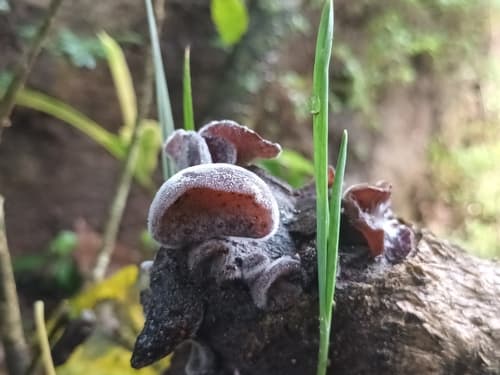
Australia offers a surprising variety of edible wild mushrooms, though the micológico knowledge base is still growing compared to Europe and Norteamérica. The most commonly foraged species are the níscalo, boleto viscoso, champiñón silvestre, and oreja de Judas.\n\nTop edible species found in Australia:\n\n- níscalo (Lactarius deliciosus): Found under introduced pino plantations across southeastern Australia. Bright orange with green-staining flesh and a distinctive carrot-colored milk when cut\n- boleto viscoso (Suillus luteus): Another pino-associated species with a slimy brown cap and spongy pores instead of gills. Peel the cap skin before cooking\n- champiñón silvestre (Agaricus campestris): Grows in pastures and grasslands, similar to the store-bought champiñón de botón. Pink gills that darken to brown with age\n- oreja de Judas (Auricularia cornea): Found on dead frondosa logs year-round in wetter regions. Rubbery texture, excellent in stir-fries\n\nAlways be cautious with Agaricus species in Australia — the deadly oronja mortal (Amanita phalloides) was introduced and now grows in similar habitats near roble trees, especially around Canberra and Melbourne.
New Zealand has a unique fungal flora shaped by its geographic isolation and mix of native bush and introduced plantation forests. Foragers can find both native species in indigenous forests and introduced European species under pino plantations.\n\nNotable edible species in New Zealand:\n\n- boleto viscoso (Suillus luteus) and níscalo (Lactarius deliciosus): Both thrive under pino radiata plantations throughout the country\n- oreja de Judas (Auricularia cornea): Grows on dead native frondosa and is commercially harvested by some foragers\n- Porcini (Boletus edulis): Found in some plantation forests, though less common than in Australia\n- champiñón silvestre (Agaricus campestris): Appears in pastures during autumn\n- Native coral fungi and bejines: Several edible native species exist but require careful identification\n\nNew Zealand's mushroom season peaks from marzo through junio (autumn), mirroring Australia's reversed seasons. The country has a relatively small number of deadly poisonous species compared to Australia, but the oronja mortal has not yet established itself in New Zealand. Still, never eat any mushroom without positive identification — several toxic Agaricus and Galerina species are present.
Sudamérica hosts extraordinary fungal diversity, from the temperate Patagonian forests to the tropical Amazon basin. The continent offers unique foraging opportunities not found anywhere else, though micológico knowledge varies greatly by region.\n\nKey foraging regions and species:\n\n- Patagonia (Chile and Argentina): Home to the prized cyttaria (Indian bread or pan de indio), a bright orange-yellow fungus that grows on haya austral trees. Also find boletes, rebozuelos, and colmenillas in the Valdivian temperate rainforest\n- Southern Brazil: Diverse Agaricus species in grasslands, plus oreja de Judas and setas ostra on dead timber\n- Andean highlands: Various bejines and boletes at elevation, some used in traditional cuisine\n- Tropical lowlands: setas de termita, oreja de Judas, and various tropical species on decaying wood\n\nLocal indigenous communities hold centuries of ethnomycological knowledge that is only beginning to be documented scientifically. If foraging in Sudamérica, connect with local sociedades micológicas in Chile (Fundacion Fungi), Argentina, and Brazil, as field guides specific to the region are limited compared to Norteamérica and Europe.
Australia's mushroom season is reversed from the hemisferio norte because the seasons are flipped. The peak foraging window is autumn, running from marzo through junio, when cooling temperatures and autumn rains create ideal fruiting conditions.\n\nSeasonal guide for Australian foraging:\n\n- Autumn (marzo-junio): The prime season. níscalos, boletos viscosos, champiñones silvestres, and pino boletes appear after the first significant autumn rains. This is equivalent to the hemisferio norte's septiembre-noviembre peak\n- Winter (junio-agosto): Some species continue fruiting in milder coastal regions. oreja de Judas and setas ostra can be found year-round in wetter areas\n- Spring (septiembre-noviembre): A secondary flush of some species, particularly in regions with spring rainfall\n- Summer (diciembre-febrero): Generally too hot and dry for most temperate species, though tropical northern regions may produce oreja de Judas and other heat-tolerant fungi\n\nThe key trigger is the same as anywhere: soaking rain followed by mild temperatures. In southeastern Australia, experienced foragers watch for the first sustained autumn rains (the \"autumn break\") and head to pino plantations 5-10 days later for níscalos.
Tropical regions produce a distinct set of edible mushrooms adapted to warm, humid conditions year-round. The most commonly foraged tropical species include oreja de Judas, setas de arroz, and setas de termita, all of which thrive in heat that would suppress temperate species.\n\nKey tropical edible mushrooms:\n\n- oreja de Judas (Auricularia spp.): Grows prolifically on dead frondosa throughout the tropics. Rubbery texture, mild flavor, available year-round after rain\n- seta de arroz (Volvariella volvacea): Naturally appears on rice straw, compost heaps, and oil palm waste. A staple of Southeast Asian cuisine\n- setas de termita (Termitomyces spp.): Grow from termite mounds across tropical Africa and Asia. Highly prized and impossible to cultivate commercially\n- Tropical setas ostra (Pleurotus spp.): Several warm-weather oyster species fruit on dead wood in humid forests\n- Schizophyllum commune (split gill): Extremely common on dead wood in the tropics, eaten in parts of Asia and Africa\n\nTropical foraging presents unique challenges: rapid decomposition means mushrooms appear and decay faster, insect infestation is more common, and fewer regional field guides exist. Humidity also favors toxic molds, so inspect specimens carefully and process your harvest quickly.
South Africa has a rich but underexplored fungal heritage, with foraging traditions strongest in the Western Cape and among rural communities who have harvested setas de termita for generations. The country offers both native species and introduced European fungi under pino and eucalipto plantations.\n\nNotable edible species in South Africa:\n\n- setas de termita (Termitomyces spp.): Harvested from termite mounds across the bushveld and lowveld. These are culturally significant and sold at rural markets, known locally as \"amakhowe\" in Zulu\n- pino ring (Lactarius deliciosus): Found under planted pino forests in the Western Cape, KwaZulu-Natal, and Mpumalanga\n- Boletes (Boletus and Suillus spp.): Several edible species grow in plantation forests\n- oreja de Judas (Auricularia spp.): Common on dead wood in subtropical KwaZulu-Natal and the Eastern Cape\n- champiñones silvestres (Agaricus campestris): Appear in grasslands after summer rains\n\nBe extremely cautious: the oronja mortal (Amanita phalloides) has been introduced to South Africa and grows under roble trees, particularly in the Western Cape around Cape Town and Stellenbosch. Several fatal poisonings have occurred. Always verify identification with the Cape sociedad micológica or a local expert.
Yes, both rebozuelos and colmenillas can be found in parts of the hemisferio sur, though they are far less common and widespread than in Europe or Norteamérica. Your best chances are in the temperate forests of southern Sudamérica and parts of Australasia.\n\nWhere to find them:\n\n- rebozuelos: Native Cantharellus species exist in parts of Australia, New Zealand, and Sudamérica, but they are not nearly as abundant as hemisferio norte populations. Some Australian foragers report finding them in native eucalipto forests, but sightings are sporadic\n- colmenillas (Morchella spp.): Found in Patagonia (Chile and Argentina) in their spring season (octubre-diciembre). Also reported in parts of southeastern Australia and New Zealand, particularly after bushfires, which can trigger dramatic colmenilla fruitings the following season\n\nThe hemisferio sur lacks the vast micorrícico networks that support enormous rebozuelo and colmenilla harvests in Pacific Northwest forests or European woodlands. This is partly because the dominant native trees (eucalipto, haya austral) support different fungal communities than the robles, coníferas, and frondosas of the north.\n\nFor reliable harvests of these prized species in the hemisferio sur, focus on plantation forests with introduced tree species or post-fire landscapes for colmenillas.
Australia is home to several dangerously toxic mushrooms, including one of the world's deadliest species. The most dangerous is the oronja mortal (Amanita phalloides), an introduced European species responsible for the majority of fatal mushroom poisonings in Australia.\n\nThe most dangerous species to know:\n\n- oronja mortal (Amanita phalloides): Introduced to Australia via imported roble trees. Now established around Canberra, Melbourne, Adelaide, and parts of Sydney. Greenish-yellow cap, white gills, prominent skirt and cup at the base. Causes fatal insuficiencia hepática\n- Yellow-staining mushroom (Agaricus xanthodermus): The most common cause of mushroom poisoning in Australia. Looks like a champiñón silvestre but stains bright chrome yellow when the base is cut or scratched. Causes severe gastrointestinal distress\n- seta fantasma (Omphalotus nidiformis): A bioluminescent native species that causes violent vomiting. Sometimes mistaken for setas ostra\n- Cortinarius spp.: Several native webcap species contain toxins that cause delayed insuficiencia renal\n\nThe oronja mortal is especially dangerous because it closely resembles the edible seta de arroz (Volvariella volvacea), leading to tragic poisonings among Asian immigrants familiar with foraging in their home countries. When foraging near roble trees in southeastern Australia, exercise extreme caution.
The seta de pino — Lactarius deliciosus, commonly called the níscalo — is Australia's most popular and recognizable foraging target. Its season runs from marzo through junio, coinciding with autumn rainfall and cooling temperatures in southeastern Australia.\n\nSeasonal timeline for níscalos:\n\n- Early season (marzo-abril): The first mushrooms appear after sustained autumn rains. Experienced foragers scout their favorite pino plantations after the first heavy rain events and return 7-10 days later\n- Peak season (abril-mayo): The largest and most consistent flushes occur during mid-autumn when soil moisture is high and temperatures are mild (10-18°C / 50-65°F)\n- Late season (mayo-junio): Fruiting tapers off as temperatures drop further, though some mushrooms continue appearing in warmer coastal regions\n\nLook for níscalos exclusively under Pinus radiata (pino de Monterrey) plantations, which are widespread in Victoria, South Australia, New South Wales, and Tasmania. The mushrooms have a distinctive bright orange cap that develops green patches with age, and they exude carrot-orange milk when cut.\n\nArrive early in the season — seta de pino foraging is extremely popular, and well-known spots near Melbourne and Adelaide attract crowds on autumn weekends.
The reversal of seasons between hemispheres fundamentally shifts the mushroom foraging calendar. When hemisferio norte foragers are picking colmenillas in abril, hemisferio sur foragers are harvesting autumn species like níscalos — and vice versa.\n\nKey differences to understand:\n\n- Autumn foraging (marzo-junio in the south): This is equivalent to septiembre-diciembre in the north. The same temperature-and-moisture triggers apply, just six months offset\n- Spring foraging (septiembre-noviembre in the south): If colmenillas fruit in your region, look for them now rather than in the hemisferio norte's marzo-mayo window\n- Online resources can mislead you: Most mushroom foraging content is written for Norteamérica and Europe. If a guide says \"look for rebozuelos in julio,\" that translates to roughly enero in the hemisferio sur — but local climate conditions matter more than simple month conversion\n\nThe reversal also affects spore availability and competition. hemisferio sur foragers benefit from a smaller community, meaning less competition for productive spots. However, fewer foragers also means fewer shared resources, trip reports, and regional identification guides.\n\nAlways calibrate your foraging to local weather patterns rather than rigidly converting hemisferio norte dates. Watch for the autumn break rains and temperature shifts that trigger fruiting in your specific region.
¿Necesitas más ayuda? Dr. Myco puede responder preguntas adicionales sobre recolección en el hemisferio sur y trópicos basándose en miles de experiencias reales de cultivo.
Pregunta al Dr. MycoMás en Recolección e Identificación Silvestre
Fundamentos y Seguridad en la Recolección
10 consejos
Especies Comestibles Selectas
12 consejos
Especies Mortales y Tóxicas
14 consejos
Guías Regionales de Recolección
9 consejos
Guía de Identificación Visual
17 consejos
Identificación y Recolección de Chaga
10 consejos
Guía de Recolección de Colmenillas
10 consejos
Variedades de Colmenillas y Rebozuelos
10 consejos
Recolección en Norteamérica por Región
14 consejos
Guía de Recolección en Europa
12 consejos
Especies de Recolección por Temporada
12 consejos
Dónde Encontrar Setas Silvestres
15 consejos
Hábitats de Setas y Asociaciones con Árboles
12 consejos
Especies de Rebozuelo por Región
12 consejos
Especies de Colmenilla por Región
12 consejos
Pollo del Bosque y Cola de Pavo por Región
10 consejos
Setas Mortales — Dónde Crecen Realmente
10 consejos
Melena de León, Erizo y Langosta Silvestres
10 consejos
Boletus Edulis, Trompeta Negra y Otras Selectas
10 consejos