Especies de Colmenilla por Región
12 consejos en Recolección e Identificación Silvestre
Por Andrew Langevin · Fundador, Nature Lion Inc · Autor colaborador, Mushroomology (Brill, 2026)
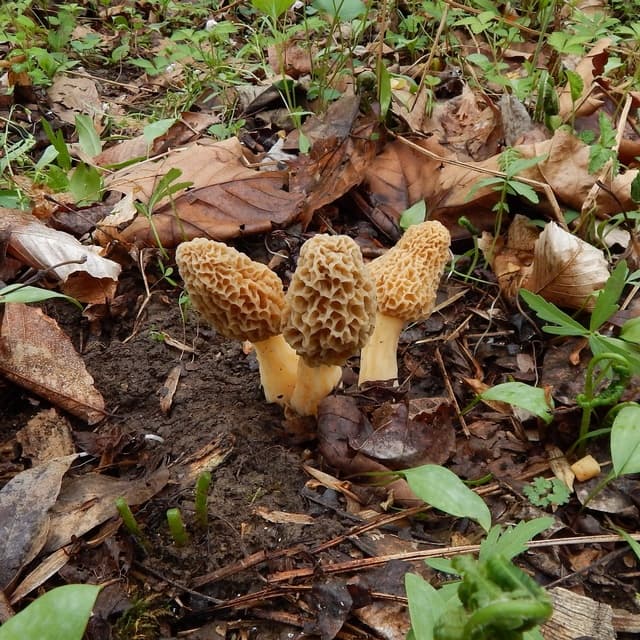
The Eastern US is the heartland of colmenilla diversity in Norteamérica, with at least four well-documented species fruiting in spring frondosa forests. Based on verified Mushroom Observer data, Morchella americana leads with 20 confirmed observations.\n\nEastern colmenilla species and verified locations:\n\n- M. americana (20 obs) — The common colmenilla amarilla. Verified at Brown County IN, Centre County PA, Crystal Lake, and Des Moines. Found under tulipero, ash, and olmo in rich bottomland forests\n- M. angusticeps (12 obs) — The colmenilla negra. Confirmed at Brown County, Greenbrook Sanctuary, and Jefferson National Forest. Fruits earlier than colmenillas amarillas, often in higher elevation frondosa forests\n- M. punctipes (11 obs) — The colmenilla semilibre. Documented at Bald Mountain Recreation Area, Bill's Woods, and Findlay OH. Cap attached only at the very top of the stem\n- M. diminutiva (6 obs) — The tiny colmenilla. Verified at Brown County, Centre County, and Georgia. Often under 5 cm tall and easily overlooked\n\nPeak season is abril through mayo, progressing from south to north as temperatures warm. Track soil temperatures — colmenillas typically emerge when soil reaches 10–13°C at 10 cm depth.

The Pacific Northwest's colmenilla flora is dominated by fire-associated and mountain species quite different from the Eastern frondosa colmenillas. Based on verified Mushroom Observer data, the region's most commonly observed species is Morchella snyderi, a colmenilla de fuego with 9 confirmed observations.\n\nPNW colmenilla species and verified locations:\n\n- M. snyderi (9 obs) — The PNW colmenilla de fuego. Verified at Rimrock Lake, Cascades Highway 12, and Eastern Shasta-Trinity National Forest. Fruits prolifically 1–2 years after forest fires\n- M. importuna (5 obs) — The landscape colmenilla. Confirmed at Lacey, Olympia, and urban settings. Grows in woodchip mulch and landscaping beds\n- M. tridentina (5 obs) — A mountain conífera colmenilla. Documented in the Cascades, Gold Hill, and Millersylvania State Park. Associated with coníferas at higher elevations\n\nPNW colmenilla season runs mayo through junio, later than Eastern populations due to cooler spring temperatures. The biggest harvests come from post-fire forests — commercial pickers follow wildfire maps from the previous year. colmenillas de fuego can produce extraordinary flushes, with hundreds of pounds harvested from a single burn area in good years.

California's colmenilla scene includes a unique urban species that fruits in garden mulch alongside mountain colmenillas de fuego found after wildfires. Based on verified Mushroom Observer data, Morchella rufobrunnea has 4 confirmed observations in distinctly urban settings.\n\nCalifornia colmenilla species and verified locations:\n\n- M. rufobrunnea (4 obs) — The urban garden colmenilla. Verified in San Diego and San Francisco. Fruits in landscaping bark, garden beds, and woodchip mulch — often in backyards and city parks\n- M. tridentina — Mountain conífera colmenilla found at higher elevations in the Sierra Nevada and Cascades\n- colmenillas de fuego (M. snyderi and related species) — Fruit prolifically in the year following California's frequent wildfires\n\nWhat makes California remarkable is M. rufobrunnea's enero through marzo fruiting season — the earliest colmenilla season in Norteamérica. While the rest of the country waits for abril, California foragers find colmenillas in urban gardens during winter rains. This species is also notable because it is one of the only colmenillas that can grow saprotróficamente (decomposing organic matter) rather than requiring a micorrícico tree partner. Check newly mulched garden beds, city park plantings, and landscape bark after winter rains.
The Midwest is America's colmenilla heartland, with some of the most productive and accessible colmenilla hunting in the country. Based on verified Mushroom Observer data, Morchella americana dominates the region with concentrations at well-known foraging areas.\n\nTop Midwest colmenilla locations from verified observations:\n\n- Brown County, Indiana (6+ obs) — Rich frondosa hollows with tulipero, ash, and olmo. One of the most documented colmenilla locations in Mushroom Observer\n- Crystal Lake area — Productive M. americana territory in mixed frondosa forests\n- Des Moines region — River bottom forests with dying olmo trees\n- Jasper County — M. angusticeps documented in upland frondosa forests\n\nPeak season is abril through mayo, with the progression following the \"colmenilla front\" north at roughly 100 km per week. Key habitat indicators:\n\n- Dying or recently dead olmo, ash, and tulipero trees\n- South-facing slopes that warm earliest in spring\n- River bottoms and flood plains with rich alluvial soil\n- Old apple orchards\n- Soil temperature at 10 cm reaching 10–13°C\n\nTrack soil temperature, not air temperature. A warm week followed by rain is the classic trigger for massive colmenilla flushes in the Midwest.
Just like with rebozuelos, the common Norteamérican colmenilla amarilla is NOT the European species. For generations, field guides labeled the common colmenilla amarilla as Morchella esculenta, but DNA studies published in 2012 by O'Donnell et al. revealed that it is actually Morchella americana, a species endemic to Norteamérica.\n\nKey differences between the species:\n\n- M. esculenta — European species. Rounded cap, random pit arrangement. Found across Europe under various frondosas\n- M. americana — Norteamérican species. Cap often more elongated, pits arranged in somewhat vertical rows. Based on verified Mushroom Observer data, confirmed at 20 locations across the Eastern US and Midwest\n\nThe 2012 phylogenetic revision identified at least 14 distinct colmenilla species in Norteamérica, most of which had been lumped under just 2–3 names. This means:\n\n- Your field guide's \"M. esculenta\" is actually M. americana\n- Your field guide's \"M. elata\" (colmenilla negra) may be M. angusticeps, M. snyderi, or several other species\n- Regional identification now matters — the same \"colmenilla amarilla\" name may apply to different species in different areas\n\nThis taxonomic revolution is still catching up with foraging culture. Many experienced hunters resist the name changes, but accurate identification matters for understanding ecology, seasonality, and distribution.

The colmenilla semilibre is a distinctive colmenilla species where the cap attaches to the stem only at its very top, hanging like a skirt with the lower edges free. Based on verified Mushroom Observer data, Morchella punctipes has 11 confirmed observations at locations including Bald Mountain Recreation Area, Holly Holdridge, and Pontiac Lake.\n\nIdentifying features:\n\n- Cap attachment: Connected to the stem only at the apex — pull the cap back to see large amounts of stem inside the cap\n- Cap shape: Conical, with vertical ridges and pits\n- Size: Typically 5–12 cm tall, often with a long stem relative to cap size\n- Season: Often the earliest colmenilla to fruit — appears 1–2 weeks before colmenillas amarillas in the same area\n- Habitat: Rich frondosa forests, especially near streams and river bottoms\n\ncolmenillas semilibres are edible and good, though generally considered slightly less flavorful than yellow or colmenillas negras. They serve as an important scouting indicator — when you find colmenillas semilibres, colmenillas amarillas are typically 7–14 days behind in the same habitat. Some foragers dismiss them, but experienced hunters welcome them as the first sign that colmenilla season has truly begun. Do not confuse with Verpa bohemica (wrinkled thimble cap), which has a completely smooth interior and cottony pith inside the stem.
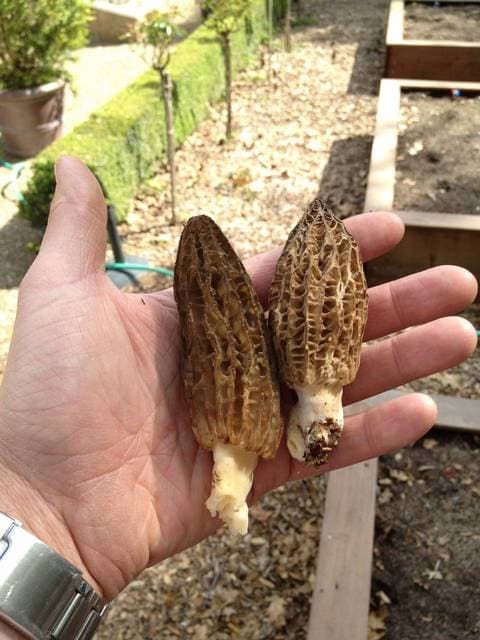
Morchella importuna is a colmenilla negra species that has adapted to thrive in urban landscapes, making it perhaps the most surprising colmenilla in Norteamérica. Based on verified Mushroom Observer data, all 5 confirmed observations come from urban and suburban settings: Lacey, mayotown, Olympia, and Sebastopol.\n\nWhy M. importuna grows in cities:\n\n- saprotrófico lifestyle: Unlike most colmenillas which are micorrícico (needing tree partners), M. importuna can decompose woodchips and bark mulch directly\n- Preferred substrate: Fresh frondosa woodchip mulch, landscape bark, and recently disturbed garden beds\n- Fruiting triggers: Mulch laid down in fall often produces colmenillas the following spring when temperatures and moisture align\n- Common locations: Commercial landscaping, garden beds, parking lot borders, path edges, city parks\n\nThis species has been spreading across the Pacific Northwest and is increasingly reported in other regions. Landscapers unknowingly create perfect habitat by spreading fresh woodchip mulch every season. The colmenillas are perfectly edible and identical in culinary quality to wild-harvested colmenillas.\n\nTo find urban colmenillas, check freshly mulched areas at commercial properties, apartment complexes, and public parks in abril and mayo. They often appear in the same beds year after year until the mulch is fully decomposed.
colmenillas de fuego are colmenilla species that fruit prolifically in forests burned by wildfire, producing some of the largest colmenilla harvests in Norteamérica. Based on verified Mushroom Observer data, Morchella snyderi has 9 confirmed observations in post-fire forests at Rimrock Lake, Eastern Shasta-Trinity National Forest, and the Cascades.\n\nFire colmenilla facts:\n\n- Primary species: M. snyderi is the dominant colmenilla de fuego in the PNW and Northern Rockies. M. exuberans and M. tomentosa also occur in burn areas\n- Timing: Fruit the first or second spring after a forest fire. The first year is typically the most productive\n- Habitat: Moderate-severity burns where some trees survived. Completely scorched areas often produce fewer colmenillas\n- Scale: Commercial harvests from a single burn can exceed thousands of kilograms in a good year\n- Why they fruit: The prevailing theory is that fire-killed tree roots release nutrients and break micorrícico connections, triggering massive reproductive fruiting\n\nTo find colmenillas de fuego, monitor wildfire maps from the previous summer. Target fires in conífera forests at 500–1,500 m elevation. Check in mayo or junio when snow melts and soil warms. The best producers are north-facing slopes in the moderate-burn perimeter. Many commercial pickers follow colmenilla de fuego seasons across multiple states, from California in abril to Montana and British Columbia in junio.

Morchella diminutiva is the smallest known colmenilla species in Norteamérica, often standing less than 5 cm tall and weighing just a few grams. Based on verified Mushroom Observer data, it has 6 confirmed observations at Brown County IN, Centre County PA, Georgia, and Jefferson National Forest.\n\nIdentifying features of M. diminutiva:\n\n- Size: Typically 2–5 cm tall — about the size of your thumbnail to your little finger. The cap may be only 1–2 cm\n- Color: Dark brown to black ridges with tan pits. Resembles a miniature colmenilla negra\n- Habitat: frondosa forests, often on well-drained slopes under mixed robles and hickories\n- Season: Fruits with or slightly before M. americana in abril–mayo\n- Distribution: Primarily Eastern US, from Georgia north to Pennsylvania\n\nMost foragers walk right past M. diminutiva without ever seeing it. At such small sizes, it blends into leaf litter and is practically invisible unless you are on hands and knees. It is edible but rarely collected in quantity due to its size. Its main value is scientific — it demonstrates that colmenilla diversity extends far beyond the 2–3 species most foragers recognize. If you find tiny colmenillas that seem \"not quite right\" compared to your field guide, you may have found this species.
colmenilla season sweeps across Norteamérica in a predictable wave, but the specific timing varies by nearly four months depending on region and species. Based on verified Mushroom Observer data, peak observation months reveal the following pattern.\n\nMorel seasons by region:\n\n- California (M. rufobrunnea): enero–marzo. Urban garden colmenillas fruit during winter rains — the earliest colmenilla season in Norteamérica\n- Southeast US: marzo–abril. The colmenilla front begins moving north from Georgia and the Carolinas\n- Eastern US (M. americana): abril–mayo. The classic Midwest and Eastern colmenilla season. Peaks when dogwoods bloom and soil hits 10–13°C\n- Midwest: abril–mayo. Follows 1–2 weeks behind the southern Eastern US. Track the \"colmenilla front\" northward\n- Pacific Northwest (M. snyderi, colmenillas de fuego): mayo–junio. Mountain and colmenillas de fuego fruit as snow recedes at higher elevations\n\nKey timing indicators:\n\n- Soil temperature at 10 cm depth reaching 10–13°C is the most reliable predictor\n- Lilac bloom, dandelion bloom, and may-apple emergence correlate with colmenilla emergence\n- 2–5 days after a warm soaking rain is the classic trigger\n\nThe colmenilla front moves north at roughly 100 km per week, allowing dedicated hunters to follow it from marzo through junio across multiple states.
Morchella rufobrunnea is the only colmenilla species that has been successfully cultivated with any reliability — and it naturally grows in urban gardens, making it uniquely suited to controlled production. Based on verified Mushroom Observer data, it has 4 confirmed observations in San Diego, San Francisco, and Santo Domingo.\n\nWhat makes M. rufobrunnea unique:\n\n- saprotrófico growth: Unlike most colmenillas that need living tree partners, M. rufobrunnea decomposes organic matter directly — woodchips, bark mulch, and garden soil\n- Urban habitat: Naturally fruits in garden beds, landscaping bark, and disturbed soils rather than forests\n- Winter fruiting: enero–marzo in California, the earliest colmenilla season in Norteamérica\n- Cultivation potential: Researchers in China and the US have successfully fruited this species indoors using supplemented woodchip substrates\n\nCultivation basics:\n\n- Substrate: frondosa woodchips mixed with soil and supplemented with nutrients\n- Temperature: Fruiting triggered by temperature cycling between 10–18°C\n- Moisture: Consistent high humidity (85–95%) during fruiting\n- Timeline: 2–6 months from inoculation to potential fruiting\n\nHowever, colmenilla cultivation remains unreliable and inconsistent compared to species like setas ostra. Yields vary wildly between attempts. Commercial colmenilla cultivation exists primarily in China, where industrial-scale outdoor bed systems produce M. importuna and related species.
At least 14 distinct colmenilla species have been documented in Norteamérica through Mushroom Observer data and the landmark 2012 phylogenetic study by O'Donnell et al. Before this molecular revolution, most field guides recognized only 3–4 colmenilla species for the entire continent.\n\nDocumented Norteamérican Morchella species:\n\n- M. americana — Common colmenilla amarilla (Eastern/Midwest)\n- M. angusticeps — colmenilla negra (Eastern)\n- M. punctipes — colmenilla semilibre (Eastern)\n- M. diminutiva — Tiny colmenilla (Eastern)\n- M. snyderi — PNW colmenilla de fuego\n- M. importuna — Urban landscape colmenilla\n- M. tridentina — Mountain conífera colmenilla\n- M. rufobrunnea — Urban garden colmenilla (California)\n- M. exuberans — colmenilla de fuego (Western)\n- M. tomentosa — Gray colmenilla de fuego (Western)\n- M. brunnea — Brown colmenilla (Eastern)\n- M. cryptica — Cryptic colmenilla negra\n- M. septentrionalis — Northern colmenilla\n- M. prava — Western colmenilla negra\n\nMost foragers still use outdated names like M. esculenta and M. elata, which are European species that do not occur in Norteamérica. Learning the correct species names matters for understanding ecology — M. snyderi fruits in burns, M. importuna in mulch, M. rufobrunnea in gardens, and M. americana in frondosa forests. Each species has different habitat requirements, seasonal timing, and geographic range.
¿Necesitas más ayuda? Dr. Myco puede responder preguntas adicionales sobre especies de colmenilla por región basándose en miles de experiencias reales de cultivo.
Pregunta al Dr. MycoMás en Recolección e Identificación Silvestre
Fundamentos y Seguridad en la Recolección
10 consejos
Especies Comestibles Selectas
12 consejos
Especies Mortales y Tóxicas
14 consejos
Guías Regionales de Recolección
9 consejos
Guía de Identificación Visual
17 consejos
Identificación y Recolección de Chaga
10 consejos
Guía de Recolección de Colmenillas
10 consejos
Variedades de Colmenillas y Rebozuelos
10 consejos
Recolección en Norteamérica por Región
14 consejos
Guía de Recolección en Europa
12 consejos
Recolección en el Hemisferio Sur y Trópicos
10 consejos
Especies de Recolección por Temporada
12 consejos
Dónde Encontrar Setas Silvestres
15 consejos
Hábitats de Setas y Asociaciones con Árboles
12 consejos
Especies de Rebozuelo por Región
12 consejos
Pollo del Bosque y Cola de Pavo por Región
10 consejos
Setas Mortales — Dónde Crecen Realmente
10 consejos
Melena de León, Erizo y Langosta Silvestres
10 consejos
Boletus Edulis, Trompeta Negra y Otras Selectas
10 consejos