Facility economics
Mushroom Farm Profit per Square Foot and Shelf Position
Floor-area profit is useful for rent decisions, but fruiting shelf-position contribution is the better production metric. Calculate weekly operating contribution for the room and divide by usable floor area, then verify that rack utilization, crop cycle and sales assumptions are realistic.
By Andrew Langevin · Founder, Nature Lion Inc · Contributing author, Mushroomology (Brill, 2026) · Updated August 11, 2026
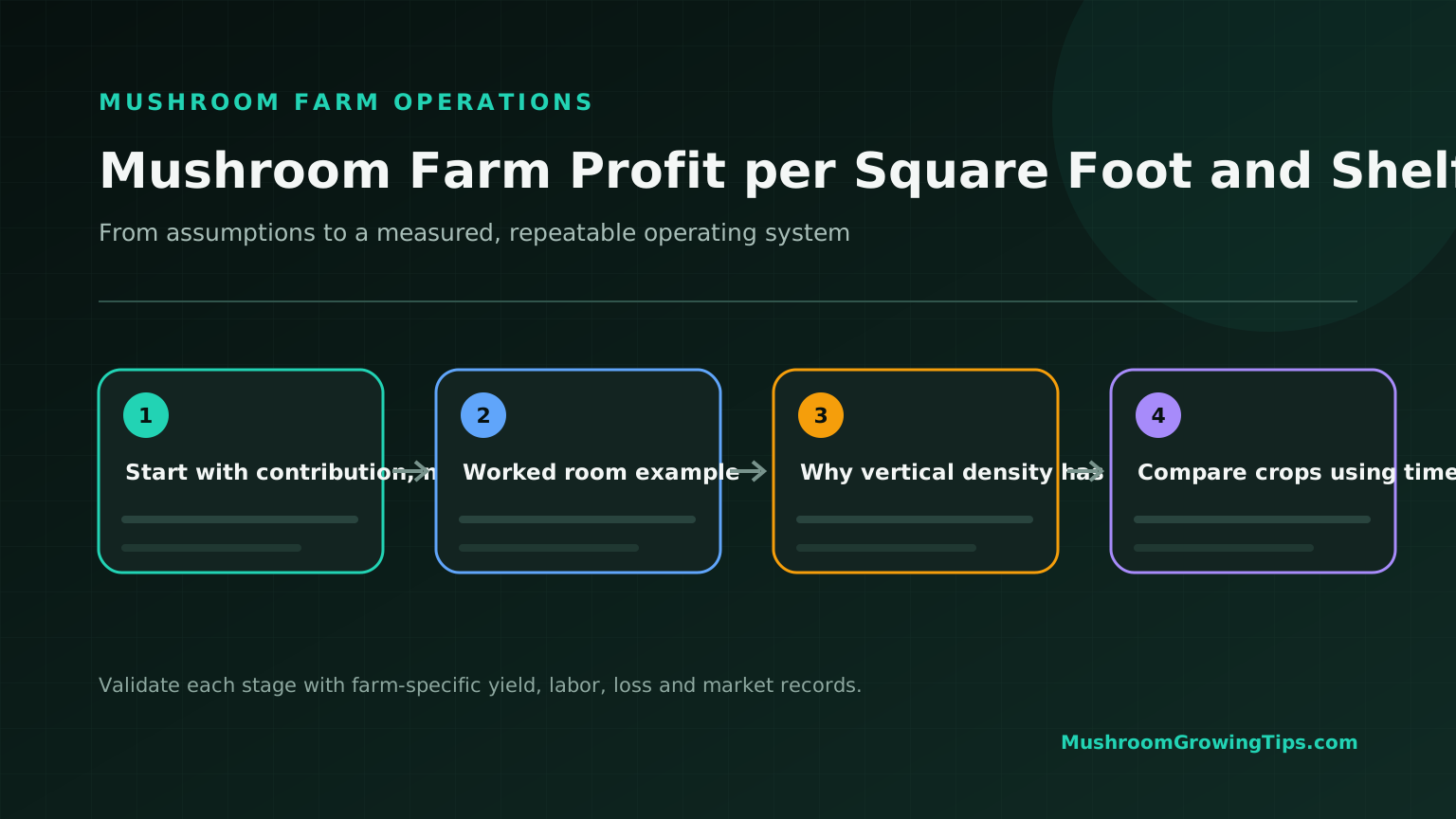
Start with contribution, not revenue
Revenue per square foot can make an unprofitable room look productive. Subtract block materials, spawn, packaging, direct labor and allocated room operating costs before comparing layouts or crops.
- Weekly room contribution = saleable revenue − variable production and room costs
- Contribution per floor area = weekly room contribution ÷ usable room square feet
- Contribution per shelf-week = contribution per block ÷ fruiting occupancy weeks
Worked room example
| Input | Example |
|---|---|
| Usable room footprint | 200 sq ft |
| Installed block positions | 600 |
| Average occupied positions | 480 (80% utilization) |
| Average contribution per occupied position-week | $4.50 |
| Weekly room contribution | $2,160 |
| Contribution per usable sq ft-week | $10.80 |
Why vertical density has limits
Adding shelves increases theoretical capacity until access, airflow, light, harvest labor or climate uniformity becomes the constraint. Measure crop performance by shelf. A rack position that produces downgraded mushrooms is not equal capacity.
- Maintain harvest and cleaning access
- Verify CO₂ and RH at upper, middle and lower shelves
- Account for species-specific block spacing
- Include aisles, doors, drains and service clearance
- Use actual occupied-position utilization, not maximum rack count
Compare crops using time
A premium species can earn more per block while earning less per shelf-week if it occupies the room longer. Compare the same cost scope and saleable grade, then include customer demand and unsold inventory before changing the crop mix.
Frequently asked questions
How do you calculate mushroom farm profit per square foot?
Calculate the room's weekly operating contribution and divide it by usable room floor area. State which costs are included and use actual utilization rather than maximum rack capacity.
Is profit per shelf position better than profit per square foot?
It is often better for crop decisions because it accounts for vertical production and occupancy time. Floor-area contribution remains important for facility and rent decisions.
Continue building the farm plan
Sales and unit economics
Mushroom Farm Pricing Guide: Wholesale, Restaurant and Retail
Set mushroom prices from true unit cost, channel margin, packaging, delivery, unsold inventory and target contribution—not competitor guesses.
Commercial launch roadmap
Mushroom Farm Startup Checklist: From Market Test to First Sale
Follow a staged mushroom farm startup checklist covering market proof, crop trials, facility, records, food safety, production and launch readiness.
Premium crop planning
Lion’s Mane Yield per Block and Commercial Economics
Plan lion's mane mushroom yield per 5 lb block using dry substrate, biological efficiency, saleable grade, crop loss and shelf-week economics.
Build this into a measured production plan
Use your own yields, labor, loss rate, prices and room constraints before committing capital or customer volume. The planning tools below turn these operating assumptions into a weekly model.