Mushroom Growing & Farming in India — Your Complete Guide
By Andrew Langevin · Founder, Nature Lion Inc · Contributing author, Mushroomology (Brill, 2026)
Updated May 2026 · 25 min read
India is the world's third-largest mushroom producer and one of the fastest-growing mushroom markets on Earth. With annual production exceeding 200,000 tonnes and demand growing at 25–30% year over year, mushroom farming has become one of the most promising agricultural enterprises in the country — from smallholder farmers in Odisha growing oyster mushrooms on rice straw to climate-controlled button mushroom facilities in Punjab.
What makes India uniquely suited to mushroom cultivation is the abundance of agricultural waste. India produces over 500 million tonnes of crop residues annually — rice straw, wheat straw, sugarcane bagasse, cotton waste, and more — all of which are excellent mushroom substrates. Instead of burning these residues (a major contributor to air pollution in northern India), they can be transformed into high-value protein through mushroom cultivation.
India also has something no other country has: Calocybe indica, the milky mushroom, discovered and domesticated by Indian scientists at ICAR. This tropical species thrives in the heat that defeats temperate mushrooms, making year-round cultivation possible across most of the subcontinent.
This guide covers everything you need to know about mushroom growing and farming in India: the best species for Indian climates, low-cost growing setups, state-by-state conditions, government subsidies and training programmes, cultivation methods, wild mushroom foraging traditions, and critical safety warnings.
Popular Mushroom Species Grown in India
India's diverse climate zones support a wider range of cultivated mushroom species than almost any other country. The tropical plains, temperate hill stations, and subtropical northeastern states each favour different species. Here are the six most important cultivated mushrooms in India, along with their ideal growing conditions and market potential.
| Species | Temp Range | Substrate | Best Regions |
|---|---|---|---|
| Oyster Mushroom Pleurotus spp. | 20-30°C | Rice straw, wheat straw, sugarcane bagasse | All India (most popular) |
| Button Mushroom Agaricus bisporus | 14-18°C (fruiting) | Composted wheat straw + poultry manure | HP, Punjab, UP, Kashmir (winter) |
| Paddy Straw Mushroom Volvariella volvacea | 28-35°C | Rice straw beds (outdoor) | Odisha, WB, Kerala, TN, NE states |
| Milky Mushroom Calocybe indica | 25-38°C | Rice straw, wheat straw | TN, Karnataka, AP, Kerala, Odisha |
| Shiitake Lentinula edodes | 12-20°C | Sawdust blocks, hardwood logs | NE states, HP, Uttarakhand |
| Reishi Ganoderma lucidum | 25-30°C | Sawdust + wheat bran blocks | All India (medicinal market) |
Oyster Mushroom — India's Most Popular Species
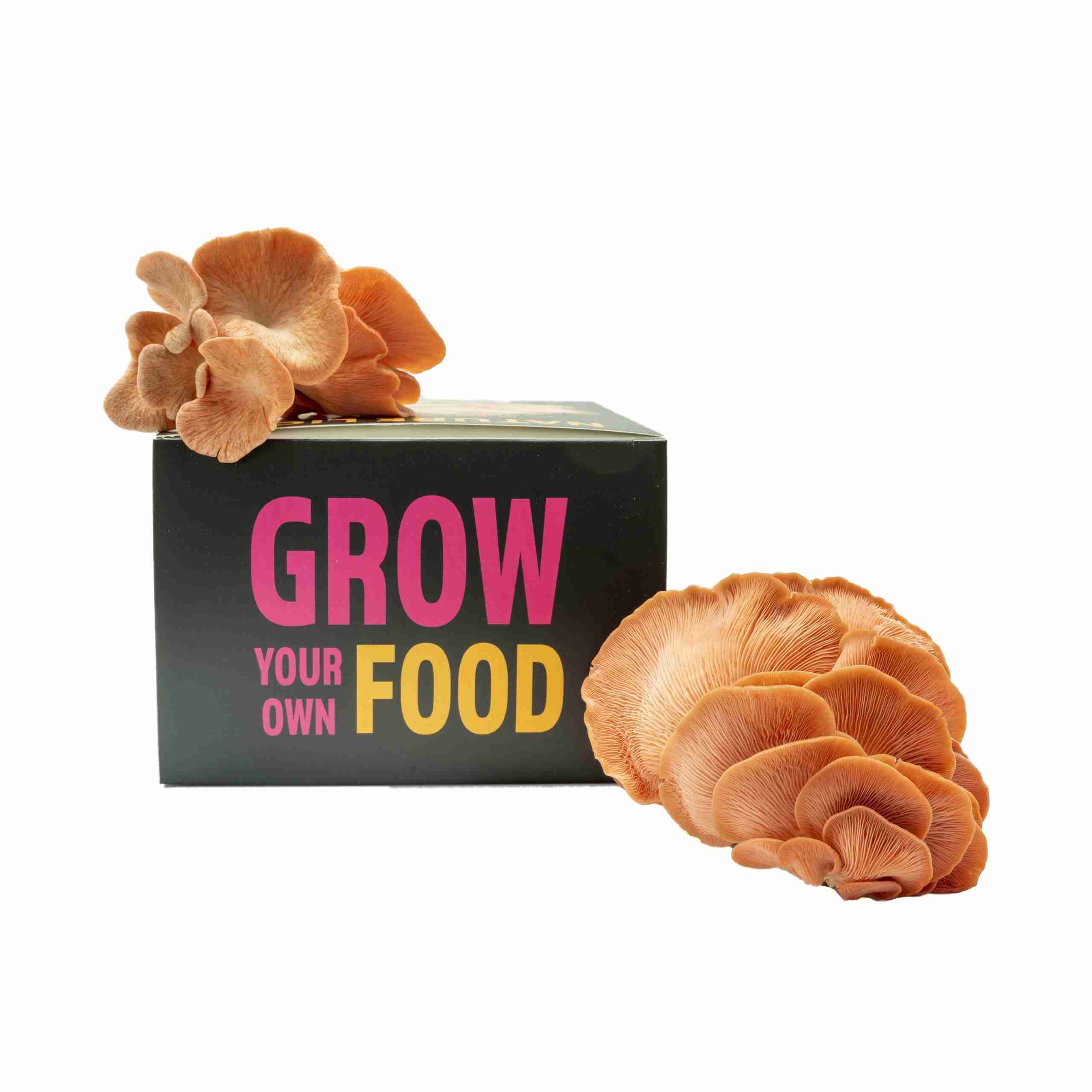
The oyster mushroom dominates Indian small-scale mushroom farming for good reason: it grows on virtually any agricultural waste, tolerates temperatures from 20–30°C, completes its cycle in just 25–35 days, and requires no climate control in most Indian states. Grey oyster (Pleurotus sajor-caju) and pink oyster (Pleurotus djamor) are the most popular strains. A single kilogram of spawn costing 60–80 INR can produce 8–12 kg of fresh mushrooms on rice straw. Market price ranges from 150–300 INR/kg in urban areas, making it exceptionally profitable relative to input costs.
Button Mushroom — The Premium Commercial Crop
Button mushroom (Agaricus bisporus) accounts for approximately 73% of India's total mushroom production by value, concentrated in the cooler northern states. It requires composted substrate (a mixture of wheat straw, poultry manure, gypsum, and urea fermented for 28 days) and precise temperature control at 14–18°C for fruiting. In Himachal Pradesh and parts of Punjab, seasonal growing without air conditioning is possible from October to March. Large-scale producers in Sonipat (Haryana) and Jalandhar (Punjab) operate climate-controlled facilities year-round. Button mushrooms sell at 200–500 INR/kg depending on grade and market.
Paddy Straw Mushroom — The Tropical Classic
Volvariella volvaceahas been cultivated in Asia for centuries and thrives in India's hot, humid conditions. Traditionally grown on outdoor beds of soaked rice straw during the monsoon season (June–September), it fruits rapidly in 10–15 days at 28–35°C. Odisha, West Bengal, Kerala, Tamil Nadu, and the northeastern states are the primary production regions. The mushroom has a short shelf life of 12–24 hours at room temperature, which limits transport but creates strong local market demand. Dried paddy straw mushrooms fetch premium prices in urban markets.
Milky Mushroom — India's Own Species
Calocybe indicais the only commercially cultivated mushroom species that was discovered and domesticated entirely in India. First described from West Bengal and developed for cultivation at TNAU (Tamil Nadu Agricultural University) in the 1990s, it thrives at 25–38°C — temperatures where most other cultivated mushrooms fail. The pure white, firm-textured caps have a long shelf life (4–5 days at room temperature), excellent flavour, and good market acceptance. It grows on rice straw or wheat straw with a casing layer of soil. Biological efficiency reaches 100–140%, rivalling oyster mushrooms. This species is a game-changer for hot-climate mushroom farming across tropical India.
Shiitake and Reishi — Emerging Species
Shiitake cultivation is expanding in the cooler northeastern states (Meghalaya, Nagaland, Manipur) and Himalayan regions where temperatures suit this temperate species. Log cultivation using local hardwoods such as Alnus nepalensis(Nepalese alder) works well at 1,000–2,000 metres elevation. Reishi (Ganoderma lucidum) is grown primarily for the medicinal market on supplemented sawdust blocks and tolerates Indian temperatures better than shiitake. Both species command premium prices: shiitake at 500–1,200 INR/kg and dried reishi at 2,000–5,000 INR/kg.
Growing Mushrooms in India's Climate
India's climate ranges from alpine in Kashmir to equatorial in Kerala, with the vast Indo-Gangetic plains experiencing extreme seasonal variation — scorching summers above 45°C and cool winters below 10°C. Understanding how to work with these conditions rather than against them is the key to successful mushroom farming in India.
Seasonal Growing Calendar
The following calendar applies to the northern plains (Delhi, UP, Bihar, Punjab, Haryana). Southern and northeastern states have different patterns — see the state-by-state section below for regional details.
| Season | Months | Temp Range | Best Species |
|---|---|---|---|
| Winter | Nov–Feb | 8–22°C | PEAK SEASON. Button mushroom, oyster mushroom (grey), shiitake, lion's mane. Ideal temperatures for most temperate species without climate control. |
| Spring | Mar–Apr | 20–35°C | Oyster mushroom (transition to pink oyster as temperatures rise), milky mushroom spawning begins, reishi inoculation. |
| Summer | May–Jun | 35–47°C | Milky mushroom, pink oyster, paddy straw (with irrigation). Only heat-tolerant species viable on plains without AC. |
| Monsoon | Jul–Oct | 25–35°C | Paddy straw mushroom (peak), oyster mushroom, milky mushroom. High humidity excellent for fruiting but increases contamination risk. |
Working with Monsoon Humidity
The Indian monsoon (July–September) brings relative humidity of 80–95% across most of the country — ideal for mushroom fruiting but a double-edged sword for contamination. High humidity promotes green mould (Trichoderma), bacterial blotch, and competitor fungi. To manage this: ensure adequate ventilation (4–6 air changes per hour) in growing rooms, avoid overcrowding bags on shelves, remove contaminated bags immediately, and maintain strict hygiene. Despite these challenges, the monsoon season produces the highest yields for paddy straw and oyster mushrooms when managed properly.
Managing Extreme Heat
During the peak summer months, growing rooms on the northern plains can exceed 45°C without cooling. Strategies to manage heat include: building thatched-roof structures (kuccha houses) that stay 5–8°C cooler than metal-roofed buildings, using wet gunny bags or khus(vetiver) screens on windows with cross-ventilation, growing in semi-underground rooms or basements, spraying water on roofs and walls during peak afternoon heat, and choosing heat-tolerant species like milky mushroom and pink oyster. Evaporative cooling (desert coolers) can reduce temperatures by 8–12°C in dry-heat regions like Rajasthan and western UP.
Species Selection by Region
Tropical plains (below 500m):Oyster (year-round with strain selection), milky mushroom (Mar–Oct), paddy straw (Jun–Oct). Subtropical hills (500–1,500m):Oyster (year-round), button (Oct–Mar), shiitake (Nov–Mar). Temperate highlands (above 1,500m): Button (year-round), shiitake (year-round), lion's mane (year-round), oyster (year-round). The northeastern hill states (Meghalaya, Nagaland, Mizoram) at 1,000–2,000m elevation have India's best year-round climate for diverse mushroom cultivation.
Low-Cost Mushroom Farming Setup in India
One of mushroom farming's greatest advantages in India is its remarkably low entry cost. Unlike most agricultural enterprises that require land, heavy equipment, and significant capital, a mushroom farm can be started in a spare room, a bamboo hut, or even under a mango tree — making it accessible to landless labourers, women's self-help groups, and rural youth.
Growing House Construction
The ideal Indian mushroom growing house is designed to maintain cool, humid conditions using local, inexpensive materials. Avoid metal roofing, which creates extreme heat. The best low-cost options include:
- Bamboo and thatch structure:A bamboo frame with paddy straw thatching on the roof and walls. Cost: 5,000–15,000 INR for a 3m × 4m structure. The thatch provides excellent insulation, keeping the interior 5–8°C cooler than ambient temperature.
- Mud-wall room: Traditional kucchaconstruction with mud walls (30–45 cm thick) and thatched roof. Excellent thermal mass keeps temperatures stable. Cost: 10,000–25,000 INR.
- Brick room with ventilation:More permanent structure with adjustable windows for air exchange. White-wash the interior to reflect heat and reduce contamination. Cost: 30,000–80,000 INR.
- Converted existing room:Any existing room with ventilation can be adapted. Add shelving (bamboo or angle-iron), seal gaps to exclude insects, and ensure 2–3 windows for cross ventilation. Cost: 2,000–10,000 INR for modifications.
Substrate Preparation
India's abundant agricultural waste means substrate is often free or nearly free. The two primary methods for preparing mushroom substrate in India are:
- Hot water pasteurisation:Chop straw to 3–5 cm pieces, soak in hot water (70–80°C) for 60–90 minutes, drain, and cool to below 30°C before spawning. The simplest and most reliable method. Uses a metal drum over a wood fire — equipment cost under 2,000 INR.
- Chemical pasteurisation:Soak chopped straw in water with formaldehyde (500 ppm) and carbendazim (75 ppm) for 16–18 hours, then drain. No heating required, which saves fuel costs. Widely used across India, though the hot water method is preferred for organic production.
Common Indian substrates by availability:Rice straw (Odisha, WB, Bihar, AP, TN, Kerala), wheat straw (Punjab, Haryana, UP, MP, Rajasthan), sugarcane bagasse (Maharashtra, UP, Karnataka), cotton waste (Gujarat, Maharashtra), soybean straw (MP), banana pseudostem (Kerala, TN, Karnataka), and coconut coir (Kerala, TN, Karnataka). All work well for oyster mushrooms with biological efficiencies of 75–125%.
Spawn and Spawning
Quality spawn is the single most important input for successful mushroom farming. Purchase from reputable sources — ICAR's Directorate of Mushroom Research in Solan, state agricultural universities (PAU Ludhiana, GBPUAT Pantnagar, TNAU Coimbatore), or certified private producers. Fresh spawn should be uniformly white with vigorous mycelial growth and no signs of discolouration, wet spots, or sour smell. Use spawn within 15–20 days of production. Spawn rate for oyster mushrooms is 3–5% of wet substrate weight — approximately 100–150 grams per 2 kg substrate bag. Layer spawn between substrate in polythene bags (40 × 60 cm, gauge 100), tie the top, and punch 6–8 holes with a nail for air exchange.
Budget Breakdown for a Small Farm
| Item | Cost (INR) | Notes |
|---|---|---|
| Growing house (bamboo/thatch) | 5,000–15,000 | 3m × 4m, thatched roof, bamboo shelving |
| Pasteurisation drum | 1,500–3,000 | 200L metal drum, reusable |
| Spawn (5 kg) | 300–500 | Enough for 50–70 bags |
| Polythene bags (100 pcs) | 300–500 | 40 × 60 cm, gauge 100 |
| Straw (2–3 quintals) | 0–1,000 | Often free from own or neighbour's fields |
| Sprayer, rope, nails, misc | 500–1,000 | Hand sprayer for misting |
| Total startup | 8,000–21,000 | First crop cycle |
With 50 bags producing an average of 1–1.5 kg each, a single cycle yields 50–75 kg of fresh oyster mushrooms. At 150–250 INR/kg, that is 7,500–18,750 INR in revenue from an investment as low as 8,000 INR — a potential return of 50–100% in the first 40-day cycle. Subsequent cycles cost only spawn, bags, and straw (under 2,000 INR). For detailed growing instructions, see our getting started guide.
State-by-State Mushroom Growing Conditions
India's federal structure means that agricultural extension, training, and subsidy programmes vary by state. Here is an overview of the major mushroom-growing states and what makes each region distinctive.
Himachal Pradesh
India's mushroom capital. Home to ICAR's Directorate of Mushroom Research in Solan, the premier research and training institution. The temperate climate (5–25°C) supports button mushroom cultivation for 8–10 months without AC. Shimla, Solan, Kullu, and Mandi districts are major production centres. Shiitake on local hardwood logs is expanding. HP produces the highest-quality button mushrooms in India and supplies Delhi-NCR markets. The state government provides subsidies up to 50% for mushroom units through the horticulture department.
Uttarakhand
Similar temperate climate to HP, with GBPUAT Pantnagar providing research support and spawn. The hill districts (Nainital, Almora, Chamoli, Pithoragarh) are excellent for button mushroom and shiitake. The plains districts (Haridwar, Dehradun valley) suit oyster and milky mushroom. The state promotes mushroom farming as a livelihood option for hill communities, with training through Krishi Vigyan Kendras (KVKs).
Punjab & Haryana
The commercial heartland of Indian button mushroom production. PAU (Punjab Agricultural University) Ludhiana is a leading research centre. Large-scale, climate-controlled facilities in Jalandhar, Hoshiarpur, Ludhiana, and Sonipat operate year-round. Seasonal button mushroom growing (Oct–Mar) is widespread among small farmers. Abundant wheat straw provides cheap substrate. The stubble-burning problem creates an opportunity: converting rice straw residue into mushroom substrate instead of burning addresses both an environmental crisis and a business opportunity.
Uttar Pradesh
India's most populous state has a rapidly growing mushroom sector. Button mushroom grows seasonally in winter (Nov–Feb), oyster mushroom year-round with strain selection, and milky mushroom in the eastern districts during summer. Major centres include Lucknow, Varanasi, Gorakhpur, and the western UP belt near Delhi. CSAUA&T Kanpur and NDUA&T Ayodhya provide training and spawn. Sugarcane bagasse from UP's massive sugar industry is an underutilised substrate with excellent potential.
Odisha
A rising star in Indian mushroom production, particularly for paddy straw and oyster mushrooms. The hot, humid climate and abundant rice straw make it ideal for tropical species. OUAT Bhubaneswar leads research and training. Women's self-help groups (SHGs) in Odisha have been particularly successful at mushroom farming as a group enterprise — a model replicated across eastern India. The tribal districts of Koraput, Kalahandi, and Mayurbhanj have active mushroom development programmes.
Tamil Nadu & Kerala
South India's mushroom powerhouses. TNAU Coimbatore developed the milky mushroom for commercial cultivation and remains the leading research centre for tropical species. Tamil Nadu grows oyster, milky, and paddy straw mushrooms year-round. Kerala's Kudumbashree (women's cooperative) programme has made mushroom farming a popular livelihood for women across the state, with training and marketing support. Coconut coir and banana pseudostem are locally abundant substrates. The Nilgiris and Kodaikanal hill stations support temperate species.
Northeastern States
The northeastern states — Meghalaya, Nagaland, Manipur, Mizoram, Arunachal Pradesh, Tripura, and Assam — have India's best overall climate for mushroom cultivation. Moderate temperatures (15–28°C), high rainfall, and rich biodiversity create ideal conditions. Shiitake cultivation on local alder and oak logs is expanding rapidly in Meghalaya and Nagaland. Oyster mushrooms grow year-round without climate control. The region also has the richest wild mushroom diversity in India, with strong foraging traditions among tribal communities. ICAR-NEH Region Umiam (Meghalaya) coordinates mushroom research and training.
Starting a Mushroom Business in India
Mushroom farming is one of India's most promising agricultural enterprises, offering high returns per square metre, short crop cycles, and strong government support. Whether you are a farmer diversifying income, a rural woman joining an SHG enterprise, or an entrepreneur seeking a startup opportunity, the pathway from first bag to profitable business is well-documented.
Government Support and Subsidies
India's central and state governments actively promote mushroom cultivation through multiple schemes:
- National Horticulture Board (NHB): Provides back-ended capital subsidy of 40% of project cost (50% for SC/ST, women, and small farmers) up to 20 lakh INR for mushroom production units including compost units, spawn labs, and growing rooms.
- Rashtriya Krishi Vikas Yojana (RKVY): State-level allocation for mushroom development projects including cluster-based approaches, demonstration units, and farmer training. Funding varies by state proposal.
- Mission for Integrated Development of Horticulture (MIDH): Provides assistance for mushroom spawn labs, compost making units, and fresh mushroom production units with subsidies up to 40% of cost.
- NABARD financing: The National Bank for Agriculture and Rural Development provides refinance to banks for mushroom cultivation projects. Regional rural banks and cooperative banks offer Kisan Credit Cards that can be used for mushroom farming inputs.
- PM-FME scheme: The Prime Minister Formalisation of Micro Food Processing Enterprises scheme provides capital subsidy of 35% (maximum 10 lakh INR) for mushroom processing units — drying, pickling, powder making, and packaging.
Training Centres and Resources
Free or low-cost training is available throughout India:
- ICAR-Directorate of Mushroom Research, Solan (HP):The premier institution. Offers 5-day and 10-day training programmes covering spawn production, cultivation of all major species, post-harvest handling, and marketing. Nominal fee of 500–1,000 INR. Also provides consultancy for commercial projects.
- State Agricultural Universities:PAU Ludhiana, GBPUAT Pantnagar, TNAU Coimbatore, OUAT Bhubaneswar, YSPUHF Solan, and others conduct regular mushroom training programmes of 3–7 days. Many are free for farmers.
- Krishi Vigyan Kendras (KVKs): Over 720 KVKs across India provide district-level training and demonstration in mushroom cultivation. Contact your nearest KVK through the ICAR website.
- Online resources: Our own getting started guide covers universal cultivation principles, and our oyster mushroom guide details the species most relevant to Indian growers.
Marketing and Sales Channels
The Indian mushroom market is primarily urban-driven, with highest demand in metro cities and tier-2 towns. Direct sales channels include: local vegetable markets (sabzi mandis), hotels and restaurants (particularly Chinese, Continental, and South Indian restaurants), supermarket chains (Reliance Fresh, Big Bazaar, D-Mart, More), online platforms (BigBasket, Amazon Fresh, Swiggy Instamart), and direct door-to-door delivery in residential areas. Value-added products — dried mushrooms, mushroom powder, pickles, mushroom soup mix — extend shelf life and command higher margins. Dried oyster mushroom sells at 1,200–2,500 INR/kg, roughly 10× the fresh price by weight.
Scaling Your Operation
The typical growth path for Indian mushroom entrepreneurs follows three stages. Stage 1 (0–6 months):Learn with 50–100 bags of oyster mushroom, sell locally, reinvest profits. Investment: 10,000–25,000 INR. Stage 2 (6–18 months):Scale to 200–500 bags, add a second species (milky or paddy straw), establish regular buyers, begin value-added processing. Investment: 50,000–2 lakh INR. Stage 3 (18+ months):Own spawn production, 500–2,000+ bags, multiple species, processing unit, possibly training others. Investment: 2–10 lakh INR. Government subsidies typically become available at Stage 2–3.
Wild Mushrooms in India
India's forests, grasslands, and agricultural landscapes harbour an extraordinary diversity of wild mushrooms — an estimated 2,000+ recorded species, with many more undocumented. Wild mushroom foraging is deeply embedded in the food culture of many Indian communities, particularly tribal and rural populations who have gathered monsoon mushrooms for generations.
Termite Mushrooms — India's Most Prized Wild Species
Termitomyces species grow exclusively in association with fungus-farming termites (Odontotermesand related genera) and cannot be commercially cultivated. Found across central, eastern, and southern India during the monsoon (June–September), these mushrooms emerge from termite mounds and surrounding soil after heavy rains. They are among the most expensive wild mushrooms in India, selling at 500–2,000 INR/kg in local markets. Termitomyces heimii (known as boda chhatu in Bengal and puttu in Telugu) can have caps exceeding 20 cm. Tribal communities in Jharkhand, Chhattisgarh, and Odisha rely on termite mushroom collection as an important seasonal income source. Our foraging basics guide covers general foraging principles.
Morels — The Himalayan Gold
Morels (Morchellaspecies) are India's most economically valuable wild mushroom, harvested in the Himalayan regions of Kashmir, Himachal Pradesh, Uttarakhand, and parts of Arunachal Pradesh during spring (March–May). They grow in conifer and mixed forests at 2,000–3,500 metres elevation, particularly in areas disturbed by fire or logging. Dried morels command prices of 15,000–30,000 INR/kg in Indian markets and are a significant export commodity to Europe and North America. Kashmiri gucchi (as morels are locally known) support the livelihoods of thousands of rural families. However, overharvesting and habitat disturbance are growing concerns in some areas.
Monsoon Mushrooms of the Plains
The Indian monsoon triggers massive mushroom fruitings across the country. Common edible wild species collected during this period include: Volvariella volvacea (paddy straw mushroom, growing naturally on rice straw heaps), Pleurotus species on dead wood, Lentinus species on logs in forests, and various Agaricus species in grasslands. In the Western Ghats — one of the world's 36 biodiversity hotspots — the monsoon produces extraordinary fungal diversity. The Shola grasslands and tropical forests of Kerala, Karnataka, and Tamil Nadu harbour hundreds of species, many endemic and some potentially undescribed by science.
Foraging Traditions Across India
Wild mushroom knowledge in India is primarily held by tribal and rural communities and passed down orally. The Santal, Munda, and Ho peoples of Jharkhand and Odisha have sophisticated taxonomies for dozens of wild mushroom species. Naga, Khasi, and Mizo communities in the northeast forage extensively, with traditional ecological knowledge identifying over 100 edible species. South Indian communities in Kerala and the Western Ghats collect Termitomyces, oyster mushrooms, and various bracket fungi during the monsoon. This indigenous knowledge is increasingly being documented by ethnomycologists at Indian universities, but much remains unrecorded.
Safety Warnings — Poisonous Mushrooms in India
Wild mushroom poisoning is a serious public health issue in India, with dozens of deaths reported annually — predominantly in tribal and rural areas during the monsoon season. The lack of formal mycological education, combined with strong foraging traditions and superficial similarity between edible and deadly species, creates a dangerous situation. Our deadly and toxic mushrooms guide covers dangerous species worldwide.
Death Cap Confusion with Paddy Straw Mushroom
The most dangerous mushroom confusion in India is between the death cap (Amanita phalloides) and the edible paddy straw mushroom (Volvariella volvacea). Both have a volva (cup) at the base of the stem and can appear similar at the button stage before the cap expands. Death caps have been confirmed in parts of India, particularly in temperate regions and near introduced European trees. This confusion has caused fatalities in India and among South and Southeast Asian immigrant communities worldwide. Always examine mature specimens: Volvariella has pink to brown gills and no ring, while Amanita phalloides has white gills, a ring, and an olive-green cap.
Amanita Species in Indian Forests
Several deadly Amanita species occur in Indian forests, particularly in the Western Ghats, Himalayan foothills, and northeastern hill forests. Amanita verna (destroying angel) has been recorded in the Himalayas and northeastern India. Other toxic Amanita species include A. subjunquillea and several poorly documented tropical species. Any white-spored mushroom with a volva, ring, and free gills growing near trees should be treated as potentially lethal until positively identified by an expert.
Monsoon Poisoning Incidents
The monsoon season (July–September) sees a spike in mushroom poisoning cases across India, particularly in Himachal Pradesh, Uttarakhand, Jharkhand, Chhattisgarh, Odisha, and the northeastern states. Mass poisoning events affecting entire families or villages are reported multiple times each year. The most common scenarios: collecting unfamiliar species after heavy rains, confusing toxic species with known edibles, and children eating brightly coloured mushrooms. Traditional “tests” for edibility (silver spoon test, garlic test, cooking with rice) are completely unreliable and have led to fatalities.
Toxic Look-alikes of Common Edibles
Beyond the death cap/Volvariella confusion, other dangerous look-alikes in India include: Chlorophyllum molybdites (green-spored parasol, causes severe gastrointestinal poisoning, common on lawns and gardens across India — often confused with edible parasol mushrooms), Omphalotus olearius (jack-o-lantern, confused with chanterelles in forested areas), and various small brown Galerina species containing deadly amatoxins that grow on wood and can be confused with edible species.
If you suspect mushroom poisoning:rush the patient to the nearest hospital immediately. Do not wait for symptoms to appear — amatoxin poisoning from death caps shows symptoms only after 6–12 hours, by which time liver damage has already begun. Preserve any remaining mushroom material (raw, cooked, or vomited) for identification. Call the nearest poison information centre. The sooner treatment begins, the better the outcome. Never rely on home remedies or folk tests.
Frequently Asked Questions
Which mushroom is most profitable to grow in India?
Oyster mushrooms (Pleurotus ostreatus) are the most profitable species for small-scale Indian growers due to extremely low startup costs (as little as 5,000-10,000 INR), short growing cycles of 25-35 days from spawning to harvest, high biological efficiency of 75-125% on rice or wheat straw, and strong domestic demand at 150-300 INR per kilogram in urban markets. Milky mushroom (Calocybe indica) is increasingly profitable in southern India because it tolerates high temperatures up to 38°C and commands premium prices of 200-400 INR per kilogram. Button mushrooms (Agaricus bisporus) offer higher per-kilogram prices but require air-conditioned growing rooms in most of India, making them better suited to established commercial operations with higher capital investment.
Can you grow mushrooms in hot Indian summers?
Yes, but species selection is critical. During the hot season (April-June) when temperatures regularly exceed 35-45°C across the plains, milky mushroom (Calocybe indica) is the best choice as it fruits at 25-38°C. Paddy straw mushroom (Volvariella volvacea) also thrives in tropical heat, fruiting at 28-35°C. Oyster mushrooms can be grown in summer using pink oyster (Pleurotus djamor), which tolerates temperatures up to 35°C, though yields drop above 30°C. Standard grey oyster and button mushrooms are not viable during Indian summers without air conditioning. In hill stations above 1,500 metres — such as Shimla, Ooty, or Shillong — cooler temperatures allow year-round cultivation of temperate species.
How much does it cost to start a mushroom farm in India?
A small-scale mushroom farm in India can be started for 10,000-50,000 INR, making it one of the most affordable agricultural enterprises. A basic setup includes: a thatched or bamboo growing house (5,000-15,000 INR), spawn bags (50-100 INR per kg, needing 3-5 kg to start), rice or wheat straw substrate (free to 500 INR per quintal), polythene bags (500-1,000 INR), and basic tools. A mid-scale commercial unit producing 100-200 kg per month requires 1-3 lakh INR investment including a semi-permanent structure with shelving. Large-scale button mushroom operations with climate control can cost 10-50 lakh INR. Government subsidies through NHB and RKVY can cover 40-50% of project costs up to certain limits.
What substrate is best for mushroom growing in India?
Rice straw (paddy straw) is the most widely used and economical substrate in India, available for free or at minimal cost in rice-growing states. It works excellently for oyster, paddy straw, and milky mushrooms after pasteurisation. Wheat straw is equally effective and dominant in Punjab, Haryana, and UP. Other locally available substrates include: sugarcane bagasse (Maharashtra, UP, Karnataka), cotton waste (Gujarat, Maharashtra), soybean straw (Madhya Pradesh), banana leaves and pseudostem (Kerala, Tamil Nadu), coconut coir (Kerala, Tamil Nadu), and maize stalks (Bihar, Jharkhand). Supplementation with wheat bran, rice bran, or gram flour at 5-10% by dry weight boosts yields by 15-30%. Our substrate guide covers preparation techniques in detail.
Is there government support for mushroom farming in India?
Yes, the Indian government actively promotes mushroom cultivation through multiple schemes. The National Horticulture Board (NHB) provides subsidies of 40% of project cost (50% for SC/ST and women farmers) up to 20 lakh INR for mushroom production units. The Rashtriya Krishi Vikas Yojana (RKVY) funds mushroom development projects through state agriculture departments. ICAR's Directorate of Mushroom Research in Solan (Himachal Pradesh) offers free training programmes of 5-10 days covering spawn production, cultivation techniques, and marketing. Many state agricultural universities run their own mushroom training centres. NABARD provides term loans through regional rural banks specifically for mushroom cultivation projects. The PM-FME (Formalisation of Micro Food Processing Enterprises) scheme also covers mushroom processing units.
Where can I get mushroom spawn in India?
Quality mushroom spawn is available from several sources across India. ICAR's Directorate of Mushroom Research in Solan, Himachal Pradesh produces certified spawn for all major species. State agricultural universities with mushroom research programmes — including PAU Ludhiana, GBPUAT Pantnagar, TNAU Coimbatore, and OUAT Bhubaneswar — sell spawn at subsidised rates, typically 60-80 INR per kg. Private spawn producers operate in most major mushroom-growing states; look for producers who maintain culture banks and produce fresh spawn with high viability. Fresh spawn should be white, firm, and free of discolouration. Avoid spawn older than 15-20 days from production, and always transport in cool conditions during summer.
Can I grow button mushrooms in India without AC?
Button mushrooms (Agaricus bisporus) require composting temperatures of 24-28°C for spawn run and fruiting temperatures of 14-18°C, which limits non-AC cultivation to the winter months (November-February) in the northern plains and year-round only in hill stations above 1,500 metres. In Himachal Pradesh, Uttarakhand, parts of Kashmir, and the northeastern hill states, button mushrooms grow successfully without air conditioning for 6-8 months of the year. The seasonal growing model used in Punjab and UP produces 2-3 crops during winter using insulated rooms or underground cellars. Some growers use evaporative cooling (desert coolers) to extend the season by a few weeks, though this is unreliable when humidity is already high.
Are wild mushrooms safe to eat in India?
Wild mushroom foraging in India carries significant risks and should only be attempted with expert guidance. India has approximately 2,000 recorded mushroom species, of which around 300 are edible and at least 100 are poisonous. The most dangerous confusion occurs between paddy straw mushrooms (Volvariella volvacea) and death cap mushrooms (Amanita phalloides), which has caused fatalities. Termite mushrooms (Termitomyces species) are highly prized and relatively safe when identified by experienced foragers in central and southern India. Morels collected in Himalayan regions (Kashmir, Himachal Pradesh, Uttarakhand) are a valuable wild harvest but require knowledge of the terrain. Never consume wild mushrooms without positive identification by a trained mycologist. When in doubt, leave it out.
Got a Question About Growing Mushrooms in India?
Whether you need help choosing the right species for your climate, troubleshooting contamination in your growing room, or planning a mushroom farming business, Dr. Myco is our AI mycology assistant trained on decades of cultivation knowledge. Ask about substrate preparation, spawn sourcing, growing conditions for specific Indian states, government subsidy applications, or any other mushroom-related question. Get expert guidance in seconds.
Ask Dr. MycoAbout the Author
Andrew Langevin is the founder of Nature Lion Inc, a CFIA-licensed mushroom cultivation facility that has served over 50,000 customers. He is a contributing author of Mushroomology (Brill, 2026), one of the most comprehensive academic references on applied mycology. His content draws on verified Mushroom Observer data covering 5,700+ species and a knowledge base of 32,000+ community knowledge chunks spanning decades of field experience.
Read full bio →Continue Learning
Oyster Mushroom Guide
The most popular species for Indian growers
Substrate Preparation
Rice straw, wheat straw, and other substrates
Getting Started
Your first mushroom grow from scratch
How to Grow Mushrooms
Complete growing guide for beginners
Contamination Prevention
Keep your grow clean and productive
Deadly & Toxic Mushrooms
Species that can kill or harm you
Shiitake Guide
Growing shiitake in temperate climates
Reishi Growing Guide
Medicinal mushroom cultivation
UK Growing Guide
Cultivation and foraging in the UK