Commercial launch roadmap
Mushroom Farm Startup Checklist: From Market Test to First Sale
Start with customer evidence and repeatable crop data, then size the facility and equipment. Do not commit to commercial volume until pricing, yield, crop loss, labor, cold storage and required local approvals have been tested together.
By Andrew Langevin · Founder, Nature Lion Inc · Contributing author, Mushroomology (Brill, 2026) · Updated August 11, 2026
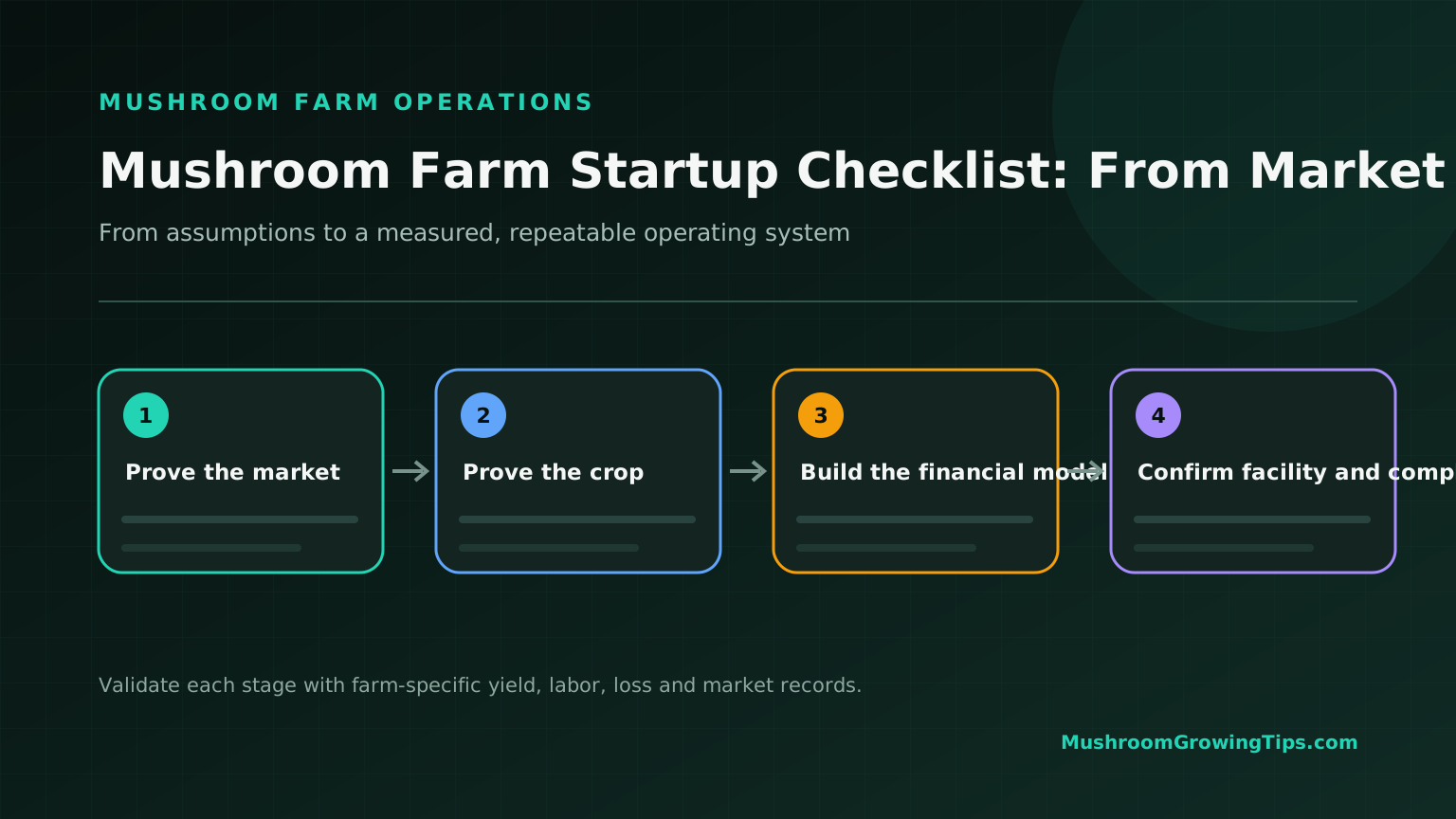
1. Prove the market
- Interview buyers by channel and record species, volume, pack size, delivery day and acceptable price
- Run paid trial orders rather than relying on verbal interest
- Measure route time and minimum viable order
- Identify customer concentration and seasonal demand risk
2. Prove the crop
- Choose one or two species suited to the available climate and market
- Run at least several comparable full cycles
- Record saleable yield, flush timing, crop loss, labor and shelf life
- Set internal release and discard rules
- Keep backup cultures and traceable spawn lots
3. Build the financial model
- Estimate installed startup cost and working-capital runway
- Calculate cost per saleable kilogram
- Test selling prices by channel
- Stress-test crop loss, unsold product and lower yield
- Define expansion triggers and stop-loss limits
4. Confirm facility and compliance
- Map clean-to-dirty workflow and waste exit
- Confirm utilities, drainage, ventilation, heat rejection and refrigeration
- Identify business, building, fire, food, labor, tax and insurance requirements that apply locally
- Create cleaning, traceability, corrective-action and recall procedures appropriate to the operation
5. Prepare for first recurring sales
- Set production from committed demand and a controlled buffer
- Create labels, invoices, lot records and delivery procedures
- Verify cold-chain capacity and shelf-life assumptions
- Schedule customer communication for shortages or quality issues
- Review actual results after every batch and route
Launch gate
| Question | Ready when |
|---|---|
| Can the farm produce it? | Several comparable cycles meet saleable yield and loss targets |
| Can the farm sell it? | Paid recurring demand supports the planned route |
| Can the farm cool it? | Peak harvest fits documented cold storage |
| Can the farm trace it? | Culture, batch, harvest and customer lots connect |
| Can the farm survive variance? | Cash runway and capacity tolerate tested downside scenarios |
Frequently asked questions
What should be done first when starting a mushroom farm?
Validate recurring customer demand and run repeatable crop trials before investing in a large integrated facility.
How many species should a new mushroom farm grow?
One or two species are easier to standardize initially. Add crops when the market and operating system can support additional environmental, scheduling and sales complexity.
Continue building the farm plan
Premium crop planning
Lion’s Mane Yield per Block and Commercial Economics
Plan lion's mane mushroom yield per 5 lb block using dry substrate, biological efficiency, saleable grade, crop loss and shelf-week economics.
Worked business-plan example
Oyster Mushroom Farm Example: A 100 kg/Week Operating Plan
Study a worked 100 kg/week oyster mushroom farm example covering customers, blocks, rooms, labor, pricing, risks and financial assumptions.
Environmental engineering
Mushroom Fruiting Room Design: Airflow, Humidity and CO₂
Design a mushroom fruiting room around crop-level airflow, humidity, CO2 removal, condensate, sensors, racks and failure response.
Build this into a measured production plan
Use your own yields, labor, loss rate, prices and room constraints before committing capital or customer volume. The planning tools below turn these operating assumptions into a weekly model.