Contamination by Timing
10 tips in Contamination & Troubleshooting
By Andrew Langevin · Founder, Nature Lion Inc · Contributing author, Mushroomology (Brill, 2026)
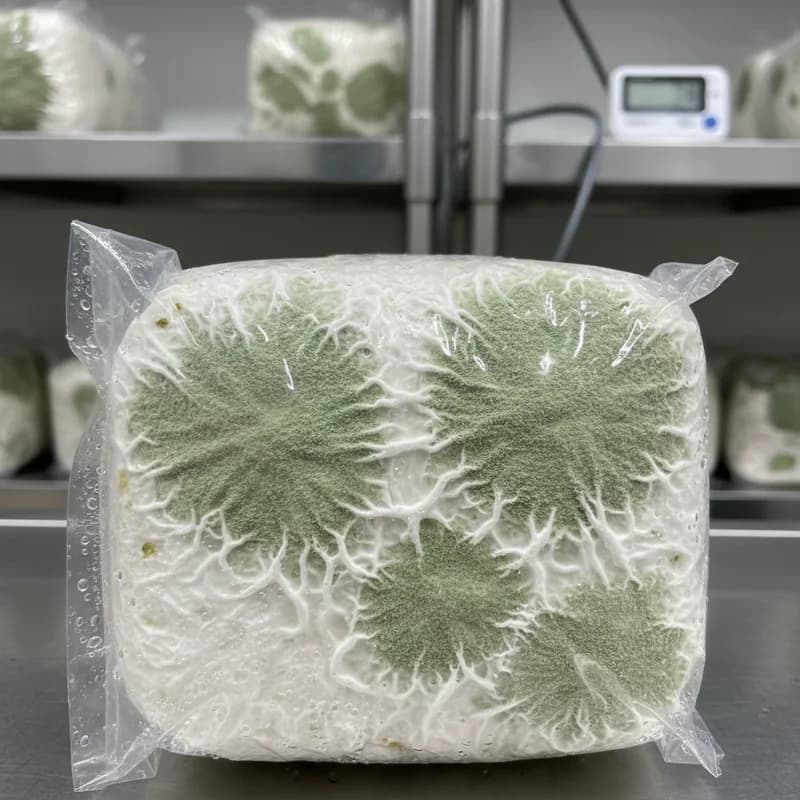
Contamination that shows up within the first five days after inoculation almost always points to insufficient sterilization of your substrate or grain. At this stage, your mushroom mycelium has barely started growing — it has not had time to establish a defensive colony. If contaminants are already visible, they were present in the jar or bag from the start, meaning they survived your sterilization process.
The most likely causes are:
- Your pressure cooker did not reach or maintain 15 PSI for the required duration
- You had cold spots in the cooker from overloading or poor jar arrangement
- Your grain was too wet, creating pockets where heat could not penetrate effectively
- Your substrate jars were not sealed properly, allowing contaminants in during the cooling phase
Check your pressure cooker gauge for accuracy — cheap gauges drift over time and a few PSI low means significantly lower sterilization temperatures. Make sure the cooker reaches full pressure before you start your timer. Grain jars should be sterilized at 15 PSI for a minimum of 90 minutes, and substrate bags at 15 PSI for at least 2.5 hours. If you are consistently seeing day-one-to-five contamination across multiple jars, the problem is systemic and your sterilization setup needs upgrading.
Contamination appearing in the 7-to-14-day window usually indicates a break in sterile technique during inoculation or handling rather than a sterilization failure. Your substrate or grain was likely clean coming out of the pressure cooker, but contaminants were introduced when you opened, inoculated, or handled the jars. The contaminant entered as a small number of spores or cells and has spent the past week growing to visible size.
Common sources of mid-stage contamination:
- Working without a flow hood or still air box during inoculation
- Failing to flame-sterilize your needle between each jar
- Not wiping the injection port with alcohol before inserting the needle
- Shaking grain jars in a non-clean environment to redistribute spawn
- Brief exposure to open room air, which introduces thousands of mold spores
The fix is procedural. Tighten up your sterile technique — always work in your SAB or in front of your flow hood, minimize the time your jars are open, and make sure every tool that touches the inside of your container is sterile. A 95% success rate usually means your sterilization is fine but your technique needs minor refinement.
Late-stage contamination — appearing two weeks or more into colonization — typically points to filter or seal failure on your containers. By this time, your sterilization clearly worked and your inoculation was clean, but something is allowing outside air and contaminants into the container during the weeks of colonization.
Check these potential failure points:
- Filter patches on grain bags — Are they actual synthetic filter material, or just micropore tape that may have gotten wet and lost its filtering ability?
- Jar filters — A single layer of micropore tape is not sufficient for long colonization periods; use at least two layers or upgrade to synthetic filter discs rated at 0.2 microns
- Jar lids — Look for hairline cracks, loose band rings, or degraded gaskets
- Mites or gnats — These can find their way through filter material, carrying mold spores with them
Environmental factors play a role too. If your colonization area has high ambient contamination levels — near a kitchen, bathroom, or in a dusty basement — even good filters are working harder. If you are seeing late-breaking contamination, hold your jars up to a light and inspect every inch of the seal and filter for compromised spots.
Fruiting introduces a massive contamination risk because you are deliberately exposing your colonized substrate to the open environment. During colonization, your substrate was sealed in a filtered container with no direct air exposure. The moment you open that container, cut holes in a bag, or transfer the block to a fruiting chamber, every airborne spore in the room has a chance to land on your substrate. On top of that, fruiting conditions — high humidity, moderate warmth, and fresh air exchange — are ideal for mold growth, not just mushroom growth.
There are several ways to reduce fruiting contamination:
- Make sure your substrate is fully colonized before opening it — uncolonized patches are vulnerable landing pads for contaminants
- Clean your fruiting area thoroughly before introducing new blocks — wipe surfaces with 10% bleach solution, remove spent blocks and organic debris, and ensure your humidifier reservoir is clean
- Watch your fresh air exchange source — if you are pulling air from a dusty room, consider a HEPA filter on your FAE intake
- Never fruit new blocks in the same space as old, contaminated ones — one sporulating Trichoderma block can infect an entire room
The first week is when your mushroom mycelium is at its weakest and most vulnerable. Right after inoculation, you have a small amount of mushroom culture — a few milliliters of liquid culture or a small piece of agar — trying to establish itself in a relatively enormous volume of nutritious substrate. That substrate is essentially a buffet for any organism, and your mushroom mycelium has not had time to claim territory yet.
Mushroom mycelium defends colonized substrate through a combination of:
- Physical coverage of the substrate surface
- Chemical warfare — producing antimicrobial compounds
- Nutrient consumption — depleting available food sources
- Physical blocking of competitors from accessing substrate
But none of that works until the mycelium has actually grown out and established itself. In the first few days, there is plenty of exposed, uncolonized substrate where a contaminant spore can land and start growing without opposition.
This is why higher spawn rates dramatically reduce contamination. A jar inoculated with 1 mL of liquid culture takes much longer to establish defensive coverage than one inoculated with 5 mL. Similarly, grain-to-grain transfers at higher ratios colonize faster and leave less time for contaminants to gain a foothold. Speed is your ally in the first week.
Yes, absolutely. Colonization speed is one of the most important factors in contamination resistance, and experienced growers optimize for it relentlessly. The principle is simple: every hour that substrate remains uncolonized is an hour that a contaminant could establish itself. Once mushroom mycelium has fully colonized a substrate, it is remarkably resistant to contamination.
You can increase colonization speed in several ways:
- Use a higher inoculation rate — more spawn means more starting points for growth and faster overall coverage
- Use healthy, vigorous cultures — a liquid culture sitting in the fridge for months colonizes slower than a fresh, active one
- Optimize your temperature for colonization, which for most species is slightly warmer than fruiting temperature
- Use grain spawn rather than spore syringes when possible, since grain spawn is already established mycelium
- Keep grain at the right moisture content — too dry slows growth, too wet encourages bacteria
- Add a small amount of gypsum to grain, which helps maintain optimal pH and grain separation
The race is to get your mycelium across the finish line before any contaminant gets started. The physical coverage and antimicrobial compounds produced by fully colonized mycelium make it very hard for a new organism to gain a foothold.
Higher spawn rates are one of the most reliable ways to reduce contamination in bulk substrates, and the effect is dramatic. The standard recommendation for bulk substrate is a spawn-to-substrate ratio between 1:2 and 1:5 by volume. Going to 1:1 or even higher practically eliminates contamination for many growers, though it uses more spawn and is more expensive per batch.
The math is straightforward:
- 1:5 ratio — Each piece of colonized grain needs to send mycelium outward far enough to meet its neighbors; full colonization takes weeks, leaving plenty of vulnerable time
- 1:2 ratio — Colonized grain pieces are much closer together; full colonization happens in days rather than weeks
- 1:1 ratio — Equal parts colonized grain and substrate; full colonization can occur in under a week, barely enough time for most contaminants to get started
The trade-off is cost — a higher spawn rate means you need more grain jars per batch. But if contamination is costing you entire batches, the extra spawn investment is far cheaper than losing your substrate, time, and the opportunity cost of a failed grow. Many commercial operations run at 1:2 or higher for this exact reason.
Colonization is fundamentally a race between your mushroom mycelium and every other organism that wants to eat the same food. Your sterilization and pasteurization processes give your mushroom a head start by eliminating most of the competition, and your inoculation introduces the mushroom as the first colonizer on an open playing field. But the field is never truly empty — resistant endospores, heat-tolerant bacteria, and any contaminants introduced during your work are also in the race.
Your mushroom has advantages when conditions are set up correctly:
- It was introduced first
- It was introduced in quantity via grain spawn rather than a single spore
- The substrate conditions are optimized for its growth
But contaminants have their own advantages — many mold species grow faster than mushroom mycelium under the same conditions, especially at warmer temperatures. Trichoderma can outpace most mushroom species in a straight race.
The key is that your mushroom mycelium does not need to be faster in absolute terms — it just needs enough head start and enough coverage to establish chemical and physical dominance before the contaminant reaches critical mass. This is why everything in contamination prevention comes back to giving your mushroom the biggest possible advantage: clean substrate, high spawn rates, vigorous cultures, and optimal conditions.
Fully colonized substrate has significant natural resistance to contamination, and in many cases it can fight off minor challenges without your intervention. Once mushroom mycelium has completely colonized a substrate, it has saturated the material with its hyphae, consumed most readily available simple sugars, and is actively producing antimicrobial compounds. Oyster mushrooms are particularly aggressive defenders.
However, fully colonized does not mean invincible. Factors that weaken mycelial defenses include:
- Physical damage — Cutting, tearing, or heavy handling creates openings where contaminants can enter
- Exhausted substrate — Blocks that have produced several flushes have depleted nutrients and weakened mycelium
- Extreme environmental conditions — Excessive heat or prolonged waterlogging can stress the mycelium enough that its defenses drop
The practical takeaways:
- Let your substrate colonize fully before exposing it to fruiting conditions
- Handle your blocks gently to avoid creating entry points
- Retire blocks after they stop producing rather than trying to squeeze out one more flush from an exhausted, vulnerable substrate
Healthy, fully colonized substrate is your best defense — most contamination problems happen when growers rush to fruiting before colonization is complete.
The save-versus-discard decision is one of the most important judgment calls in mushroom growing, and the wrong choice can cost you more than just that one container.
Discard immediately:
- Trichoderma (green mold) — it sporulates aggressively and will spread to everything in the room
- Aspergillus (black mold) — for health reasons
- Anything with a strong foul smell
- Any spawn jar or liquid culture that shows contamination, since spreading contamination forward is the worst possible outcome
You can sometimes save:
- A fruiting block with cobweb mold — spray it with hydrogen peroxide, increase FAE, and monitor
- A monotub where contamination is limited to one small corner if the rest is fully colonized — carefully remove the contaminated section with a margin of healthy substrate, spray with peroxide, and let the mycelium recolonize
- Contaminated outdoor beds by burying them in garden soil, where the natural soil microbiome can sometimes help
The cardinal rule: never try to save a contaminated container at the expense of your clean ones. If saving it means keeping it in the same room as healthy grows, the risk is not worth it. When in doubt, discard. Substrate is cheap; a contaminated growing room is not.
Need more help? Dr. Myco can answer follow-up questions about contamination by timing based on thousands of real growing experiences.
Ask Dr. MycoMore in Contamination & Troubleshooting
Identifying Contamination
11 tips
Mushroom Contamination or Normal Mycelium?
10 tips
What Should Mushroom Mycelium Smell Like?
10 tips
Prevention & Sterile Technique
12 tips
Common Problems & Fixes
20 tips
Rescue & Recovery Techniques
8 tips
Mushroom Grow Room Cleaning & Hygiene SOP
20 tips
Advanced Contamination Diagnosis
17 tips