Common Beginner Questions
24 tips in Getting Started
By Andrew Langevin · Founder, Nature Lion Inc · Contributing author, Mushroomology (Brill, 2026)
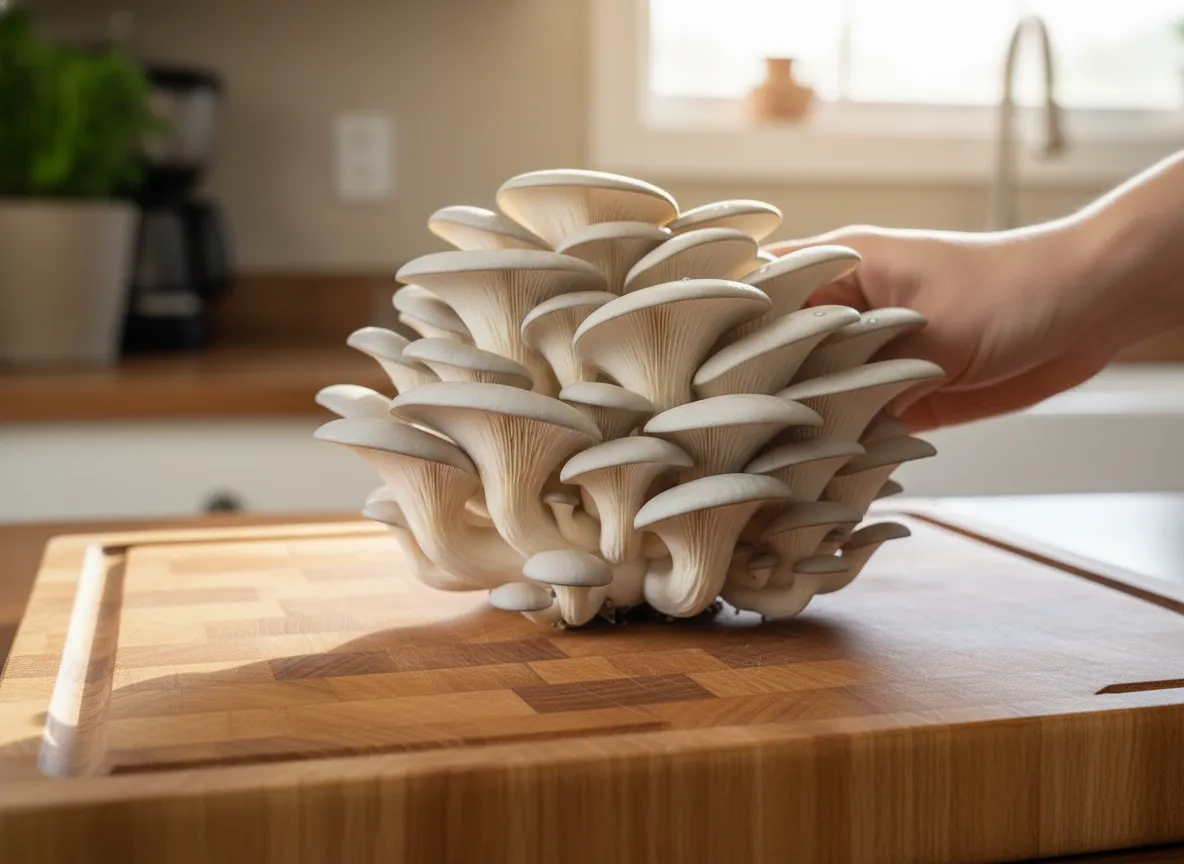
Mushroom agriculture is the commercial and hobbyist practice of cultivating fungi for food, medicine, and other products. Unlike traditional crop farming, mushroom agriculture does not require soil, sunlight, or large tracts of land. Instead, growers produce mushrooms by inoculating organic substrates with fungal spawn and managing environmental conditions indoors or in sheltered outdoor spaces.
The basic agricultural cycle involves:
- Preparing a substrate such as straw, sawdust, or composted manure
- Sterilizing or pasteurizing the material to eliminate competing organisms
- Introducing mushroom spawn and allowing the mycelium to colonize
- Shifting to fruiting conditions with controlled humidity, temperature, and airflow
- Harvesting, packing, and distributing the crop
Mushroom farming is one of the fastest-growing sectors in agriculture because fungi convert low-value waste materials into high-value protein. A small indoor operation can produce hundreds of pounds per month in a fraction of the space required for vegetables. The industry spans everything from backyard hobbyists growing oyster mushrooms in buckets to industrial facilities producing millions of pounds of button mushrooms annually.
Yes, it is possible to grow mushrooms from store-bought specimens, but success rates vary widely depending on the species and freshness. The technique involves taking a small piece of inner stem tissue from a very fresh mushroom, placing it on a nutrient agar plate under clean conditions, and allowing the mycelium to grow out. This is called tissue cloning.
Species that clone well from store-bought:
- Oyster mushrooms — the most reliable because they are aggressive colonizers with vigorous mycelium
- King oyster — clones relatively easily from fresh stem tissue
- Lion's mane — can work if the specimen is very fresh
Species that are difficult or impossible:
- Button mushrooms and cremini — require composted substrate and specific growing conditions that make cloning impractical for most beginners
- Shiitake — possible but store-bought specimens are often too old
The biggest challenge is contamination. Working with tissue from a non-sterile grocery store mushroom in open air introduces bacteria and mold. A still air box and proper sterile technique are essential. For beginners, purchasing spawn from a reputable supplier is far more reliable than attempting to clone store-bought mushrooms.
Oyster mushrooms are generally the most profitable species for home and small-scale growers because they combine fast growth, low production costs, high market demand, and premium pricing at farmers markets and restaurants.
Profitability factors by species:
- Oyster mushrooms — grow on inexpensive substrates like straw or coffee grounds, mature in as little as three weeks from inoculation, and sell for eight to twelve dollars per pound at retail
- Lion's mane — commands premium prices of ten to fifteen dollars per pound and has strong demand from health-conscious consumers, though it requires more precise humidity control
- Shiitake — sells well at eight to twelve dollars per pound and has broad consumer recognition, but takes longer to produce
- King oyster — valued by chefs at ten to fourteen dollars per pound, though yields per block are lower than regular oysters
The real key to profitability is finding your local market. Farmers markets, restaurants, specialty grocery stores, and direct-to-consumer subscriptions each offer different margins. Many small growers find that selling a mix of species at a weekly farmers market generates the best return on their time and space.
Income from mushroom growing ranges from a small side-hustle supplement to a full-time livelihood, depending on your scale and market. A small home operation producing twenty to thirty pounds per week can generate one hundred fifty to three hundred dollars weekly at farmers market prices, while a dedicated small farm producing several hundred pounds per week can earn fifty thousand to one hundred thousand dollars or more annually.
Key financial considerations:
- Startup costs — A basic home setup costs two hundred to five hundred dollars; a small commercial operation with a dedicated fruiting room runs five thousand to twenty thousand dollars
- Operating costs — Substrate, spawn, utilities, and packaging typically cost two to four dollars per pound of mushrooms produced
- Revenue — Fresh gourmet mushrooms sell for eight to fifteen dollars per pound depending on species and market
- Margins — Well-run small farms achieve fifty to seventy percent gross margins
The biggest constraint for most growers is not demand but production capacity. Mushroom cultivation requires consistent daily attention, and scaling up means investing in climate-controlled growing rooms, reliable spawn production, and steady sales channels. Many successful mushroom entrepreneurs start as hobbyists and scale gradually as they build both skills and customer relationships.
Absolutely — indoor mushroom cultivation is a true year-round activity because you control the growing environment completely. Unlike outdoor gardening that depends on seasons, indoor growing lets you maintain ideal temperature, humidity, and light conditions regardless of what is happening outside.
Year-round indoor growing works because:
- Temperature control — Heating in winter and cooling in summer keep your grow space within the sixty to seventy-five degree Fahrenheit range most species prefer
- Humidity management — A humidifier and misting routine maintain the eighty-five to ninety-five percent relative humidity mushrooms need regardless of dry winter air or summer heat
- Artificial lighting — A simple LED on a twelve-hour cycle replaces seasonal daylight variations
- Staggered production — By starting new blocks every one to two weeks, you can maintain continuous harvests
The main seasonal challenge is summer heat. High temperatures above eighty degrees promote contamination and stress most gourmet species. If your grow space lacks air conditioning, consider growing heat-tolerant species like pink oyster during summer months and switching to cool-weather species like blue oyster in winter. A basement growing area naturally stays cooler year-round and is ideal for consistent indoor production.
Growing culinary and gourmet mushrooms is legal virtually everywhere in the world. Species like oyster mushrooms, shiitake, lion's mane, maitake, and button mushrooms are ordinary food crops with no legal restrictions on home cultivation. You can grow them freely in your home, garage, basement, or backyard without permits or licenses in most jurisdictions.
Important legal distinctions:
- Culinary species — Completely legal to grow, sell, and consume with no restrictions in any country
- Medicinal species — Reishi, turkey tail, chaga, and similar medicinal mushrooms are legal to cultivate everywhere
- Selling mushrooms — If you plan to sell at farmers markets or to restaurants, check local food safety regulations; some jurisdictions require a cottage food license or food handler certification
- Spore purchases — Spores for gourmet species are legal to buy, sell, and ship everywhere
The only mushroom-related legal issues involve species containing controlled substances, which are prohibited in most jurisdictions. This guide focuses exclusively on legal culinary and medicinal mushroom cultivation. If you are growing gourmet species for food or hobby purposes, you have nothing to worry about from a legal standpoint.
Starting a small mushroom farm requires mastering the growing process at home before investing in commercial-scale infrastructure. Most successful mushroom farmers spent six to twelve months as hobbyists before selling their first pound.
Steps to launch a small farm:
- Master one or two species — Get consistent results with oyster mushrooms or shiitake before expanding your lineup
- Build a dedicated grow space — Convert a spare room, garage, or shipping container into a climate-controlled fruiting room with insulation, humidity control, and ventilation
- Develop spawn production — Making your own grain spawn from liquid cultures dramatically reduces per-block costs
- Establish sales channels — Start with farmers markets, then approach local restaurants and specialty grocery stores
- Scale gradually — Begin with twenty to fifty blocks per week and increase as demand grows
Startup budget ranges:
- Minimal home-based operation — Five hundred to two thousand dollars
- Small dedicated facility — Five thousand to fifteen thousand dollars
- Fully equipped small farm — Fifteen thousand to fifty thousand dollars
Focus on consistency before scale. Restaurants and markets need reliable weekly supply. A small operation that delivers thirty pounds every Tuesday is more valuable to a chef than one that produces one hundred pounds sporadically.
There is no scientific difference between a mushroom and a toadstool — the distinction is purely a folk tradition. In everyday language, people often use mushroom for edible fungi and toadstool for poisonous or inedible ones, but mycologists do not recognize these as separate categories. Both terms refer to the spore-bearing fruiting bodies of various fungal species.
The word toadstool likely comes from old European folklore associating certain fungi with toads, poison, and fairy tales. In many cultures:
- Mushroom — generally implies something safe and edible
- Toadstool — suggests something dangerous, often pictured as the classic red cap with white spots (the fly agaric, Amanita muscaria)
Why the distinction is unreliable:
- Some of the most deadly fungi look like ordinary edible mushrooms
- Many perfectly edible species look intimidating or unusual
- There is no single visual rule that separates safe from dangerous fungi
- The only reliable way to determine edibility is positive species identification by an experienced forager or mycologist
In the context of home cultivation, this distinction is irrelevant because you are growing known, identified species from purchased spawn. Every mushroom you intentionally cultivate from a reputable supplier is a known quantity with established edibility.
Mushrooms can grow without light, but most species produce abnormal fruiting bodies in complete darkness. Unlike plants, mushrooms do not use light for energy — they get all their nutrition from breaking down organic matter in their substrate. However, many species use light as an important environmental cue for fruit body development and orientation.
What happens in total darkness:
- Mycelium colonization proceeds normally — light is completely unnecessary during this phase and many growers keep colonizing jars in dark closets
- Fruiting is where problems appear — without light, many species produce elongated stems, tiny or malformed caps, and poorly oriented growth
- Oyster mushrooms are especially affected, producing coral-like clusters with long stems and almost no caps in darkness
- Shiitake and lion's mane are somewhat less light-dependent but still benefit from a light cycle
The light requirement is minimal. A few hours of indirect daylight from a nearby window or a simple LED bulb on a twelve-hour cycle is more than sufficient. Mushrooms need light at roughly the intensity required to comfortably read a book — nothing close to the powerful grow lights used for plants. Think of light as a gentle directional signal rather than a food source.
Fairy rings form because fungal mycelium grows outward in all directions from a central point, creating an expanding underground circle. When conditions trigger fruiting, mushrooms appear along the active outer edge of this ring where the mycelium is youngest and most vigorous, producing a dramatic circle of mushrooms in lawns and meadows.
The science behind fairy rings:
- A single spore lands and germinates, sending mycelium outward equally in all directions
- The mycelium consumes nutrients in the soil as it expands, leaving depleted soil behind
- The actively growing outer edge is where nutrient access is highest, so this is where fruiting bodies appear
- The ring expands a few inches to a few feet per year, depending on species and soil conditions
- Some fairy rings are hundreds of years old and can reach enormous diameters
Fairy rings often produce a visible effect on grass:
- A dark green ring of lush grass where the mycelium is releasing nitrogen as it decomposes organic matter
- A brown ring of dead grass where the mycelium is so dense it repels water, creating a hydrophobic zone
In cultivation, fairy rings are irrelevant because we grow mushrooms on prepared substrates in containers. But understanding the radial growth pattern of mycelium helps you visualize how colonization works in your jars and bags.
Yes, greenhouses can work well for mushroom cultivation, but they require modifications from their typical plant-growing configuration. Plants need maximum light and moderate humidity, while mushrooms need shade, very high humidity, and strong air circulation. A greenhouse adapted for mushrooms looks quite different from one growing tomatoes.
Key greenhouse modifications for mushrooms:
- Shade cloth — Cover the greenhouse with seventy to ninety percent shade cloth to block direct sunlight, which overheats substrate and dries mushrooms rapidly
- Humidity system — Install a misting system or ultrasonic humidifier to maintain eighty-five to ninety-five percent relative humidity
- Ventilation — Add exhaust fans or large vents for fresh air exchange; stagnant greenhouse air builds CO2 quickly
- Thermal mass — Water barrels or stone floors help buffer temperature swings that are common in greenhouses
Best species for greenhouse growing:
- Oyster mushrooms tolerate the widest range of conditions
- Shiitake logs do well in greenhouse environments with natural humidity
- Wine cap beds can be placed directly on the greenhouse floor
Greenhouses work best in spring and fall when temperatures naturally stay in the sixty to seventy-five degree range. Summer heat is the biggest challenge — temperatures above eighty-five degrees promote contamination and stress most gourmet species.
The health risks of home mushroom cultivation are minimal when basic precautions are followed, but there are a few legitimate concerns worth understanding. Growing mushrooms is no more dangerous than most kitchen hobbies, but awareness helps you stay safe.
Potential health considerations:
- Spore exposure — Mature mushrooms release billions of spores that can irritate airways, especially in enclosed spaces. Harvest mushrooms before they fully mature and release heavy spore loads. People with asthma or respiratory sensitivity should harvest early and consider wearing a mask during large harvests
- Mold exposure — Contaminated substrates can harbor Aspergillus and other molds that produce harmful spores. Always discard contaminated containers sealed, and never open moldy jars indoors
- Allergic reactions — Some people develop sensitivity to specific mushroom spores with prolonged exposure, particularly oyster mushroom spores in poorly ventilated spaces
Safe practices:
- Maintain good ventilation in your growing area
- Harvest before heavy spore release
- Wear an N95 mask when handling contaminated materials
- Keep your growing area clean and remove spent substrates promptly
For the vast majority of home growers, mushroom cultivation poses no meaningful health risk. The key is adequate ventilation, timely harvesting, and sensible handling of any contaminated materials.
Mushroom agriculture is a $50+ billion global industry that encompasses everything from massive commercial button mushroom farms to backyard hobbyists growing oyster mushrooms in buckets. It is one of the fastest-growing sectors in food production, with the global market projected to exceed $115 billion by 2030.
Industry breakdown:
- Button mushrooms (Agaricus bisporus — including cremini and portobello) dominate global production at roughly 70-75% of total volume
- Specialty and gourmet species (oyster, shiitake, king oyster, lion's mane, maitake) represent the fastest-growing segment at 8-12% annual growth
- Medicinal mushroom products (reishi, chaga, turkey tail, cordyceps supplements) are a separate multi-billion dollar market
- China produces approximately 75% of the world's mushrooms, followed by the United States, the Netherlands, Poland, and India
What makes mushroom agriculture unique:
- No soil or sunlight required — mushrooms grow on organic waste materials (straw, sawdust, manure, agricultural byproducts) in controlled indoor environments
- Extremely space-efficient — vertical farming techniques allow production of up to 150 kg per square meter annually, far exceeding any vegetable crop
- Fast production cycles — from inoculation to harvest in as little as 3-6 weeks for oyster mushrooms
- Low water footprint — mushrooms require a fraction of the water needed for equivalent protein from livestock
For home growers, the opportunity is significant. Specialty mushrooms sell for $8-15 per pound at farmers markets, and a small home operation can generate meaningful income from a single spare room.
A mushroom grow kit is the fastest path from zero experience to your first harvest — most produce edible mushrooms in 10-21 days with nothing more than water and a spray bottle.
Step 1: Open the kit
- Remove outer shipping box immediately upon arrival
- Inside is a colonized substrate block — a bag or box filled with sawdust, straw, or grain fully colonized by white mycelium
- If the kit has been sitting in transit, tiny pin-like bumps may already be forming
Step 2: Cut or expose the fruiting surface
- Most kits have a marked area — cut an X-shaped slit approximately 5-8cm wide through the plastic
- Some kits use a perforated panel you simply peel away
- Do not remove the entire bag — the plastic maintains moisture in the block
Step 3: Mist regularly
- Spray the exposed area with clean water 2-3 times daily using a fine mist spray bottle
- The surface should look damp but not dripping
- For better results, create a humidity tent: drape a clear plastic bag loosely over the kit and mist inside the tent
Step 4: Provide light and fresh air
- Place the kit in indirect natural light — a kitchen counter, bookshelf, or windowsill away from direct sun
- Mushrooms need a 12-hour light cycle but the intensity of ambient room light is sufficient
- Ensure some air circulation — mushrooms release CO2 and need fresh air to form normal caps
Step 5: Harvest at the right time
- Tiny pins appear within 5-10 days and grow rapidly
- Harvest oyster mushrooms when cap edges begin to flatten or curl slightly upward
- Harvest lion's mane when spines are 1-2cm long and before they yellow
- Twist and pull at the base, or cut with a clean knife
Step 6: Second and third flushes
- After harvest, rest the kit for 7-10 days with minimal misting
- Soak the block overnight in cold water to rehydrate
- Resume misting — a second flush typically appears within 1-2 weeks
- Most kits produce 2-3 flushes with decreasing yields each time
Yes, you can grow mushrooms from grocery store specimens using a technique called stem butt cloning, but success rates are inconsistent and buying commercial spawn is far more reliable for beginners.
How stem butt cloning works:
- Purchase the freshest possible mushrooms — ideally the same day they were stocked, with firm, unblemished stems
- Using a clean knife, cut the very bottom 1-2cm of the stem base where it was attached to the substrate
- Tear this piece open to expose the clean inner tissue (the inside is less contaminated than the surface)
- Place the inner tissue on agar plates or directly onto damp cardboard, straw, or coffee grounds in a clean container
- Store at 20-24°C in a dark location and watch for white mycelial growth within 3-7 days
Species success rates from grocery stores:
- Oyster mushrooms — highest success rate (40-60%) because they are aggressive colonizers that outcompete many contaminants
- King oyster — moderate success (20-40%) if specimens are very fresh
- Lion's mane — possible but less reliable due to slower colonization speed
- Button/cremini/portobello — very low success rate for home growers because Agaricus bisporus requires composted manure substrate and specific conditions
- Shiitake — rarely works from store-bought due to age and handling
Why buying spawn is better for beginners:
- Commercial spawn has a 95%+ success rate versus 20-60% for cloning
- Eliminates contamination risk from unsterile grocery store tissue
- Provides a known, vigorous strain optimized for home growing
- Costs $10-20 for enough spawn to produce multiple harvests
Stem butt cloning is a fun experiment and a useful skill for intermediate growers, but it should not be your primary strategy for a first grow.
The most common beginner mistake is inadequate sterile technique, followed closely by incorrect substrate moisture and impatience during colonization. These three errors account for the vast majority of failed first grows.
Top beginner mistakes and how to avoid them:
- Skipping or rushing sterile procedure — Not using a still air box, touching substrate with bare hands, or working in drafty areas introduces contaminants that destroy your grow before it starts
- Wrong substrate moisture — Too wet breeds bacteria, too dry stalls colonization. Always perform the squeeze test: a firm squeeze should produce 2-3 drops, not a stream
- Peeking during colonization — Opening jars or tubs to check progress introduces contamination. Inspect visually through the container walls instead
- Insufficient fresh air exchange during fruiting — New growers tend to keep tubs sealed too tight, producing leggy mushrooms with tiny caps
- Giving up too early — Colonization can take 14-30 days depending on species and method. Many beginners discard perfectly healthy jars that just needed more time
Start with a forgiving species like oyster mushrooms and a simple method like a grow kit or bucket tek. Master one technique before experimenting with advanced methods. Every experienced grower failed their first few attempts — persistence is the most important skill in mushroom cultivation.
Yes, mushroom grow kits are one of the best science projects for children because they provide a complete, observable lifecycle in just 10-21 days with minimal equipment and no dangerous chemicals.
Why mushrooms make excellent science projects:
- Visible daily changes — Children can observe and measure growth of 1-3 cm per day during fruiting, making it easy to keep a science journal with drawings and measurements
- Teaches biology concepts — Decomposition, lifecycles, kingdom Fungi vs plants, spore reproduction, and the role of environmental conditions like humidity and temperature
- Safe species only — Commercial grow kits contain well-known edible species like oyster mushrooms and lion's mane with zero risk of toxic exposure
- Hands-on engagement — Children enjoy the daily misting routine and the excitement of watching pins appear and grow into full mushrooms
Supervision guidelines:
- Children under 8 should have adult help with misting to avoid overwatering
- An adult should handle any contaminated kits (discard sealed, do not open)
- Keep the grow kit in a common area where the child can observe it easily
For a structured project, have the child measure mushroom height daily, record temperature and humidity, photograph each stage, and compare growth rates between two kits kept in different conditions. This teaches the scientific method through direct observation.
Mushroom spores are microscopic single cells that serve as the reproductive units of fungi, fundamentally different from plant seeds in both structure and biology. A single mature mushroom can release billions of spores, each just 5-20 micrometers in diameter — invisible to the naked eye individually.
Key differences between spores and seeds:
- Spores are single cells with no embryo, no stored food supply, and no protective seed coat. Seeds contain a fully formed plant embryo with nutrient reserves
- Spores need a compatible mating partner — Two genetically compatible spores must germinate near each other and fuse their hyphae to form dikaryotic mycelium capable of producing mushrooms. Seeds germinate independently
- Spores are produced in astronomical numbers — A single oyster mushroom cap releases 1-2 billion spores because the odds of any individual spore finding a compatible mate and suitable substrate are extremely low
- Genetic unpredictability — Growing from spores produces genetically unique offspring every time, unlike cloned cultures which are genetically identical
For home cultivators, this distinction matters practically. Spore syringes produce variable results because each germination event creates a unique genetic combination. Liquid culture and grain spawn from cloned tissue produce consistent, predictable results because the genetics are identical across every grow.
Yes, most mushroom grow kits produce 2-3 flushes of mushrooms before the substrate is exhausted, with each subsequent flush yielding roughly 50-70% of the previous one. Getting multiple harvests from a single kit is one of the best values in the hobby.
How to get additional flushes:
- After your first harvest, rest the kit for 7-10 days with reduced misting
- Soak the block by submerging it in cold, clean water for 6-12 hours to rehydrate the substrate. The first flush pulled significant moisture out of the block
- Drain thoroughly and return to fruiting conditions with regular misting
- Expect pins within 7-14 days of resuming fruiting conditions
Typical flush progression:
- First flush — Largest and most vigorous, producing 40-50% of total yield
- Second flush — Slightly smaller mushrooms, 25-35% of total yield
- Third flush — Noticeably smaller, 15-20% of total yield
- Beyond three flushes — Diminishing returns; the substrate is largely spent
When to compost your kit: If the block has not produced new pins within 3 weeks after soaking, or if contamination appears (green, black, or orange patches), the kit is done. Spent mushroom substrate makes excellent garden compost — it is rich in organic matter and beneficial microorganisms.
Mushroom cultivation is one of the most sustainable forms of food production on the planet, with a remarkably small environmental footprint compared to virtually any other protein source.
Why mushroom growing is eco-friendly:
- Substrate from waste products — Mushrooms grow on agricultural byproducts that would otherwise be discarded: straw, sawdust, coffee grounds, cotton seed hulls, and soy hull pellets. They convert waste into high-quality food
- Minimal water use — Producing 1 kg of mushrooms requires only 10-20 liters of water, compared to 500-1,000 liters for the same weight of vegetables and 15,000+ liters for beef
- Carbon-positive potential — Spent mushroom substrate sequesters carbon when composted into soil, and the indoor growing process has a fraction of the emissions of field agriculture
- No pesticides or herbicides — Indoor cultivation in controlled environments eliminates the need for chemical pest control entirely
- Year-round indoor production — No seasonal limitations, no land clearing, no soil depletion, and no transportation emissions from importing out-of-season produce
At home scale, mushroom growing is even more sustainable because you eliminate packaging, refrigerated transport, and retail food waste. A single 5-gallon bucket of pasteurized straw and $10 of spawn produces 2-4 lbs of fresh oyster mushrooms with near-zero environmental impact.
Mushrooms need water in two distinct forms: substrate moisture for the mycelium to grow, and air humidity for fruit bodies to develop properly. Understanding this distinction is key to successful cultivation because each requires different management.
Substrate moisture (during colonization):
- The substrate should be at field capacity — approximately 60-65% moisture by weight
- This is verified with the squeeze test: a firm squeeze produces 2-3 drops of water
- Once the substrate is prepared and sealed, no additional water is needed during colonization
- The mycelium transports water internally through its hyphal network
Air humidity (during fruiting):
- Fruiting mushrooms need 85-95% relative humidity in the surrounding air
- Mushroom fruit bodies are approximately 90% water by weight — a 200g cluster of oyster mushrooms contains roughly 180g of water
- Misting 2-4 times daily or running an ultrasonic humidifier maintains adequate air moisture
- Mist the walls of your chamber, not directly onto the mushrooms, to avoid bacterial blotch
Species differences:
- Lion's mane — Needs the highest humidity at 90-95% RH due to its high surface area spines
- Oyster mushrooms — Tolerant down to 80% RH but cap quality improves at 85%+
- Shiitake — Less humidity-dependent at 80-90% RH, especially on logs where wood retains moisture
- Reishi — Most tolerant at 70-90% RH due to its lacquered, moisture-resistant surface
Mushroom agriculture is a $50+ billion global industry that spans everything from massive button mushroom factories to small-scale gourmet farms and backyard hobbyists. The term encompasses all intentional cultivation of edible and medicinal fungi.
Global mushroom production by species:
- Button/cremini/portobello (Agaricus bisporus) — accounts for roughly 30-35% of global production. Grown on composted horse manure and straw in climate-controlled rooms
- Shiitake (Lentinula edodes) — the second most cultivated mushroom worldwide, dominant in China and Japan. Grown on hardwood logs or supplemented sawdust blocks
- Oyster (Pleurotus species) — the fastest-growing segment, cultivated on straw, sawdust, or agricultural waste. Popular because of low startup costs
- Paddy straw (Volvariella volvacea) — hugely important in Southeast Asia, grown on rice straw in tropical climates
- Enoki, king oyster, maitake, lion's mane — specialty species commanding premium prices in developed markets
What makes mushroom agriculture unique:
- Vertical farming natural fit — mushrooms don't need sunlight, so production stacks vertically
- Waste-to-food conversion — substrates are agricultural byproducts (straw, sawdust, coffee grounds)
- Fast crop cycle — harvest in weeks, not months
- Year-round production — indoor cultivation is independent of seasons
- Low water footprint — mushrooms require far less water per kilogram than most crops
Spawning is the process of mixing colonised grain spawn into your bulk substrate — it's the moment your mushroom culture meets its food source and begins colonising the growing medium. Think of it as planting seeds, except you're distributing millions of living mycelium fragments throughout the substrate.
The spawning process step by step:
- Prepare your substrate — pasteurise or sterilise your bulk substrate (straw, CVG, Masters Mix, or supplemented sawdust) and cool to room temperature
- Break up the spawn — shake or crumble your fully colonised grain spawn so individual kernels separate
- Mix thoroughly — combine spawn and substrate at your target ratio (10-25% spawn by weight), distributing grain evenly throughout
- Load your container — pack the mixed substrate into monotubs, bags, or buckets. Level the surface but don't compress too tightly
- Seal and incubate — close the container and maintain colonisation temperature (21-24°C for most species) in the dark
Why even mixing matters: Each grain kernel is an inoculation point. The more evenly distributed they are, the faster colonisation completes and the less opportunity contamination has to establish.
Common spawning mistakes:
- Spawning to substrate that's too hot (kills the mycelium)
- Uneven mixing (creates uncolonised pockets)
- Too little spawn (slow colonisation = contamination risk)
- Working in dirty conditions (introducing contaminants at the most vulnerable stage)
The paddy straw mushroom (*Volvariella volvacea*) is the third most cultivated mushroom species worldwide, hugely important in Southeast Asian cuisine and agriculture. It gets its name from being traditionally grown on rice straw (paddy straw) in tropical climates.
Key characteristics:
- Appearance: Egg-shaped when young (the button stage), opening into a flat grey-brown cap with prominent volva (cup) at the base
- Flavour: Mild, silky, and delicate — a staple in Thai, Chinese, Vietnamese, and Filipino cooking
- Shelf life: Extremely short — must be consumed within 24 hours of harvest or preserved in brine
Growing requirements:
- Temperature: Requires 30-35°C — this is a strictly tropical species that dies below 15°C
- Substrate: Traditionally grown on soaked rice straw bundled into beds. Also grown on cotton waste, banana leaves, or oil palm waste
- No sterilisation needed — pasteurisation by soaking in hot water is sufficient at tropical temperatures
- Speed: Extremely fast — harvest in 10-14 days from spawning
- Spawn rate: 3-5% by weight (much lower than temperate species)
CRITICAL SAFETY WARNING: In regions where death caps (Amanita phalloides) are present, paddy straw mushrooms are one of the most commonly confused species. The button stage looks similar. Several fatal poisonings have occurred when foragers from Southeast Asian backgrounds mistook death caps for paddy straw mushrooms in Australia, Europe, and North America.
Need more help? Dr. Myco can answer follow-up questions about common beginner questions based on thousands of real growing experiences.
Ask Dr. Myco