Chestnut & Other Gourmet
15 tips in Species Guides
By Andrew Langevin · Founder, Nature Lion Inc · Contributing author, Mushroomology (Brill, 2026)
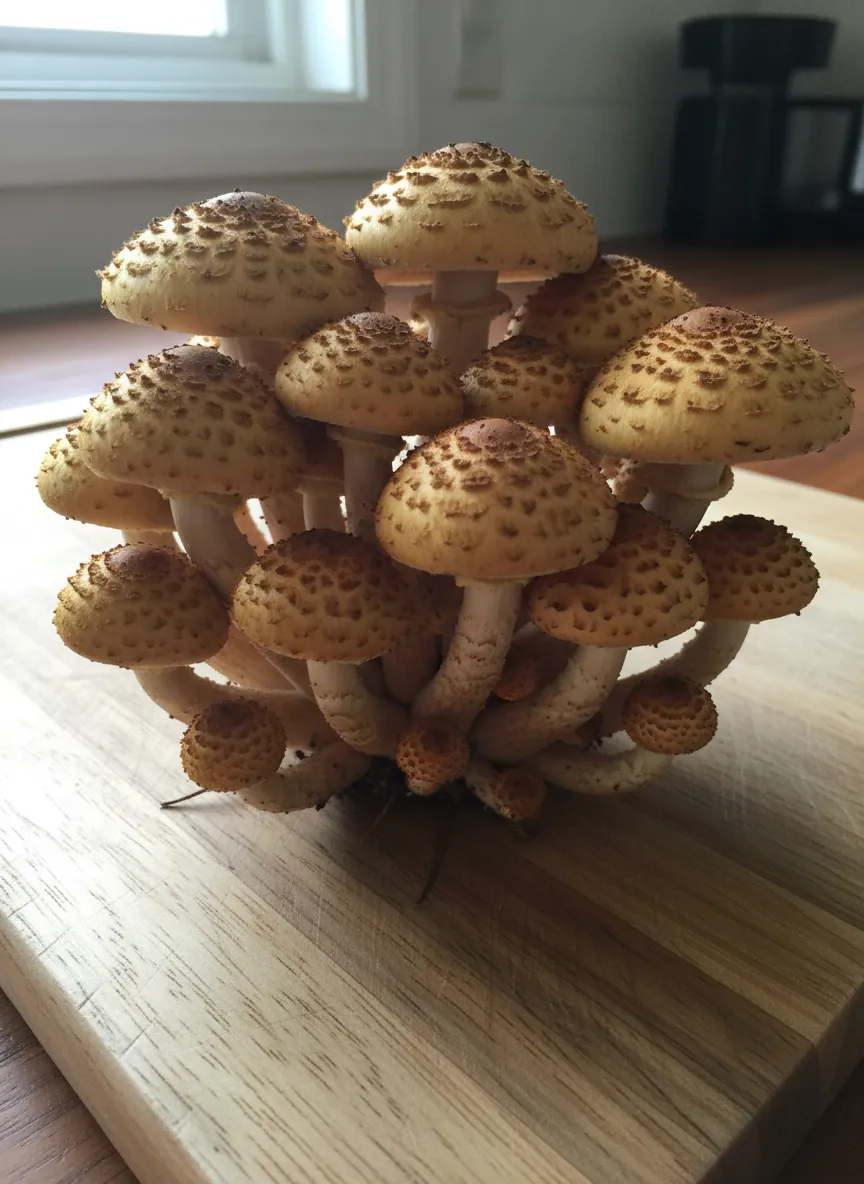
Chestnut mushroom (Pholiota adiposa) is a gourmet species with a distinctive nutty, slightly sweet flavor and a crunchy texture that holds up exceptionally well in cooking. The caps are golden-brown to chestnut-colored, typically 3-6cm across, growing in dense clusters on short stems.
Unlike many gourmet mushrooms that become soft and slimy when cooked, chestnut mushrooms retain a pleasant crunch, making them a favorite of chefs and home cooks who want textural contrast in stir-fries, soups, and roasted dishes.
Chestnut mushrooms are gaining popularity at farmers markets because they look beautiful, taste unique, and offer something genuinely different from the oyster and shiitake mushrooms that dominate most vendors' tables. The growing market price is $10-16 per pound. Commercially, chestnut mushrooms are popular in Asian cuisine, particularly Korean and Japanese cooking. For cultivators, chestnut mushrooms are an intermediate-difficulty species that grows on supplemented hardwood substrate and requires cooler fruiting temperatures.
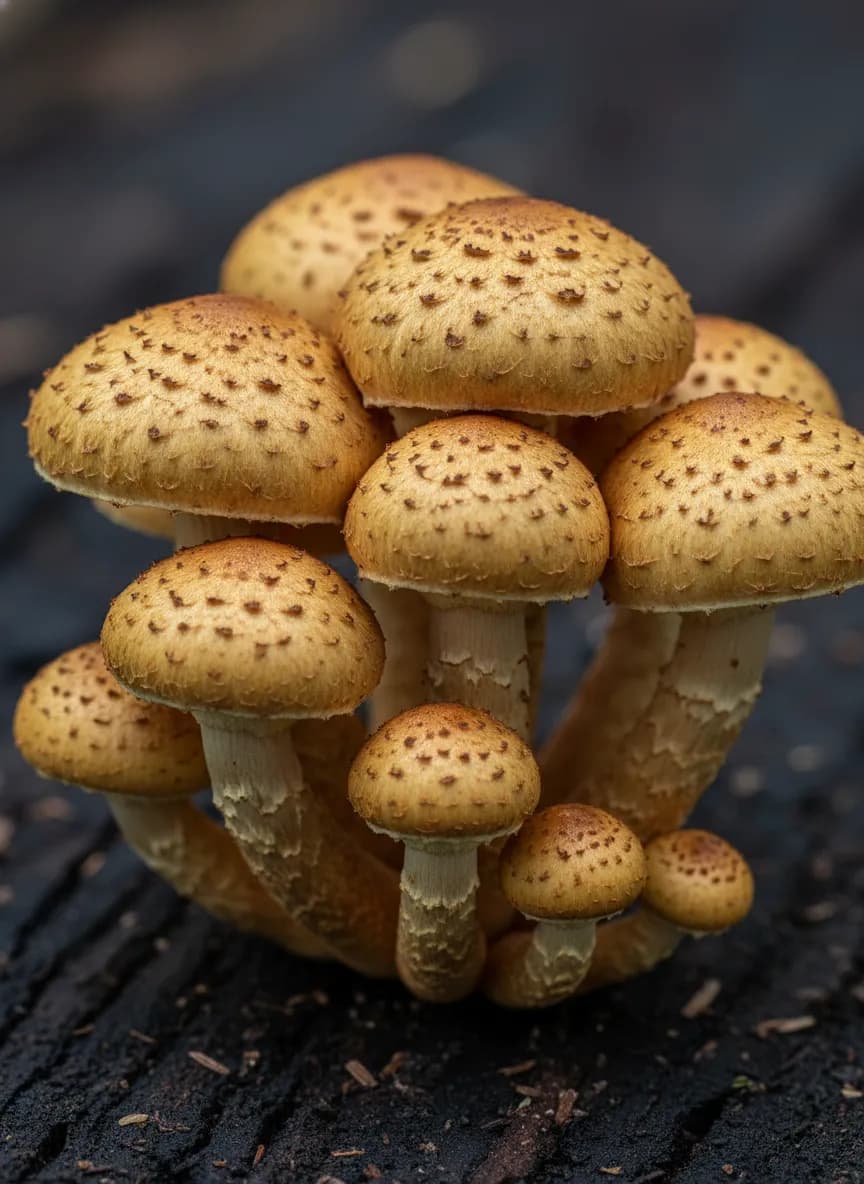
Chestnut mushroom (Pholiota adiposa) cultivation follows straightforward parameters but requires attention to temperature.
- Colonization: 21-24°C (70-75°F), completing in 14-21 days on supplemented hardwood sawdust
- Fruiting: 13-18°C (55-65°F) — needs cool conditions to produce firm, well-colored caps
- Humidity: 85-95% during fruiting
- FAE: moderate, similar to shiitake
- Spawn rate: 15-20% by weight
- Substrate: supplemented hardwood sawdust (Masters Mix or hardwood with 15% wheat bran), pressure sterilized at 15 PSI for 2.5 hours
The mycelium is white and moderately aggressive, similar to king oyster in growth speed. At warmer temperatures, caps are paler, thinner, and less flavorful. Fruit from the top of the block with the bag opened or removed.
Pins appear 5-10 days after introducing fruiting conditions and reach harvest size in 7-10 additional days. A temperature drop of 5-8°C from colonization to fruiting conditions helps trigger pinning. Chestnut mushrooms produce dense clusters of 10-30 individual mushrooms per flush, creating an impressive visual display.
Chestnut mushrooms offer several advantages that make them excellent for farmers market sales and restaurant supply.
- Unique flavor profile — nutty, crunchy, immediately noticeable as different from standard oyster or shiitake
- Visually striking — golden-brown caps photograph well for social media marketing
- Chef-friendly — retained crunch when cooked provides textural variety
- Premium pricing — at $10-16 per pound with less market saturation than oyster mushrooms
- Display durability — they don't wilt as quickly as oyster mushrooms in warm market conditions
- Low equipment overhead — growing parameters overlap with shiitake and king oyster, so growers with cool-temperature fruiting infrastructure need no additional equipment
The key marketing angle is the cooking versatility and unique texture. Offer samples at market — once customers taste the crunchy, nutty flavor, repeat purchases are nearly guaranteed.
Chestnut mushrooms have an excellent shelf life of 7-10 days when stored properly in a paper bag at 2-4°C in the refrigerator. This rivals shiitake and significantly outlasts oyster mushrooms (3-5 days) and lion's mane (3-5 days). The firm cap structure and relatively low moisture content contribute to this longevity.
Chestnut mushrooms also dehydrate exceptionally well — the nutty flavor actually intensifies when dried:
- Slice to 5-6mm thickness
- Dehydrate at 50-60°C for 5-7 hours until cracker-dry
- Rehydrate in hot water for 15-20 minutes — retains most of the characteristic crunch
- Store dried chestnuts in airtight containers for 6-12 months
For commercial growers, the long fresh shelf life means less waste and more flexibility in sales timing — you can harvest Monday and sell Saturday at market without significant quality loss. This makes chestnut mushrooms more forgiving for small-farm sales logistics compared to short-lived species like oyster and lion's mane that must be sold within 2-3 days of harvest.
The best substrate for chestnut mushrooms is supplemented hardwood sawdust, specifically an oak or beech sawdust base with wheat bran supplementation. This mirrors the species' natural ecology — Pholiota adiposa is a hardwood decomposer in the wild.
Recommended substrate recipe (per 5 lb block):
- 680g dry hardwood sawdust (oak, beech, or maple preferred) or hydrated hardwood fuel pellets
- 120g wheat bran (15% supplementation rate by dry weight)
- 1,200ml water — target 60-63% moisture content
- Mix thoroughly, bag in autoclavable grow bags with filter patches
- Sterilize at 15 PSI for 2.5 hours — no shortcuts, chestnut is not aggressive enough for pasteurization
Alternative high-performance recipe — Masters Mix:
- 50% hardwood pellets, 50% soy hull pellets by dry weight
- Hydrate to 60% moisture
- Produces 15-25% higher yields than straight hardwood sawdust due to increased nitrogen from soy hulls
Supplementation tips:
- Do not exceed 20% bran — over-supplementation increases contamination risk without proportional yield gains
- Adding 1-2% gypsum (calcium sulfate) improves substrate structure and pH buffering
- Avoid softwood sawdust entirely — pine, cedar, and spruce contain antifungal terpenes that inhibit Pholiota growth
Chestnut mushrooms perform poorly on straw-based substrates — the lower lignin content and inability to sterilize straw reliably leads to both lower yields and higher contamination rates.
Chestnut mushroom cultivation is intermediate-difficulty, and most problems relate to temperature, contamination during the long colonization, or insufficient FAE during fruiting.
Problem: No pins forming after full colonization - Cause: Temperature not cold enough or insufficient temperature drop - Fix: Ensure a 5-8°C temperature drop from colonization (21-24°C) to fruiting (13-18°C). Chestnut mushrooms are a cool-weather species and will not pin reliably above 20°C.
Problem: Thin, pale caps with weak flavor - Cause: Fruiting temperature too warm - Fix: Lower fruiting temperature to 13-16°C. The nutty flavor and golden-brown coloring develop best at cooler temperatures.
Problem: Green mold (Trichoderma) during colonization - Cause: Insufficient sterilization, contaminated spawn, or spawn rate too low - Fix: Sterilize for a full 2.5 hours at 15 PSI, verify spawn health before use, and increase spawn rate to 20% to speed colonization.
Problem: Small or few mushrooms per flush - Cause: Under-supplemented substrate or dehydrated block - Fix: Ensure 15% wheat bran supplementation and soak spent blocks in cold water for 2-4 hours between flushes to rehydrate.
Problem: Long stems with tiny caps - Cause: Insufficient fresh air exchange (high CO2) - Fix: Increase FAE — chestnut mushrooms need moderate airflow similar to shiitake. If growing in a shotgun fruiting chamber, ensure all holes are unblocked.
Expect 2-3 productive flushes per block, with yields of 0.5-1 lb per 5 lb block per flush.
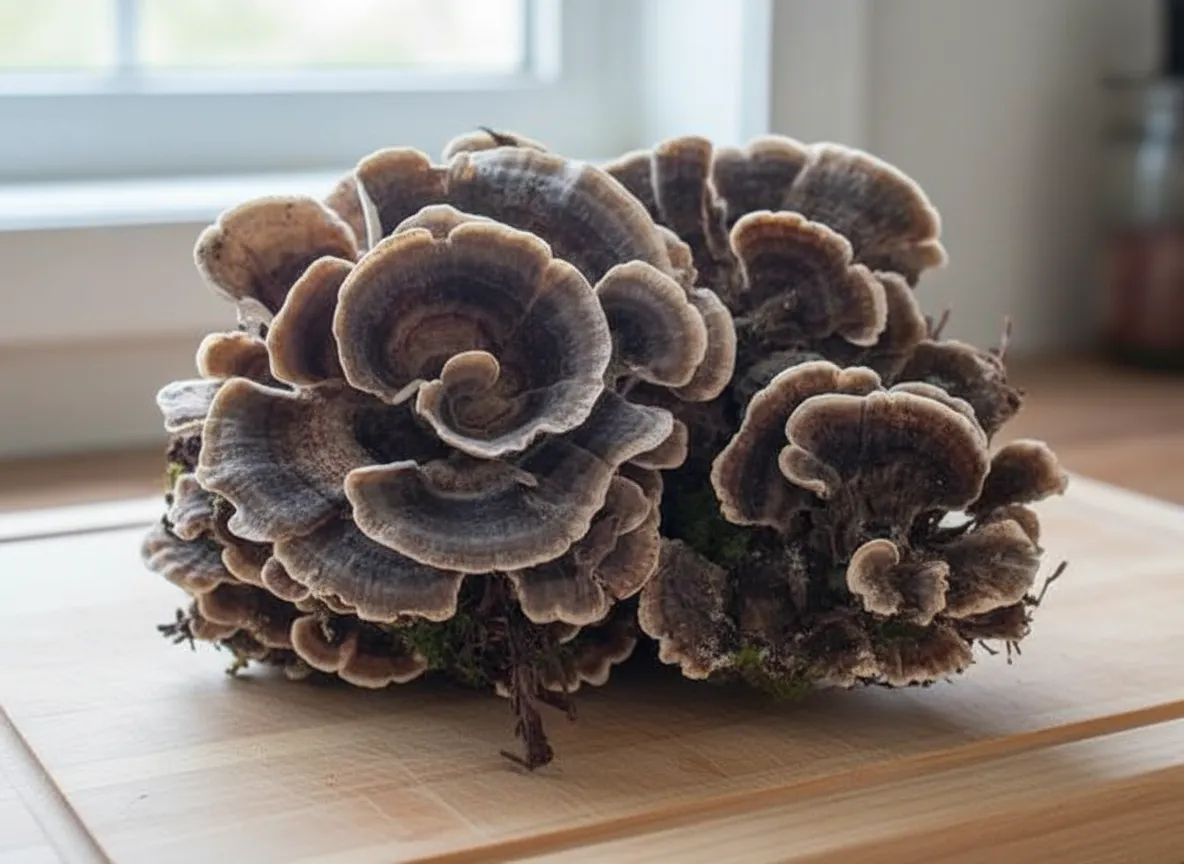
Turkey Tail (Trametes versicolor) is a common medicinal polypore that grows naturally on dead hardwood worldwide. It produces thin, leathery, semicircular brackets with distinctive concentric color bands resembling a turkey's tail.
- Colonization: 20-24°C on supplemented hardwood sawdust or logs, completing in 14-21 days on sawdust blocks
- Spawn rate: 10-15%
- Fruiting: 15-24°C, 80-90% humidity, moderate FAE
- Bracket development: 4-8 weeks (slow — thin, tough brackets rather than fleshy mushrooms)
Turkey Tail is aggressive and contamination-resistant, similar to oyster mushrooms in ease of colonization. The brackets grow as layered shelves from the substrate surface, building concentric color zones as they expand.
For outdoor log cultivation, Turkey Tail is one of the easiest species — inoculate hardwood logs with plug spawn and stack in a shady, moist location. Brackets appear 6-12 months after inoculation.
Turkey Tail is not eaten fresh (too tough) — it is dried and used for tea, tincture, or powdered extract.
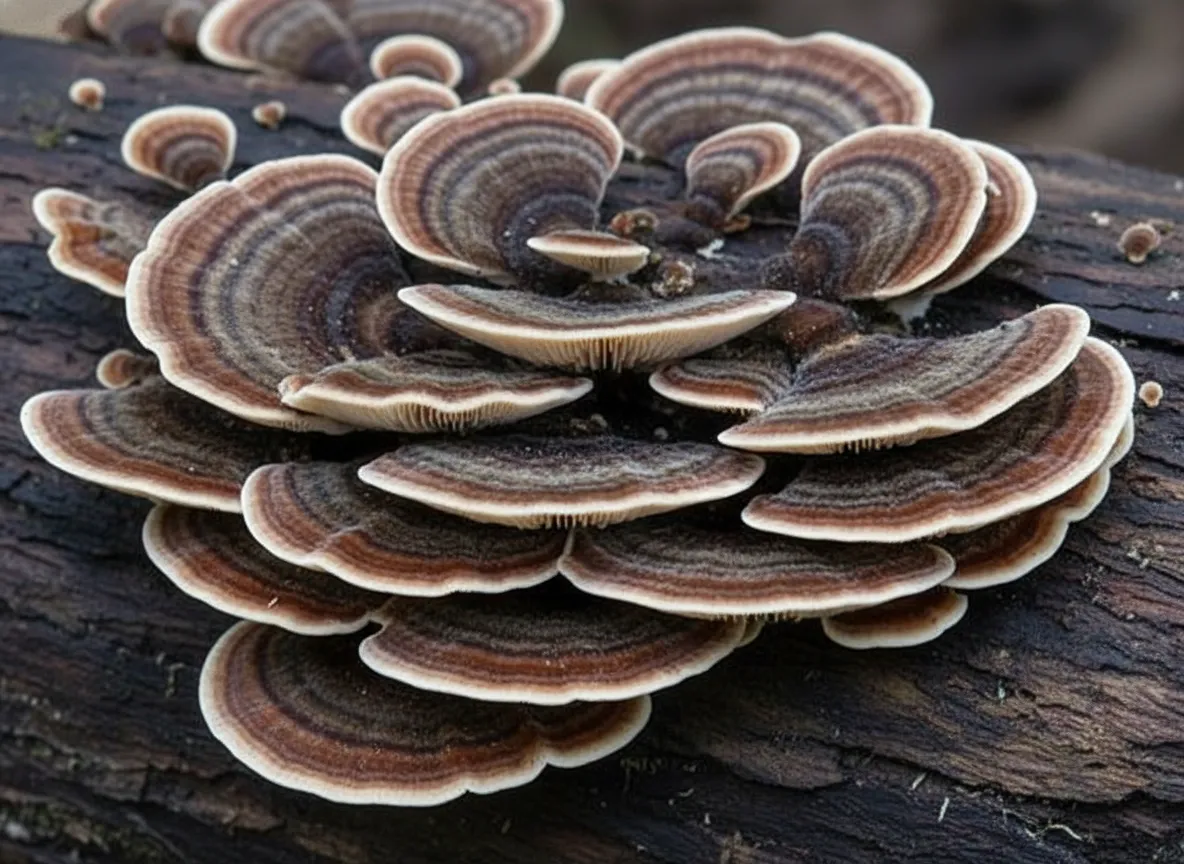
Turkey Tail (Trametes versicolor) is one of the most extensively researched medicinal mushrooms, with significant evidence supporting immune system benefits.
The key bioactive compounds are polysaccharide-K (PSK) and polysaccharopeptide (PSP), both beta-glucan complexes that modulate immune function. PSK has been approved as an adjunct cancer therapy in Japan since the 1970s, prescribed alongside conventional treatment to improve outcomes and quality of life.
Research highlights:
- Stimulates natural killer (NK) cell activity and enhances T-cell function
- Supports gut microbiome health through prebiotic effects
- A notable NIH-funded clinical trial showed Turkey Tail extract improved immune function in breast cancer patients after radiation therapy
For home growers, Turkey Tail is the most accessible medicinal species because it grows aggressively on simple substrates, fruits readily outdoors on logs, and produces year after year with minimal maintenance.
Process similarly to reishi: dry the brackets thoroughly, then use hot water extraction (simmer 2-4 hours) or dual extraction (alcohol + water) to create teas and tinctures. The mild flavor is much more palatable than reishi.
Wine Cap (Stropharia rugosoannulata), also called King Stropharia or Garden Giant, is the premier outdoor-cultivated gourmet mushroom. It thrives in garden beds, wood chip paths, and mulched areas with zero sterile technique required.
To establish a Wine Cap bed:
- Choose a shady or partially shaded location
- Lay down a 10-15cm layer of fresh hardwood chips (not cedar or pine, which are antifungal)
- Mix in sawdust spawn at roughly 10-15% by volume, distributing evenly throughout the chip layer
- Water thoroughly and cover with a thin layer of straw
- Keep the bed moist but not waterlogged — think forest floor moisture
Wine Cap colonizes the wood chip bed over 2-4 months, and mushrooms appear when temperatures are 10-22°C with regular rainfall or watering. The mushrooms are large (caps 5-15cm across), with a distinctive burgundy-wine colored cap when young, fading to tan as they mature. Flavor is mild, slightly potato-like, with a firm texture.
Wine Cap beds produce for 2-3 years before the wood chips are fully decomposed. Simply add fresh chips annually to extend production.
Wine Cap mushrooms provide remarkable benefits when grown in garden beds alongside vegetables, making them the ultimate dual-purpose cultivation.
The mycelium network acts as a living mulch:
- Retains soil moisture — reducing watering frequency by 20-30%
- Breaks down wood chips into rich humus that feeds your plants
- Suppresses weeds by occupying the soil surface
- Attracts beneficial organisms including earthworms that further improve soil structure
Some gardeners report that plants grown in Wine Cap beds show improved vigor and disease resistance, possibly due to beneficial microbial interactions in the rhizosphere.
To integrate Wine Cap with garden vegetables, lay a 5-10cm layer of inoculated wood chips between rows of tomatoes, peppers, squash, or corn. The mushrooms fruit at the edges of the chip mulch, away from direct root zones. A single bed produces 2-5 lbs of mushrooms per square meter per season while simultaneously building soil fertility.
After 2-3 years, the decomposed chips become excellent compost that can be incorporated directly into garden soil. This is the closest thing to a free mushroom — the woodchips you would buy anyway for mulching become a productive food crop.
Wine cap mushrooms (Stropharia rugosoannulata) should be harvested when the cap is still convex to flat — before it turns upward and begins releasing spores. Timing is critical because wine caps deteriorate rapidly once past their prime.
Harvest stages and quality:
- Button stage (cap closed): best for long storage (5-7 days refrigerated), firm texture, mild flavor. Caps are 3-6cm across with the partial veil still intact.
- Prime stage (cap flat): peak flavor and size — the distinctive wine-red to burgundy color is most vivid. Caps are 6-15cm across. Store 3-5 days refrigerated.
- Overripe (cap upturned): spores are dropping, flesh becomes soft and dark, flavor turns earthy and unpleasant. Compost these — do not eat.
Harvesting technique:
- Twist and pull gently from the wood chip bed rather than cutting. Wine caps fruit from the chip surface and pull cleanly.
- Harvest in the morning before the sun dries the caps — mushrooms harvested in cool, dewy conditions store significantly longer.
- Check beds daily during fruiting season — wine caps can grow from pinhead to full size in 3-5 days during warm, rainy weather.
Fruiting season in temperate climates:
- Spring flush: May-June (most productive)
- Autumn flush: September-October
- Triggered by rain followed by warm days (15-22°C) — patterns similar to wild morel and chanterelle fruiting
A well-maintained wine cap bed (1-2 square meters) produces 2-5 lbs per season with almost zero labor once established.
Enoki (Flammulina velutipes) is a cold-loving species that produces dramatically different mushrooms depending on growing conditions. Wild-type enoki has tawny brown caps on short stems, while the commercial form — grown in tall containers with restricted light and high CO2 — produces the familiar long, thin, white stalks sold in grocery stores.
Home cultivation for the wild form:
- Colonization: 20-24°C for 14-21 days on supplemented hardwood sawdust
- Spawn rate: 10-15%
- Fruiting temperature: COLD — 2-10°C (36-50°F), ideal for winter production in unheated spaces or refrigerators
- Humidity: 85-95%
- FAE: moderate
Pins appear within 7-14 days of cold exposure, and mushrooms reach harvest size in 7-10 additional days. For the commercial long-stemmed form, grow in tall bottles or containers with a paper collar that restricts the growing space and limits light exposure. The mushrooms elongate dramatically in the dark, confined environment.
Enoki has a mild, slightly fruity flavor and a pleasant crunch. Its extremely cold fruiting requirement makes it an excellent species for winter growing when most other species struggle in unheated spaces.
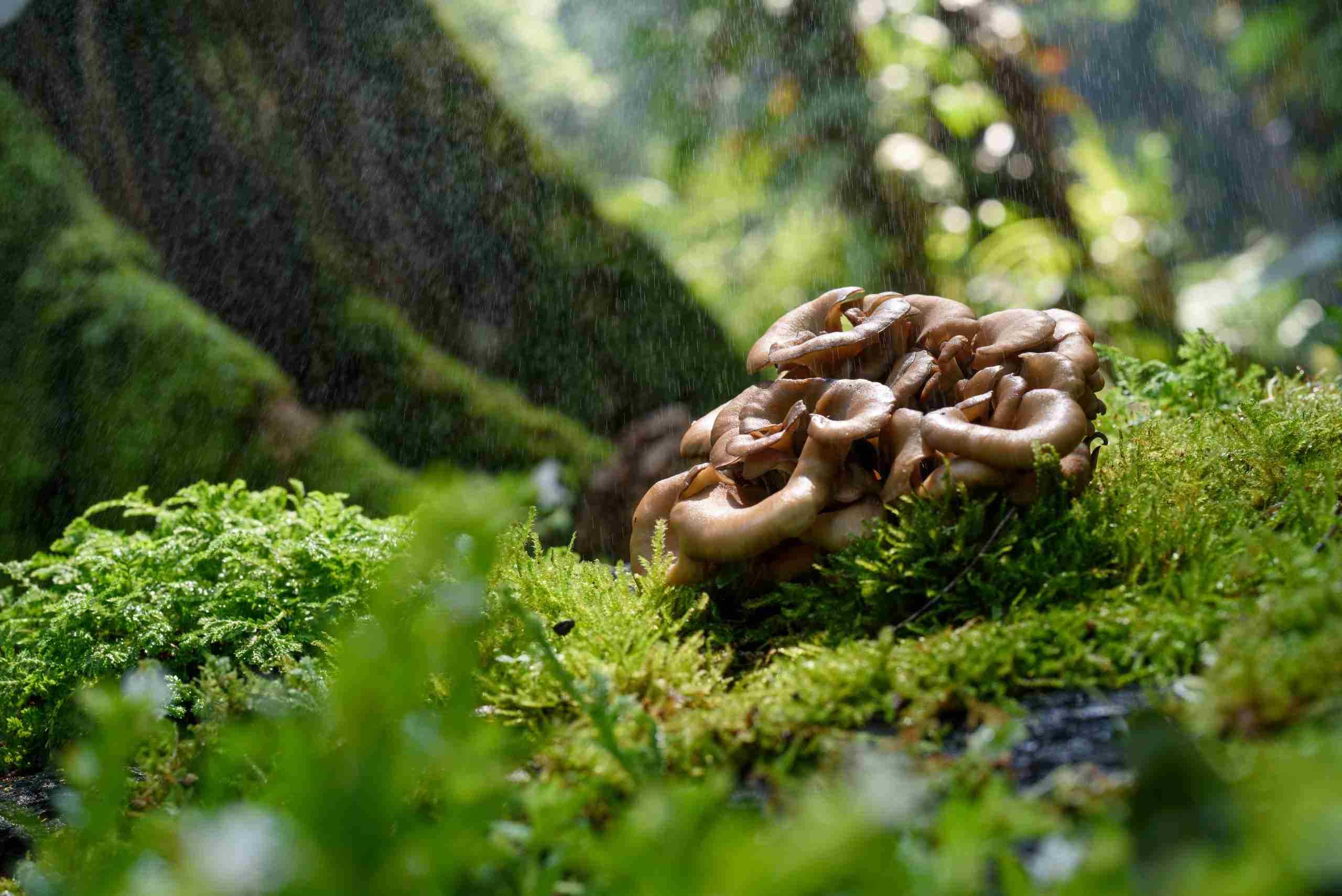
Maitake (Grifola frondosa) is one of the most challenging commonly attempted cultivated species, earning an advanced difficulty rating. It is possible to grow at home, but expectations must be realistic.
- Colonization: 21-24°C on supplemented hardwood sawdust, but extremely slow — 8-16 weeks for a complete block
- Spawn rate: 20-25% to maximize colonization speed
- Fruiting: 15-21°C, 85-95% humidity, moderate FAE
- Development: 2-4 weeks for the cluster of overlapping fan-shaped caps, final weight 200-500g
Maitake mycelium is thin, delicate, and easily overwhelmed by contamination during the long colonization period. Sterile technique must be impeccable. Many experienced growers fail with maitake multiple times before achieving consistent results.
The primary challenge is the extended colonization period — contamination rates are high on blocks that take 3-4 months to mature.
Outdoor cultivation on buried hardwood logs or wood chip beds is sometimes more successful than indoor block cultivation because the natural environment provides beneficial microorganisms that support maitake growth.
Pioppino (Agrocybe aegerita), also called Black Poplar mushroom, is an underappreciated gourmet species with a firm, crunchy texture and a nutty, slightly peppery flavor.
- Colonization: 21-24°C for 21-30 days on supplemented hardwood
- Fruiting: 13-18°C, 85-95% humidity
Pioppino produces clusters of small brown-capped mushrooms on long stems, similar in appearance to chestnut mushrooms but with distinct flavor. It holds its texture remarkably well in cooking, making it a chef favorite.
Other specialty species worth exploring:
- Nameko (Pholiota nameko) — a Japanese favorite with a natural gelatinous coating, used in miso soup. Grows on supplemented hardwood at 10-18°C fruiting temperature.
- Coral Tooth (Hericium coralloides) — a relative of lion's mane that produces beautiful coral-like formations, with similar medicinal properties and a milder flavor. Grows on hardwood.
- Elm oyster (Hypsizygus ulmarius) — produces large, meaty individual mushrooms on supplemented hardwood.
Each specialty species adds diversity to your growing repertoire and potential market offerings. Start with the species whose parameters best match your existing setup and climate.
Matching species to your environment is the single most important decision in mushroom cultivation.
Start by assessing your available temperature range:
- 18-27°C year-round (typical heated home): oyster mushrooms, lion's mane, reishi
- 10-18°C (basement, garage, cool season): shiitake, king oyster, chestnut, pioppino
- 2-12°C (winter garage, spare fridge): enoki and cold-weather shiitake strains
- Above 25°C (hot climates): pink oyster and tropical reishi variants
Next, assess your equipment:
- No pressure cooker: oyster mushrooms on pasteurized straw or HWFP
- Pressure cooker available: lion's mane, shiitake, king oyster, chestnut on supplemented sawdust
- Outdoor space: Wine Cap in garden beds, shiitake on logs, Turkey Tail on logs
Finally, consider your goals:
- Culinary: oyster, lion's mane, king oyster, shiitake
- Medicinal: reishi, Turkey Tail, lion's mane
- Market sales: oyster and shiitake for volume, king oyster and chestnut for premium pricing
Start with one species, master it, then expand to complementary species that share similar parameters.
Need more help? Dr. Myco can answer follow-up questions about chestnut & other gourmet based on thousands of real growing experiences.
Ask Dr. MycoMore in Species Guides
Oyster Mushrooms
15 tips
Lion's Mane
13 tips
Shiitake
13 tips
King Oyster
12 tips
Reishi
13 tips
Mushroom Health & Medicinal Benefits
17 tips
Cooking & Preparation
16 tips
Enoki, Maitake & Cordyceps
14 tips
Mushroom Alternate Names & Varieties
17 tips
Mushroom Supplement Guide
18 tips
Common Mushroom Varieties
20 tips
Rare & Specialty Cultivatable Species
16 tips