Making Liquid Culture
12 tips in Liquid Culture
By Andrew Langevin · Founder, Nature Lion Inc · Contributing author, Mushroomology (Brill, 2026)
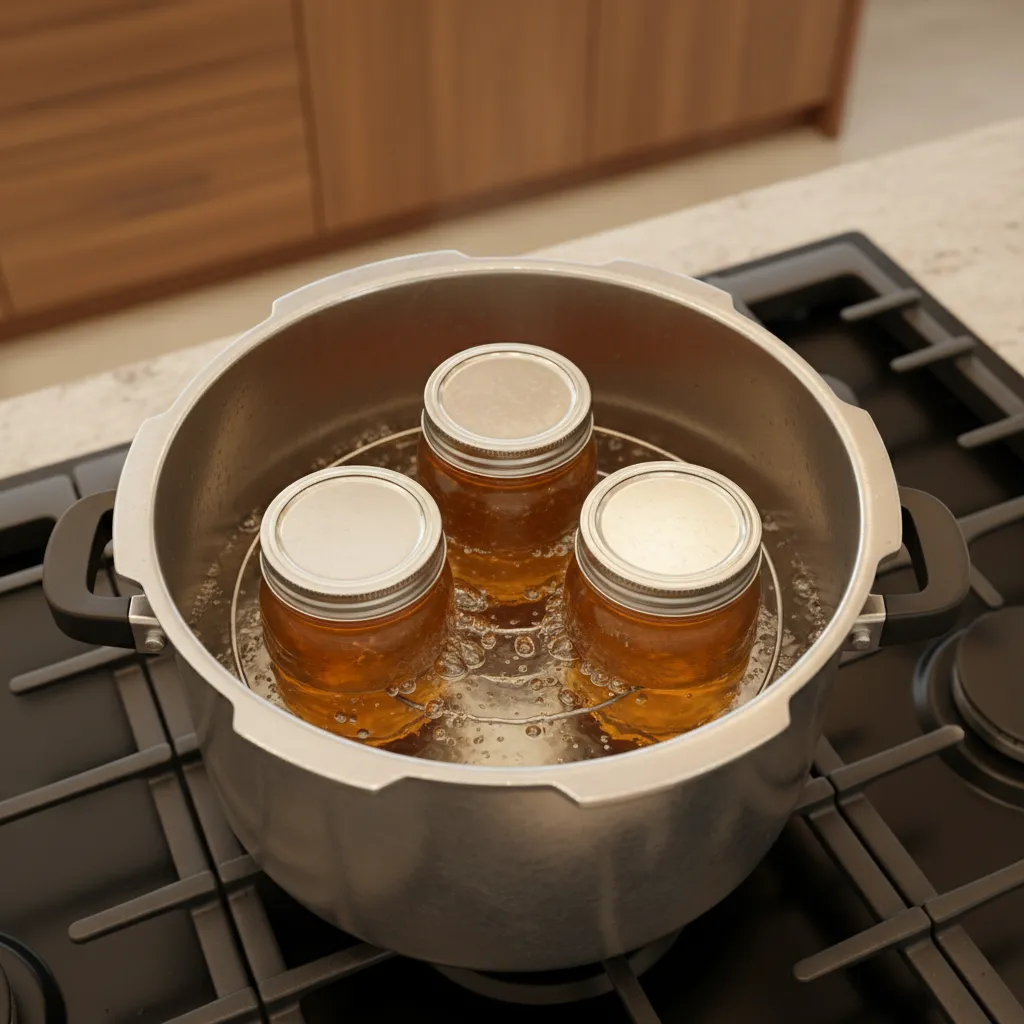
Honey liquid culture is the most popular recipe among home growers because honey is cheap, widely available, and produces reliable results.
Honey LC Recipe: - 600 mL distilled water - 24 grams (about 1 tablespoon + 1 teaspoon) of light honey - Use raw, unfiltered honey — avoid honey with additives or artificial flavors
Preparation steps: 1. Measure 600 mL of distilled water into a clean quart-sized mason jar 2. Add 24 grams of honey (a 4% sugar solution by weight) 3. Stir thoroughly until the honey is completely dissolved 4. Add a small piece of broken glass or a magnetic stir bar to the jar (this helps break up mycelium when you swirl the jar later) 5. Cover the jar with a modified lid fitted with an injection port and a filter patch 6. Cover the lid loosely with aluminum foil to prevent water from entering during sterilization 7. Pressure cook at 15 PSI for 20 minutes 8. Allow the pressure cooker to cool completely and naturally — do not quick-release 9. Let the jar cool to room temperature before inoculating
Why 4% sugar concentration? Higher concentrations (above 5%) can actually inhibit mycelium growth and increase contamination risk. The 4% ratio provides enough nutrition for vigorous growth without overfeeding. Some growers go as low as 3%, which works but produces slightly slower growth.
Brown rice syrup is an excellent alternative sugar source for liquid culture. It contains complex sugars and trace minerals that some growers believe produce denser, healthier mycelium growth compared to simple sugars.
Brown Rice Syrup LC Recipe: - 600 mL distilled water - 24 grams (1 tablespoon + 1 teaspoon) brown rice syrup - Optional: 0.5 gram nutritional yeast for added nitrogen
Preparation: 1. Warm 100 mL of the distilled water in a microwave-safe container for 30 seconds — brown rice syrup is thick and dissolves better in warm water 2. Add the 24 grams of brown rice syrup to the warm water and stir until fully dissolved 3. Pour this solution into your quart mason jar and add the remaining 500 mL of distilled water 4. Drop in a marble or piece of broken glass as an agitation aid 5. Fit the jar with a modified LC lid (injection port + filter patch) 6. Cover with aluminum foil and pressure cook at 15 PSI for 20 minutes 7. Cool completely before inoculating
Notes on brown rice syrup: - The solution will appear slightly more amber than honey LC — this is normal - Brown rice syrup can caramelize slightly during sterilization, giving the liquid a light golden color - Source brown rice syrup from health food stores — ensure it contains no added flavors or preservatives - Performance is comparable to honey LC with colonization times within 1-2 days of each other
Light malt extract (LME) is the professional's choice for liquid culture. It is the standard medium used in mycology labs because it provides a consistent, well-balanced nutrient profile for mycelium growth.
Light Malt Extract LC Recipe: - 600 mL distilled water - 20 grams (about 1 tablespoon) light dry malt extract (DME) powder - Alternative: 24 grams liquid light malt extract (LME)
Preparation: 1. Measure 600 mL of distilled water into a quart mason jar 2. Add 20 grams of dry malt extract powder and stir vigorously — DME clumps easily, so whisk or shake until fully dissolved 3. Add your agitation aid (marble, stir bar, or broken glass piece) 4. Fit the jar with a modified LC lid and cover with aluminum foil 5. Pressure cook at 15 PSI for 20 minutes 6. Cool to room temperature before inoculating
Why use malt extract? - It contains a balanced mix of maltose, glucose, amino acids, and B vitamins that promote strong mycelium growth - The nutrient profile closely matches what mycelium encounters in its natural environment - Results are highly reproducible because DME is manufactured to consistent specifications
Sourcing tips: - Purchase light or extra-light DME from homebrewing supply stores — it is cheaper per gram than buying from mycology suppliers - Avoid dark or amber malt extract, which contains more complex sugars that can inhibit some species - A 1 lb bag of DME costs about $5-8 and makes roughly 20 jars of LC
Karo light corn syrup is one of the cheapest and most accessible sugar sources for liquid culture. It produces a very clear solution that makes it easy to visually inspect your mycelium and detect contamination.
Karo Corn Syrup LC Recipe: - 600 mL distilled water - 24 mL (about 1.5 tablespoons) Karo Light corn syrup - Use only Karo Light — not dark corn syrup, which contains molasses and can inhibit growth
Preparation: 1. Pour 600 mL of distilled water into a quart mason jar 2. Add 24 mL of Karo Light corn syrup 3. Stir until the syrup is completely dissolved — Karo dissolves easily in room-temperature water 4. Add your agitation aid 5. Fit with a modified LC lid and cover with aluminum foil 6. Pressure cook at 15 PSI for 20 minutes 7. Cool naturally and completely
Advantages of Karo LC: - Produces the clearest solution of any recipe, making contamination very easy to spot - Extremely affordable — a $3 bottle makes dozens of jars - Dissolves instantly without heating - Available at virtually every grocery store
Disadvantages: - Some growers report slightly slower initial growth compared to honey or malt extract - Contains only simple sugars with no additional nutrients - Some batches may benefit from adding 0.5 grams of nutritional yeast for extra nitrogen
Karo LC is an excellent choice for beginners because the clarity makes it the easiest medium to monitor visually. If growth seems slow, try increasing inoculation volume to 2-3 cc of source culture.
Proper sterilization is the single most important step in making liquid culture. Even a tiny number of surviving bacteria or mold spores will outcompete your mycelium in the nutrient-rich sugar water.
Equipment needed: - Pressure cooker capable of reaching 15 PSI (Presto 23-quart is the standard) - Modified mason jar lids with self-healing injection ports and filter patches - Aluminum foil to cover lids during sterilization
Sterilization procedure: 1. Prepare your LC solution in a quart mason jar, filling no more than ⅔ full (600 mL) 2. Hand-tighten the modified lid — not too tight, as pressure needs to equalize 3. Cover the entire lid area with aluminum foil, crimping around the edges 4. Place a rack or trivet in the pressure cooker to keep jars off the bottom 5. Add 2-3 inches of water to the pressure cooker 6. Load jars and seal the pressure cooker 7. Heat until the cooker reaches 15 PSI 8. Maintain 15 PSI for 20 minutes — start timing only after full pressure is reached 9. Turn off heat and let pressure drop naturally — this takes 45-60 minutes 10. Do not open until pressure reads zero
Critical mistakes to avoid: - Never quick-release pressure — the rapid temperature change can crack jars and suck contaminants through filters - Never skip the foil — condensation dripping onto filter patches during cooling introduces contamination - Never sterilize at less than 15 PSI — lower pressure means lower temperature, and not all organisms are killed
Modified lids are essential for liquid culture work. They allow you to inoculate jars and draw out culture using a syringe without ever opening the lid, dramatically reducing contamination risk.
Materials needed: - Wide-mouth mason jar lids (flat disc + ring) - Self-healing injection ports (SHIP — silicone, available online in packs of 10-20 for about $5-10) - Adhesive filter patches (0.2 micron synthetic filter discs, or use Micropore tape over a drilled hole) - Drill with a ⅜-inch (10mm) drill bit for the injection port and a ¼-inch bit for the filter - High-temperature RTV silicone (optional, for extra sealing)
Assembly steps: 1. Drill a ⅜-inch hole on one side of the flat lid disc for the injection port 2. Drill a ¼-inch hole on the opposite side for the air exchange filter 3. Remove any metal burrs with a file or sandpaper 4. Press the self-healing injection port into the larger hole from the underside of the lid — it should fit snugly 5. Apply a small bead of RTV silicone around the port edges if it feels loose 6. Cover the smaller hole with an adhesive filter patch on the top side of the lid 7. Allow silicone to cure for 24 hours before use
Budget alternative: Skip purchased injection ports. Instead, drill one hole, cover the top with several layers of red RTV silicone, and let it cure into a thick, self-healing pad. This works well and costs almost nothing.
Make lids in batches of 10-20 at a time. They are reusable for dozens of cycles — just replace the filter patch and check the injection port for leaks before each use.
Inoculating LC from a clean agar culture is the most reliable way to start a new liquid culture. Agar gives you visual confirmation that your source culture is contamination-free before it ever touches your LC.
What you need: - A fully colonized, clean agar plate with vigorous mycelium growth - A sterilized and cooled LC jar - A sterile scalpel or exacto knife - A still air box (SAB) or laminar flow hood - A lighter or alcohol lamp for flame sterilization
Procedure: 1. Set up your SAB or flow hood and wipe all surfaces with 70% isopropyl alcohol 2. Flame-sterilize your scalpel until it glows red-hot, then let it cool for 10 seconds 3. Open the agar plate and cut a small piece of mycelium — approximately 5mm x 5mm (about the size of a pencil eraser) 4. Cut from the leading edge of the mycelium, not the center — the leading edge contains the most vigorous, actively growing tissue 5. Quickly open the LC jar lid, drop the agar piece into the liquid, and close the lid 6. Swirl the jar gently to submerge the agar piece 7. Place the jar at 75°F (24°C) in a dark location
Expected timeline: - Days 1-3: The agar piece sinks and mycelium begins growing off the edges - Days 3-7: Wispy mycelium clouds form and spread through the liquid - Days 7-14: Dense mycelium clumps fill the jar — swirl daily to break up clumps and encourage even growth
Always inoculate from agar that has been tested and confirmed clean on at least two transfer generations.
Inoculating LC from a spore syringe is common for beginners who do not yet have agar cultures, but it carries higher contamination risk because spore syringes are not always clean.
Procedure: 1. Set up your still air box (SAB) and wipe all surfaces with 70% isopropyl alcohol 2. Shake the spore syringe vigorously for 30 seconds to distribute spores evenly 3. Flame-sterilize the syringe needle until it glows red, then let it cool for 10 seconds (or wipe with an alcohol pad) 4. Insert the needle through the self-healing injection port on your LC lid 5. Inject 1-2 cc of spore solution into the LC jar — less is more, as too many spores can create excess genetic variation 6. Remove the needle and wipe the injection port with an alcohol pad 7. Swirl the jar gently and place at 75-78°F (24-26°C)
Expected timeline (slower than agar): - Days 1-7: No visible growth — spores are germinating - Days 7-14: First wispy growth appears, usually at the bottom of the jar - Days 14-21: Mycelium clumps form and grow throughout the solution - Days 21-28: LC may be ready, but must be tested on agar before use
Critical warning: Because spore syringes can harbor hidden bacteria, you must test spore-derived LC on agar before using it to inoculate grain. Drop 2-3 drops on agar plates and wait 5-7 days to confirm only mycelium grows. Skipping this step is the number one cause of mass grain contamination among new growers.
Josex' Poke Method is a clever, low-tech approach to making liquid culture that eliminates the need for modified lids with injection ports. It was popularized on mushroom growing forums and is especially useful for beginners who want to start making LC without investing in specialized supplies.
How it works: 1. Prepare your LC solution in a quart mason jar using any standard recipe (600 mL water + 24 grams sugar source) 2. Cover the jar with a standard flat mason jar lid (no holes needed) 3. Place a piece of aluminum foil over the lid and secure the ring tightly 4. Pressure cook at 15 PSI for 20 minutes and cool completely 5. When ready to inoculate, work in a SAB or flow hood 6. Remove the foil and ring, then lift the flat lid just enough to create a small gap 7. Using a sterile tool, poke your agar wedge or squirt your source culture through the gap 8. Immediately replace the lid and ring, then cover with fresh micropore tape around the edges for gas exchange
Advantages: - No drilling, no injection ports, no filter patches - Uses supplies you already have - Works well for small batches and experimentation
Disadvantages: - Opening the lid exposes the culture to air briefly — contamination risk is higher than with injection ports - You cannot draw LC out with a syringe without opening the lid again - Best suited for SAB users who plan to use the LC within 2-3 weeks
This method is a great stepping stone for beginners who want to try LC before investing in modified lid supplies.
The grain LC method is an improvised technique where you create a small-batch liquid culture using colonized grain as your inoculation source. It is popular among growers who have colonized grain jars but no agar cultures, and want to quickly scale up without additional transfers.
Method: 1. Prepare a small LC jar — a half-pint (250 mL) jar works perfectly for this 2. Use 250 mL distilled water with 10 grams of honey or Karo syrup 3. Sterilize at 15 PSI for 20 minutes and cool completely 4. Working in a SAB, open the LC jar and drop in 3-5 individual colonized grain kernels from a confirmed clean, fully colonized grain jar 5. Close the lid immediately and seal with micropore tape around the edges 6. Place at 75°F and swirl daily
Expected timeline: - Days 1-3: Mycelium begins growing off the grain kernels into the liquid - Days 5-10: Clouds of mycelium form throughout the solution - Days 10-14: LC is typically ready for use
Tips for success: - Select fully white, densely colonized grains from the center of your jar — avoid any grains from near the walls or lid where contamination is most likely - Use smaller jars for this method — half-pint or even 4 oz jelly jars work well because the smaller volume colonizes faster - This LC should be tested on agar before large-scale use since grain-to-LC carries moderate contamination risk
This is an excellent emergency method when you need LC quickly and your agar game is not yet established.
A magnetic stir plate continuously agitates your liquid culture, breaking up mycelium clumps and distributing nutrients evenly. This results in faster colonization, more uniform mycelium distribution, and easier syringe filling.
Setup: - Magnetic stir plate — homebrew or lab-grade models work equally well (available for $25-50 online) - Magnetic stir bar — use a 1-inch (25mm) PTFE-coated stir bar placed inside the jar before sterilization - Your standard LC jar with a modified lid
How to use it: 1. Place the stir bar inside your LC jar before sterilization 2. After sterilization, cooling, and inoculation, place the jar centered on the stir plate 3. Set the speed to low-medium — you want a gentle vortex, not a violent tornado 4. The stir bar should spin smoothly without rattling or bouncing 5. Run the stir plate for 30 minutes 2-3 times per day, or continuously on the lowest setting
Benefits: - Colonization time drops by roughly 30-50% compared to unstirred LC - Mycelium breaks into smaller, more uniform pieces — perfect for filling syringes without clogging needles - Nutrients and oxygen are distributed evenly throughout the solution - Reduces the formation of large, dense mycelium balls that are hard to draw into syringes
DIY alternative: If you do not want to buy a stir plate, manually swirling your jars 2-3 times daily achieves similar (though slower) results. Some growers mount jars on an orbital shaker or even tape them to a washing machine during the spin cycle for improvised agitation.
Knowing when LC is ready prevents two common mistakes: using it too early (poor colonization) or too late (declining viability). Here are the signs that your LC is ready for use.
Visual indicators: - The jar contains multiple distinct mycelium clumps that swirl freely when agitated - Mycelium pieces are white to off-white with a wispy, cloud-like appearance - The liquid between mycelium clumps remains clear (not cloudy or hazy) - When you swirl the jar, mycelium pieces break apart and reform rather than staying as one solid mass
Volume indicator: The mycelium should occupy roughly 20-40% of the total liquid volume. If it fills more than 50%, the culture may be past its prime and starting to consume itself.
Syringe test: Draw 2-3 cc into a syringe with an 18-gauge needle. The liquid should flow freely with small mycelium fragments visible. If the needle clogs constantly, the mycelium is too dense — swirl vigorously to break it up or use a larger 16-gauge needle.
Typical readiness timelines: - From agar: Ready in 7-14 days - From spore syringe: Ready in 14-28 days - From LC-to-LC transfer: Ready in 5-10 days
Before using: Always confirm readiness by testing 2-3 drops on agar. Wait 5-7 days to verify only clean mycelium grows. Only then proceed to inoculating grain at your standard rate of 2-3 cc per quart jar.
Need more help? Dr. Myco can answer follow-up questions about making liquid culture based on thousands of real growing experiences.
Ask Dr. Myco