Advanced LC Techniques
10 tips in Liquid Culture
By Andrew Langevin · Founder, Nature Lion Inc · Contributing author, Mushroomology (Brill, 2026)
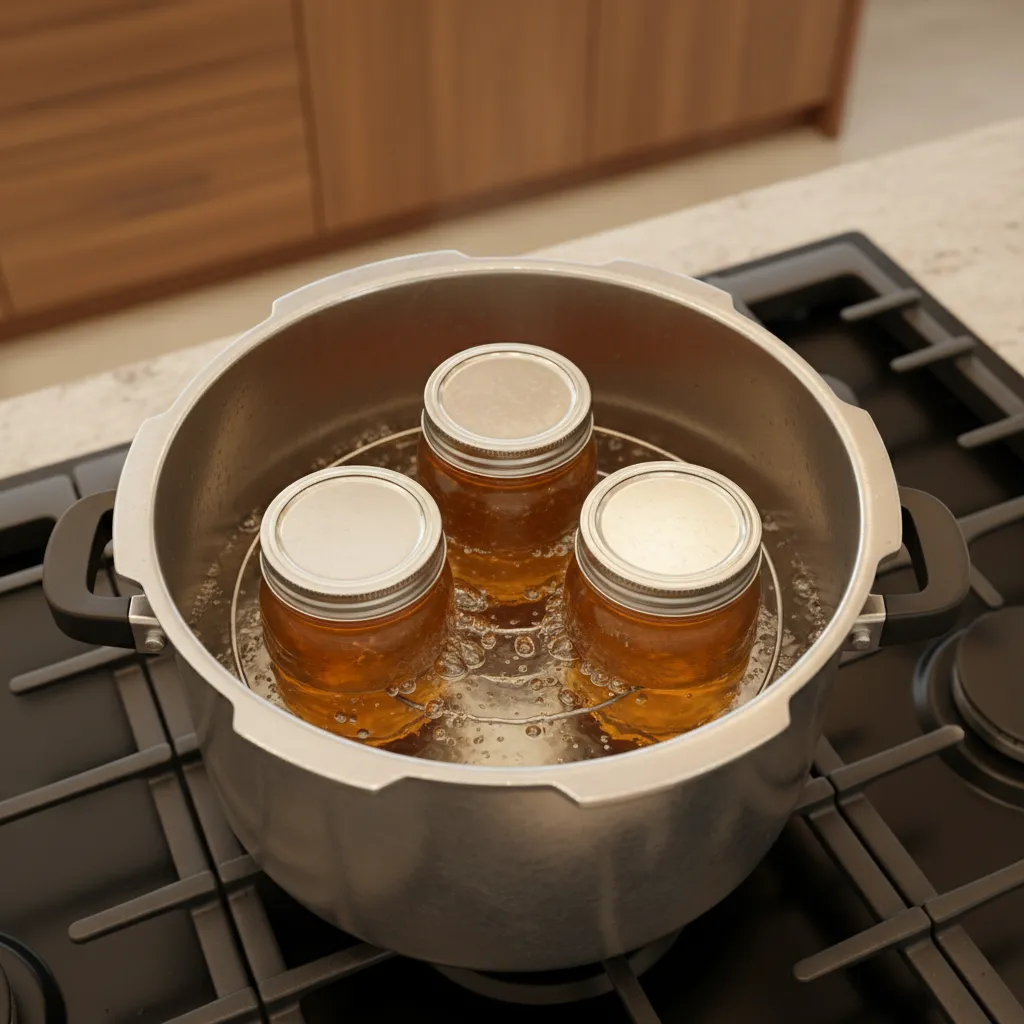
Expanding LC by transferring a small amount into fresh media is the fastest way to scale up your culture supply. A single source jar can produce dozens of new jars in just a few days.
Procedure: 1. Prepare fresh LC jars using your preferred recipe (600 mL water + 24 grams sugar) and sterilize 2. Allow source and destination jars to reach room temperature 3. Working in a SAB or flow hood, shake the source LC jar to break up mycelium 4. Draw 3-5 cc of source LC into a sterile 18-gauge syringe 5. Inject 3-5 cc into each fresh LC jar through the injection port 6. Swirl each jar gently and place at 75°F
Expected timeline: - Days 1-2: Tiny mycelium fragments begin extending new growth - Days 3-5: Visible clouds of new mycelium form - Days 5-10: Jars are typically fully colonized and ready
Expansion ratios: - One 600 mL jar of source LC can inoculate 10-15 new jars at 3-5 cc each - Each of those new jars can be expanded again, but track your generation number
Generation tracking is critical. Label each jar with its generation: G1 (from agar), G2 (from G1 LC), G3 (from G2 LC), etc. Most growers limit expansion to G3 or G4 before returning to agar to avoid genetic drift and accumulated contamination risk. If you notice slower growth or weaker mycelium in later generations, start fresh from a clean agar culture.
Stro's forced hydration method is a technique for reviving old, dried-out, or low-viability spore syringes that have failed to germinate using normal methods. It works by concentrating spores and giving them optimal conditions to wake up.
When to use this method: - Spore syringes that are over 6 months old - Syringes that have been improperly stored (left at room temperature or frozen) - Syringes that failed to produce growth when injected directly into grain or LC
Procedure: 1. Prepare a half-pint (250 mL) LC jar with 250 mL distilled water and 10 grams light malt extract 2. Sterilize at 15 PSI for 20 minutes and cool completely 3. Inject the entire contents of the old spore syringe (10 cc) into the small LC jar — the higher spore concentration increases the odds of germination 4. Place the jar on a magnetic stir plate at low speed, or swirl manually 3-4 times daily 5. Incubate at 78-80°F (26-27°C) — slightly warmer than normal to encourage germination 6. Wait 14-30 days — old spores are slow to wake up
What to watch for: - Days 7-14: Faint, wispy growth may appear — be patient - Days 14-21: If spores are viable, visible mycelium clouds will form - Day 30: If no growth appears after 30 days, the spores are likely not viable
Key insight: The small jar volume concentrates the spores in a richer nutrient environment than a standard-sized jar would. The forced hydration and warm temperature give dormant spores every advantage to germinate. Always test the resulting LC thoroughly on agar before use.
The number of syringes you can fill from a single LC jar depends on jar size, mycelium density, and how much liquid you leave behind.
Standard yield from a quart jar (600 mL of LC): - At 10 cc per syringe: approximately 50-55 syringes - At 5 cc per syringe: approximately 100-110 syringes - Practical yield after accounting for loss: 40-50 syringes at 10 cc each
Why you lose some volume: - 50-75 mL remains in the jar as dead volume you cannot draw out - Some liquid is lost to evaporation during colonization - Dense mycelium clumps that clog needles reduce usable volume
Maximizing your yield: - Use a magnetic stir plate to break mycelium into fine, uniform pieces before filling - Use 16-gauge needles for drawing LC from the jar, then cap syringes with Luer lock caps and attach 18-gauge needles when ready to inoculate - Swirl the jar vigorously before each draw to redistribute mycelium evenly - Tilt the jar at a 45-degree angle to access the last bit of liquid
Inoculation rates: - Quart grain jars: Use 2-3 cc per jar - 5 lb grain bags: Use 5-8 cc per bag - Agar plates: Use 1-2 drops per plate
With 50 syringes at 10 cc each, a single quart of LC can inoculate roughly 150-250 quart jars of grain — making LC one of the most cost-efficient tools in mushroom cultivation.
Testing LC on agar is the single most important quality control step in liquid culture work. Skipping this step is like skipping a safety check before a long drive — it might be fine, but when it fails, the consequences are severe.
Why test on agar? - A contaminated LC jar used to inoculate 20 grain jars wastes weeks of work and pounds of grain - Bacteria in LC are often invisible to the naked eye — the liquid may look perfectly clear while harboring millions of bacteria - Agar makes contamination visible within 24-72 hours in ways that LC and grain cannot
Testing procedure: 1. Draw a small amount of LC into a sterile syringe 2. Place 1-2 drops on each of 3-5 agar plates (malt extract agar or potato dextrose agar) 3. Seal with parafilm and incubate at 75°F (24°C) 4. Check daily for 7 days
Reading your results: - Clean: Only white mycelium radiates outward from each drop point. No other growth anywhere on the plate after 7 days. - Bacterial contamination: Slimy, shiny, or wet-looking colonies appear within 24-48 hours, often near the mycelium or at the drop points - Yeast: Small, round, glossy, cream-colored dots - Mold: Fuzzy colored growth (green, black, or orange)
Rule of thumb: Test every batch of LC, every generation of expansion, and any LC that has been stored for more than 30 days. The cost of 3-5 agar plates is nothing compared to losing an entire grain run to hidden contamination.
Creating LC from a tissue clone lets you capture the exact genetics of a mushroom you want to replicate. However, you should always go through agar first rather than placing tissue directly into LC.
Step-by-step process: 1. Take the tissue clone on agar first: - Select a fresh, healthy mushroom and tear the cap or stem in half with clean hands - Using a flame-sterilized scalpel, cut a small piece (3-5 mm) of inner tissue from the center of the stem where contamination is least likely - Place the tissue on an agar plate, seal with parafilm, and incubate at 75°F 2. Clean up the culture on agar: - Transfer the leading edge of clean mycelium to a fresh agar plate at least 2-3 times to ensure purity - Each transfer should be from the outermost edge of healthy growth, away from any contaminants 3. Inoculate LC from the clean agar: - Once you have a confirmed clean culture after 2-3 agar transfers, cut a 5mm x 5mm piece and drop it into a sterilized LC jar - Incubate at 75°F, swirling daily
Why not clone directly into LC? - Mushroom tissue almost always carries surface bacteria and wild yeast - Agar lets you visually separate clean mycelium from contaminants through sequential transfers - Putting contaminated tissue directly into LC creates an unrecoverable mess — bacteria multiply explosively in sugar water
Timeline: Agar cleanup takes 10-14 days (2-3 transfers at 4-5 days each), then LC colonization takes another 7-14 days. Total time from fresh mushroom to usable LC is roughly 3-4 weeks.
Filling syringes from LC is a core skill that requires clean technique to avoid introducing contamination into your culture jar.
Equipment: - 10 cc Luer lock syringes (buy in bulk — packs of 50 are about $15) - 16-gauge needles for drawing LC (wider bore prevents clogging) - 18-gauge needles for inoculating grain (standard size) - Luer lock caps to seal filled syringes - SAB or laminar flow hood
Procedure: 1. Set up your SAB and wipe all surfaces with 70% isopropyl alcohol 2. Swirl your LC jar vigorously to break up mycelium clumps and distribute evenly 3. Flame-sterilize a 16-gauge needle and attach it to a sterile syringe 4. Insert the needle through the injection port on your LC lid 5. Tilt the jar slightly and draw 10 cc of LC slowly into the syringe 6. Remove the needle from the jar 7. Remove the 16-gauge needle and immediately cap the syringe with a Luer lock cap 8. Label the syringe with species, date, and generation 9. Repeat for each syringe, re-sterilizing the needle between every 3-5 draws
Tips for efficiency: - Work in batches — fill 10-20 syringes in one session - Keep the LC jar on a stir plate during filling to maintain even mycelium distribution - If the needle clogs, withdraw it, eject the clog into an alcohol-soaked paper towel, and re-sterilize before continuing - Store filled syringes flat in the refrigerator in labeled zip-lock bags
Needle clogs are one of the most frustrating aspects of LC work. Dense mycelium clumps block the needle bore, making it impossible to draw or inject culture. Here is how to minimize and deal with clogs.
Prevention strategies: - Use a magnetic stir plate to break mycelium into fine, uniform fragments before filling syringes — this is the single most effective prevention measure - Use 16-gauge needles for drawing LC from jars — the wider bore accommodates larger mycelium pieces. Switch to 18-gauge only for inoculation - Swirl the jar vigorously for 30 seconds before each draw to break up clumps - Add a marble or stir bar to your LC jars before sterilization — agitation aids help break up mycelium when you swirl - Draw slowly — rapid suction compresses mycelium against the needle opening
When clogs happen: 1. Do not force the plunger — you will bend the needle or break the syringe 2. Remove the needle from the jar 3. Point the needle into a waste container and gently push the plunger to eject the clog 4. If the clog will not clear, replace the needle with a fresh sterile one 5. Flame-sterilize and try again
Advanced solution — needle-free filling: Some growers skip needles entirely for filling. They remove the LC jar lid in a flow hood, draw culture directly into the syringe barrel (without a needle), then cap with a Luer lock. Needles are only attached at inoculation time. This eliminates clogging during the filling step entirely.
For persistent issues: If your LC consistently produces dense clumps that clog even 16-gauge needles, blend the LC briefly with a sterile immersion blender or draw it through a sterile mesh filter (cut from a paint strainer) while filling.
Proper syringe sterilization prevents you from introducing contaminants into your clean LC. There are several methods depending on your equipment and syringe type.
Method 1 — Pressure cooker sterilization (best for reusable glass syringes): - Wrap each glass syringe and needle separately in aluminum foil - Place in the pressure cooker on a rack - Sterilize at 15 PSI for 30 minutes - Allow to cool completely before unwrapping in your SAB or flow hood
Method 2 — Alcohol and flame (best for disposable plastic syringes): - Plastic syringes cannot be pressure cooked — they will melt - Remove the syringe from its sterile packaging inside your SAB - Flame-sterilize only the needle until it glows red-hot, then let cool for 10 seconds - Do not flame the plastic syringe body — it will melt - The syringe interior is sterile from factory packaging as long as you open it inside your clean workspace
Method 3 — Alcohol bath: - Submerge needles in 70% isopropyl alcohol for 5 minutes - Remove and allow to air dry completely inside your SAB - Do not flame needles that are wet with alcohol — it can flare dangerously
Best practices: - Buy individually wrapped, pre-sterilized disposable syringes and open them only inside your SAB or hood — this is the simplest approach - Always flame-sterilize needles between jars when doing multiple inoculations - Replace needles after every 5-10 uses — dull needles damage injection ports and create contamination entry points - Never touch the needle shaft with bare fingers — hold syringes by the barrel and Luer lock only
Knowing when to expand and when to start over is key to maintaining healthy, productive cultures long-term. Expanding is faster, but starting fresh ensures genetic integrity and cleanliness.
Expand existing LC when: - You are within generations G1-G3 from your original agar culture - The LC is producing fast, vigorous growth in grain jars - Your agar tests consistently come back clean - Mushroom yields from this culture line are strong and consistent - You need more LC quickly for an upcoming inoculation session
Start fresh from agar when: - You have reached generation G4 or beyond - Colonization times have increased noticeably compared to earlier generations - Mushroom yields or quality have declined - You have had any contamination scares, even if agar tests came back clean - The LC has been stored for more than 3 months without use - You want to introduce new genetics from a fresh clone or spore isolation
Warning signs that demand starting fresh: - LC takes more than 20% longer to colonize than previous generations - Mycelium appears thin, wispy, or slow to recover after swirling - Grain jars inoculated from LC show patchy or uneven colonization - Any agar test shows bacterial or yeast colonies alongside mycelium
Best practice: Maintain a master agar culture library in the refrigerator. Keep slants or plates of every strain you work with, stored at 38°F and transferred to fresh agar every 6-12 months. This way, starting fresh never means going all the way back to spores — you always have a clean, known-good source to return to.
Liquid culture does not last forever. Over time and through successive generations, LC can lose its vigor — meaning the mycelium becomes weaker, slower, and less productive. Recognizing these signs early saves you from wasting grain and time on declining cultures.
Growth rate decline: - LC that once colonized a quart grain jar in 10-12 days now takes 18-25 days - New LC-to-LC expansions take noticeably longer to show growth - Mycelium in the LC jar itself grows slowly and produces thin, sparse clouds instead of dense clumps
Visual changes in the LC: - Mycelium appears translucent or glassy instead of bright white - Clumps are small and do not grow larger over time - The mycelium sinks to the bottom and does not stay suspended when swirled - The liquid develops a yellowish or brownish tint beyond normal media color
Performance issues on grain: - Grain jars show uneven colonization — some grains colonize while others remain untouched - Stalling at 50-70% colonization without reaching full colonization - Increased contamination in grain jars that used to stay clean with the same process - Fruiting bodies are smaller, fewer, or less uniform than previous flushes
What causes vigor loss: - Excessive generations — each LC-to-LC transfer can introduce subtle genetic drift - Nutrient exhaustion — old LC has consumed all available sugars - Age — mycelium stored too long begins to die - Repeated freeze-thaw cycles — cellular damage accumulates
Solution: Return to your agar library, select a clean master culture, and start a fresh G1 LC. Most growers who maintain good agar records can go from agar to fresh, vigorous LC in 7-14 days.
Need more help? Dr. Myco can answer follow-up questions about advanced lc techniques based on thousands of real growing experiences.
Ask Dr. Myco