Liquid Culture Basics
10 tips in Liquid Culture
By Andrew Langevin · Founder, Nature Lion Inc · Contributing author, Mushroomology (Brill, 2026)
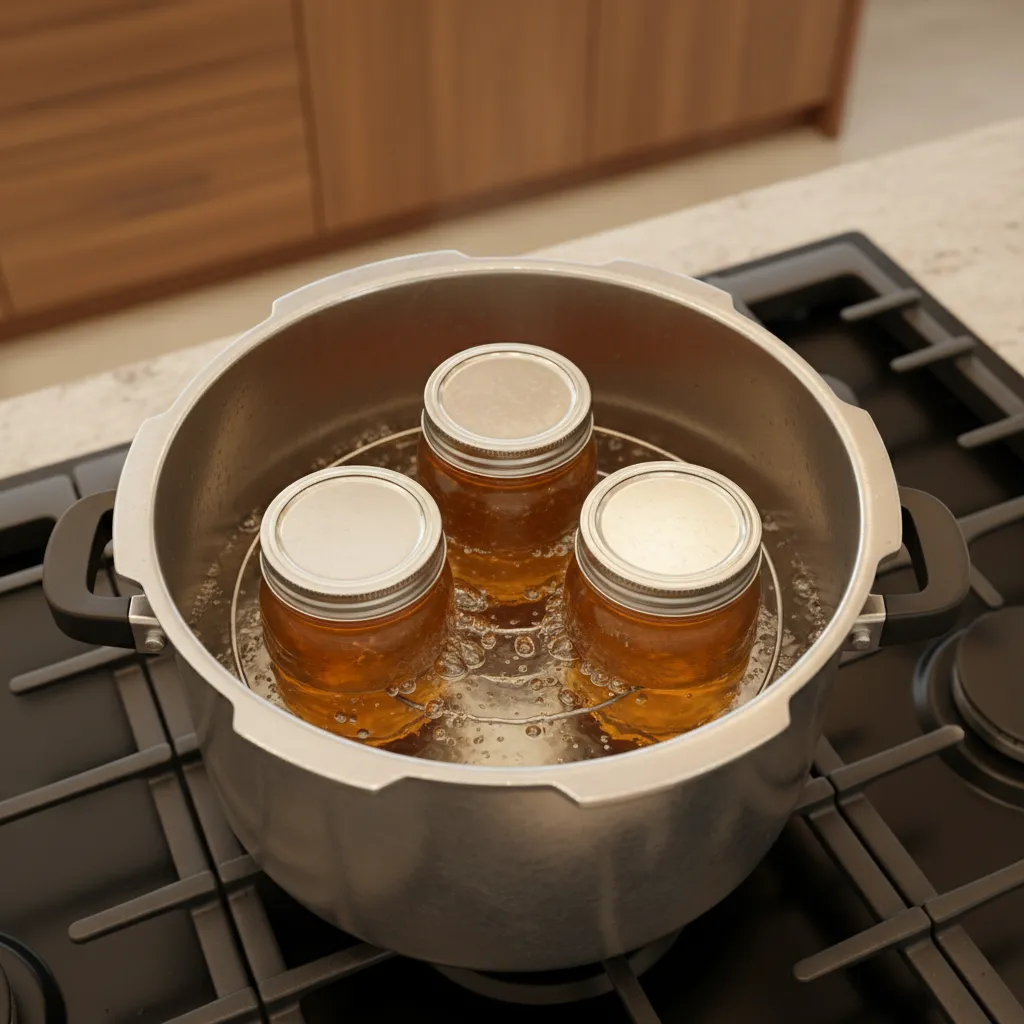
Liquid culture (LC) is a nutrient-rich, sterilized sugar-water solution that contains living mycelium. The mycelium grows and multiplies throughout the liquid, creating a suspension of healthy tissue that can be drawn into syringes and used to inoculate grain spawn, agar plates, or other substrates.
The concept is simple: you provide mycelium with a warm, sugary environment where it can reproduce rapidly without competition. A single 1 mL piece of mycelium on agar can colonize an entire 500 mL jar of liquid culture in 7-14 days under good conditions.
Think of LC as a living starter culture, similar to sourdough starter or yogurt culture. Once you have a clean, vigorous LC, you can use it to inoculate dozens of grain jars quickly and reliably. Each 1 cc of liquid culture contains thousands of microscopic mycelium fragments, giving your grain jars multiple inoculation points simultaneously.
LC is one of the most efficient tools in mushroom cultivation because it bridges the gap between slow agar work and large-scale grain production. It lets you scale up from a single culture to many jars without needing a laminar flow hood for every transfer, though clean technique is still essential during inoculation.
Liquid culture offers several major advantages over spore syringes that make it the preferred inoculation method for experienced growers.
Speed is the biggest difference. LC contains living, growing mycelium that can begin colonizing grain immediately upon injection. Spore syringes contain dormant spores that must first germinate, find compatible mating partners, and then begin growing — adding 5-10 extra days to colonization time.
Genetics are another key advantage. LC is clonal, meaning every piece of mycelium is genetically identical. Spore syringes produce random genetic combinations, so results vary from jar to jar. With LC, you get consistent, predictable performance across all your jars.
Contamination resistance improves with LC because the mycelium is already actively growing and can outcompete contaminants more easily than slow-germinating spores.
Cost efficiency is significant too. One agar plate can produce a jar of LC, and one jar of LC can fill 20-30 syringes. A single spore syringe might cost $10-15, while LC lets you produce dozens of syringes for pennies each.
The main trade-off is that making LC requires more skill and equipment upfront. You need sterile technique and a pressure cooker, but the payoff in speed and reliability is well worth the learning curve.
Liquid culture and grain spawn serve different roles in the cultivation pipeline, and choosing the right one depends on your goals and scale.
Use liquid culture when: - You want to inoculate grain jars from a syringe without opening them - You need to store genetics long-term in a compact format - You want to scale up from a small culture to many jars quickly - You are shipping cultures to other growers - You want to test genetics on agar before committing grain
Use grain-to-grain (G2G) transfer when: - You need the fastest possible colonization of bulk grain - You are scaling up from jars to large bags (5-10 lbs) - You want maximum mycelium density for competitive colonization - Your grain spawn is already fully colonized and vigorous
Grain spawn provides a much higher mycelium-to-volume ratio than LC. A single colonized grain jar broken up into fresh grain delivers thousands of individual inoculation points, each carrying nutrients from the original grain. LC provides fewer, smaller inoculation points per cc.
Many growers use both in sequence: LC to inoculate a few grain jars, then G2G transfers to scale up to production quantities. This gives you the convenience and storage benefits of LC with the colonization speed of grain-to-grain work.
Liquid culture dramatically reduces colonization time compared to spore syringes. Here is a rough timeline comparison for a 1-quart grain jar inoculated with 2-3 cc of solution at 75°F (24°C):
Liquid Culture: - First visible growth: 2-4 days - 50% colonization: 7-10 days - Full colonization: 10-18 days
Spore Syringe: - First visible growth: 7-14 days - 50% colonization: 14-21 days - Full colonization: 21-35 days
The difference comes from biology. Spores must germinate (which can take days), find a compatible mating partner, fuse, and then begin producing mycelium. Liquid culture skips all of that — the mycelium is already alive, growing, and ready to colonize on contact.
Temperature matters significantly. At 70°F, expect colonization to take 20-30% longer than at 75°F. Above 80°F, bacterial contamination risk increases sharply even if mycelium grows faster.
Some species are naturally faster than others. Oyster mushroom LC can fully colonize a quart jar in as little as 7 days, while reishi or lion's mane may take 14-21 days even from clean LC. These timelines are guidelines — your actual results depend on genetics, grain hydration, and inoculation rate.
Healthy liquid culture has several distinctive visual characteristics that you should learn to recognize before using or distributing your LC.
Color: The liquid should be clear to very slightly amber, depending on the sugar source. Honey-based LC tends to be slightly more golden than Karo-based LC. The liquid should never be milky, opaque, or deeply discolored.
Mycelium appearance: Healthy mycelium in LC forms wispy, cloud-like clumps that swirl when you gently agitate the jar. Some species form tight, brain-like masses while others produce loose, fluffy clouds. The mycelium should be white to off-white — never green, black, pink, or bright yellow.
When swirled: Healthy LC shows mycelium that moves freely through the solution in distinct pieces. It should not be slimy, gelatinous, or stick to the glass walls in a film.
Smell: If you crack the lid slightly in front of a flow hood, healthy LC should smell mildly sweet or mushroomy. Any sour, yeasty, or foul odor indicates contamination.
Clarity test: Hold the jar up to a light source. You should be able to see through the liquid between the mycelium clumps. If the entire solution is cloudy or hazy, bacterial contamination is likely present even if you see mycelium growth. Always test suspect LC on agar before using it on grain.
Contaminated liquid culture shows several warning signs, and catching them early saves you from losing entire batches of grain.
Bacterial contamination is the most common problem. The liquid turns cloudy or milky throughout — not just near the mycelium, but the entire solution becomes hazy. Bacteria can be present even alongside healthy-looking mycelium, which is why clarity of the liquid matters so much. A sour or unpleasant smell when the lid is cracked confirms bacteria.
Yeast contamination often looks like a thin film on the surface or makes the liquid appear slightly milky. Yeast can also produce tiny bubbles along the surface or at the liquid line. The smell is distinctly yeasty or bread-like.
Mold contamination is less common in LC but shows as colored spots — green (Trichoderma), black (Aspergillus), or pink/orange (Neurospora) — usually floating on the surface or growing on mycelium clumps.
Slimy or gelatinous texture when you draw liquid into a syringe is a red flag. Clean LC should flow freely through an 18-gauge needle without clogging from bacterial slime.
What to do: If you suspect contamination, do not use the LC on grain. Instead, test it by dropping 1-2 drops onto an agar plate and incubating for 3-5 days. If anything besides clean mycelium grows, discard the entire jar. Never try to salvage contaminated LC — start fresh.
Testing LC on agar before committing it to grain is one of the most important quality control steps in mushroom cultivation. A contaminated LC jar can ruin 10-20 grain jars in a single session, so the small effort of testing saves enormous time and resources.
Agar drop test (preferred method): - Prepare 3-5 agar plates (malt extract agar or potato dextrose agar work well) - Draw LC into a sterile syringe with an 18-gauge needle - Drop 1-2 drops of LC onto each plate, spacing drops apart - Seal plates with parafilm and incubate at 75°F (24°C) - Check daily for 5-7 days
What to look for: - Clean result: Only white mycelium grows outward from each drop point with no other growth anywhere on the plate - Bacterial contamination: Slimy, shiny, or off-colored colonies appear near or away from the mycelium within 24-48 hours - Yeast contamination: Small, round, glossy colonies appear, often cream-colored - Mold: Colored fuzzy growth appears, usually within 3-5 days
Test every new batch of LC and any LC that has been stored for more than a month. Use multiple plates to increase confidence — one clean plate could be luck, but five clean plates means your LC is reliable. Only proceed to grain inoculation after all test plates come back clean.
The shelf life of liquid culture depends heavily on storage conditions, the sugar source used, and the species of mushroom.
At room temperature (68-75°F): LC remains viable for 2-4 weeks after the mycelium has fully developed. Beyond this, the mycelium consumes all available nutrients and begins to decline. Bacterial contamination risk also increases over time at warm temperatures.
Refrigerated (35-40°F / 2-4°C): Properly made LC can last 2-6 months in the refrigerator. The cold slows mycelium metabolism dramatically, preserving viability without exhausting nutrients. This is the recommended storage method for most growers.
Frozen: Some growers freeze LC in syringes at 0°F (-18°C) for long-term storage up to 1-2 years, but freeze-thaw cycles damage mycelium. Only freeze once, and expect reduced viability — test on agar after thawing before committing to grain.
Factors that shorten shelf life: - Higher sugar concentrations (more food for contaminants) - Warmer storage temperatures - Incomplete sterilization - Non-airtight lids allowing gas exchange
Signs your LC has expired: - Liquid has turned cloudy or dark - Mycelium has broken down into fine sediment - No growth when tested on agar - Sour or off smell
For best results, use your LC within 1-2 months of preparation and always test before use if it has been stored longer than 4 weeks.
Proper storage keeps your liquid culture clean and viable for months, while poor storage can kill your cultures or invite contamination.
Refrigerator storage (recommended): - Store LC jars upright at 35-40°F (2-4°C) - Keep lids tight with injection ports sealed using micropore tape or silicone plugs - Label each jar with the species, date made, and generation number - Store away from raw foods to reduce contamination exposure - LC stored this way stays viable for 2-6 months
Syringe storage: - Fill 10 cc syringes from your LC jar under sterile conditions - Cap each syringe with a sterile Luer lock cap - Store syringes flat in the refrigerator in a sealed zip-lock bag - Label each syringe with species and date - Syringes last 1-3 months refrigerated, up to 1 year frozen
Important storage tips: - Never store LC in direct sunlight — UV damages mycelium - Do not freeze jars — glass can crack and expansion damages mycelium structure - Gently swirl jars once every 1-2 weeks during storage to redistribute nutrients - Keep a separate agar backup of every culture — LC can fail, and agar slants stored in the fridge at 38°F can last 6-12 months
Before using any stored LC, always shake the jar gently and visually inspect for cloudiness or discoloration. Test on agar if it has been more than 30 days since your last confirmed clean test.
Yes, liquid culture can be shipped successfully, and it is one of the most common ways cultures are exchanged between growers. Shipping in syringes is far more practical and safer than shipping jars.
Shipping in syringes (preferred): - Fill 10 cc syringes with LC and cap with sterile Luer lock caps - Wrap each syringe in a layer of bubble wrap - Place in a small padded envelope or box with enough cushioning to prevent movement - Include a sterile 18-gauge needle capped separately for safety - Ship via USPS Priority Mail or equivalent 2-3 day service
Temperature considerations: - LC survives 40-90°F during transit without major issues - In extreme summer heat (above 95°F), include a cold pack wrapped in newspaper to prevent overheating - In winter, include a hand warmer wrapped in newspaper if temperatures drop below 32°F — frozen LC has reduced viability
Legal considerations: - Liquid culture of gourmet and medicinal species (oyster, lion's mane, reishi, shiitake, etc.) is legal to ship in all 50 US states - Always check local regulations for your specific species and destination - Label packages clearly with the species name
Upon receipt: The recipient should refrigerate syringes immediately and test on agar within 1-2 weeks to confirm viability and cleanliness. Transit stress can weaken mycelium, so prompt testing ensures you catch any issues before inoculating grain.
Need more help? Dr. Myco can answer follow-up questions about liquid culture basics based on thousands of real growing experiences.
Ask Dr. Myco