Mushroom Genetics & Strain Selection
15 tips in Agar Work & Culture
By Andrew Langevin · Founder, Nature Lion Inc · Contributing author, Mushroomology (Brill, 2026)
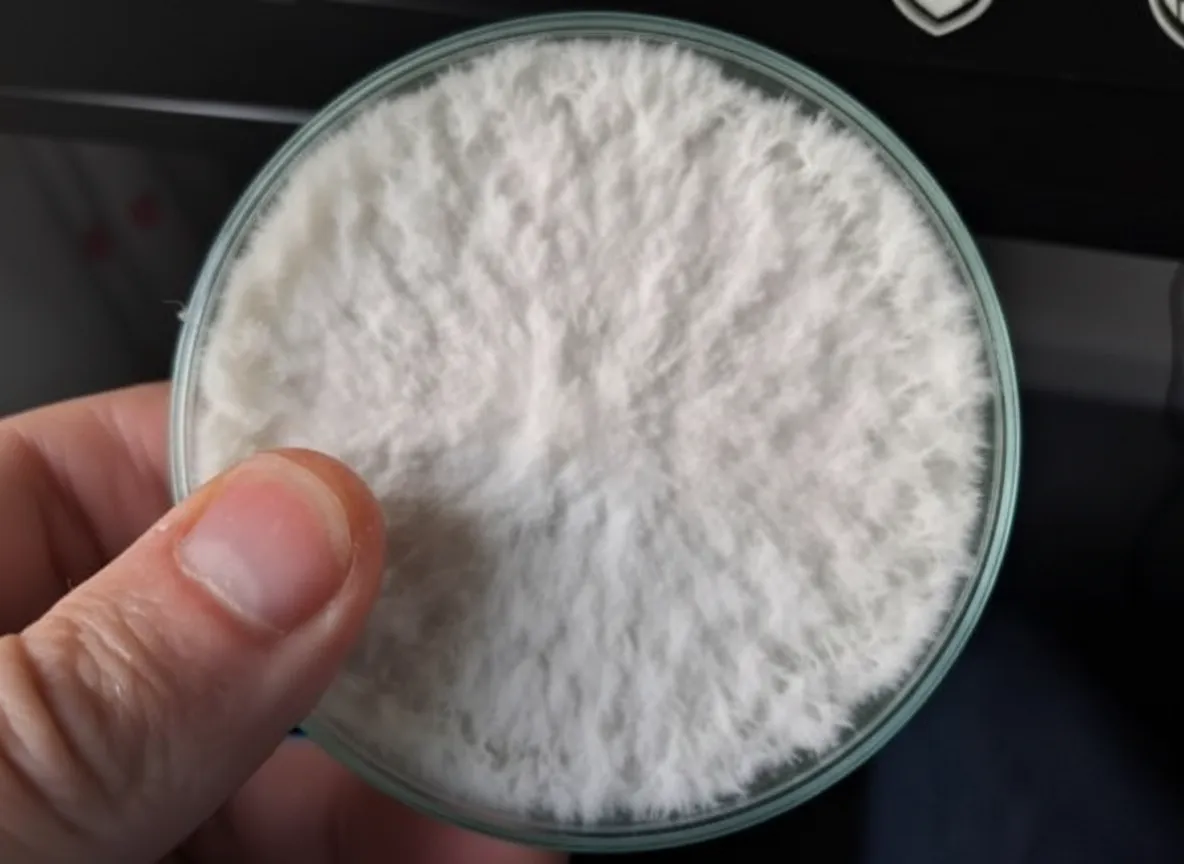
A species is a broad biological classification — Pleurotus ostreatus (oyster mushroom) is a species. A strain is a specific genetic lineage within that species, selected for particular traits. Think of species as the breed and strain as the individual bloodline within that breed.
Key differences between strain and species:
- Species defines the organism's fundamental biology — what it can decompose, its general fruiting body shape, and its reproductive compatibility
- Strain determines performance characteristics within that species — colonization speed, yield potential, temperature tolerance, fruiting body color, and resistance to contamination
- Two strains of the same species can perform dramatically differently. One Pleurotus ostreatus strain might colonize straw in 10 days and produce dense clusters, while another takes 18 days and fruits sparsely
Commercial suppliers name their strains (e.g., "Blue Dolphin" oyster, "Max White" lion's mane) to distinguish genetics they have selected and stabilized. When you buy spawn, you are buying a specific strain — not just a species. Choosing the right strain for your climate and substrate is one of the most impactful decisions in cultivation.
Evaluating a commercial strain requires testing it under your specific growing conditions rather than trusting catalog descriptions alone. The best approach is to run a small trial batch before committing your entire production to a new strain.
Key metrics to evaluate:
- Colonization speed: Time from inoculation to full colonization of grain spawn and bulk substrate. Faster colonizers generally outcompete contaminants
- Yield: Measure in grams per kilogram of dry substrate across at least 3 flushes. Good oyster strains produce 100-200g fresh weight per kg of dry substrate
- Contamination resistance: Track your contamination rate across 10+ bags or trays. A good strain should stay below 5% loss
- Fruiting body quality: Size, color, firmness, shelf life, and cluster formation all matter for market sales
- Temperature range: Verify the strain fruits reliably in your grow room's temperature range
Request a small sample from the supplier before ordering bulk. Run it alongside your current strain under identical conditions. Document everything — inoculation date, substrate recipe, temperatures, first pins, harvest weights. After three flushes, you will have enough data to decide whether to switch.
Genetic senescence is the gradual decline in vigor that occurs when mushroom mycelium is transferred repeatedly on agar or grain. Each transfer is a generation, and most strains begin showing senescence after 15-30 transfers, though some robust strains can go further.
Signs of genetic senescence:
- Slower colonization speed — what once took 7 days now takes 14
- Thinner, wispier mycelium instead of dense rhizomorphic growth
- Reduced pinning and lower yields per flush
- Increased susceptibility to contamination as the mycelium loses competitive vigor
- Abnormal fruiting bodies — smaller caps, thinner stems, irregular shapes
Senescence happens because each cell division accumulates small errors and because subculturing on artificial media selects for growth on agar rather than the natural substrate the fungus evolved to colonize.
To maximize the lifespan of your strains, minimize unnecessary transfers, always transfer from the leading edge of vigorous growth, and maintain master cultures in cold storage (4°C) or under mineral oil. When a strain shows signs of decline, go back to a stored master culture or obtain fresh genetics from a tissue clone or spore germination.
Selective pressure on agar lets you push a strain toward specific performance traits over successive transfers. The key principle is simple: transfer only the mycelium that demonstrates the trait you want, and discard the rest.
Selection strategies by trait:
- Speed: Transfer from the fastest-advancing sector of the plate. Mark the leading edge at 24-hour intervals to identify which sector is outpacing others. After 3-5 rounds, you will have isolated the fastest-growing genetics
- Yield: This cannot be selected on agar alone. Grow out multiple isolates to fruiting, weigh the results, and then return to the agar culture of the top producer for further propagation
- Contamination resistance: Intentionally expose plates to unsterile conditions (briefly open near ambient air) and transfer survivors that outgrow or resist bacterial challengers
For best results, start with a multispore germination to maximize genetic diversity, then apply selective pressure across 10-20 isolates. Label each isolate with a unique identifier and track its performance through every stage.
Remember that selecting hard for one trait may sacrifice another — the fastest colonizer is not always the highest yielder. Balance your selection criteria based on your actual production priorities.
Inbreeding depression occurs when a mushroom culture loses genetic diversity through repeated selfing or subculturing from a narrow genetic base. The result is reduced vigor, lower yields, and increased vulnerability to disease — the same problem seen in inbred animal populations.
How inbreeding happens in mushroom cultivation:
- Repeated tissue cloning from the same genetic individual without ever introducing new genetics
- Single-spore isolation that captures only one mating type, limiting future breeding potential
- Multispore germination from a single fruit body, which produces siblings that may mate with each other
Signs of inbreeding depression:
- Progressively weaker mycelial growth on agar
- Longer colonization times on grain and substrate
- Fewer and smaller fruiting bodies per flush
- Increased sensitivity to temperature and humidity fluctuations
To avoid inbreeding depression, periodically introduce fresh genetics from wild collections, spore prints from different geographic locations, or culture exchanges with other growers. You can also cross compatible monokaryons from unrelated dikaryons to create new hybrid vigor. Most small-scale cultivators should refresh their genetics every 1-2 years by obtaining new cultures or performing fresh wild clones.
Maintaining genetic diversity prevents your culture library from stagnating and ensures long-term production quality. The most effective methods are wild cloning, spore acquisition from diverse sources, and culture exchanges with other cultivators.
Methods for introducing fresh genetics:
- Wild tissue cloning: Collect fruiting bodies from different geographic locations and clone them on agar. Each wild specimen represents a unique genetic individual shaped by its local environment
- Spore prints from multiple sources: Germinate spores from fruit bodies of the same species but from different origins. This gives you maximum genetic diversity to work with
- Culture exchanges: Trade cultures with growers in other regions. Online mycology communities and local mushroom clubs facilitate these exchanges
- Commercial strain acquisition: Purchase new strains from reputable suppliers every 1-2 years to benchmark against your existing library
A practical diversity schedule:
- Add 2-3 new wild clones per species annually
- Acquire 1-2 commercial strains per year for comparison
- Maintain at least 3-5 distinct genetic lines per species you grow regularly
Label every culture with its origin — collection location, date, source, and how many transfers since original isolation. This metadata becomes invaluable when you need to trace back to your most vigorous genetics.
In mushroom biology, mycelium exists in two fundamental states that determine whether it can produce mushrooms. A monokaryon contains one set of nuclear DNA, while a dikaryon contains two compatible sets — and only dikaryotic mycelium can fruit.
The lifecycle explained:
- Monokaryotic mycelium arises from a single germinating spore. It grows and colonizes substrate but cannot produce mushrooms on its own. Under the microscope, monokaryons lack clamp connections at their cell junctions
- Dikaryotic mycelium forms when two compatible monokaryons meet and fuse. Each cell now carries two distinct nuclei. This is the state of all fruiting cultures, and it shows characteristic clamp connections visible at 400x magnification
- Compatibility is governed by mating-type genes. Two monokaryons must have different mating types to form a viable dikaryon
Why this matters for cultivators:
- Tissue clones from fruiting bodies are always dikaryotic — ready to fruit
- Single-spore isolates are monokaryotic — they cannot fruit until paired with a compatible mate
- Multispore germinations produce dikaryons naturally as compatible spores meet on the plate
If your isolated culture refuses to fruit despite ideal conditions, it may be a monokaryon. Verify by checking for clamp connections or pairing it with another isolate.
Creating new mushroom strains involves crossing compatible monokaryons from different parent strains to produce novel dikaryons with hybrid characteristics. This is the fungal equivalent of plant breeding, and it can produce strains with unique combinations of yield, speed, and environmental tolerance.
Step-by-step breeding process:
- Step 1: Obtain spore prints from two different parent strains of the same species that you want to cross
- Step 2: Germinate spores from each parent separately on agar. Isolate individual monokaryons (single-spore isolates) — confirm monokaryotic status by checking for the absence of clamp connections
- Step 3: Pair compatible monokaryons by placing small wedges from each isolate 3-5mm apart on a fresh agar plate
- Step 4: Watch for the formation of a new growth front where the two colonies meet. If compatible, dikaryotic mycelium with clamp connections will emerge from the contact zone
- Step 5: Transfer the new dikaryon to fresh agar and grow it out to grain, then to fruiting substrate
Expect to screen 20-50 crosses to find one exceptional performer. Not all pairings will be compatible, and compatible pairings vary widely in performance. Keep detailed records of every cross and its fruiting results to guide future breeding decisions.
Several organizations maintain culture collections and strain databases that cultivators can access for research-grade genetics and reference strains. The most useful for growers are public culture collections, university repositories, and commercial strain catalogs.
Major culture collections:
- ATCC (American Type Culture Collection): Houses thousands of fungal strains with detailed documentation. Research-grade but accessible to commercial growers for a fee — typically $200-400 per strain
- CBS-KNAW (Westerdijk Institute, Netherlands): One of the world's largest fungal culture collections with over 100,000 strains
- USDA ARS Culture Collection (NRRL): Free access to many strains for US-based researchers and growers
- Penn State Mushroom Culture Collection: Focused specifically on cultivated species with performance data
- Mycelia (Belgium): Commercial supplier that also maintains a documented strain library
Online community resources:
- Shroomery and Mycotopia forums: Grower reviews of commercial strains with real-world performance data
- Supplier catalogs (Field & Forest, Fungi Perfecti, North Spore): Strain descriptions with recommended substrates and temperature ranges
When sourcing from culture collections, request strains with known cultivation history and performance data rather than wild isolates, which may require extensive screening before they are production-ready.
A well-organized strain library prevents costly mix-ups and lets you trace performance back to specific genetics. Use a standardized labeling system from day one — relabeling later is painful and error-prone.
Recommended labeling format:
- Species abbreviation (2-3 letters): PO = Pleurotus ostreatus, HE = Hericium erinaceus, GT = Ganoderma tsugae
- Source code: W = wild clone, C = commercial, S = spore germination, X = cross/breeding
- Sequential number: Unique identifier within that species and source
- Transfer generation: T1, T2, T3, etc.
- Example: PO-W-003-T2 = Pleurotus ostreatus, wild clone #3, second transfer
Physical organization:
- Store plates in labeled sleeves or bags, grouped by species
- Keep master cultures (T1) in a separate cold-storage location at 2-4°C
- Working cultures (T3+) stay in your active rotation
- Use a spreadsheet or database to track: strain ID, species, source location/supplier, isolation date, substrate preferences, performance notes, and current transfer number
Never rely on memory alone. A library of 20+ cultures without proper labels quickly becomes an unidentifiable mess. Write on the plate edge with a fine-tip permanent marker and cross-reference everything in your digital records.
Comprehensive strain records transform random growing into systematic improvement. At minimum, record the origin, isolation history, and performance data for every strain in your library.
Essential metadata to track:
- Strain ID: Your standardized label (e.g., PO-W-003)
- Species: Full scientific name and common name
- Source: Where you obtained it — supplier name, wild collection GPS coordinates, or parent strains if bred
- Isolation date: When the original culture was created
- Current transfer number: How many generations removed from the original
- Storage locations: Which fridge shelf, which backup location
Performance data to record after each grow:
- Colonization speed: Days from inoculation to full colonization on grain and substrate
- Contamination rate: Percentage of bags/trays lost per run
- Yield: Grams of fresh mushrooms per kilogram of dry substrate, tracked across flushes 1-3
- Fruiting body quality: Average cap diameter, cluster density, firmness, color
- Temperature and humidity during fruiting: Optimal ranges observed
- Shelf life: Days from harvest to quality decline
Review your records quarterly to identify top performers, retire declining strains, and prioritize genetics for future breeding or cloning work.
Switching spawn suppliers is risky — bad spawn can cost you weeks of production time and hundreds of dollars in wasted substrate. Always run a structured trial before committing your full operation to a new source.
Evaluation protocol:
- Visual inspection on arrival: Grain should be fully colonized with dense white mycelium and no off-colors (green, black, orange, or pink patches). It should smell earthy and clean, not sour or alcoholic
- Shake test: Properly colonized grain spawn should break apart relatively easily when shaken. If it is a solid brick that will not break, it may be over-incubated or bacterially contaminated
- Agar test: Transfer a few grains to agar plates and incubate for 5-7 days. Clean, vigorous mycelium should emerge without bacterial haze or mold competitors. This is the most reliable quality check
- Side-by-side trial: Run the new spawn alongside your current source on identical substrate, same day, same conditions. Compare colonization speed, contamination rates, and yield across 3 flushes
Red flags to watch for:
- Spawn arrives warm (should be shipped with cold packs in summer)
- Excessive moisture or pooled liquid in the bag
- Grain that crumbles to powder (over-dried or old)
- Supplier cannot tell you the strain name or generation number
Order a small quantity first — 5-10 lbs is enough for a meaningful trial without major financial risk.
Tissue banking and cryopreservation are long-term storage methods that preserve mushroom genetics in a state of suspended animation, stopping genetic drift and senescence. Cryopreservation in liquid nitrogen (-196°C) can maintain viable cultures for decades, making it the gold standard for serious strain libraries.
Common preservation methods ranked by longevity:
- Agar slants at 4°C: Simplest method. Cultures remain viable for 6-12 months but continue aging slowly. Requires periodic transfers
- Mineral oil overlay: Covering agar cultures with sterile mineral oil extends viability to 2-5 years by limiting oxygen and slowing metabolism
- Sterile water storage (Castellani method): Agar plugs submerged in sterile distilled water at 4°C. Surprisingly effective for 5-10 years with many species
- Lyophilization (freeze-drying): Used by professional culture collections. Viability extends 10-20+ years but requires specialized equipment costing $5,000+
- Cryopreservation in liquid nitrogen: The ultimate method. Cultures stored in 10% glycerol cryoprotectant are viable indefinitely at -196°C. Equipment cost: $1,000-3,000 for a small dewar
For most home cultivators, the sterile water method offers the best balance of simplicity, cost (nearly free), and longevity. Cut 5-8 small agar plugs of colonized mycelium and submerge them in a screw-cap vial of sterile distilled water. Store at 4°C and revive by plating a plug onto fresh agar.
The legal landscape for protecting mushroom genetics is complex and varies by jurisdiction. In the United States, you can patent a novel mushroom strain under utility patent law if it meets the criteria of being new, useful, and non-obvious, but the process is expensive and difficult to enforce.
Intellectual property options for mushroom strains:
- Utility patents: The strongest protection. Requires demonstrating that your strain is genetically distinct and has novel, useful characteristics. Costs $10,000-30,000 in legal and filing fees and takes 2-4 years to obtain
- Plant Variety Protection (PVP): Does not apply to fungi — this is limited to sexually reproduced plants
- Trade secrets: Many commercial operations protect their strains simply by not sharing them. This is free but offers no legal remedy if someone independently develops an identical strain
- Trademarks: You can trademark a strain name (e.g., "Blue Dolphin" oyster) but this protects only the name, not the genetics. Others can sell identical genetics under a different name
Practical reality for small farms: Patent enforcement against other mushroom growers is nearly impossible because proving someone is growing your exact strain requires expensive DNA analysis. Most small-scale cultivators rely on trade secret protection — keeping their best genetics in-house and selling only spawn, never cultures.
Large commercial mushroom operations use systematic strain management programs to prevent the genetic decline that plagues smaller growers. The core strategy is a master cell bank system borrowed from pharmaceutical manufacturing, where original cultures are preserved and working cultures are replaced on a fixed schedule.
Commercial strain management practices:
- Master cell bank: The original isolate is divided into 20-50 cryopreserved vials stored in liquid nitrogen (-196°C). This is the genetic baseline that never gets used for production directly
- Working cell bank: A single master vial is thawed and expanded to create 10-20 working vials. These are used for day-to-day spawn production
- Transfer limits: Most commercial operations enforce a strict maximum of 5-8 transfers from the working bank before discarding and thawing a fresh master vial
- Performance monitoring: Every production lot is tracked for colonization speed, yield, and contamination rate. Any decline triggers a return to the master bank
- Periodic benchmarking: Farms test new commercial strains or wild clones annually against their established genetics to identify potential replacements
Smaller farms can adapt this system without liquid nitrogen by maintaining master cultures under sterile water storage (Castellani method) at 4°C, creating working subcultures for production, and enforcing a maximum transfer limit of 8-10 generations. Replace working cultures from your masters every 3-6 months to maintain peak performance.
Need more help? Dr. Myco can answer follow-up questions about mushroom genetics & strain selection based on thousands of real growing experiences.
Ask Dr. Myco