Advanced Agar Techniques
20 tips in Agar Work & Culture
By Andrew Langevin · Founder, Nature Lion Inc · Contributing author, Mushroomology (Brill, 2026)
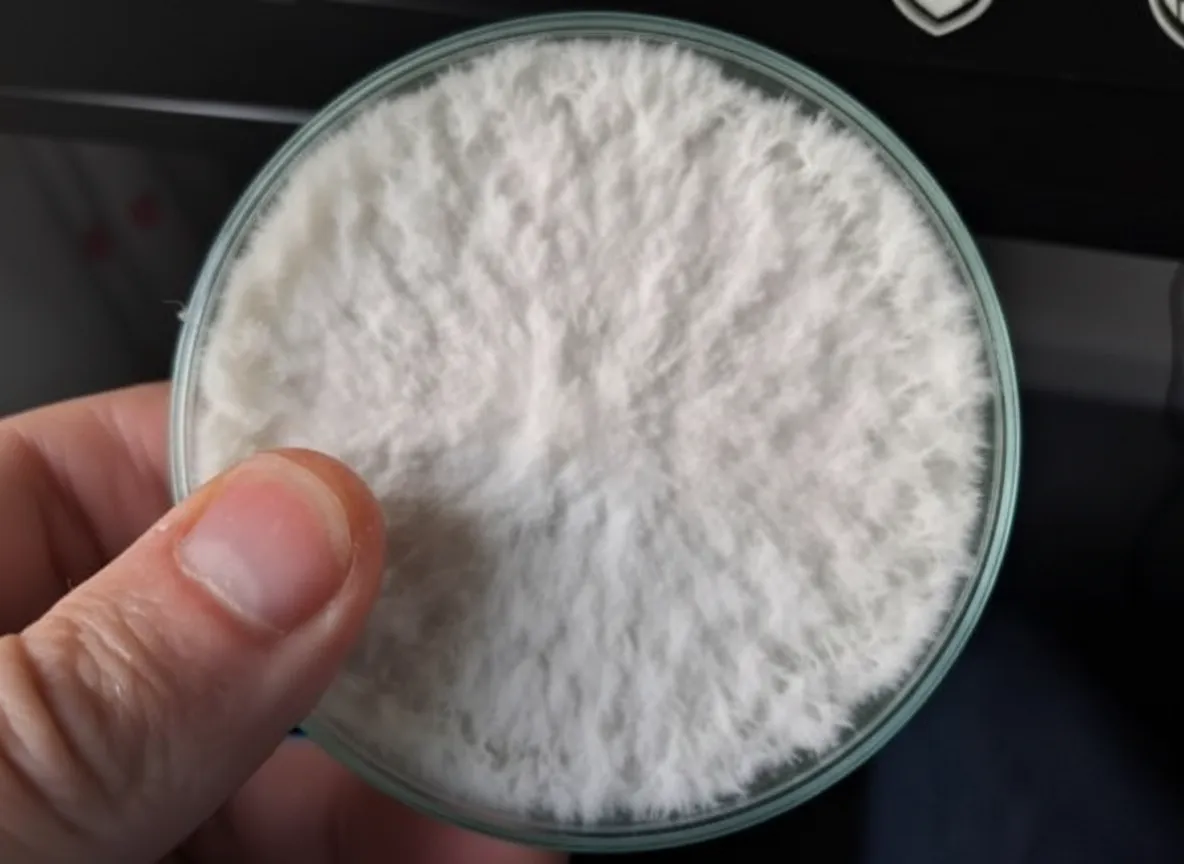
The agar sandwich technique is an advanced isolation method where you place a thin slice of contaminated tissue or culture between two layers of agar, forcing the mycelium to grow through the bottom layer while leaving contaminants trapped on top.
How it works:
- Pour a thin layer of agar (2-3mm) in a petri dish and let it solidify
- Place your contaminated tissue sample or agar wedge on top of this base layer
- Pour a second thin layer of molten agar (cooled to 45-50C) over the sample, creating a sandwich
- The mycelium, being more aggressive at penetrating solid media, grows downward through the bottom layer
- Bacteria and most mold spores remain trapped in or above the top layer
After 3-5 days, flip the plate over and look at the bottom — you should see clean mycelial growth that has pushed through the agar. Cut a piece of this clean growth and transfer it to a fresh plate.
This technique is especially useful for:
- Cleaning heavily contaminated tissue clones from wild mushrooms
- Rescuing cultures where standard leading-edge transfers have failed
- Working with species that grow slowly and are easily overtaken by contaminants
Hydrogen peroxide (H2O2) agar is a selective medium that suppresses mold spores and bacteria while allowing established mycelium to grow. The key insight is that mature mycelium produces catalase enzyme, which breaks down hydrogen peroxide, while spores and bacteria lack this defense.
Preparing H2O2 agar:
- Prepare your standard agar recipe and sterilize as normal
- Let the agar cool to 50-55C — this is critical because heat destroys hydrogen peroxide
- Add 3% hydrogen peroxide at a rate of 5-10ml per 500ml of agar media
- Mix gently and pour plates immediately
- Use plates within 24-48 hours as the H2O2 breaks down over time
Important limitations:
- H2O2 agar only works with established mycelium, not spores. Spore germination will be inhibited just like contaminant spores.
- The peroxide concentration is a balance — too much inhibits even mycelium, too little does not suppress contaminants effectively
- This technique is best used for transferring contaminated cultures, not for initial spore germination
Combine with leading-edge transfers for best results: transfer a piece of mycelium from a contaminated plate onto H2O2 agar, then transfer the clean growth to standard agar for long-term storage.
A serial dilution streak is a technique borrowed from microbiology that spreads organisms progressively thinner across an agar surface to isolate individual colonies. In mushroom cultivation, it is used to separate individual genetic strains from a multispore mixture or to isolate contaminant-free mycelium.
The streaking process:
- Sterilize an inoculating loop or the tip of a scalpel
- Touch the loop to your spore suspension or liquid culture
- Streak across one section (roughly one-third) of the agar plate in tight zigzag lines
- Flame-sterilize the loop, then drag through the end of your first streak into a fresh section of the plate
- Repeat a third time into the final section
Each successive section contains fewer organisms, increasing the distance between individual germination points. By the third section, individual colonies should be spaced far enough apart to identify and select from.
When to use this technique:
- Isolating individual strains from multispore suspensions
- Separating mycelium from bacterial contamination in liquid culture
- Evaluating the diversity of organisms present in a sample
This technique requires practice to get the dilution right. Your first attempts may result in sections that are either too dense or too sparse.
Dog food agar (DFA) is an unconventional but surprisingly effective nutrient medium that uses dry dog food as the nutrient base instead of malt extract or potato dextrose. It gained popularity in online mycology communities because it is cheap, readily available, and provides a rich, well-balanced nutrient profile.
DFA recipe:
- 10g dry dog food (kibble) — use a grain-based formula, not grain-free
- 10g agar powder
- 500ml water
Preparation:
- Grind the dog food into a fine powder using a coffee grinder or blender
- Mix the ground dog food, agar powder, and water in a flask or bottle
- Stir well — the dog food will not fully dissolve, and that is normal
- Sterilize at 15 PSI for 30 minutes
- Let cool to 55C, then pour plates
The resulting plates will be opaque and brownish rather than clear, making it slightly harder to spot contamination. However, many cultivators report faster and more vigorous mycelial growth on DFA compared to standard LME or PDA, likely due to the protein content and balanced nutrition in dog food.
DFA works well for most gourmet and medicinal species. It is especially popular for fast-growing species like oyster mushrooms.
PDYA adds yeast extract to the standard PDA recipe, creating a more nutrient-rich medium that promotes faster mycelial growth and is especially useful for slow-growing or demanding species.
PDYA recipe:
- 200g diced potatoes (or 20g instant potato flakes)
- 20g dextrose (glucose)
- 2g yeast extract
- 20g agar powder
- 1 liter water
Preparation:
- Boil the diced potatoes in the water for 20 minutes until soft
- Strain out the potato pieces through a fine mesh strainer
- Add the dextrose, yeast extract, and agar powder to the hot potato broth
- Stir until the agar dissolves completely — bring back to a gentle simmer if needed
- Pour into a flask or bottle, cover with foil
- Sterilize at 15 PSI for 20 minutes
- Cool to 55C and pour plates
Why add yeast extract:
- Yeast extract provides B vitamins, amino acids, and trace minerals that are not present in standard PDA
- It promotes denser, more vigorous mycelial growth
- Especially beneficial for species like maitake, lion's mane, and other slow colonizers
The downside of PDYA is that its richer nutrition also supports contaminant growth more aggressively. Use PDYA for transfers from clean cultures rather than for initial isolation from contaminated samples.
Each agar recipe has strengths and ideal use cases. There is no single best recipe — the right choice depends on your species, purpose, and what you have available.
MEA (Malt Extract Agar):
- Ingredients: Malt extract + agar + water
- Pros: Simple to prepare, good all-purpose medium, clear plates make contamination easy to spot
- Cons: Not the most nutritious option for demanding species
- Best for: General use, isolation work, culture storage, beginners
PDA (Potato Dextrose Agar):
- Ingredients: Potato broth + dextrose + agar + water
- Pros: Richer nutrition, slightly faster growth for most species, laboratory standard
- Cons: More preparation steps, opaque plates
- Best for: Slow-growing species, professional work, when maximum vigor is needed
DFA (Dog Food Agar):
- Ingredients: Ground dog food + agar + water
- Pros: Very cheap, balanced nutrition including protein, often produces the most vigorous growth
- Cons: Opaque plates, unconventional, quality varies by dog food brand
- Best for: Budget-conscious growers, fast-growing species, spawn production cultures
Recommendation for most home cultivators: Start with MEA for its simplicity and clarity. Move to PDA or DFA once you are comfortable with agar technique and want to experiment with growth speed optimization.
Oven tek uses the rising convection currents inside a heated oven to create a low-contamination environment for agar work, serving as an alternative to a still air box or flow hood.
How oven tek works:
- Preheat your oven to its lowest setting — typically 75-100C (170-210F)
- Turn off the oven once it reaches temperature, or leave it on the lowest setting
- The warm air rises out of the oven, creating an upward draft that pushes airborne contaminants away from your work surface
- Work at the oven door opening with your plates and tools positioned just inside
The procedure:
- Place your agar plates, scalpel, lighter, and parafilm on a clean tray
- Open the oven door and position the tray at the oven opening
- Work quickly — make your transfers with the plates held inside the oven where the upward draft provides protection
- Flame-sterilize your scalpel between each transfer as normal
- Seal plates with parafilm immediately after transfer
Limitations:
- Less effective than a SAB or flow hood — expect a higher contamination rate (20-30%)
- Risk of melting plastic petri dishes if they contact hot surfaces
- Not practical for large batches
- Best used as a temporary solution while you build or acquire a SAB
Oven tek is popular with beginners who want to try agar work before investing in a SAB or flow hood.
Yes, though your contamination rates will be higher. Several alternative sterilization methods can produce usable agar plates without a pressure cooker.
Steam sterilization (tyndallization):
- Steam your agar media in a pot with a tight-fitting lid for 60 minutes
- Let it cool and sit for 24 hours at room temperature
- Repeat the steaming process two more times over three consecutive days
- Each steaming kills active organisms, and the rest periods allow dormant spores to germinate so the next steaming kills them
Microwave method:
- Mix your agar recipe in a microwave-safe container
- Microwave on high for 2-3 minutes until it reaches a rolling boil
- Let it boil for at least 60 seconds to reduce microbial load
- Pour immediately into pre-sterilized containers inside your SAB
- Expect higher contamination rates than pressure-cooked media
Pre-made plates:
- Buy pre-poured, pre-sterilized agar plates from mycology suppliers
- More expensive per plate but eliminates the sterilization step entirely
- This is the best option if you truly cannot access a pressure cooker
No-pour cups:
- Mix agar recipe directly into small condiment cups, cover with foil, and steam in a pot for 90 minutes
- The sealed cups reduce contamination risk compared to pouring
A pressure cooker remains the gold standard. Consider it a priority investment if you plan to do regular agar work.
No-pour ketchup cup agar is a budget-friendly, low-contamination method that uses disposable 2oz or 4oz plastic condiment cups (the kind restaurants use for ketchup) as miniature agar containers.
The process:
- Mix your agar recipe (500ml water + 10g LME + 10g agar powder)
- Pour the unsterilized liquid media into each ketchup cup, filling about halfway (roughly 15-20ml per cup)
- Snap the lids on loosely — tight enough to stay closed but loose enough to allow pressure equalization
- Place the cups upright in your pressure cooker on a rack or in a shallow tray
- Sterilize at 15 PSI for 30 minutes
- Let the pressure cooker cool naturally
The agar solidifies inside the sealed cups during cooling. You now have pre-sterilized, pre-poured, individually sealed agar containers ready for use.
Advantages:
- Eliminates the risky pouring step entirely
- Each cup is individually sealed, reducing cross-contamination
- Extremely cheap — packs of 100 cups cost a few dollars
- Compact and easy to store
Disadvantages:
- Smaller working surface than standard 90mm petri dishes
- Harder to see growth clearly through the cup walls
- Transfers are more awkward due to the small opening
For inoculation, snap off the lid inside your SAB, make your transfer, and reseal with the lid plus a wrap of parafilm.
Shipping agar cultures requires protecting both the sterility of the culture and the physical integrity of the plate during transit. With proper packaging, cultures can survive several days in the mail without refrigeration.
Packaging method:
- Wrap the agar plate tightly with several layers of parafilm around the entire lid-to-base seam
- Wrap the sealed plate in a layer of bubble wrap or paper towel for cushioning
- Place inside a small ziplock bag as a secondary containment
- Pack the wrapped plate inside a rigid container — a small cardboard box or padded mailer
- Add packing material around all sides so the plate cannot shift during transit
Important considerations:
- Ship early in the week (Monday or Tuesday) so the package does not sit in a warehouse over the weekend
- Avoid shipping during extreme heat or cold — temperatures above 35C can kill cultures, and freezing destroys the agar
- Include a small label inside with the species name, strain, and transfer number
- Use priority or express shipping to minimize transit time
Alternative shipping formats:
- Parafilm-wrapped slants are more durable than plates and survive shipping better
- Colonized agar squares in sterile water vials are nearly indestructible for shipping
- Some growers ship cultures on small squares of agar sealed between strips of parafilm — compact and effective
Learning to read agar plates is one of the most valuable skills in mycology. The growth pattern, speed, morphology, and color of what appears on your plates tells you exactly what is happening with your culture.
Healthy mycelium patterns:
- Radial growth from center — clean, even expansion outward from the inoculation point. This is ideal.
- Rhizomorphic strands — ropy, root-like growth radiating outward. Indicates vigor and genetic health.
- Tomentose mat — fluffy, even, cotton-like growth. Normal for many species.
- Sectoring — distinct wedge-shaped zones with different growth patterns. Indicates multiple genetics present.
Contamination patterns:
- Spots away from inoculation point — airborne contamination that landed during transfer. Indicates technique issues.
- Growth radiating from the inoculation point in a different texture — contamination was on/in your source material.
- Bacterial haze — wet, shiny, spreading film. Often appears before visible mold.
- Rapid colored growth — green, black, orange appearing within 24-48 hours indicates aggressive mold contamination.
What growth speed tells you:
- Full plate colonization in 5-7 days is typical for fast species (oyster)
- 7-14 days for medium species (lion's mane, shiitake)
- Very slow growth may indicate old culture, wrong temperature, or poor nutrition in the media
Sectoring is when an agar plate shows distinct wedge-shaped zones of different growth morphology radiating from the center, each sector looking visually different from its neighbors. This is an important indicator of the genetic state of your culture.
What sectoring means:
- Multiple sectors with different textures or speeds — your culture contains more than one genetic individual. This is expected on multispore plates where many different dikaryons are competing.
- Two clear sectors — likely two dominant genetic individuals. Each is a potential monoculture candidate.
- Many sectors (5+) — typical early multispore germination with high genetic diversity. More isolation transfers are needed.
- No sectoring (uniform growth) — likely a monoculture or a dominant strain has taken over. This is the goal of isolation.
How to use sectoring for selection:
- Choose the sector with the fastest, most vigorous growth and transfer from its leading edge
- Avoid sectors that are slow, wispy, or show irregular margins
- After transfer, if the new plate shows uniform growth, you have likely isolated that strain
- If sectoring persists, continue transferring from the dominant sector
Sectoring can also appear in previously uniform cultures if:
- The culture has undergone many transfers and is showing signs of genetic instability
- Senescence is setting in — very old cultures may sector as they lose vigor
- A mutation has occurred during vegetative growth
Selecting for fast colonization is one of the primary reasons cultivators work with agar. The process uses serial transfers from the leading edge of the fastest-growing mycelium to progressively concentrate genes for speed and vigor.
The selection process:
- Start with a multispore or mixed-genetics plate
- Wait until growth sectors become visible (typically 5-10 days)
- Identify the fastest-growing sector — the one whose leading edge has advanced furthest from the center
- Cut a tiny wedge (3-5mm) from the very tip of that leading edge
- Transfer to a fresh plate and repeat
Over 3-5 transfers, you are applying selection pressure for:
- Faster hyphal extension rate
- More aggressive substrate colonization
- Better competitive ability against other organisms
- Rhizomorphic growth habit (in most species)
Important considerations:
- Fast on agar does not always mean fast on grain or substrate — agar selects for growth on agar specifically. Always test selected strains on your actual production substrate.
- After isolation, do a small test grow before committing to large batches
- Maintain your original culture as a backup in case the selected strain performs poorly in production
- Some species respond better to selection than others — oyster and shiitake respond well, while lion's mane shows less variation in growth speed
Document your transfers with dates and observations so you can track improvement across generations.
These are the two primary growth morphologies you will see on agar plates, and understanding the difference helps you make informed decisions during strain selection.
Rhizomorphic growth:
- Appears as thick, rope-like or root-like strands radiating outward from the center
- Grows faster and more directionally
- Generally indicates genetic vigor and aggressive colonization ability
- Preferred for most spawn production because it colonizes grain and substrate quickly
- Most common in species like oyster mushrooms and many Psilocybe species
Tomentose growth:
- Appears as a fluffy, cotton-like, even mat spreading outward uniformly
- Grows more slowly and evenly in all directions
- Does not necessarily indicate weakness — many productive strains are tomentose
- Some species are naturally tomentose and never show rhizomorphic growth
Which should you pick?
- For species that naturally show both: select rhizomorphic growth for faster colonization and generally better production results
- For naturally tomentose species (lion's mane, reishi, many Hericium species): tomentose is normal and healthy. Trying to select for rhizomorphic growth in these species is usually futile.
- Judge by performance, not just appearance. A tomentose strain that fruits heavily is more valuable than a rhizomorphic strain that colonizes fast but produces poorly.
The best approach is to test both morphologies in small grows and select based on actual yield and mushroom quality, not just agar appearance.
Germinating spores from a print onto agar is the starting point for creating new cultures with fresh genetics. The key challenge is depositing the right amount of spores — too many creates a dense, unsortable mass, and too few may result in no germination.
The process:
- Work in your SAB or in front of your flow hood
- Flame-sterilize a scalpel or inoculating loop and let it cool
- Gently touch the tip of the tool to the spore print — you need only a tiny amount. The spores may not even be visible on the tool, and that is fine.
- Lightly drag the spore-loaded tool across the agar surface in a zigzag pattern to spread the spores
- Seal the plate with parafilm and incubate at the species' optimal colonization temperature
What to expect:
- Germination appears in 3-10 days as tiny white dots or fuzzy patches scattered across the plate
- Each germination point is a different genetic individual (monokaryon)
- Compatible monokaryons will eventually meet and fuse to form fertile dikaryons
- Within 1-2 weeks, you should see distinct growth sectors that can be transferred for isolation
Tips for success:
- Use fresh spore prints (less than 6 months old) for best germination rates
- If germination is slow, try a richer media like PDA or PDYA
- Store unused spore prints in a sealed bag in a cool, dark place — properly stored prints can remain viable for years
Gelatin can technically support mycelial growth, but it is a poor substitute for agar in nearly every practical respect. Understanding why helps you appreciate what makes agar the standard.
Why gelatin is problematic:
- Gelatin melts at 35-37C — this is within the incubation temperature range for many species. Your plates may partially liquify during colonization, especially with heat-generating aggressive mycelium.
- Many fungi produce protease enzymes that digest gelatin, causing the medium to liquify as the mycelium grows. Agar is a polysaccharide that fungal proteases cannot break down.
- Gelatin does not solidify as firmly as agar, making transfers and cutting more difficult.
- Gelatin is an animal product and can introduce additional contamination vectors.
When gelatin might work:
- For very short-term observation of slow-growing species at cool temperatures (below 25C)
- As a temporary substitute if agar is completely unavailable
- For educational demonstrations where long-term viability is not needed
Better alternatives if agar is unavailable:
- Order agar powder online — it is inexpensive and widely available from mycology suppliers and Asian grocery stores
- Use no-pour techniques with liquid culture instead of solid media
- Buy pre-poured agar plates from a supplier
The bottom line: invest in proper agar powder. It is inexpensive, shelf-stable, and there is no adequate substitute.
Charcoal agar incorporates activated charcoal into the medium to adsorb toxic metabolites and inhibitory compounds that can slow or prevent mycelial growth. It is especially useful for isolating slow-growing or sensitive species and for reviving old, weakened cultures.
Charcoal agar recipe:
- 500ml water
- 10g light malt extract (or 20g PDA powder)
- 10g agar powder
- 1-2g activated charcoal powder (food-grade or laboratory-grade)
Preparation:
- Mix all ingredients together — the charcoal will turn the media black
- Sterilize at 15 PSI for 20-30 minutes
- Cool to 55C and pour plates
- The resulting plates will be opaque black, making it harder to see growth — hold plates up to a light to check for mycelium
Why charcoal helps:
- Activated charcoal adsorbs phenolic compounds and other toxic metabolites that mycelium produces as waste products
- Old or stressed cultures often accumulate these metabolites, which inhibit their own growth
- Charcoal essentially detoxifies the environment, giving the mycelium a clean start
- Some species that struggle on standard media grow significantly better on charcoal agar
Best use cases:
- Reviving old or weakened cultures that fail to grow on standard media
- Isolating species from wild samples that produce strong antimicrobial compounds
- Working with species known to be difficult to culture (certain Boletus, Cantharellus, and Amanita species)
These are the two main methods for moving mycelium from one agar plate to another. Each has distinct advantages depending on your goal.
Wedge transfer:
- Cut a small triangular or square piece of colonized agar (3-5mm) using a scalpel
- Transfer the entire wedge — agar and mycelium together — to a fresh plate
- Advantages: Provides a large, well-established piece of mycelium with its own nutrient reserve. Reliable growth resumption. The standard method for most transfers.
- Best for: Routine transfers, culture maintenance, isolation from leading edge, moving cultures between media types
Point transfer:
- Touch a flame-sterilized needle or scalpel tip to the mycelium and transfer only the tiny amount that adheres to the tool
- No agar is transferred — just a few hyphal strands
- Advantages: Transfers minimal material, which can help separate mycelium from contaminants that are physically close. Creates multiple distinct germination points if you touch the plate in several spots.
- Best for: Fine isolation work, separating mycelium from closely adjacent contamination, creating spread plates for observation
Which to use:
- For general culture work, use wedge transfers — they are more reliable and consistent
- For advanced isolation where contamination is close to the mycelium, point transfers give you finer control
- When in doubt, default to wedge transfers. Point transfers have a higher failure rate because you are transferring so little material.
The optimal time between transfers is when the mycelium reaches 60-80% colonization of the plate — typically 5-10 days depending on species and temperature. Transferring at the right time maximizes the vigor of each successive culture.
Timing guidelines by purpose:
For isolation (selecting fast genetics):
- Transfer when the fastest sector reaches about two-thirds across the plate
- Do not wait for full colonization — you want to capture the leading edge while it is actively growing at maximum speed
- Waiting too long allows slower sectors to catch up, diluting your selection
For culture maintenance:
- Transfer when the plate is 70-90% colonized
- This ensures the culture is healthy and vigorous without being stressed by running out of nutrients
For long-term storage:
- Let the plate fully colonize, then transfer and immediately refrigerate the new plate
- Full colonization ensures maximum mycelial mass for storage resilience
Signs you have waited too long:
- The mycelium has fully colonized and is producing metabolic exudates (yellow or brown liquid droplets)
- The agar is drying out at the edges
- The mycelium appears thin or wispy compared to earlier growth
- Aerial mycelium is growing upward off the agar surface — a sign of nutrient depletion or stress
For most species, a consistent 7-day transfer schedule during active isolation work provides the best balance of speed and vigor.
Agar plates degrade over time through desiccation, nutrient breakdown, and increased contamination risk. Knowing when a plate is past its prime saves you the frustration of failed transfers and wasted effort.
Signs a poured (uninoculated) plate is too old:
- Visible drying or shrinkage — the agar has pulled away from the edges of the dish, leaving a gap between the agar and the wall
- Cracking on the surface — dehydrated agar cracks like dried mud
- Discoloration — clear agar turning yellow or brown indicates nutrient degradation
- Any growth despite never being inoculated — the plate has been contaminated during storage
Signs a colonized plate is too old:
- Heavy metabolic exudates — pools of yellow, amber, or brown liquid covering the surface indicate the mycelium is stressed and has exhausted available nutrients
- Thin, wispy regrowth over previously dense mycelium — the culture is cannibalizing itself
- Dried, leathery mycelial mat that has pulled away from the agar
- Failed transfers — if a wedge from this plate produces no growth on fresh media after 14 days, the culture may be dead
General shelf life guidelines:
- Uninoculated plates (refrigerated, parafilm-wrapped): 2-4 weeks
- Colonized plates (refrigerated, parafilm-wrapped): 3-6 months
- Colonized slants (refrigerated, screw-cap): 6-18 months
When in doubt, always transfer to a fresh plate and test viability rather than assuming an old plate is still good.
Need more help? Dr. Myco can answer follow-up questions about advanced agar techniques based on thousands of real growing experiences.
Ask Dr. Myco